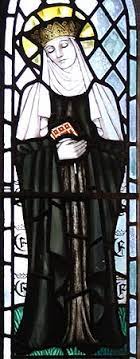
St. Ermenilda of Ely is a significant figure in Christian mythology, particularly within the history of the early English church. She is often remembered for her piety, her noble lineage, and her dedication to the Christian faith during a time when such beliefs were often challenged. St. Ermenilda was born into a royal family, which placed her in a unique position to influence the spread of Christianity in England. Her story intertwines with the history of the church and the development of monastic life in the early medieval period.
Life and Early Years
St. Ermenilda was born around the year 650 AD, the daughter of King Anna of East Anglia. Her family was known for its strong Christian beliefs, which played a crucial role in shaping her character and future endeavors. Growing up in a royal household, she was exposed to both the luxuries of noble life and the responsibilities that came with it. This upbringing instilled in her a sense of duty towards her people and her faith.
 St. Stephen Of Perm
During her youth, St. Ermenilda witnessed the profound impact of Christianity on her kingdom. Many of her relatives were involved in spreading the faith, and she was inspired by their dedication. Her father, King Anna, was particularly influential, as he was known for his efforts to convert his kingdom to Christianity. This environment of faith and devotion laid the foundation for her future contributions to the church.
As she grew older, St. Ermenilda faced many challenges, including the loss of family members and the political turmoil of the time. However, she remained steadfast in her beliefs and sought ways to serve her community. She eventually decided to dedicate her life to God, which led her to take significant steps towards a life of monasticism.
Monastic Life
St. Ermenilda’s decision to embrace monastic life was a pivotal moment in her journey. She entered a convent, where she dedicated herself to prayer, contemplation, and service. This choice was not only a personal commitment but also a statement of her faith during a period when many were skeptical of religious institutions. In the convent, she found solace and a community of like-minded individuals who shared her devotion to God.
 St. Enddwyn
Her life in the convent was marked by a deep commitment to spiritual practices and a focus on helping others. St. Ermenilda became known for her compassion and her ability to provide guidance to those in need. She often took on roles that involved caring for the sick and the poor, demonstrating her belief that true faith is expressed through acts of kindness and service.
St. Ermenilda’s dedication to monastic life also included a commitment to education. She believed in the importance of teaching the next generation about the Christian faith. As a result, she became involved in instructing young women in the convent, ensuring that they were well-versed in the teachings of Christ. This focus on education contributed to the growth of the Christian community and helped to strengthen the faith among women during this period.
Legacy and Influence
St. Ermenilda’s influence extended beyond her immediate community. Her dedication to the Christian faith and her role in monastic life inspired many others to follow in her footsteps. She became a symbol of faith and perseverance, and her story resonated with those who sought to deepen their own spiritual journeys. Many accounts of her life highlight her unwavering commitment to God and her compassionate nature.
 St. Enda
After her death, which is believed to have occurred around 700 AD, St. Ermenilda’s legacy continued to grow. She was venerated as a saint, and her feast day is celebrated on the 20th of September. Many churches and religious institutions were named in her honor, and her story became an integral part of Christian mythology in England. People began to seek her intercession, believing that she could help them in their times of need.
St. Ermenilda’s life also played a significant role in the development of women’s monastic communities. Her example encouraged many noble women to pursue lives of service and spirituality. These women often established their own convents, where they could live out their faith and support one another. This movement contributed to the growth of female monasticism in England and helped to elevate the status of women within the church.
Historical Context
To fully appreciate the life of St. Ermenilda, it is essential to understand the historical context in which she lived. The 7th century was a time of great change in England, as Christianity was spreading rapidly through the region. This period saw the establishment of many monasteries and churches, as well as the development of a more organized church hierarchy.
The influence of Christian missionaries was significant during this time. Figures such as St. Augustine of Canterbury played a crucial role in converting the Anglo-Saxons to Christianity. St. Ermenilda’s family was part of this movement, and her upbringing reflected the values of the early church. The political landscape was also shifting, with various kingdoms vying for power and influence, often leading to conflicts that challenged the stability of the region.
In this environment, St. Ermenilda’s commitment to her faith and her community stood out. She became a beacon of hope for many, showing that a life dedicated to God could provide strength and purpose, even amidst turmoil. Her story is a testament to the resilience of the human spirit and the transformative power of faith.
St. Ermenilda in Art and Literature
The life and legacy of St. Ermenilda have been depicted in various forms of art and literature throughout the centuries. Artists have sought to capture her essence, often portraying her as a figure of grace and compassion. Many medieval manuscripts include illustrations of her, highlighting her role as a saint and her dedication to the Christian faith.
In literature, St. Ermenilda’s story has been told and retold, often emphasizing her virtues and her impact on the early church. These narratives serve not only as historical accounts but also as moral lessons for future generations. Her life story is frequently used as an example of how one can live a life of faith, service, and commitment to God.
- Depictions in medieval manuscripts
- References in hagiographies
- Inspiration for modern authors
Modern authors continue to draw inspiration from St. Ermenilda, incorporating her story into their works. Her character embodies the ideals of faith, perseverance, and compassion, making her a relatable figure for many readers. Through these artistic and literary representations, her legacy endures, reminding us of the importance of faith and service in our own lives.
Veneration and Modern-Day Celebrations
St. Ermenilda is venerated in various Christian traditions, particularly within the Roman Catholic Church and the Anglican Communion. Her feast day, celebrated on September 20th, is an opportunity for the faithful to remember her life and contributions to the church. Many congregations hold special services, where they recount her story and reflect on her virtues.
In some communities, the celebration of St. Ermenilda’s feast day includes traditional rituals, prayers, and hymns dedicated to her memory. These practices serve to reinforce the values she embodied, such as compassion, humility, and a commitment to serving others. Additionally, some churches may organize charitable activities in her honor, emphasizing the importance of helping those in need.
St. Ermenilda’s legacy is not only celebrated in churches but also in the broader community. Various events, such as festivals and educational programs, are organized to promote awareness of her life and teachings. These initiatives aim to inspire people to follow her example and engage in acts of service and kindness, fostering a sense of community and compassion.
St. Ermenilda of Ely remains a vital figure in Christian mythology, symbolizing faith, service, and perseverance. Her life story continues to inspire individuals and communities, reminding us of the transformative power of faith and the importance of serving others. As we reflect on her legacy, we are encouraged to embrace the values she championed and strive to make a positive impact in our own lives and the lives of those around us.