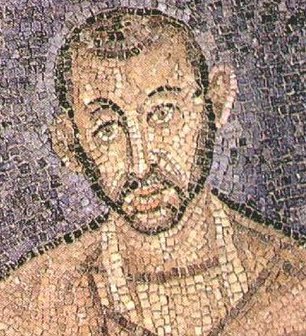
St. Ambrose, one of the most influential figures in early Christian history, played a crucial role in shaping the church’s development and its relationship with the Roman Empire. Born around 340 AD in Trier, modern-day Germany, Ambrose was initially a lawyer and governor before becoming a bishop. His journey from a secular life to a prominent ecclesiastical position is remarkable and highlights the transformative power of faith. As a bishop of Milan, he became known for his eloquent preaching, theological writings, and his staunch defense of the church’s independence from imperial authority.
Early Life and Education
Ambrose was born into a well-off family, with his father serving as a Roman official. His early education took place in Rome, where he studied literature, rhetoric, and law. These subjects provided him with a solid foundation for his future career in politics. Ambrose was not only academically gifted but also had a deep appreciation for classical literature, which later influenced his theological writings. Despite his promising career in the secular world, Ambrose’s life took a significant turn when he was appointed as the governor of the province of Aemilia-Liguria.
 St. Amadour
During his tenure as governor, Ambrose was noted for his fairness and ability to maintain peace among the diverse populations of Milan. However, it was a series of events surrounding the death of the previous bishop, Auxentius, that changed the course of his life. Following the bishop’s death, a heated debate arose over who would succeed him. Ambrose, attending the assembly, unexpectedly found himself chosen as the new bishop. His initial reaction was one of disbelief, but he soon accepted the position, marking the beginning of his remarkable ecclesiastical career.
Bishop of Milan
As the bishop of Milan, Ambrose quickly established himself as a powerful figure in the church. He was known for his charismatic preaching and ability to connect with the faithful. His sermons were not only theologically rich but also addressed social issues of the time, such as the moral decay of society and the need for repentance. Ambrose’s approach to preaching emphasized the importance of personal transformation and the role of the church in guiding individuals toward a virtuous life. His style attracted many followers, and he became a prominent voice in the early Christian community.
One of Ambrose’s most significant contributions as bishop was his role in the conversion of St. Augustine. Augustine, a young man struggling with a tumultuous life, heard Ambrose’s sermons and was profoundly moved. The bishop’s ability to articulate complex theological concepts in a way that resonated with the common people played a pivotal role in Augustine’s eventual conversion to Christianity. This relationship between Ambrose and Augustine is often highlighted as a key moment in Christian history, demonstrating the power of mentorship and the impact of effective communication in spreading the faith.
 St. Alphonsus Rodriguez
Theological Contributions
Ambrose’s theological contributions were vast and varied, influencing the development of Christian doctrine. He is best known for his works on the nature of God, the Trinity, and the relationship between the church and state. His writings emphasized the importance of the incarnation of Christ, arguing that God became human to redeem humanity. This concept became central to Christian theology and was foundational for later theologians, including Augustine and Thomas Aquinas.
One of Ambrose’s notable theological works is “On the Holy Spirit,” where he delves into the nature and role of the Holy Spirit within the Trinity. He argued that the Holy Spirit is fully divine and plays a vital role in the life of the church. This understanding of the Holy Spirit was significant in the development of Christian doctrine and was later affirmed in the Nicene Creed. Ambrose’s writings continue to be studied and revered for their depth and insight into the nature of God and the workings of the church.
Conflict with Imperial Authority
Ambrose’s tenure as bishop was marked by significant conflicts with imperial authority, particularly with Emperor Theodosius I. Ambrose was a staunch advocate for the church’s independence from state control, believing that spiritual matters should not be subjected to political influence. This stance led to a famous confrontation with Theodosius after the emperor ordered the massacre of a group of rebellious citizens in Thessalonica. Ambrose publicly condemned the emperor’s actions and demanded that he perform public penance for his sins. This bold move demonstrated Ambrose’s commitment to justice and the moral responsibilities of rulers.
 St. Alphonsus Liguori
The conflict escalated when Ambrose refused to allow Theodosius to enter the cathedral for a period of penance. This incident showcased Ambrose’s unwavering belief that the church had authority over moral matters, even when it meant standing against the emperor. Ultimately, Theodosius complied with Ambrose’s demands, marking a significant moment in the relationship between the church and the state. This episode not only solidified Ambrose’s position as a powerful church leader but also set a precedent for the church’s role in political matters.
Liturgical Innovations
St. Ambrose is also credited with several liturgical innovations that transformed the way Christian worship was conducted. One of his most significant contributions was the introduction of antiphonal chanting, a form of singing that involves alternating groups of singers. This practice enriched the liturgical experience and allowed for greater participation from the congregation. Ambrose believed that music was a powerful tool for worship and could elevate the spiritual experience of the faithful.
In addition to antiphonal chanting, Ambrose is often associated with the development of hymns. He wrote several hymns that are still used in Christian worship today. His hymns emphasized themes of praise, worship, and the beauty of God’s creation. By incorporating hymns into the liturgy, Ambrose helped to create a more vibrant and engaging worship experience. This emphasis on music and liturgy became a hallmark of the Christian tradition and has continued to influence worship practices throughout history.
Legacy and Influence
St. Ambrose’s legacy is profound and enduring. He is recognized as one of the four original doctors of the Church, alongside St. Augustine, St. Jerome, and St. Gregory the Great. His writings and teachings laid the groundwork for many aspects of Christian theology and liturgy. Ambrose’s influence can be seen in the development of the Western Church and its relationship with the state. His commitment to the independence of the church and the moral responsibilities of leaders has continued to resonate throughout history.
Moreover, Ambrose’s life and work have inspired countless individuals to pursue a deeper understanding of their faith. His emphasis on the importance of education, preaching, and the transformative power of grace has encouraged generations of Christians to seek a more profound relationship with God. His writings are still studied in seminaries and theological institutions around the world, ensuring that his contributions to Christianity remain relevant and impactful.
Feast Day and Veneration
St. Ambrose is celebrated on December 7th each year, a feast day that commemorates his life and contributions to the church. This day is marked by special liturgies, prayers, and reflections on his teachings. Many Christian denominations, including the Catholic Church and the Eastern Orthodox Church, honor Ambrose as a saint and recognize his role in shaping Christian thought.
In addition to his feast day, Ambrose is venerated in various ways throughout the Christian world. Churches and schools are named after him, and his writings continue to be published and studied. The influence of Ambrose extends beyond the church, as his ideas about the moral responsibilities of leaders and the importance of justice resonate in broader societal contexts. His life serves as a reminder of the impact that one individual can have on the course of history.
St. Ambrose remains a towering figure in Christian mythology, with a legacy that continues to inspire and challenge believers today. His commitment to the church, his theological insights, and his courageous stands against imperial authority have left an indelible mark on the history of Christianity. Through his life and work, Ambrose exemplified the transformative power of faith and the importance of standing up for one’s beliefs. His story is a testament to the enduring impact of dedicated individuals in shaping the course of history and the development of the Christian faith.