WORLD
WORLD
Ro’o

Ro’o is a name associated in some accounts with the religious traditions of eastern Polynesia, especially Tahiti and the wider Society Islands. The figure is often described as a deity connected with cultivated food, fertility, seasonal renewal and social well-being. However, Ro’o is not represented consistently across Polynesian traditions, and the evidence for a distinct, fully described deity under this exact spelling is limited. The name may reflect a local form or interpretation of the wider Polynesian religious complex associated with Rongo, Rongo-mā-Tāne and Lono, although these figures should not automatically be treated as identical.
Origins and cultural setting
Polynesian religions developed across a vast region of the Pacific, from the islands west of Tonga and Samoa to the central and eastern Pacific, including the Society Islands, the Marquesas, Hawai‘i, New Zealand and Rapa Nui. These traditions shared certain inherited ideas and divine names, but they were never a single uniform religion. Individual communities maintained their own genealogies, ritual systems, sacred places and accounts of the gods.
In many Polynesian societies, the prosperity of a community depended on forces that controlled rainfall, sunlight, ocean conditions, the growth of plants and the fertility of people and animals. Gods associated with agriculture and food production therefore had importance extending beyond the fields. They could also be connected with peace, political order, ritual knowledge and the renewal of life. A figure identified as Ro’o belongs to this broad religious environment, although the surviving information does not provide a complete and universally agreed biography.
Much of the evidence for Polynesian mythology was recorded after European contact. Missionaries, colonial officials, travellers and later ethnographers wrote down oral traditions, often using spelling systems that differed from one another. Indigenous religious knowledge was also preserved through chants, genealogies, ritual speech, place names, objects and performances rather than through a single canonical scripture. As a result, a short divine name may appear in several forms, while a god’s attributes may vary between islands or between different informants.
Name and identity
The spelling Ro’o includes an apostrophe representing a glottal stop in some systems of Polynesian transcription. Other spellings may omit the mark, use different diacritics or represent the name as Rongo or a related form. These variations do not by themselves prove that every figure with a similar name is the same being. Polynesian languages are related, but their sound systems, orthographies and religious vocabularies developed differently.
The name is particularly important because Rongo is a major divine name in several Polynesian traditions. In Māori religion, Rongo-mā-Tāne is strongly associated with cultivated plants, especially the kūmara or sweet potato, and with peace. In the Cook Islands, Rongo appears in important genealogical and religious traditions. In Hawai‘i, Lono is connected with agriculture, rain, fertility, music, peace and the Makahiki season. These associations form part of a wider pattern inherited from ancestral Polynesian culture, but local traditions changed the roles and relationships of the gods.
Some modern summaries present Ro’o as simply the Tahitian equivalent of Rongo or Lono. That comparison can be useful when discussing shared Polynesian religious themes, but it can also conceal uncertainty. The Tahitian religious figure most prominently known in historical accounts is often written ‘Oro or Oro, a different name from Ro’o. Confusing these names can lead to incorrect descriptions of Ro’o as a war god or as the central deity of Tahitian religion.
Religious classification
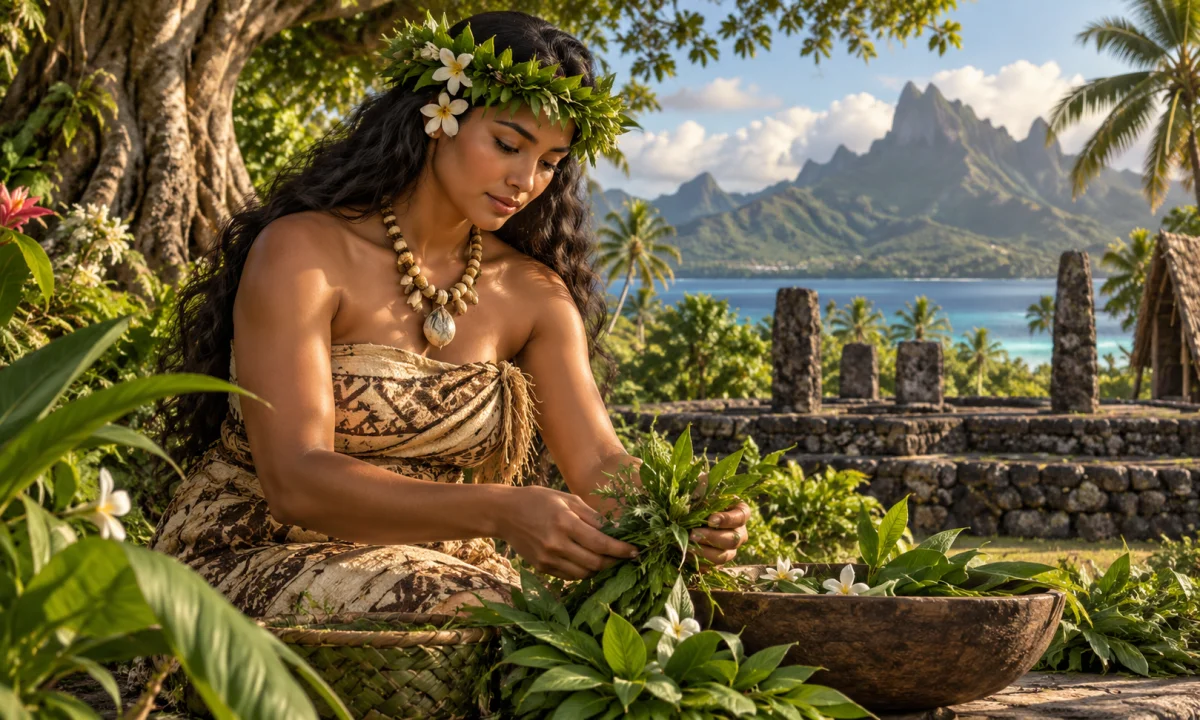
Where Ro’o is treated as a distinct figure, the name is generally placed among deities of fertility, agriculture and abundance. This classification reflects the wider Polynesian association between divine power and the production of food. Taro, breadfruit, coconut, bananas and other cultivated plants were not merely economic resources. Their growth depended on a sacred relationship between people, land, rain, ancestors and the gods.
Ro’o may therefore be understood as a deity of renewal rather than as a narrowly defined “god of crops” in the modern sense. The renewal of vegetation could imply the restoration of human health, the continuation of chiefly lines, the successful birth of children and the maintenance of communal life. In Polynesian religious thought, these areas were often related rather than separated into distinct departments.
The figure should not be forced into a rigid classification. Polynesian gods could possess several connected functions, and their importance could change according to the ceremony, island or tradition in which they appeared. A god associated with plants might also be invoked in matters of peace, ritual authority or the proper ordering of society. The surviving material about Ro’o is not extensive enough to establish a single detailed portfolio with certainty.
Attributes and symbolism
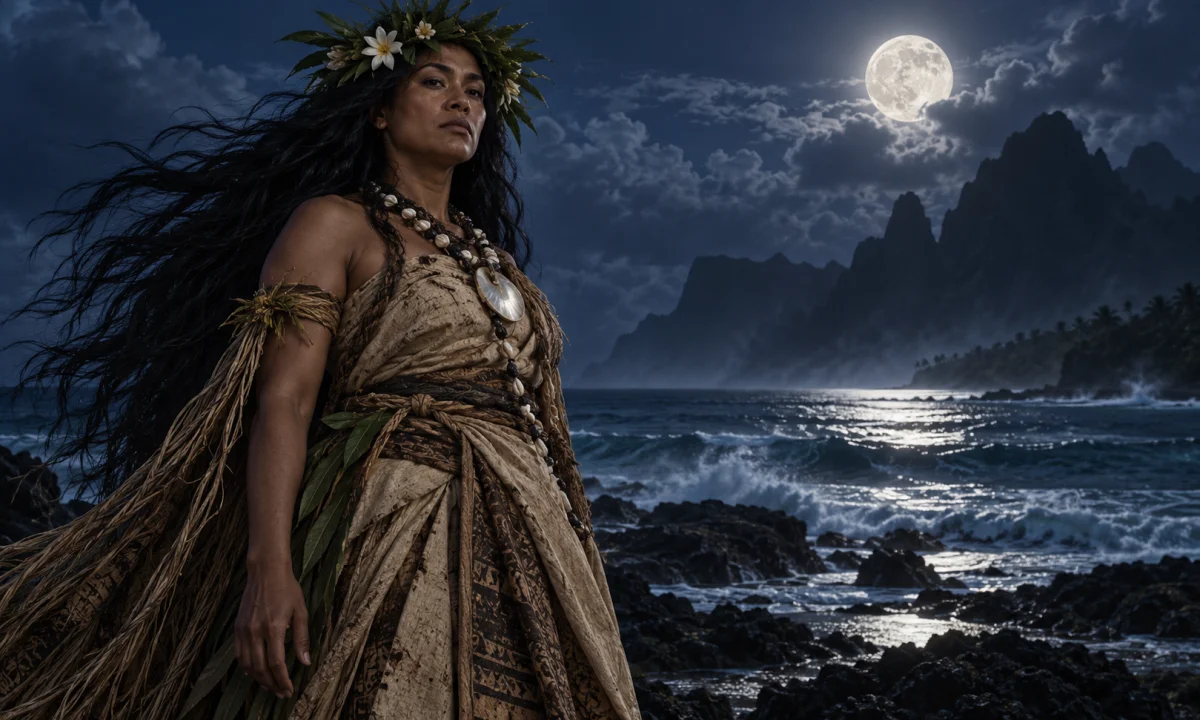
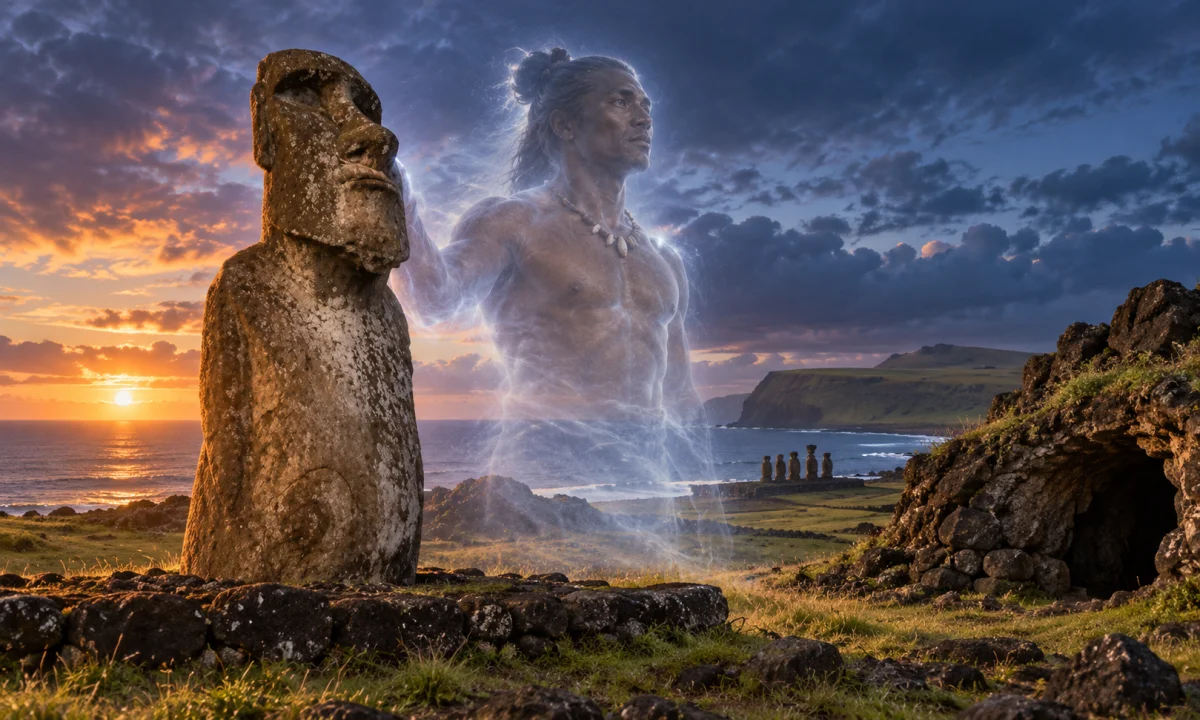
No universally accepted ancient description gives Ro’o a fixed physical appearance. There is no reliable basis for assigning the figure a standard costume, animal form, weapon or facial design. Images sometimes labelled with the name in modern collections or online material may represent other Polynesian gods, generic ancestral figures or later artistic interpretations.
The most appropriate symbols for Ro’o are therefore conceptual and environmental. They include:
- cultivated land and the growth of useful plants;
- rain and the seasonal conditions that sustain food production;
- fertility in both the natural and human worlds;
- the renewal of life after scarcity or ritual transition;
- peace and communal stability where the figure is interpreted through the Rongo tradition.
These associations should not be mistaken for a fixed emblematic system. Polynesian sacred symbolism was expressed through chants, offerings, dances, ritual objects, sacred sites and genealogical relationships. A plant, canoe, stone or ceremonial object could acquire significance from the particular ceremony in which it was used, rather than serving as a permanent symbol of one god.

Stories and relationships
There is no single widely preserved cycle of myths about Ro’o comparable in detail with the major Polynesian narratives concerning Māui, Tāne, Tangaroa or the gods of the Hawaiian and Māori traditions. Accounts that name Ro’o tend to provide a brief identification or a list of divine functions rather than a developed sequence of adventures.
This absence is important. It does not demonstrate that no stories about the figure ever existed. Oral traditions can disappear when ritual systems are suppressed, when a language declines or when early recorders chose to preserve only material that fitted their own categories. It does mean that claims about Ro’o’s family, exploits or cult should be made cautiously.
Comparative interpretations sometimes connect Ro’o with the wider family of gods descended from the ancient Polynesian religious vocabulary represented by Rongo. In different islands, such gods may be linked with creator figures, sky gods, culture heroes, agricultural ancestors or other members of a sacred genealogy. These relationships cannot be transferred automatically from one tradition to another. A genealogy in Māori tradition, for example, does not establish a genealogy for a Tahitian figure bearing a related name.
Ro’o is also distinct from the well-known Tahitian god ‘Oro. ‘Oro was a major deity in Society Islands traditions and was associated in historical accounts with chiefly power, warfare, political authority and, in some contexts, fertility. The similar-looking names are sometimes confused in English-language material, especially when apostrophes and diacritics are removed. Ro’o should not be described as ‘Oro merely because both names occur in discussions of Tahitian religion.
Relationship to Rongo and Lono
The comparison with Rongo and Lono arises from historical linguistics and comparative mythology. Polynesian languages preserve related words and divine names across great distances, suggesting that some religious concepts were inherited from ancestral societies and transformed as communities settled new islands. The names Rongo and Lono are among the clearest examples of this process.
Rongo in Māori tradition is associated with cultivated food and peace, while Lono in Hawai‘i has important connections with rain, agriculture, fertility and the Makahiki period. The similarities with descriptions of Ro’o are therefore meaningful. They suggest that the name may belong to a shared Polynesian religious pattern rather than being an isolated invention.
At the same time, comparative mythology is not a licence to flatten local differences. A shared ancestral name can develop into different divine personalities. Pronunciation may change, old meanings may be reinterpreted and a god’s status may rise or decline within a new political and religious setting. Scholars may describe Ro’o as related to Rongo without claiming that the two names identify an unchanged deity.
Ritual and cultural significance
If Ro’o represents an agricultural and fertile power, the figure’s significance lies in the relationship between divine favour and the responsibilities of human communities. Food production required labour, knowledge of local environments, cooperation and attention to seasonal cycles. Rituals surrounding planting and harvesting could express respect for the forces that made life possible, while also affirming social relationships and inherited authority.
In Polynesian societies, sacred power was often described through concepts such as mana and tapu, although their meanings varied by language and context. A deity associated with food and renewal could be approached through restrictions, offerings or ceremonies designed to maintain the proper balance between humans and the divine world. These practices were not simply requests for personal prosperity. They helped define who possessed ritual knowledge, who could speak for a community and how land and resources were treated.
Christian missions and colonial rule transformed these religious systems. Some shrines and ritual objects were destroyed, while traditional names survived in stories, songs, place names and family knowledge. Early European descriptions also reflect the assumptions of their authors. They may divide gods into categories such as “war god,” “sun god” or “agriculture god” more sharply than Polynesian communities themselves did.
Evidence and uncertainty
The limited documentation surrounding Ro’o requires a distinction between inherited tradition and later classification. The name may be based on a local form of a broader Polynesian divine name, a variant preserved in a particular record or a modern attempt to reconstruct a regional pantheon. Different reference works may consequently give different descriptions, and some may repeat one another without adding independent evidence.
It is safest to describe Ro’o as a possibly local or variant Polynesian agricultural and fertility deity, associated by comparison with the Rongo-Lono complex. It is less safe to assign a precise island of origin, a fixed appearance, a detailed family tree or a complete set of myths without identifying a specific traditional record. The uncertainty is part of the subject’s historical reality, not a gap that should be filled with invented detail.
Ro’o in modern representations
Ro’o has little established presence in globally known popular culture. The name may appear in modern encyclopedic lists, mythology websites, fantasy writing and games that draw freely on Polynesian vocabulary. Such appearances often expand a briefly documented figure into a fully developed character with weapons, powers, enemies and a visual design.
These inventions belong to modern adaptation rather than securely recorded Polynesian tradition. A respectful portrayal should preserve the distinction between Ro’o, Rongo, Lono and ‘Oro, acknowledge the regional diversity of Polynesian religions and avoid presenting a speculative reconstruction as an ancient canonical account. Where the evidence is brief, leaving some features undefined is more accurate than supplying an artificial certainty.