
Ravana is one of the most prominent figures in Hindu mythology, known primarily as the main antagonist in the ancient epic, the Ramayana. He is often depicted as a powerful demon king who rules the island of Lanka and is characterized by his immense strength, intelligence, and knowledge of the sacred texts. Ravana is a complex character who embodies both the traits of a villain and a learned scholar. His story is rich with themes of devotion, betrayal, and the eternal struggle between good and evil.
Origins of Ravana
Ravana’s origins can be traced back to the ancient texts of Hinduism. According to legend, he was born to a sage named Vishrava and a demon princess named Kaikesi. This unique lineage gave him both divine and demonic qualities, which shaped his character throughout the epic. Ravana had a number of siblings, including Kumbhakarna and Vibhishana, who played significant roles in his life and the larger narrative of the Ramayana.
 Ratri
RatriFrom a young age, Ravana displayed extraordinary abilities. He was not only physically strong but also possessed an exceptional intellect. He studied various forms of Vedic knowledge and became a master of the Shastras (sacred texts). His dedication to learning made him a revered figure among scholars and sages. However, his thirst for power and recognition often led him down a dark path, eventually resulting in his infamous reputation.
Ravana as a King
As the ruler of Lanka, Ravana transformed the island into a magnificent kingdom. His reign was marked by prosperity, architectural marvels, and advancements in science and art. Under his leadership, Lanka became known for its wealth and grandeur. Ravana’s palace was a sight to behold, filled with riches and adorned with beautiful gardens. He was admired by many for his leadership skills and his ability to maintain order and justice.
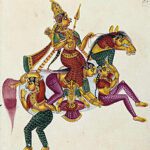 Rati
RatiDespite his positive attributes as a ruler, Ravana’s ego and desire for power often clouded his judgment. He was known for his arrogance and was often seen as a tyrant by those who opposed him. Ravana’s downfall can be attributed to his inability to balance his immense power with humility. His actions eventually led to conflict with other powerful beings, including the gods themselves.
The Abduction of Sita
One of the most significant events in the Ramayana is the abduction of Sita, the wife of Lord Rama. This act set off a chain of events that would lead to Ravana’s ultimate downfall. According to the epic, Ravana became infatuated with Sita’s beauty and decided to take her away to Lanka. This decision was fueled by his desire to prove his superiority over Rama, a noble prince known for his righteousness.
Ravana devised a cunning plan to abduct Sita. He used a magical golden deer to lure Rama and his brother Lakshmana away from their home. Once they were distracted, Ravana took the opportunity to kidnap Sita. This act of deception not only showcased his cunning nature but also set the stage for a battle between good and evil that would unfold in the subsequent chapters of the Ramayana.
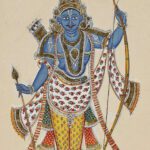 Rama
RamaThe Battle with Rama
The conflict between Ravana and Rama is central to the narrative of the Ramayana. After the abduction of Sita, Rama, with the help of his loyal followers, including Hanuman and the monkey army, set out to rescue her. This quest led to an epic battle between the forces of good and evil. Ravana, with his formidable army of demons, was determined to protect his prize and defeat Rama.
The battle was fierce and filled with dramatic moments. Ravana showcased his incredible strength and skills as a warrior, wielding various weapons and employing his knowledge of warfare. However, Rama, being an incarnation of the god Vishnu, possessed divine support and guidance. The clash between the two warriors was not just a physical confrontation but also a battle of ideologies, representing the eternal conflict between dharma (righteousness) and adharma (unrighteousness).
Ravana’s Death and Legacy
Ultimately, Ravana met his end at the hands of Rama. During the climactic battle, Rama utilized a powerful arrow given to him by the god Agni to defeat Ravana. The death of Ravana marked a significant turning point in the Ramayana, symbolizing the triumph of good over evil. Despite his demise, Ravana’s legacy lives on in various forms across different cultures and regions.
Ravana is often portrayed in a dual light. While he is seen as a villain due to his actions against Rama and Sita, many also regard him as a learned scholar and a devoted devotee of Shiva. His devotion to Lord Shiva is evident in various stories, where he is said to have performed intense penance to please the god. This complexity adds depth to his character and allows for various interpretations of his role in Hindu mythology.
Ravana in Popular Culture
The figure of Ravana has transcended the boundaries of the Ramayana and has been represented in numerous forms of popular culture. He has appeared in plays, movies, and television series, often depicted as a multi-faceted character. In many adaptations, Ravana is portrayed not just as a villain but as a tragic hero, allowing audiences to explore the complexities of his personality.
One of the most famous representations of Ravana is during the festival of Dussehra, where effigies of Ravana are burned to symbolize the victory of good over evil. This tradition serves as a reminder of the lessons learned from his story and the importance of adhering to dharma. The portrayal of Ravana in popular culture continues to evolve, reflecting contemporary values and societal changes.
Lessons from Ravana’s Story
Ravana’s story is filled with valuable lessons that resonate with people even today. One of the primary lessons is the importance of humility. Despite his immense power and knowledge, Ravana’s arrogance led to his downfall. This serves as a reminder that no matter how powerful one becomes, it is essential to remain grounded and respectful towards others.
Another significant lesson is the idea of balance. Ravana, with his strengths, failed to find a balance between his ambition and morality. His desire for power overshadowed his judgment, leading him to make choices that ultimately resulted in his demise. This teaches us that while ambition is important, it should not come at the cost of our values and principles.
Ravana in Other Traditions
While Ravana is primarily known through the Ramayana, his character has found its way into various other traditions and cultures. In some Buddhist texts, Ravana is depicted as a powerful figure with attributes that reflect both wisdom and strength. His story has been adapted in various ways, illustrating the universal themes of power, conflict, and redemption.
In the Philippines, Ravana’s story is sometimes associated with local legends, showcasing the character’s influence beyond Indian borders. This highlights the idea that stories and myths can transcend cultures, adapting to different contexts while retaining their core themes. The figure of Ravana, with all his complexities, serves as a symbol of the eternal struggle between good and evil, making him a timeless character in world mythology.
Ravana remains a compelling figure in Hindu mythology, representing the duality of human nature. His story is a reminder of the consequences of unchecked ambition and the importance of adhering to righteousness. Through his character, we learn valuable lessons that continue to resonate across generations. Ravana’s legacy, marked by both his villainy and wisdom, ensures that his tale will be told for years to come.