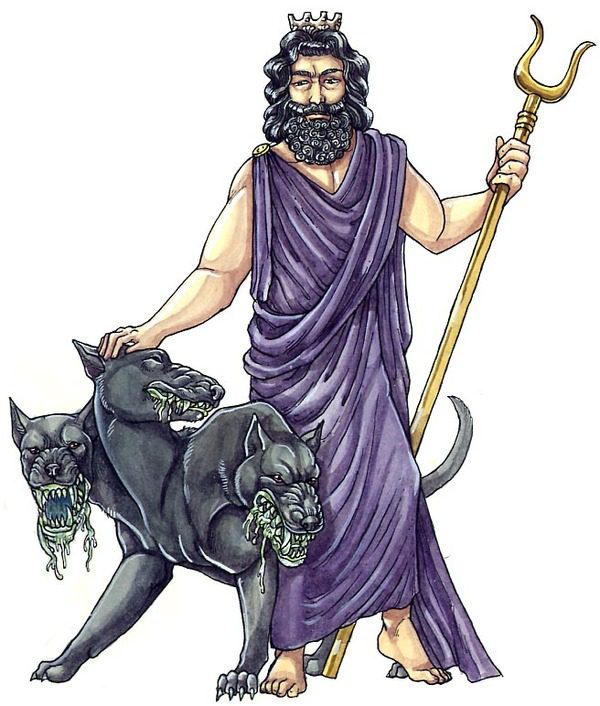
In Roman mythology, Pluto is a significant deity associated with the underworld. He is often identified with the Greek god Hades, who ruled over the realm of the dead. Pluto’s role in mythology is complex, encompassing themes of death, wealth, and the afterlife. His name is derived from the Latin word for wealth, “plutus,” which reflects his association with the riches found underground, such as precious metals and gems. This duality in his character makes him a fascinating figure in Roman lore, embodying both the fear of death and the allure of material wealth.
Origins and Family
Pluto is part of the larger pantheon of Roman gods and goddesses. He is the son of Saturn (Cronus in Greek mythology) and Ops (Rhea). His siblings include well-known deities such as Jupiter (Zeus) and Neptune (Poseidon). In Roman mythology, each of these gods governs different aspects of life and the universe. Jupiter is the king of the gods and rules the sky, Neptune is the god of the sea, while Pluto reigns over the underworld. This familial relationship emphasizes the division of power among the gods and highlights Pluto’s unique domain.
 Dis-pater
According to myth, when the three brothers divided the universe, Pluto received the underworld as his realm. This division was not without conflict, as the underworld is often viewed with fear and trepidation. The choice of Pluto to rule the underworld signifies the importance of death in the cycle of life and the belief that every being must eventually face their end. His brothers, Jupiter and Neptune, took the sky and the sea, respectively, illustrating how the natural world is intertwined with the divine.
The Underworld: Pluto’s Domain
Pluto’s realm, known as the Underworld or Hades, is a place where souls go after death. It is often depicted as a dark, gloomy place, separate from the world of the living. The Underworld is not merely a place of punishment; it is also a resting place for souls. In Roman thought, the afterlife was seen as a continuation of existence, albeit in a different form. Pluto’s role was to guide the souls of the deceased to their final resting place and ensure the proper order of the afterlife.
Within the Underworld, there are various regions that souls might inhabit, including the Elysian Fields, where the virtuous reside, and Tartarus, a deep abyss used for punishment. The presence of these distinct areas reflects the Roman belief in a just afterlife, where individuals are rewarded or punished based on their actions during their lifetime. Pluto’s authority over these realms illustrates his importance in maintaining balance and justice in the universe.
 Disciplina
Key Features of the Underworld
- Charon: The ferryman who transports souls across the river Styx to the Underworld.
- Cerberus: The three-headed dog that guards the gates of the Underworld, preventing souls from escaping.
- Persephone: Pluto’s wife, who spends part of the year in the Underworld and part on Earth, symbolizing the cycle of life and death.
Charon plays a vital role in this mythological landscape. According to the myths, souls must pay Charon for their passage across the Styx, typically with an obol, a small coin placed in the mouth of the deceased. This practice reflects the ancient belief in the necessity of proper burial rites and the importance of ensuring that one’s soul could travel safely to the afterlife. Without this payment, the souls would wander the shores of the Styx for eternity, emphasizing the significance of honoring the dead.
Cerberus, the fearsome three-headed dog, serves as another crucial figure in Pluto’s realm. His primary duty is to guard the gates of the Underworld, ensuring that the souls of the dead cannot escape back to the world of the living. This guardian symbolizes the finality of death and the idea that once a soul has entered the Underworld, there is no turning back. Cerberus is often depicted as a fearsome creature, yet he also represents the protective nature of Pluto’s domain.
Pluto and Persephone
One of the most well-known myths involving Pluto is his abduction of Persephone, the daughter of Demeter (Ceres in Roman mythology). According to the myth, Pluto fell in love with Persephone and decided to take her to the Underworld to be his queen. This event is significant as it represents the interplay between life and death, as well as the changing of the seasons. When Persephone is with Pluto in the Underworld, her mother, Demeter, mourns her absence, causing the earth to become barren. This myth explains the seasonal cycle, where spring and summer bloom during Persephone’s time on earth, and autumn and winter occur when she returns to the Underworld.
 Discordia
The story of Pluto and Persephone is a powerful narrative that illustrates the duality of life and death. It reflects the Roman belief that death is not an end but rather a transformation. The love between Pluto and Persephone also highlights the idea of unity between the living and the dead, suggesting that both realms are interconnected. This relationship emphasizes the importance of both life and death in the cycle of existence.
The Significance of Persephone
- Symbol of Renewal: Persephone’s return to the surface signifies rebirth and the renewal of life.
- Balance: Her dual existence in both realms represents the balance between light and dark, life and death.
- Harvest: The myth is often linked to agricultural cycles, as Demeter’s grief affects the fertility of the land.
Persephone’s role as a symbol of renewal is essential in understanding the broader themes of Roman mythology. Her return to the surface world each spring signifies the return of life after winter, while her descent into the Underworld represents the inevitable cycle of death. This duality is central to many myths, showcasing the Romans’ deep understanding of the natural world and its rhythms.
Furthermore, Persephone’s presence in both the Underworld and the world of the living highlights the balance that exists between the two realms. It serves as a reminder that life and death are interconnected, each giving meaning to the other. This balance is a recurring theme in Roman mythology, reflecting the belief that harmony must be maintained for the universe to function properly.
Pluto’s Worship and Cultural Impact
In ancient Rome, Pluto was revered as a powerful deity, and various rituals were dedicated to him. While he did not have as many temples or festivals as other gods like Jupiter or Mars, his influence was still felt in the lives of the Romans. People would offer sacrifices and prayers to Pluto, especially during times of mourning or when dealing with death. These acts were seen as a way to gain favor with the god and ensure a safe passage for the souls of the deceased.
One of the most notable festivals associated with Pluto was the Parentalia, a nine-day festival held in February to honor deceased ancestors. During this time, families would visit the graves of their loved ones, offering food and flowers. This festival illustrates the Roman belief in the importance of remembering and honoring the dead, as well as the hope for their peaceful existence in the afterlife. Such rituals highlight Pluto’s role in the collective consciousness of the Romans and their views on death and the afterlife.
Pluto in Literature and Art
- Virgil’s Aeneid: Pluto is mentioned in this epic poem, which explores themes of fate and the afterlife.
- Ovid’s Metamorphoses: This work includes various myths that feature Pluto and his interactions with other gods and mortals.
- Renaissance Art: Artists depicted Pluto in various forms, often highlighting his association with death and the underworld.
Pluto’s presence in literature and art has been significant throughout history. In Virgil’s Aeneid, the underworld is depicted as a place of judgment and destiny, where souls face their fates. This portrayal emphasizes Pluto’s role as a judge of the dead, reinforcing the belief in a moral order governing the afterlife. Similarly, in Ovid’s Metamorphoses, Pluto’s character is explored through various myths, showcasing his interactions with other gods and mortals, further enriching the narrative of Roman mythology.
During the Renaissance, artists began to depict Pluto in their works, often emphasizing his dark and mysterious nature. Paintings and sculptures from this period often reflect the fascination with death and the afterlife, with Pluto serving as a central figure. These artistic representations not only highlight the enduring influence of Pluto in cultural consciousness but also demonstrate how myths can evolve and adapt over time, maintaining their relevance in new contexts.
Pluto’s Legacy in Modern Culture
Even in modern times, Pluto’s influence can be seen in various aspects of culture. His character has been referenced in literature, film, and even video games. The idea of an underworld, ruled by a god like Pluto, continues to capture the imagination of creators and audiences alike. This enduring legacy speaks to the universal themes of life, death, and the unknown that Pluto embodies.
In popular culture, Pluto has been portrayed in various ways, from a fearsome ruler of the underworld to a more sympathetic character. This evolution reflects changing attitudes towards death and the afterlife. For instance, in animated films, Pluto is sometimes depicted as a misunderstood figure, inviting audiences to empathize with his role as the keeper of souls. Such representations highlight the complexity of his character and the multifaceted nature of myths.
Pluto in Astronomy
- Planetary Classification: Pluto was classified as the ninth planet in our solar system until 2006.
- Dwarf Planet: In 2006, Pluto was reclassified as a dwarf planet, sparking debate among astronomers.
- Symbolism: The name Pluto continues to evoke themes of mystery and the unknown in astronomical contexts.
Interestingly, the name Pluto has also made its way into the realm of astronomy. Discovered in 1930, Pluto was initially classified as the ninth planet of our solar system. However, in 2006, it was reclassified as a dwarf planet by the International Astronomical Union. This decision sparked considerable debate within the scientific community, with some arguing that Pluto should retain its planetary status. Regardless of its classification, the name Pluto continues to evoke a sense of mystery and intrigue, reminiscent of its mythological roots.
the legacy of Pluto extends far beyond ancient Rome. His character, steeped in themes of death and wealth, continues to resonate with audiences today. The various interpretations of Pluto in literature, art, and even astronomy reflect the timeless nature of myths and their ability to adapt to new contexts. As a figure that embodies both fear and fascination, Pluto remains a powerful symbol in the human experience, reminding us of the delicate balance between life and death.