WORLD
WORLD
Beleth
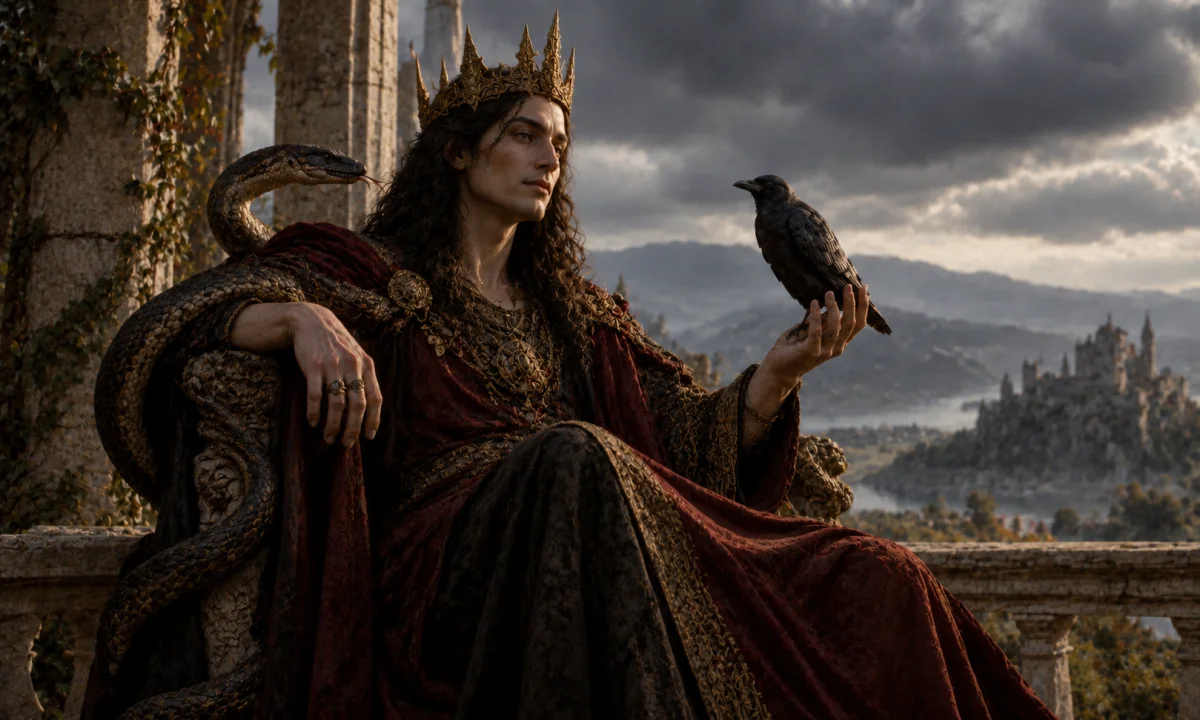
Beleth, also spelled Bileth, Byleth or Belet in different texts, is a king of demons in the early modern European grimoire tradition. He is best known from the Ars Goetia, the first part of the Lesser Key of Solomon, where he is listed as the thirteenth spirit. The text describes him as a powerful and frightening king who appears riding a pale horse, preceded by trumpets and other musical instruments. His principal function is to cause love between men and women, and he is said to command eighty-five legions of spirits.
Beleth is not a major figure of ancient Greek, Roman, Jewish or Christian mythology. His surviving identity belongs chiefly to the learned tradition of European ceremonial magic, especially the demonological catalogues and ritual manuals that circulated in manuscript and printed form from the sixteenth century onward. Although these works used biblical language and Christian ideas about demons, their individual entries often combine material from several earlier sources, folklore, literary imagination and the practical concerns of ritual magic.
Origins in the grimoire tradition
The most familiar account of Beleth appears in versions of the Lesser Key of Solomon, a collection associated with the seventeenth-century manuscript tradition. The first section, commonly called the Ars Goetia, presents a catalogue of seventy-two spirits. Each entry normally provides a spirit’s name, rank, visual form, number of legions, and the abilities attributed to it. The work also includes instructions for summoning and controlling the spirits within a ritual framework.
The Ars Goetia was not an ancient book written by the biblical King Solomon. Its Solomonic attribution is part of a long literary tradition in which Solomon is portrayed as a uniquely powerful magician who received authority over spirits. The texts that survive under his name were assembled much later, drawing on earlier magical books and demonological lists. The historical authorship and exact development of the Ars Goetia remain matters of scholarly study, and the text exists in differing manuscripts and editions.
Beleth also appears in related demonological catalogues before or alongside the Ars Goetia. A particularly important parallel is Johann Weyer’s Pseudomonarchia Daemonum, a sixteenth-century catalogue of demons included in his discussion of magic and witchcraft. The name and details vary between versions, as is common in early modern grimoires. The presence of Beleth in more than one catalogue suggests that the figure was part of a developing literary and magical tradition rather than an isolated invention in a single modern publication.
These texts should be understood in their cultural setting. Early modern Europe inherited Christian teachings about angels, fallen spirits and the Devil, while also maintaining a strong interest in astrology, ritual magic, alchemy and occult philosophy. Grimoires placed named spirits into hierarchies that resembled courts, armies or bureaucracies. Ranks such as king, duke, prince and president gave the supernatural world an organised structure that could be used in ritual narratives.
Name and classification
The spelling Beleth is especially familiar from English-language editions of the Ars Goetia, but it is not the only form. Bileth and Byleth are important variants, and other spellings occur in manuscript and printed traditions. The differences reflect the transmission of names through handwritten copying, translation and changes in orthography. There is no universally accepted ancient etymology that securely explains the name.
In the Ars Goetia, Beleth is identified as a king and as the thirteenth spirit in the catalogue. He is also credited with governing eighty-five legions. The number belongs to the formal structure of the grimoire and should not be treated as evidence for a historical religious cult or a literal ancient army of spirits.
Some related demonological descriptions connect Bileth with the angelic or celestial order called the Powers. This classification is not consistent across all sources and should not be presented as a universally established feature. The hierarchy of demons in Solomonic literature varies from one catalogue to another, and the terms used for ranks or orders often reflect the author’s system rather than a shared doctrine.
Within Christian theology, demons were generally understood as evil or fallen spirits rather than as legitimate divine beings with independent religious authority. The grimoire tradition, however, gives them detailed names, titles and capabilities. This does not mean that Beleth held a recognised place in mainstream Christian worship. His classification belongs to the ritual and literary world of demonological magic.
Appearance and first encounter
Beleth is described as appearing on a pale horse. Music accompanies his arrival: trumpets and other kinds of instruments are said to sound before him. This is one of the most distinctive features associated with the spirit and separates him from many other entries in the catalogue, whose appearances may involve animals, hybrid bodies, crowned figures or monstrous forms.
The account emphasises that Beleth is initially furious and frightening. His first display of anger is presented as a test or threat directed at the magician who has summoned him. In the ritual instructions, the operator is given methods for resisting this intimidation and compelling the spirit to answer. A silver ring is particularly important in the traditional procedure. The operator is instructed to hold the ring toward the face as a sign of authority while addressing Beleth.
These details belong to the internal logic of ceremonial magic. The magician is not portrayed as meeting Beleth in an ordinary social setting, but as conducting a carefully structured rite involving divine names, protective boundaries, commands and ritual objects. The apparent hostility of the spirit reinforces the need for preparation and control. It also contributes to the dramatic atmosphere of the text, in which the magician confronts a powerful supernatural court.
The pale horse and accompanying music have no securely documented pre-grimoire mythology specifically identifying them with Beleth. They may be understood as elements of the spirit’s literary portrayal rather than symbols with one agreed meaning. A pale horse can evoke grandeur, ominous spectacle or the imagery of apocalyptic and supernatural processions, while trumpets and ceremonial music reinforce the dignity of a king. Such interpretations are possible, but the source itself does not provide a developed symbolic explanation.
Powers and function
Beleth’s principal ability is to cause or inspire love between men and women. In the context of the grimoire, this is presented as a magical service that the spirit can provide when properly commanded. The wording is brief and does not offer a mythology explaining why Beleth has this power, nor does it describe particular lovers, romances or legendary episodes involving him.
The love attributed to Beleth is therefore different from the role of a love deity in an established religious tradition. He is not presented as a god with temples, festivals, sacred myths or a community of worshippers. Nor is he equivalent to figures such as Aphrodite, Eros, Freyja or other deities associated with desire and relationships. His role is functional: he is a named spirit whom a ritual practitioner seeks to direct toward a particular result.
The text does not define the emotional quality of the love he produces. It does not clearly distinguish affection from sexual desire, marriage, obsession or temporary attraction. Later occult writers and modern readers may interpret the ability in different ways, but those interpretations should not be confused with additional information supplied by the original catalogue.
His title as a king and his command of eighty-five legions place him among the more powerful figures in the Ars Goetia. The numerical description contributes to the ranking system of the work, but it does not come with stories about the individual spirits under his command. The catalogue is primarily an inventory of names and powers, not a cycle of myths.
Ritual context
In the Ars Goetia, the summoning of Beleth takes place within a broader ceremonial system. The operator uses a consecrated space, protective symbols, divine names and formal commands. The spirit is expected to appear outside the central protective area, often represented in modern discussions as a triangle, while the magician remains within a circle. Exact arrangements vary among editions and modern reconstructions.
The instructions involving Beleth are unusually theatrical because the spirit is said to arrive in an intimidating manner. The magician is warned not to be overcome by fear and is given a specific gesture involving the silver ring. The ring is not simply an ornament; it functions as a ritual sign of authority and protection within the text’s symbolic system. Modern occult practitioners may reproduce, reinterpret or reject these instructions, but the historical source presents them as part of a formal magical operation rather than as general folklore.
It is also important to distinguish the practical claims of a grimoire from historical evidence. The surviving texts demonstrate that authors and readers recorded these rituals and attributed powers to named spirits. They do not establish that Beleth was objectively encountered, that the rituals produced the promised effects, or that an ancient cult devoted to him existed.
Relationships and variants
Beleth has no stable family, genealogy or network of mythological relationships. The catalogue gives him a rank, a number of legions, an appearance and a power, but does not identify parents, allies, enemies or a consort. Later writers sometimes expand the personalities of Goetic spirits, yet such additions belong to subsequent occult interpretation rather than to a continuous ancient mythology.
The differences between Beleth, Bileth and Byleth generally represent variant forms of one grimoire spirit rather than separate, well-established beings. Nevertheless, spelling alone should not be used to force every similarly named figure into the same identity. Names in demonological literature can shift considerably, and a claim that two forms are related should be based on their descriptions, placement and textual context.
Beleth should also be distinguished from unrelated figures whose names resemble his. In particular, the name should not automatically be connected with every occurrence of “Byleth” or “Beleth” in modern fiction, games or invented fantasy settings. A similar spelling does not demonstrate a historical relationship.
Cultural significance
Beleth illustrates how early modern demonological catalogues transformed abstract ideas about evil spirits into sharply individualised characters. Giving a spirit a name, title, appearance and specialised ability made the invisible world easier to organise and imagine. The result resembles a supernatural monarchy, with each figure assigned a position and a domain of activity.
His association with love is also significant within the moral context of European demonology. Desire could be treated as a natural human experience, a subject of religious regulation or a form of temptation. A demon said to produce love therefore occupies an ambiguous position: the power may appear useful to the magician, but its source is classified as dangerous and spiritually suspect. The grimoire does not resolve this tension; it presents the ability as one more service within a forbidden or illicit magical system.
The dramatic image of a furious king on a pale horse, preceded by music, gives Beleth a ceremonial and theatrical identity. Rather than appearing as a subtle tempter or obscure household spirit, he arrives as a ruler demanding recognition. This imagery may help explain why he has remained one of the more memorable names in discussions of the Ars Goetia, even though the surviving source provides only a short description.
Later reception and modern usage
Beleth continues to appear in modern editions and discussions of the Ars Goetia, in occult writing, comparative studies of grimoires and works of fantasy inspired by demonological catalogues. Contemporary practitioners interpret the spirit in different ways. Some treat the Goetic figures as independent spiritual entities, some approach them as symbolic or psychological images, and others regard them primarily as products of historical literature.
Modern popular culture may borrow Beleth’s name, rank, horse, musical procession or love-related powers, but such adaptations often alter the figure substantially. A character in a game, novel or film is not automatically a continuation of early modern demonology. When modern fiction gives Beleth new origins, relationships, motives or abilities, those features belong to the adaptation rather than to the traditional grimoire description.
The historically identifiable Beleth remains a relatively concise figure: the thirteenth spirit of the Ars Goetia, a terrifying king associated with a pale horse and ceremonial music, credited with causing love and ruling eighty-five legions. Beyond these details, the sources offer no extensive body of myth, and attempts to reconstruct a much older biography should be treated as speculation rather than established tradition.