WORLD
WORLD
Piru
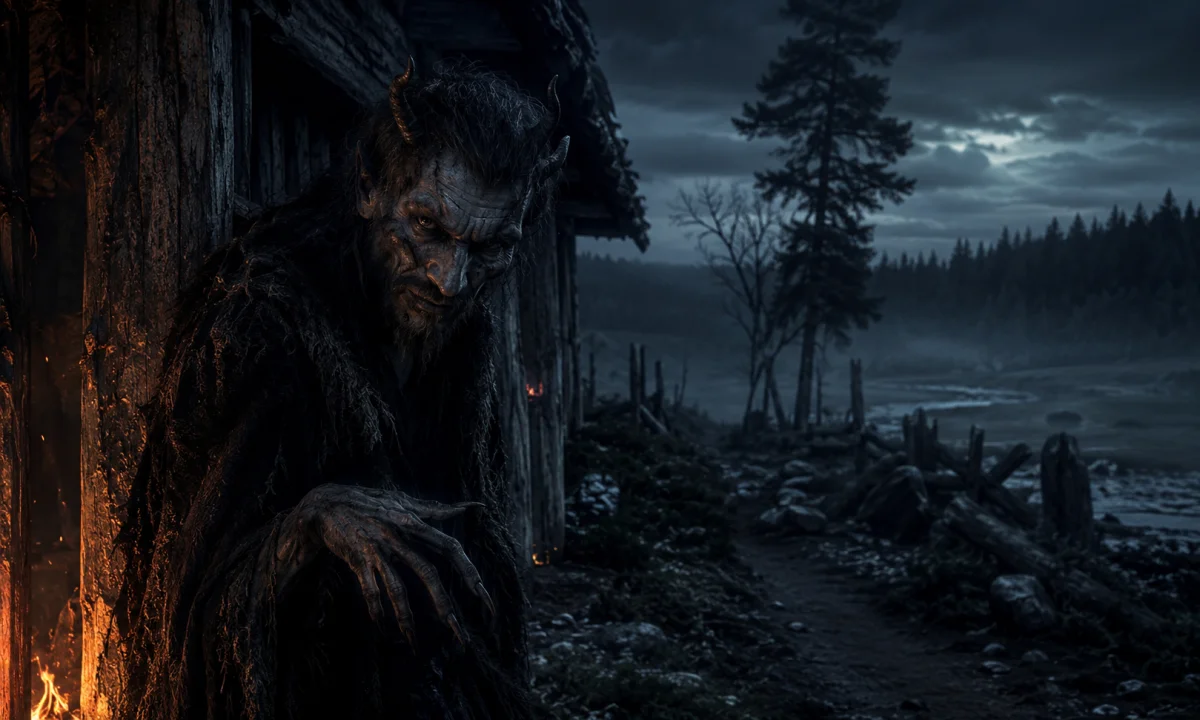
Piru is a figure from Finnish mythology and folk belief, most often understood as a name for a devil-like or demon-like being, especially in later Christian-era tradition. The word appears in Finnish vernacular usage with a wide range of meanings, and its exact role in older pre-Christian belief is not always clear. In many contexts, piru refers not to a single, fixed mythological character but to an evil spirit, a mischievous supernatural being, or even the Christian Devil as imagined in Finnish-speaking culture.
Origins and cultural setting
The history of piru belongs to the long transition from older Finnish folklore to Christian influence. Before Christianisation, Finnic communities had their own concepts of spirits, sacred powers, dangerous beings, and the unseen forces that could affect human life. Over time, Christian ideas of the Devil and demons entered local language and storytelling, and the word piru became one of the main Finnish terms used for such beings.
Because of this, the term does not point neatly to one ancient deity or one stable mythic figure. In surviving folklore, piru can mean a hostile spirit, a devilish being, a troublesome supernatural presence, or the Devil himself. In some traditions, it functions more as a category of being than as a unique personage. This makes Piru different from many mythological figures who have a clearer origin story or a more consistent set of attributes.
Recorded Finnish folklore was collected mainly in the 19th and early 20th centuries, long after Christianity had shaped everyday language and belief. As a result, many descriptions of piru reflect a blend of older folk imagination and Christian demonology. Scholars therefore treat the term cautiously: it is important in Finnish tradition, but its meanings vary by region, era, and storyteller.
Name and meaning
The Finnish word piru is commonly translated as “devil,” “demon,” or “evil spirit,” though no single English word captures all of its uses. In everyday speech, the term has also been used as an exclamation or intensifier, showing how deeply it entered the language beyond formal mythic contexts.
The origin of the word itself is not always treated as fully settled in popular discussion, and its semantic history is complex. What is clear is that the term became strongly associated with malevolent supernatural power in Finnish culture. In folklore, a piru may be dangerous, cunning, and morally negative, but the being is not always described with the theological precision found in learned Christian writing. Folk usage can be practical and local rather than doctrinal.
Because the word is so flexible, it is important not to assume that every mention of piru refers to the same entity. In some tales it is a generic label; in others, it can function like a named adversary or a personified force of harm. The term also appears in idiomatic and humorous speech, where it may lose its strict supernatural meaning.
Appearance and nature
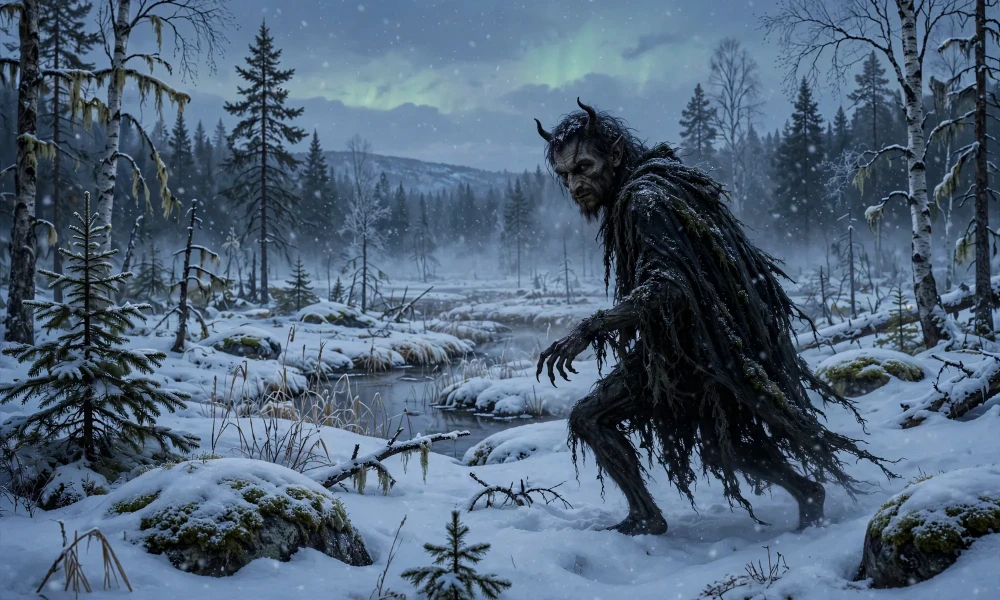
Descriptions of piru in Finnish folklore are not uniform. Depending on the region and story, the being may appear as a dark humanlike figure, a small uncanny creature, a shadowy presence, or a more overtly devilish form influenced by Christian imagery. Some accounts give the piru animal traits or hybrid features, while others emphasize its ability to change shape.
What remains consistent is the association with danger, trickery, and malevolent force. The piru is often imagined as clever rather than physically powerful, and as a being that exploits weakness, fear, pride, or foolishness. In this respect, it belongs to a broad European folklore pattern in which the devil or demon is a tempter, deceiver, and challenger in human life.
In some folk stories, the piru is not terrifying in a grand, apocalyptic way but rather small-scale and practical, involved in everyday misfortune. Such beings may lurk near crossroads, wild places, thresholds, or sites associated with danger. However, these settings vary, and it is not accurate to assign one fixed habitat to Piru across all Finnish tradition.
Roles in folklore
Piru often appears as a being that tests people, causes trouble, or tempts them into bad choices. In many stories, the emphasis is less on cosmic evil and more on local moral teaching: greed, vanity, laziness, rashness, and dishonesty may invite the piru’s influence. The figure can therefore serve as a warning device in folklore, helping explain why misfortune occurs and how people should behave.
There are also tales in which humans outwit the piru. Finnish folklore, like much European peasant storytelling, often values practical intelligence over abstract power. A clever person may trick a devil-like being through wordplay, bargains, hidden knowledge, or persistence. In such stories, the piru may be formidable but not invincible.
Another role is explanatory. When something goes wrong unexpectedly, the term piru may be used to personify the cause. This does not always mean the speaker believed in a literal demon at that moment. Folklore often uses supernatural language to interpret difficult experiences: illness, accidents, strange noises, bad luck, or unexplained fear.
Relationships to Christian tradition
The image of Piru in Finnish tradition is strongly shaped by Christianity. After conversion, the Devil became an important figure in teaching, sermons, prayer, and moral storytelling. The Finnish term piru naturally took on this role in vernacular speech. As a result, many later folk beliefs about piru should be understood as Christian-era popular religion rather than as direct survivals from a clearly defined pre-Christian cult.
This is one reason the figure is difficult to classify. If “mythology” is reserved for the older gods and spirits of pre-Christian belief, Piru belongs partly outside that system, or at least at its edge. If “folk belief” includes Christian-influenced supernatural imagination, then Piru is central to the landscape of Finnish supernatural tradition.
In folk religion, the piru could be associated with temptation, disease, bad fortune, and dangerous bargains. Yet the figure was not necessarily identical with theological Satan in every context. Local speech could blur the line between devil, demon, goblin-like spirit, and general force of evil. That fluidity is typical of vernacular religion.
Important motifs and stories
Several recurring motifs appear in tales involving piru, though no single canonical story defines the figure.
Bargains and trickery
One common pattern is the bargain with a devil-like being. A person may promise service, a soul, or some form of payment in exchange for help, wealth, or knowledge. Such stories are widespread in Europe and are not uniquely Finnish, but Finnish tellers adapted them to local speech and humour. The piru may be outwitted by a clever loophole, a literal interpretation, or a refusal to meet the terms in the expected way.
Testing human character
The piru may appear when a person is under moral pressure. In this role, the being functions as a tester, exposing greed, cowardice, or vanity. The story may not be about an external battle between gods and demons, but about the human struggle to remain sensible and upright in a difficult world.
Haunting and disturbance
Some folklore uses piru for a haunting presence in houses, barns, roads, or isolated places. Strange sounds, nightmares, or a sense of pressure may be explained as the work of a piru. Such stories often overlap with broader European and Finnish beliefs about restless spirits, but the term itself marks the Christianised demonological interpretation.
Fire, thresholds, and danger
In older folk imagination, dangerous beings are often linked to liminal spaces: crossroads, thresholds, dark paths, and fires. Piru may be imagined in such places because they symbolize vulnerability and uncertainty. However, these associations are not always exclusive to Piru and should be seen as part of a wider folk pattern rather than a fixed mythic biography.
Symbolism and cultural meaning
Piru is important not only as a supernatural being but also as a cultural symbol. The figure embodies the tension between Christian morality and older local understandings of the unseen world. In many Finnish-speaking communities, the word could express fear, annoyance, condemnation, or irony. This wide usage shows how a mythic term can become part of ordinary language while retaining a shadow of its supernatural force.
As a symbol, Piru represents temptation, disorder, and the breakdown of proper boundaries. It may stand for the force that leads people away from good judgment. At the same time, folklore often treats the piru with a degree of earthy humour. The devil is frightening, but not always solemn; sometimes he is merely a nuisance, a fool, or a figure to be mocked. That combination of fear and ridicule is characteristic of much folk treatment of evil beings.
The figure also reflects the Finnish habit of describing the world through practical, immediate terms. Instead of abstract theology, folk speech often expresses the supernatural through direct encounters, sharp language, and everyday experience. Piru belongs to that style of thought: it is close to human life, present in mishap and speech, and easily invoked in ordinary conversation.
Distinction from similar figures
Piru should not be confused with other Finnish or Finno-Ugric beings that have different origins and roles. It is especially important not to merge Piru with pre-Christian nature spirits, guardian beings, or household entities that may be more neutral or ambiguous in character. The term is primarily devil-like and hostile in Christianised Finnish usage, even if folklore sometimes blurs categories.
Piru is also distinct from named figures in other mythological systems, including the gods and heroes of Finnish epic tradition. The Kalevala and related poetic material preserve a world of smiths, maidens, singers, and magical contests, but Piru is not a central epic hero or deity there. When the term appears in later folklore, it usually belongs to a different layer of tradition.
Confusion can arise because Finnish folklore contains many beings that are translated in broad English as “spirit,” “demon,” or “devil.” Some are local, some are Christian in origin, and some are difficult to classify. Piru is best understood within that mixed environment, rather than as a neat equivalent of any single English or classical figure.
Scholarly interpretation
Folklorists and historians generally treat Piru as a product of cultural layering. The term shows how Christian demonology entered Finnish popular culture and merged with older ideas about harmful supernatural forces. Rather than preserving a pure pre-Christian demon, the traditions surrounding piru reveal adaptation, translation, and local reinterpretation.
Scholars also note that the popularity of the term in speech does not mean folklore was uniformly fearful of it. In oral tradition, devil figures can be moral teachers, comic foils, or symbols of resistance to misfortune. The piru may be powerful, but storytelling often reins that power in through wit. This makes the figure useful for understanding how Finnish communities dealt with uncertainty, evil, and social norms.
Because the evidence is mostly folkloric rather than literary or ritual in a strict ancient sense, interpretations must remain careful. It is easy to overstate continuity between pre-Christian belief and later Christian vocabulary. The safest reading is that Piru is a historically layered figure whose meaning changed over time, while still remaining recognizably connected to the darker side of the supernatural imagination.
Later reception and modern usage
In modern Finnish, piru remains a vivid and widely understood word, though many uses are no longer strictly mythological. It appears in idioms, mild curses, jokes, and expressive speech. A person might say a phrase containing piru without intending any literal reference to a supernatural being. This everyday survival is itself part of the figure’s cultural history.
Modern literature, illustration, and popular fantasy sometimes borrow Piru as a folkloric devil or as a general symbol of menace. When this happens, the figure is usually filtered through stylized imagery rather than through strict folk tradition. Such adaptations may emphasize horns, red skin, or theatrical devilishness, but these are modern visual conventions more than definitive features of Finnish folklore.
In contemporary cultural contexts, the name can also function playfully or metaphorically, detached from belief. That usage should not be confused with traditional narrative material. The older folklore preserves a more flexible and locally grounded being: one that may be feared, mocked, negotiated with, or named in frustration, depending on the story and the speaker.
Why Piru matters in Finnish tradition
Piru is significant because it reveals how Finnish folklore absorbed and transformed outside religious ideas while preserving local ways of speaking about danger, morality, and the unseen world. The figure is not a single fixed monster with one origin story, but a culturally powerful term that sits at the crossroads of old belief, Christian teaching, and everyday language.
Its endurance shows how mythological language can outlive the systems that shaped it. Even when traditional belief fades, the word remains available to explain misfortune, signal disapproval, or evoke the uncanny. In that sense, Piru is both a mythic being and a living part of Finnish expressive culture.