WORLD
WORLD
Ngaru
Ngaru is a name associated with the sea, waves, and ocean movement in parts of the Polynesian world. It is sometimes presented in modern mythology lists as the name of a Polynesian sea god or wave deity. That description, however, requires caution. Unlike major and widely attested figures such as Tangaroa, Tagaloa, or Kanaloa, Ngaru does not have one clearly documented identity shared across Polynesian cultures. The name appears in different linguistic and cultural contexts, and its meaning may be descriptive rather than the name of a single pan-Polynesian god.
Origins and cultural setting
Polynesia is a large cultural region extending across the central and eastern Pacific, including Aotearoa New Zealand, the Cook Islands, Samoa, Tonga, Tahiti, Hawaiʻi, the Marquesas, Tuvalu, Tokelau, and many smaller island groups. These societies shared ancient linguistic and cultural connections, but their religious traditions were never completely uniform. Gods, ancestors, spirits, place beings, and culture heroes often changed names and roles from one island group to another.
The ocean was central to Polynesian life. It provided food, routes of travel, political connections, and a setting for religious activity. Waves and currents could be understood both physically and spiritually. A named wave, reef, current, or storm might carry ancestral significance, while a sea being could be linked to particular islands, families, canoe traditions, or fishing grounds.
Within this setting, a name meaning “wave” or “sea surge” could become a personal name, a title, a poetic epithet, or the name of a supernatural being. It does not automatically indicate a single god worshipped throughout Polynesia. The evidence for Ngaru must therefore be treated regionally rather than as proof of a universal Polynesian deity.
The name Ngaru
In several Polynesian languages, forms related to ngaru, ngalu, or galu refer to a wave, swell, surge, or rough movement of the sea. Māori ngaru, for example, is associated with waves and the motion of water, while related forms occur elsewhere in Polynesia. Sound changes between Polynesian languages are normal, so a similar word may appear with different consonants or vowels in different islands.
The linguistic relationship does not by itself establish that all beings called Ngaru are the same. A word for “wave” can be used in ordinary speech, in a personal name, in a place name, or as the name of a supernatural character. Modern summaries sometimes take a descriptive word and turn it into a single named deity without identifying the island, language, or traditional account from which the information came.
Spelling is also variable. The name may be written as Ngaru, Ngāru, or in a related local form such as Ngalu or Galu. These forms should not be treated as interchangeable without evidence. In particular, names that merely resemble Ngaru may belong to unrelated words or figures. Māori ngaru, meaning wave, should not be confused with ngaro, a different word that can refer to disappearance or, in some contexts, an insect.
Identity and classification
Ngaru is often classified as a sea deity, wave spirit, or oceanic supernatural being. Of these descriptions, “wave-associated being” is the safest general expression when no precise regional tradition is specified. The title “god” may be appropriate in a particular island tradition, but it should not be assumed merely because the name appears in a list of Polynesian gods.
There is no securely established evidence that Ngaru was a single deity recognized across Polynesia. Nor is there a commonly agreed genealogy placing Ngaru as the spouse, child, or sibling of one of the major ocean gods. Claims that Ngaru was universally the child of Tangaroa, or that Ngaru held one fixed rank in a Polynesian pantheon, should therefore be regarded as unverified unless they are tied to a specific traditional source.
This uncertainty reflects the nature of the surviving evidence. Polynesian religious knowledge was transmitted primarily through oral performance, ritual, genealogy, place traditions, and specialist teaching. Much of it was recorded only after Christian missionary activity, colonial administration, and European ethnographic investigation had altered local religious life. Early records may preserve important material, but they can also omit local distinctions or interpret indigenous beings through European categories such as “god,” “devil,” “spirit,” or “mythological monster.”
Association with waves and the sea
When Ngaru is treated as a supernatural figure, the name naturally suggests the power and movement of the ocean. A wave is not simply water in motion. In an island society it can represent travel, danger, abundance, instability, and the boundary between the human world and the realm of ancestors or gods.
A wave-associated being may be understood in several ways:
- as a personification of the sea’s physical force;
- as a guardian or owner of a particular stretch of coast, reef, or fishing area;
- as an ancestor connected with navigation and seafaring;
- as a being who causes or controls waves, swells, and dangerous surf;
- as a poetic name used for the ocean itself rather than a distinct individual.
These possibilities should not be combined into one biography. A guardian of a local reef is not necessarily a creator god, and a personification of a wave is not necessarily an independent member of a formal pantheon. Polynesian traditions commonly allow supernatural identities to overlap: a named ancestor may become a protective spirit, a natural feature may be treated as an ancestor, and a divine name may also function as a place name or title.
Stories and traditional variants
No single cycle of stories about Ngaru is consistently preserved across Polynesian traditions. Popular descriptions sometimes attribute to Ngaru the creation of waves, command over storms, or descent from a major sea god, but these details are not securely established as pan-Polynesian features. They may result from simplified summaries, regional material being generalized, or confusion with better-documented oceanic deities.
In a particular island community, a name related to Ngaru could occur in a story about a canoe voyage, a dangerous surf break, a fishing restriction, or an ancestral encounter with the sea. Such a story would be meaningful within its own local setting. Its significance might depend on knowledge of family genealogies, ritual language, navigation practices, or the history of a specific landscape. Removing the name from that setting can make it appear to be a universal mythological character when it may originally have been local.
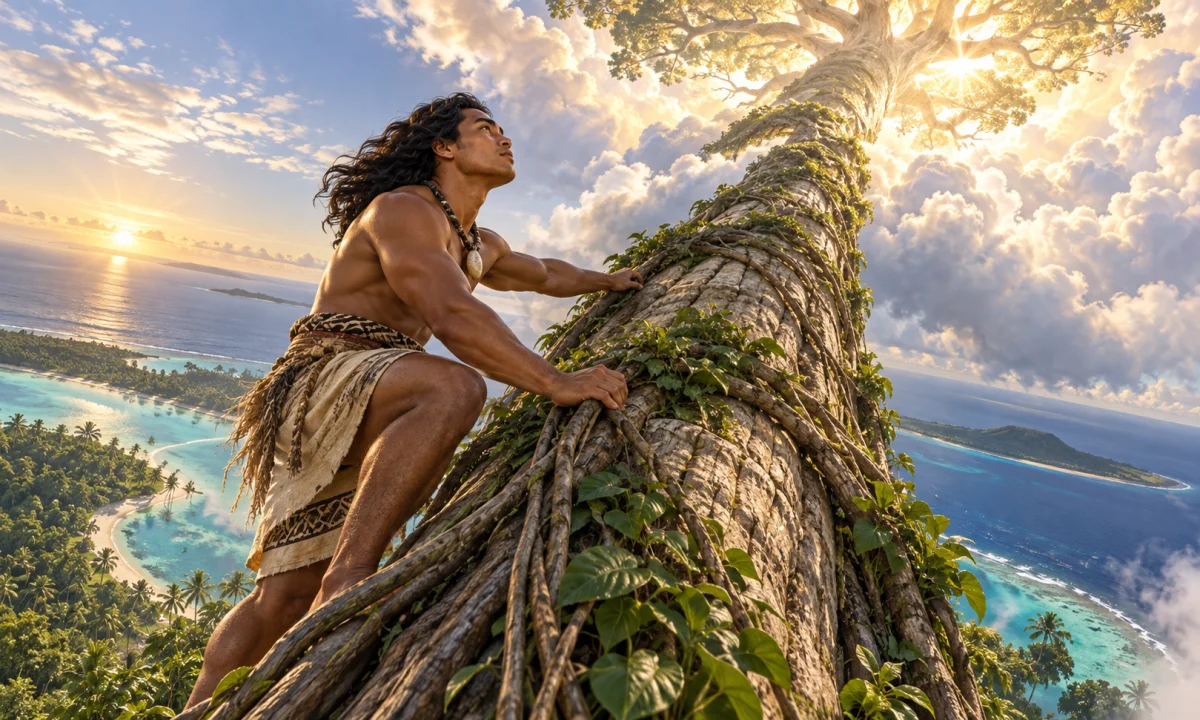
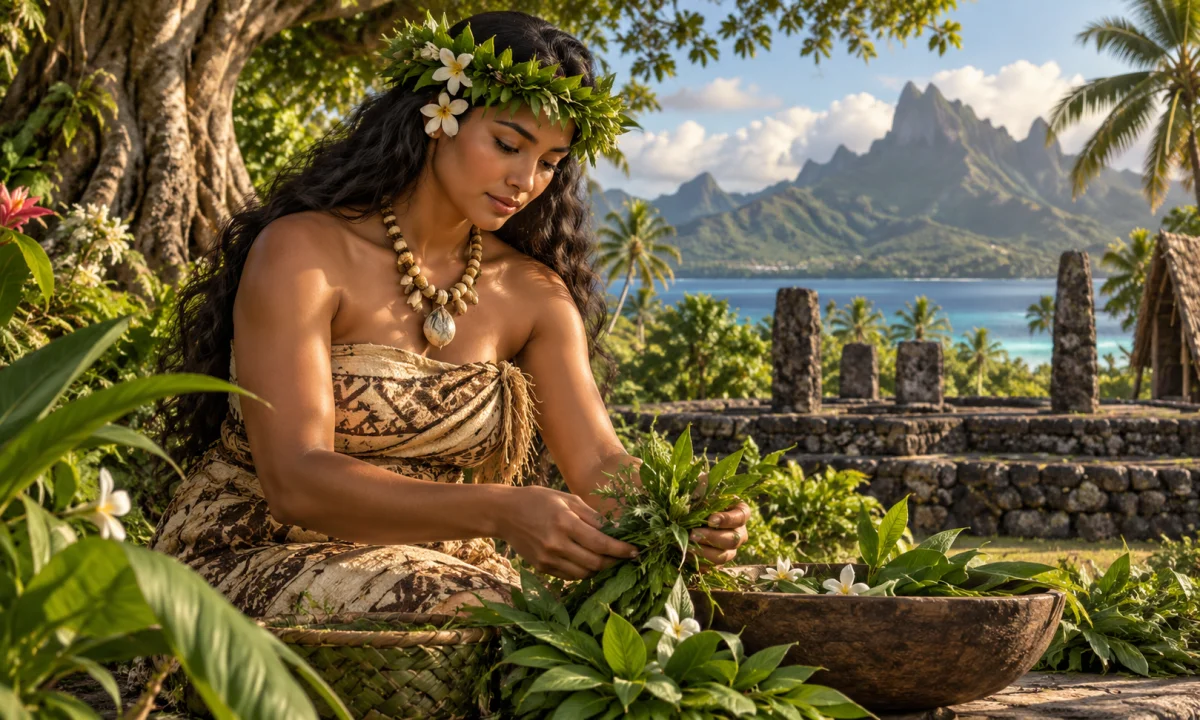
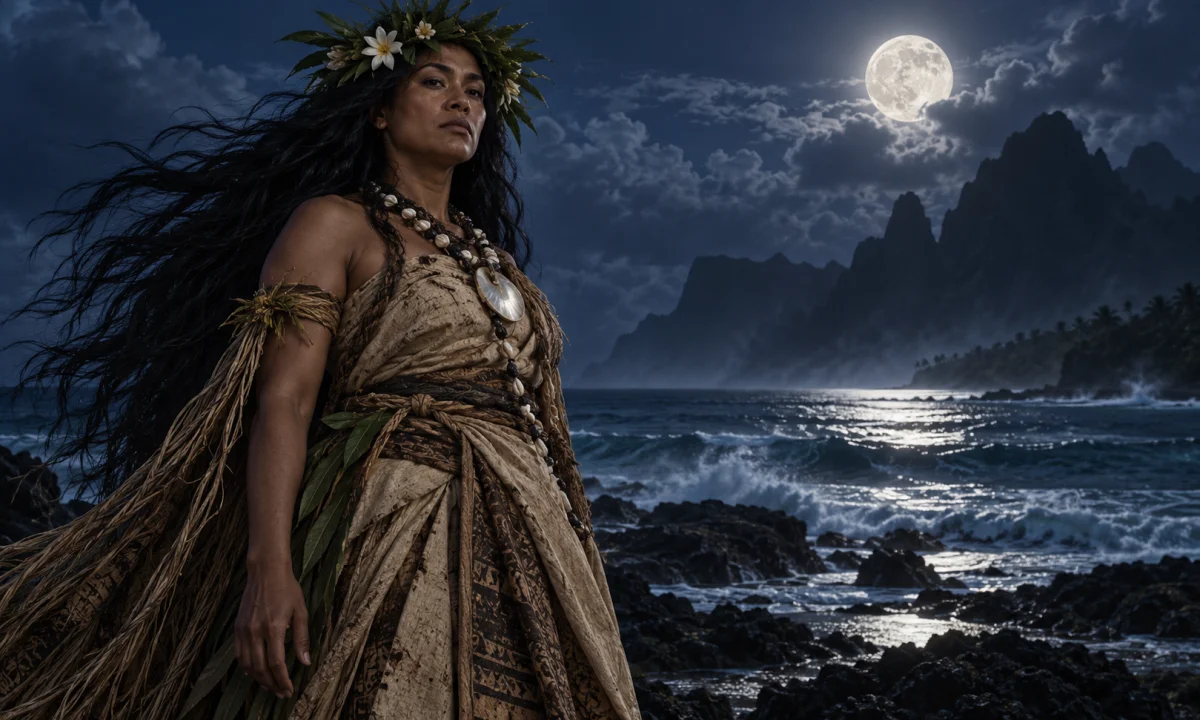
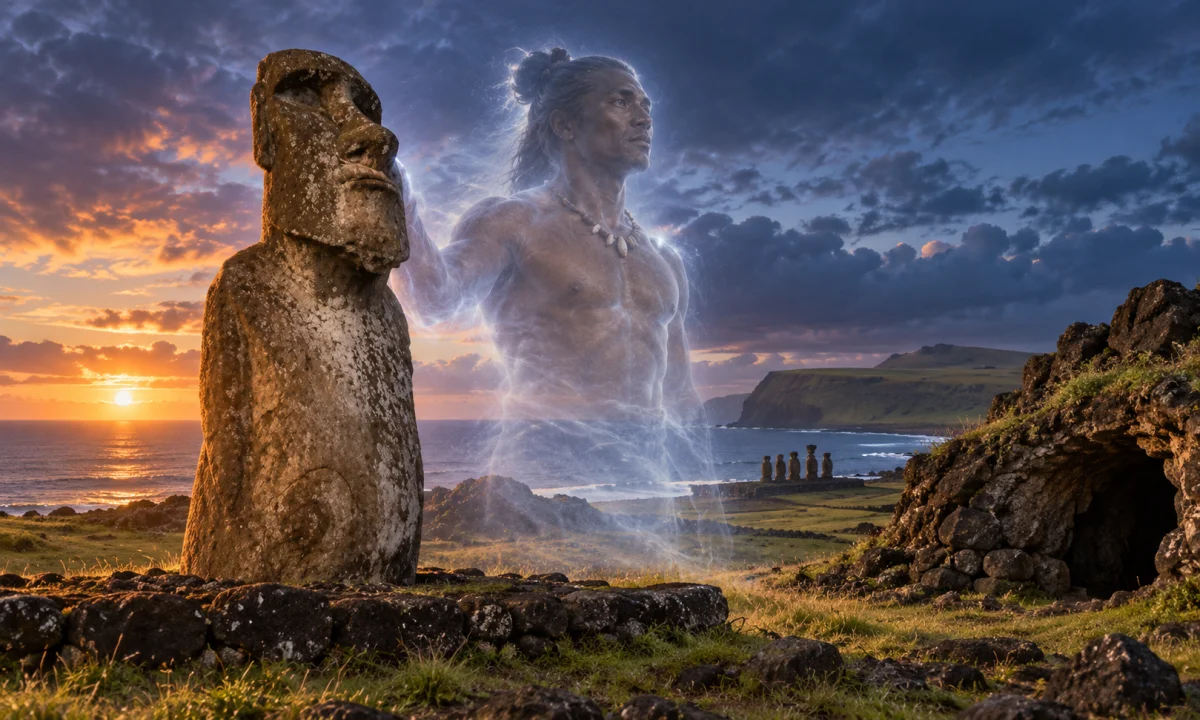
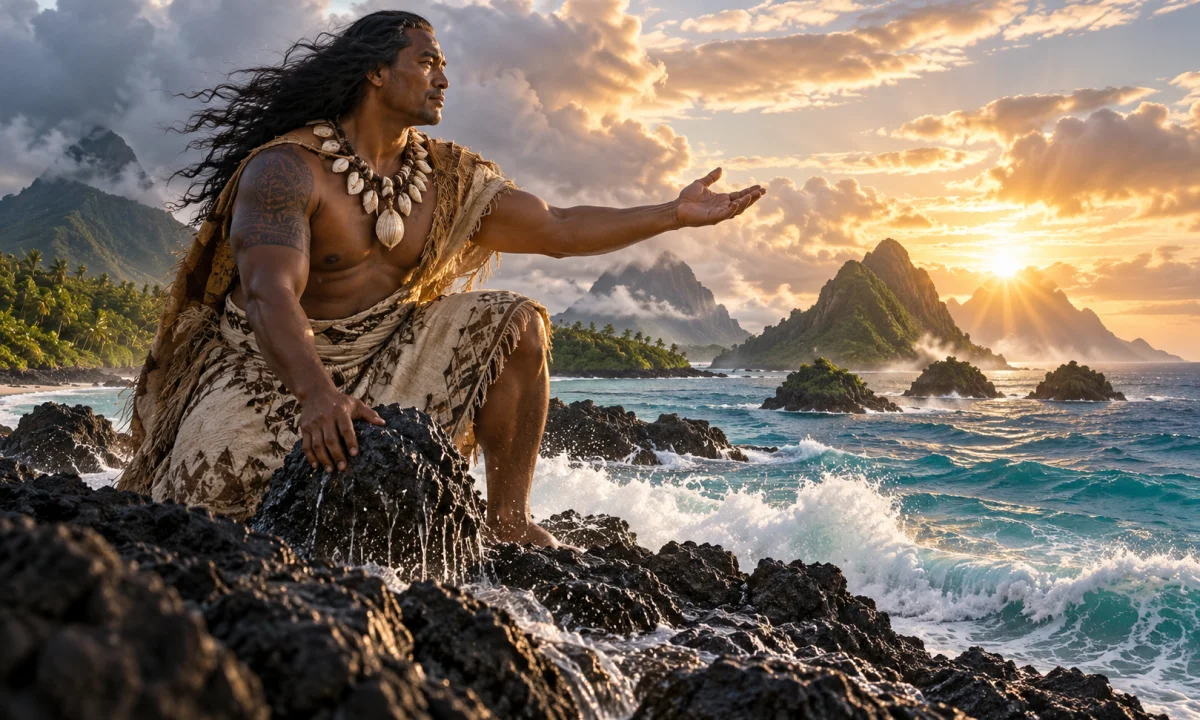
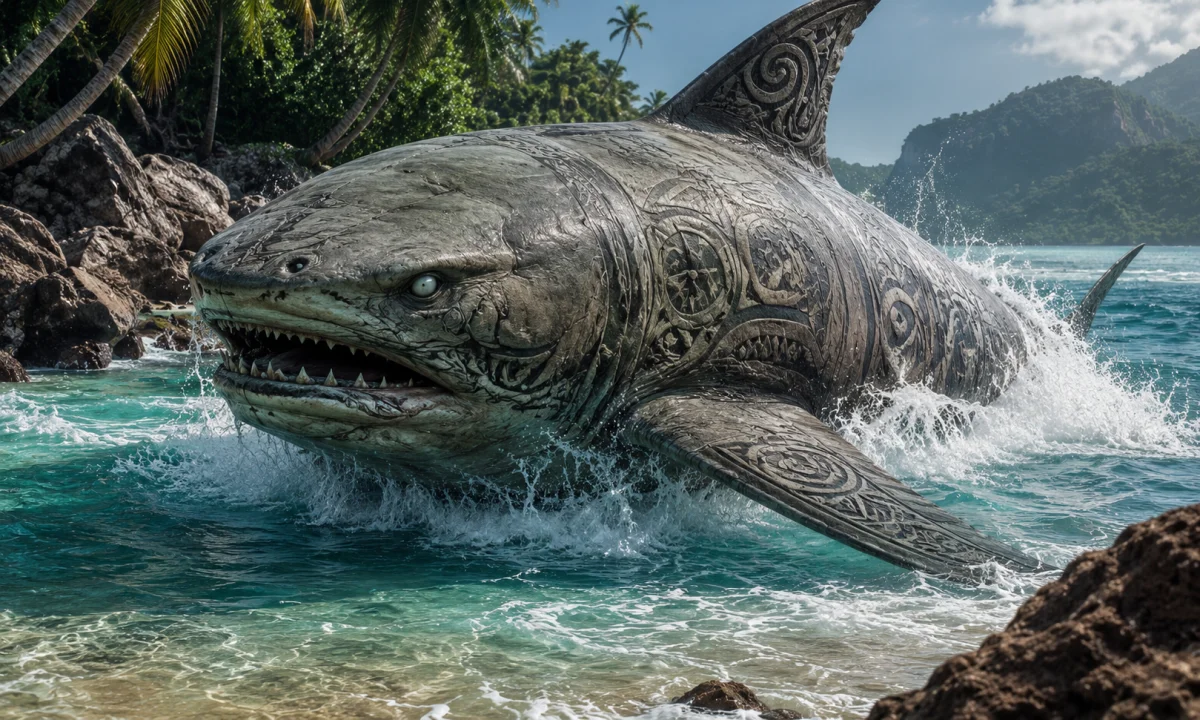
There is also no reliable basis for assigning Ngaru a standard appearance. Illustrations that show a humanoid sea god, a giant wave, a shark-like monster, or a figure carrying a trident are artistic interpretations rather than established traditional representations. Polynesian religious beings do not need to have one fixed physical form. They may appear as people, animals, natural forces, voices, dreams, or signs in the environment.
Relationship to major Polynesian sea gods
Ngaru is sometimes placed beside Tangaroa, Tagaloa, or Kanaloa because those names are widely associated with the ocean or with important divine beings in different Polynesian traditions. These figures are related through broad cultural and linguistic history, but they are not identical in every island group.
Tangaroa is a major god in Māori traditions and is strongly associated with the sea and marine life. Tagaloa is an important deity in several western Polynesian traditions, including Samoa and Tonga, although accounts of his powers and status vary. Kanaloa is a prominent figure in Hawaiian religion and is often linked with the sea, squid, deep water, or complementary relationships with Kāne, depending on the tradition being discussed.
The existence of these major oceanic gods does not prove that Ngaru was one of their names or subordinate spirits. A name connected with waves may describe an attribute of the sea without forming part of a larger divine genealogy. Ngaru should consequently be kept distinct from Tangaroa, Tagaloa, and Kanaloa unless a specific local tradition explicitly connects them.
Religious and cultural significance
The importance of a wave-associated name lies partly in the Polynesian understanding of the sea as a living and morally significant environment. The ocean could sustain communities, carry voyagers between islands, and connect distant groups, but it could also destroy canoes and claim lives. Respect for marine beings and places could therefore involve practical knowledge as well as religious obligations.
Stories about ocean powers often express relationships rather than abstract theology. They may explain why a place is dangerous, why a species is protected, why a family has authority over a fishing ground, or why certain conduct is required before a voyage. A sea being can symbolize the dependence of human communities on forces they cannot fully control.
The name Ngaru is especially suggestive in this regard because a wave is both temporary and powerful. It rises from a wider ocean, takes a recognizable form, and then disappears back into the water. As a metaphor, it can represent changing fortune, ancestral movement, the unpredictability of travel, or the continuing force of the ocean beyond human boundaries. These interpretations are comparative rather than claims about one universally shared Ngaru doctrine.
Distinguishing Ngaru from similar names
Confusion is likely because Polynesian languages contain many related words for waves, currents, and the sea. A similar spelling may refer to a natural phenomenon rather than a person. It may also belong to a different island language with its own pronunciation and religious context.
Ngaru should not automatically be identified with:
- Tangaroa, the major sea-associated god known especially from Māori and other eastern Polynesian traditions;
- Tagaloa, a major divine figure in several western Polynesian cultures;
- Kanaloa, the Hawaiian deity whose associations include the ocean and deep water;
- Tinirau, a celebrated guardian or lord of fish in several Polynesian traditions;
- any local taniwha, shark spirit, water guardian, or named wave that happens to have a similar translation.
These figures may share marine themes, but shared themes do not establish shared identity. Accurate classification requires attention to language, island group, spelling, and the particular story or ritual in which the name appears.
Modern reception
Ngaru has little firmly established presence in mainstream modern popular culture. The name may appear in online lists of Polynesian gods, fantasy settings, games, or privately created character systems, where it is often given powers over waves or storms. Such portrayals draw on the name’s linguistic association with the sea rather than on a widely documented body of traditional stories.
Modern writers and artists can use Ngaru creatively, but a fictional sea god should not be presented as evidence of an ancient pan-Polynesian belief. A responsible portrayal identifies the regional tradition, preserves uncertainty where the sources are limited, and avoids combining Māori, Hawaiian, Samoan, Tongan, Tahitian, and other traditions into a single invented mythology.
For WorldMythos, Ngaru is best understood as an uncertain or regionally variable Polynesian name connected with waves and the ocean. Its precise identity depends on the source and cultural setting. Treating that uncertainty as part of the subject is more accurate than assigning Ngaru an unsupported genealogy, appearance, or universal divine role.