WORLD
WORLD
Nechtan
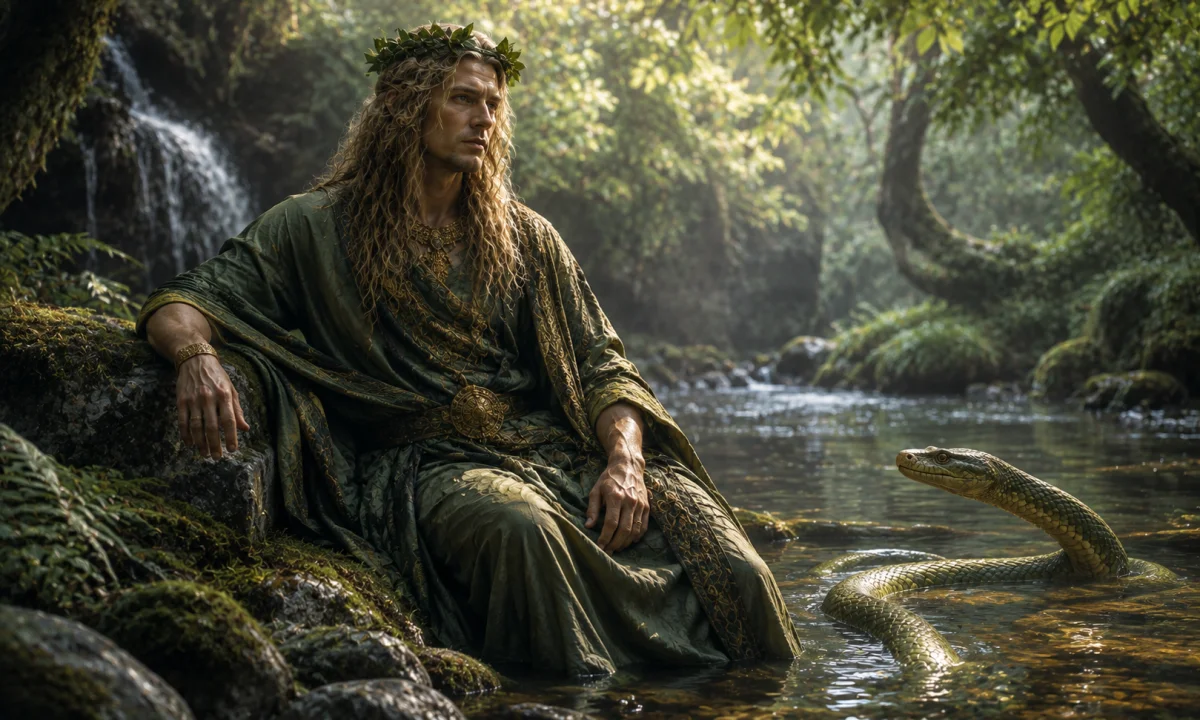
Nechtan is a figure in Irish mythological tradition associated with a sacred well, hidden knowledge and the origin of the River Boyne. He appears most prominently in medieval Irish accounts concerning Boann, the female figure whose name is connected with the Boyne. Nechtan is usually described as Boann’s husband and as the guardian or owner of the well of Segais, although the surviving sources vary in their details and do not present a single, consistent biography.
Origins and surviving tradition
The stories of Nechtan survive in medieval Irish manuscripts written by Christian scribes who recorded and reorganised older Gaelic material. These texts are not direct transcripts of pre-Christian religious ceremonies. They combine inherited oral traditions, genealogical speculation, poetic storytelling and medieval literary conventions. As a result, Nechtan’s precise status is difficult to define.
His most important appearance is in material connected with the Dindshenchas, or “lore of places”. This body of poetry and prose explains the legendary origins of notable geographical features in Ireland. The story of Boann explains how the River Boyne came into being, while also describing a supernatural well connected with wisdom and poetic inspiration.
Nechtan is also named in genealogical and mythological material relating to the Tuatha Dé Danann, the supernatural people who occupy a central position in the Lebor Gabála Érenn, or Book of the Taking of Ireland. These genealogical lists are not always consistent, and an appearance among the Tuatha Dé Danann does not automatically provide a complete narrative about a figure. In Nechtan’s case, his connection with the sacred well is more significant than any extensive family history.
Name and identity
The name appears in several forms, including Nechtan and Nechtain, depending on the language, manuscript and editorial practice. The spelling should not be treated as evidence for entirely different characters. At the same time, not every medieval person called Nechtan belongs to the same mythological tradition.
The origin of the name is uncertain. Scholars have proposed connections with older Indo-European and Celtic words associated with water, purity or supernatural beings, but its etymology is not securely established. Comparisons with names from other Indo-European traditions are sometimes useful for studying ancient religious ideas, yet they do not prove that Nechtan was directly identical with a god from another culture.
Nechtan is best described cautiously as a mythological guardian or lord of a sacred well. Some modern accounts call him a water god, but the medieval Irish texts do not offer a systematic theology in which he is clearly assigned the powers and worship of a major god. His role is defined by a particular myth rather than by a large cycle of independent stories.
The well of Segais
Nechtan’s principal setting is the well of Segais, a supernatural source of knowledge. In different accounts, the well is guarded by Nechtan and by three of his cupbearers or attendants. It is not an ordinary spring. Its waters belong to the Otherworld and are subject to rules that must be respected by those who approach them.
The well is associated with hazel trees and the salmon of wisdom. In Irish mythology, hazelnuts frequently symbolise hidden knowledge, while salmon are connected with the acquisition of wisdom. These motifs also appear in the story of Fionn mac Cumhaill, who gains wisdom after tasting the flesh of a salmon that has fed on hazelnuts from a sacred source. The traditions are related in their symbolism, but the stories should not be merged: Nechtan’s well and Fionn’s initiation belong to different narrative episodes.
The well’s waters are sometimes said to produce streams or rivers that carry supernatural knowledge into the human world. This makes it a boundary place between ordinary Ireland and the Otherworld. A spring may appear physically small, yet mythically it can be the source of rivers, poetry, prophecy and the hidden order of the land.
Boann and the creation of the Boyne
The best-known story involving Nechtan concerns Boann’s forbidden approach to the well. Boann is generally presented as Nechtan’s wife in this version of the tradition. The well is under protection, and access to it is restricted. Boann nevertheless goes to the spring and challenges its authority, either by approaching it improperly or by walking around it in the wrong direction.
The consequences are violent and supernatural. The waters rise against her, injuring or disfiguring her before rushing outward across the land. Boann attempts to escape, but the water follows her. The resulting stream becomes the River Boyne. The myth therefore explains not only the river’s origin but also its connection with a dangerous, sacred source.
Details differ between versions. Some accounts emphasise Boann’s curiosity, while others focus on the violation of a taboo. The exact injuries inflicted on her also vary in retelling. These differences are typical of medieval Irish mythological material, which circulated in multiple poetic and prose forms rather than as one fixed canonical narrative.
Nechtan’s role in the episode is sometimes understated. He may be the owner, guardian or husband connected with the well, while Boann performs the action that sets the transformation in motion. He is not usually the central protagonist of the story. Nevertheless, his presence establishes the well as a protected domain and gives the myth a personal and social dimension: the sacred source is not simply a natural feature but a place under the authority of a supernatural household.
Boann, Elcmar and differing traditions
A complication arises because Boann appears in another important story with Elcmar, a figure associated with Brug na Bóinne, the great Otherworld mound at Newgrange. In the tale commonly known as Tochmarc Étaíne, Boann is linked with Elcmar, while the Dagda arranges a deception involving the passage of time and the conception of Aengus.
This tradition should not be treated as a simple continuation of the story in which Boann is Nechtan’s wife. Medieval Irish literature often preserves overlapping versions of divine and supernatural genealogies. Characters can acquire different spouses, residences and relationships in separate texts. Some interpreters have suggested that Nechtan and Elcmar may preserve aspects of related older figures, but this remains an interpretation rather than an established fact.
It is therefore safest to distinguish the narratives. In the well story, Nechtan is connected with Boann and the well of Segais. In the Aengus conception story, Boann is connected with Elcmar and the Dagda. The two traditions share themes of sacred places, supernatural time and powerful waters, but the texts do not provide a single agreed account of how all these figures fit together.
Attributes and symbolic meaning
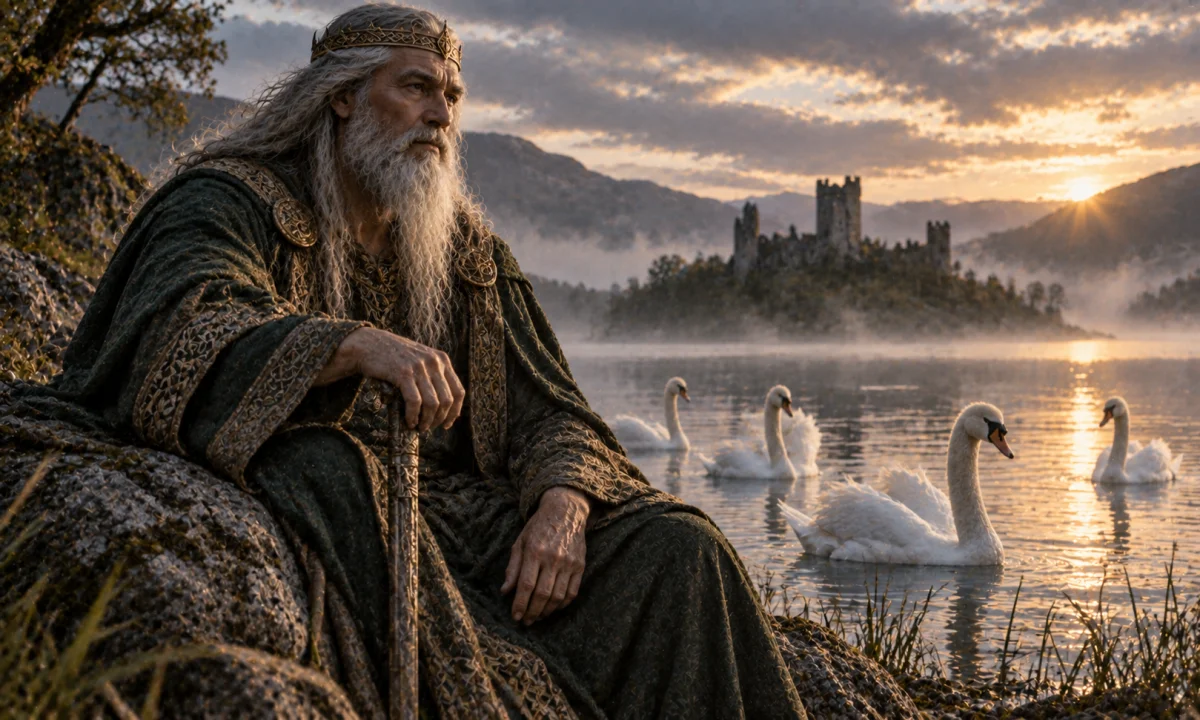
Nechtan has no consistently described physical appearance. The medieval sources generally identify him through his name, genealogy and relationship to the well rather than by giving him a distinctive costume, weapon or bodily form. Later illustrations that portray him as a bearded Celtic water deity reflect artistic interpretation, not a securely preserved ancient description.
His most important attribute is authority over a source of supernatural knowledge. The well is guarded because knowledge in Irish myth is often dangerous when approached without preparation or permission. Wisdom is not merely information; it can change the person who receives it, and contact with its source may involve pain, transformation or loss.
The story also connects Nechtan with the division between human territory and the Otherworld. Rivers occupy both realms. They are visible features of the Irish landscape, yet their mythic sources may lie in hidden wells, enchanted mounds or the dwellings of supernatural beings. A river’s origin story can therefore function as a sacred geography, explaining how Otherworld power enters the physical world.
Boann’s transformation carries several possible meanings. It may represent the peril of violating a taboo, the destructive force of uncontrolled water or the conversion of a female supernatural figure into a permanent feature of the landscape. These interpretations are not mutually exclusive, but none should be presented as a single proven explanation of the myth. The medieval texts tell the story; they do not provide a formal statement of its symbolism.
Relationship to the Tuatha Dé Danann
Nechtan is often grouped with the Tuatha Dé Danann because medieval genealogical tradition places him within their supernatural world. The Tuatha Dé Danann are portrayed as an ancient race of magical beings, skilled in poetry, crafts, healing and warfare. In later Irish literature they become associated with the sídhe, or inhabitants of the mounds, after the arrival of the Milesians.
However, Nechtan is not one of the best-developed members of the group. He does not have the extensive narrative presence of figures such as the Dagda, Lugh, Brigid or Nuada. His connection with the Tuatha Dé Danann should be understood as part of a broader mythological genealogy rather than as proof that he possessed a clearly defined cult or a central place in all Irish religious tradition.
Nor should Nechtan automatically be equated with every water-associated figure in Irish mythology. Irish tradition contains many supernatural beings connected with rivers, lakes, wells and seas. Similar functions do not necessarily indicate identity. The most secure association for Nechtan is the well of Segais and the story of Boann.
Nechtan and other figures with similar names
The name Nechtan appears in more than one Celtic historical and legendary context. A particularly important example is Nechtan mac Der-Ilei, a ruler of the Picts who lived centuries after the period traditionally assigned to the mythological Tuatha Dé Danann. He belongs to recorded Pictish history, not to the story of the well of Segais. Sharing a name does not make him a later historical form of the mythological Nechtan.
The name is also associated with saints and local traditions in parts of Britain and Ireland, particularly through forms such as Nectan. These figures belong to Christian hagiography or regional folklore and should not be merged with the supernatural guardian of the Irish well. Medieval names often travelled between languages and traditions, and resemblance alone is insufficient evidence of a common identity.
Likewise, Nechtan should not be confused with Neptune, Poseidon or other classical water gods. Comparative mythology may examine possible linguistic or thematic relationships between ancient names, but Nechtan’s surviving Irish role is distinctive. He is a figure of a sacred spring and its restricted wisdom, not simply an Irish equivalent of a Mediterranean sea god.
Cultural significance
Nechtan’s importance lies in the way his story joins landscape, taboo and knowledge. The Boyne is not presented as an anonymous river. Its identity is explained through a supernatural event involving a protected well, a woman’s transformation and the release of waters into the Irish landscape. Such stories helped make places meaningful within a culture where rivers, hills and springs could carry ancestral, poetic and sacred associations.
The tale also illustrates a recurring feature of Irish mythology: a natural feature may preserve the memory of an Otherworld event. The visible river is permanent, but its cause belongs to a mythical past. Nechtan’s well stands behind the landscape as a hidden source, while Boann’s movement converts supernatural danger into geographical reality.
In modern writing, Nechtan is sometimes presented as a fully developed Celtic water god with a fixed appearance, powers and mythology. That portrayal can be useful for creative fiction, but it goes beyond the evidence of the medieval Irish texts. The traditional figure is more elusive and more narrowly defined: a guardian or owner associated with a sacred well, a husband in one version of Boann’s story, and a member of the supernatural genealogies connected with the Tuatha Dé Danann.