WORLD
WORLD
Moai
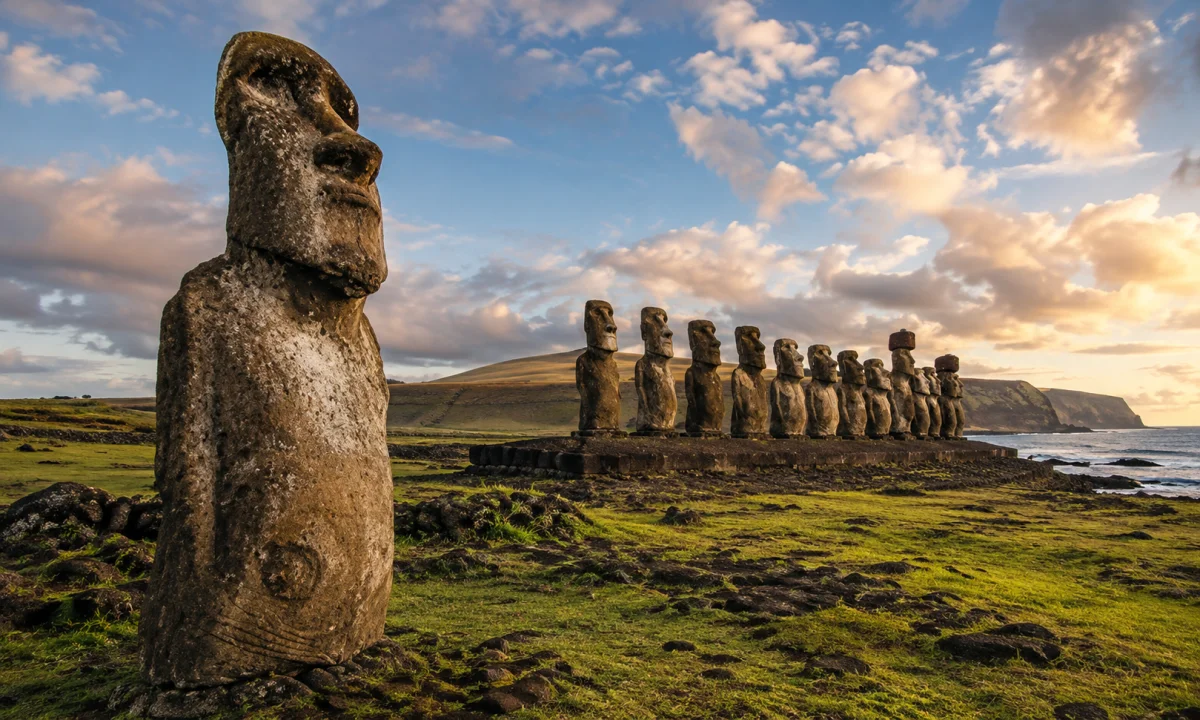
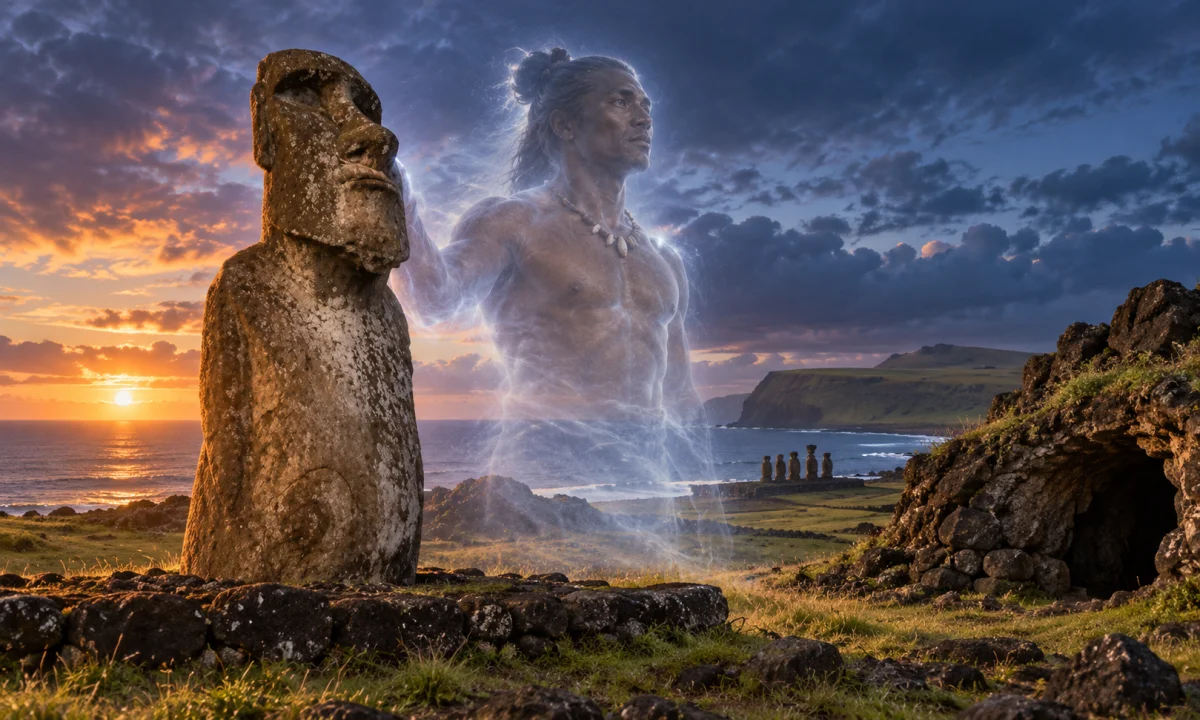
Moai are the monumental stone figures created by the people of Rapa Nui, the Polynesian island more commonly known in English as Easter Island. They are among the most recognisable monuments in the Pacific, but they are not gods or mythical beings in the usual sense. A moai is a carved image of a human ancestor or revered person, made to stand within a wider ceremonial and social setting. Their meaning is connected with ancestry, authority, memory and the continuing presence of the dead rather than with a single god named Moai.
Rapa Nui and the Polynesian setting
Rapa Nui lies in the southeastern Pacific and is culturally part of Eastern Polynesia. Its people developed a distinctive island society after Polynesian settlement, probably during the late first or early second millennium CE, although the exact date remains debated. Rapa Nui culture included its own language, religious practices, political institutions, agricultural methods, stoneworking traditions and oral histories.
The island is famous for its monumental architecture, but the moai should not be treated as isolated curiosities. They formed part of a landscape that included ceremonial platforms, burial places, village sites, cultivated fields, caves, roads and sacred locations. The most important platforms are called ahu. Many moai were erected on ahu, usually facing inland towards the communities whose ancestors they represented.
Knowledge of early Rapa Nui religion survives unevenly. Oral traditions recorded after European contact preserve genealogies, place-names, accounts of ancestral leaders and stories about the island's origins, but they do not provide a single complete explanation of every statue. Archaeological evidence is extensive, yet it cannot always reveal the personal identity of an individual represented by a particular moai. Interpretations therefore combine material evidence with Rapa Nui traditions while recognising the limits of both.
What the name means
Moai is the commonly used Rapa Nui term for the monolithic human images. In English, the word is often treated as both singular and plural, although English-language writing also uses “moai” for one figure and “moai statues” for several. Spellings such as moai and older forms influenced by European transcription can occur in historical records, but moai is the standard modern form.
The figures are sometimes called “Easter Island heads” because many appear to consist mainly of large heads and torsos. That description is misleading. Moai have full bodies, including elongated torsos and, in some cases, clearly carved arms, hands and knees. Much of the body of a statue may be buried by later soil accumulation, which made certain figures appear to be heads when photographed or excavated.
Moai are not a class of spirits comparable to demons, giants or anthropomorphic gods in a mythology. They are images made by human artists. Their sacred importance came from the people, ancestors and powers that they were understood to embody or commemorate.
Origins and production
Most of the famous moai were carved between approximately the thirteenth and sixteenth centuries, though dates and sequences vary according to the evidence and the specific site. The principal quarry was Rano Raraku, a volcanic crater whose soft tuff was suitable for carving. Hundreds of unfinished figures remain there, in different stages of production. These abandoned or incomplete statues provide important evidence for how the monuments were made.
Carvers generally shaped each figure while it was still attached to the quarry wall. The front and sides were worked first, while a supporting ridge of stone remained along the back. Once the carving was sufficiently complete, the figure could be detached and moved down the slope. Some statues were then transported to ceremonial platforms around the island, while others remained at or near the quarry.
The largest completed moai are enormous, but size varied considerably. Many stand several metres high, and some were made from other stone types, including basalt and red scoria. The famous unfinished figure known as El Gigante would have been far larger than any moai successfully erected, but its intended completion and final placement are unknown. It is unsafe to assume that every unfinished statue was abandoned for the same reason.
The statues were made with stone tools, especially hard basalt implements known as toki. Carving a moai required skilled labour, planning and access to food, water and transport systems. The work was probably organised by communities and elites, although the precise social structure behind the projects is not fully known. Archaeology shows both extraordinary cooperation and changing patterns of monument building; it does not by itself prove a single central ruler controlled the entire island.
Transport and the tradition of “walking” statues
Moving a moai from the quarry to an ahu was a major engineering challenge. Researchers have proposed several methods, including dragging statues on wooden supports, transporting them on sledges or rollers, and using ropes with teams of people. The answer may not have been identical in every period or for every statue.
Rapa Nui oral traditions say that the statues “walked” to their destinations through the power of mana, a term used across Polynesia for forms of spiritual potency or authority. This should not be dismissed as a simple mistake. It may preserve a cultural understanding of the statues' movement and a metaphor for their animation by ancestral power. Modern experimental archaeology has also shown that a standing moai can be rocked from side to side with ropes, allowing it to move forward in a walking-like motion. Such experiments demonstrate that a method was possible; they do not prove that every ancient transport operation used it.
Roads and statue fragments provide evidence that transport was carefully organised. Some moai appear to have fallen during movement and were left beside routes. Others reached their platforms and were installed successfully. The mixture of oral tradition, archaeology and experimental reconstruction makes transport one of the best-known but still debated aspects of moai history.
Appearance and distinctive features
Moai have highly stylised human forms. Their oversized heads, prominent brows, long noses, compressed mouths and powerful chins give them a solemn and commanding appearance. The proportions are not intended as ordinary naturalistic portraits. The design emphasises presence, rank and enduring strength.
Many statues originally had separate topknots or headdresses called pukao, carved from red scoria quarried mainly at Puna Pau. Pukao are often described as hair, but their exact symbolism is uncertain. They may represent a hairstyle, a headdress or a sign of status. Not every moai had one, and some statues that appear today without pukao may have lost them over time.
Some moai had inlaid eyes. Archaeologists have found eye sockets and surviving pieces of white coral and red or dark stone associated with them. Reconstructed eyes are generally placed only when the evidence supports the interpretation. The eyes may have been added after a statue was erected, potentially marking the moment when it became ritually active. The exact ritual significance of this process is not securely documented.
Moai were sometimes carved with arms lying along the sides and hands resting over the abdomen. A small number show more unusual details, such as kneeling forms or elaborate carvings on the back. These differences may reflect changes in period, workshop, rank or intended purpose. They should not automatically be interpreted as depictions of different supernatural species.
Ahu, ancestors and sacred power
The religious and political importance of a moai was closely tied to its ahu. An ahu could function as a ceremonial platform, a burial monument and a place associated with a community's ancestors. The moai often stood on the landward side of the platform, looking over the settlement and its agricultural territory. Their orientation has led many scholars to understand them as protective or watchful ancestral presences, although the exact beliefs varied between communities and periods.
Rapa Nui traditions connect chiefs and important ancestors with mana, the spiritual effectiveness that could support prosperity, authority and social order. A moai did not necessarily represent a generalised ancestor with no individual identity. Some may have commemorated particular leaders or founding figures, while others may have expressed the standing of a lineage. The names and biographies of most individual statues are not known, so broad claims about every moai being a portrait of a specific king are not justified.
The statues may also have participated in reciprocal relationships between the living and the dead. Communities maintained ceremonial places, remembered genealogies and relied on ancestral legitimacy. In this context, a moai was more than a carved object: it was part of an active system of relationships linking descendants, ancestors, land and political authority.
Important sites and examples
Rano Raraku
Rano Raraku is the principal moai quarry and contains the largest concentration of statues. Figures stand on the crater slopes, lie partially buried or remain attached to the rock. The site reveals successive stages of carving and shows that production continued over a long period. It also demonstrates that not every moai was intended to be transported to a distant ahu. Some may have had local functions, while others were left unfinished or were abandoned during changes in social practice.
Ahu Tongariki
Ahu Tongariki is one of the most impressive ceremonial platforms, with fifteen restored moai standing in a row. The platform was severely damaged by a tsunami in the twentieth century and later restored. Its present appearance is therefore a reconstruction based on archaeological evidence, not an untouched survival from the prehistoric period. Ahu Tongariki illustrates both the scale of the original monument and the importance of modern conservation work.
Paro and other large statues
The moai known as Paro, formerly erected at Ahu Te Pito Kura, is often described as the tallest statue known to have been successfully erected. It is now fallen, and its exact original measurements and history must be treated with care. The great number of statues around the island means that superlatives can depend on whether one is comparing completed, transported, erected or unfinished figures.
Moai at the quarry
The figures remaining at Rano Raraku are sometimes presented as if they were deliberately buried to preserve them. In reality, many became partly covered by natural soil and sediment over centuries. Excavations have revealed their bodies, but the exposure of those bodies is a modern archaeological intervention. The visible condition of a statue today should not be confused with its original appearance.
Why were many moai toppled?
By the time Europeans began visiting Rapa Nui, many moai had fallen from their ahu. Earlier explanations sometimes blamed a single ecological disaster or claimed that the island's society suddenly collapsed because it had used up all its trees. Current scholarship presents a more complicated history.
Statues were probably toppled during internal conflicts and changes in political or religious authority, although the timing and causes differed across the island. The decline of the ahu-moai tradition may have involved social tensions, environmental pressures, altered economic conditions and transformations in religious life. Later events had an even more devastating effect: introduced diseases, slave raids, colonial exploitation and population loss caused profound disruption in the nineteenth century.
Rapa Nui religious practice did not simply disappear because the moai were no longer standing. The island's people continued to maintain cultural identity, oral knowledge and relationships to ancestral places under severe colonial pressure. The later rise of the tangata manu, or Birdman, tradition is often understood as part of a changed religious and political landscape, but it should not be presented as a straightforward replacement religion caused by one single event.
Moai and the Birdman tradition
The Birdman ceremony was associated especially with Orongo, a ceremonial village near the crater of Rano Kau. Participants competed to obtain the first manutara, or sooty tern egg, from a nearby islet and return it to a sponsor or claimant. The winner's sponsor gained important ritual and political status for a period. This tradition belongs to a later phase of Rapa Nui history and is distinct from the earlier construction of the great statue platforms.
There is no sound basis for treating the moai as birdmen or for claiming that every statue was part of the Orongo ceremony. The two traditions belong to the same island culture but to different institutions and historical contexts.
European contact and later history
Jacob Roggeveen's expedition recorded European contact with Rapa Nui in 1722, although the island's history long predates that encounter. European visitors later described the statues, platforms and island society through their own assumptions, often misunderstanding local practices. Written accounts are therefore valuable but must be read alongside Rapa Nui oral traditions and archaeology.
During the nineteenth century, the island suffered catastrophic population decline through epidemic disease, forced labour and the removal of inhabitants. Missionisation and colonial control also affected language, landholding and religious life. Many objects and human remains were taken away from Rapa Nui, and the history of museums and collecting remains part of the broader cultural context surrounding the moai.
In the modern era, Rapa Nui communities have played an essential role in cultural revitalisation, heritage management and decisions about the treatment of ancestral monuments. Restoration projects have returned some statues to upright positions, but restoration does not erase the damage caused by earlier upheavals. A standing moai today may be the result of archaeological reconstruction rather than continuous preservation.
Distinguishing moai from related terms
- Moai are the monumental human images of Rapa Nui. They are not gods, monsters or a separate race of beings.
- Ahu are ceremonial platforms and associated structures on which many moai were erected. The two terms should not be used interchangeably.
- Pukao are red-scoria topknots or headdresses placed on some moai. They are parts of monuments, not independent spirits.
- Tangata manu means “birdman” and refers to a later Rapa Nui ritual institution, not to the stone statues.
- Moai kavakava are much smaller wooden figures from Rapa Nui, usually depicting emaciated human forms. They belong to a different object tradition and should not be confused with the monumental stone moai.
Modern popular culture and cultural responsibility
Moai frequently appear in films, video games, cartoons, advertising and tourist imagery. Their elongated faces and monumental scale make them immediately recognisable, so popular culture often uses them as shorthand for mystery, isolation or ancient civilisation. Such uses may be harmless when they acknowledge Rapa Nui heritage, but they can also reduce a living culture to a collection of enigmatic statues.
Popular stories sometimes claim that the figures were made by aliens, that they are only giant heads, or that they conceal a single lost secret. These ideas are not supported by credible archaeological evidence. The statues can be understood through the achievements of Polynesian navigators, artists, engineers, farmers and religious communities without invoking extraterrestrial intervention.
The most responsible understanding of the moai keeps their material and spiritual dimensions together. They are archaeological monuments, works of art, ancestral images and sacred elements of Rapa Nui cultural heritage. Their enduring significance lies not only in the technical achievement of carving and moving stone, but also in the ways Rapa Nui people used monuments to express descent, authority, place and the continuing presence of their ancestors.