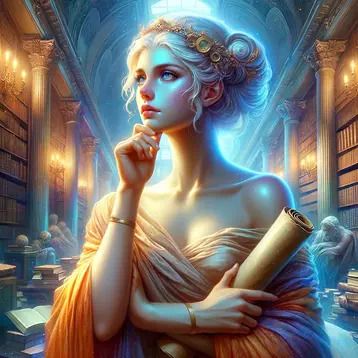
Mnemosyne is a significant figure in Greek mythology, often associated with memory and remembrance. She is the goddess of memory and the mother of the nine Muses, who inspire the arts and sciences. In ancient Greece, Mnemosyne was revered not only for her role as a divine being but also for her connection to the creative processes that shape human culture. Her importance is reflected in various myths, artistic representations, and the reverence shown by ancient Greeks towards memory as a fundamental aspect of human experience.
The Origins of Mnemosyne
Mnemosyne’s origins can be traced back to the earliest Greek cosmogonies, where she is described as one of the primordial deities. According to Hesiod’s “Theogony,” she is the daughter of Uranus (Sky) and Gaia (Earth). This lineage places her among the original beings who emerged at the beginning of time. Her name, which translates to “memory” in Greek, signifies her essential role in the pantheon of gods and goddesses. In this context, Mnemosyne represents not only personal memory but also the collective memory of humanity, embodying the idea that memories shape identities and cultures.
 Momus
MomusIn many myths, Mnemosyne is depicted as a powerful goddess who possesses the ability to influence the thoughts and actions of mortals and immortals alike. Her connection to memory is crucial, as it allows individuals to learn from the past, make informed decisions in the present, and create visions for the future. This theme of memory’s importance is a recurring motif in Greek mythology, where gods and humans alike rely on their memories to navigate the complexities of life.
The Nine Muses
One of the most notable aspects of Mnemosyne’s legacy is her role as the mother of the Nine Muses. According to myth, she conceived these goddesses with Zeus, the king of the gods, after spending nine nights together. Each Muse represents a different aspect of the arts and sciences, and their names are well-known in the realms of literature, music, and the visual arts. The Muses are:
- Calliope – Muse of epic poetry
- Clio – Muse of history
- Erato – Muse of love poetry
- Europia – Muse of lyric poetry
- Melpomene – Muse of tragedy
- Polyhymnia – Muse of sacred poetry
- Terpsichore – Muse of dance
- Thalia – Muse of comedy
- Urania – Muse of astronomy
Each Muse serves as a source of inspiration for artists and thinkers, guiding them in their creative endeavors. Mnemosyne’s role as their mother emphasizes the connection between memory and creativity. The Muses remind us that our ability to create is deeply intertwined with our memories and experiences. This relationship illustrates the belief that art and knowledge are not merely products of the present but are also shaped by the past.
 Mopsus
Mnemosyne in Art and Literature
Throughout history, Mnemosyne has been a subject of fascination in various forms of art and literature. Ancient Greek artists often depicted her in sculptures and paintings, highlighting her beauty and divine nature. These artistic representations serve to remind viewers of the importance of memory in their lives. For example, she is often shown alongside the Muses, symbolizing the collaborative nature of memory and creativity.
In literature, Mnemosyne appears in various works, particularly in those that explore themes of memory, identity, and the passage of time. Poets and playwrights have drawn on her myth to convey the idea that memories are vital to the human experience. In many stories, characters are faced with the consequences of forgetting or losing their memories, emphasizing the idea that memory shapes who we are and how we interact with the world around us.
 Moros
MorosMnemosyne and Memory in Greek Culture
The concept of memory was deeply embedded in Greek culture, influencing various aspects of life, including education, storytelling, and religious practices. The Greeks believed that memory was essential for learning and wisdom. Mnemosyne, as the personification of memory, was revered in this context, as she represented the idea that knowledge is built upon the foundation of remembered experiences.
In addition to its role in education, memory was also significant in storytelling and oral traditions. The Greeks relied on oral recitation to pass down myths, histories, and cultural values. Mnemosyne’s influence can be seen in the way stories were told, as the act of remembering and recounting tales was viewed as a sacred duty. This practice highlights the connection between memory and identity, as the stories of the past shape the values and beliefs of future generations.
Mnemosyne and the Afterlife
In Greek mythology, memory also played a crucial role in concepts of the afterlife. The ancient Greeks believed that the soul continued to exist after death and that memories of one’s life were carried into the underworld. Mnemosyne’s influence in this regard was profound, as she represented the idea that memories could transcend the physical realm. This belief in the immortality of memory underscored the importance of living a life worth remembering.
The connection between Mnemosyne and the afterlife can also be seen in the rituals and practices surrounding death. The Greeks engaged in various customs to honor the dead and ensure that their memories lived on. These practices included storytelling, offerings, and commemorative ceremonies, all aimed at preserving the memory of the deceased. In this way, Mnemosyne served as a bridge between the living and the dead, emphasizing the importance of memory in maintaining connections across generations.
Modern Interpretations of Mnemosyne
In contemporary society, Mnemosyne continues to inspire various interpretations and discussions around memory and its significance. Modern artists, writers, and philosophers often explore themes related to memory, identity, and the passage of time. The myth of Mnemosyne serves as a reminder of the enduring nature of memory and its role in shaping human experience.
Moreover, the concept of memory has gained renewed attention in fields such as psychology and neuroscience. Researchers study how memories are formed, stored, and recalled, seeking to understand the mechanisms behind this complex process. Mnemosyne, as the goddess of memory, serves as a symbolic figure in these discussions, representing the quest for knowledge about how memory functions in our lives.
Mnemosyne in Popular Culture
The influence of Mnemosyne extends beyond academic discussions and into popular culture. She has appeared in various forms of media, including films, literature, and video games. These portrayals often highlight her role as a guardian of memory and creativity, reflecting the timeless relevance of her myth.
In literature, authors may draw on Mnemosyne to explore themes of memory and identity. Characters may grapple with their pasts, seeking to understand how their memories shape their present circumstances. This exploration resonates with readers, as it mirrors the universal human experience of reflecting on one’s life and the memories that define it.
The Legacy of Mnemosyne
The legacy of Mnemosyne is vast and multifaceted, impacting not only the realm of mythology but also art, culture, and psychology. Her representation of memory emphasizes the importance of preserving the past and learning from it. In a world where the pace of life often leads to the forgetting of significant events and experiences, Mnemosyne serves as a reminder to cherish and honor our memories.
As societies evolve and change, the significance of memory remains constant. Mnemosyne’s role as the goddess of memory encourages individuals to reflect on their pasts, embrace their experiences, and use their memories to inform their futures. Her legacy continues to inspire new generations to value the power of memory in shaping identity and culture.