WORLD
WORLD
Miru
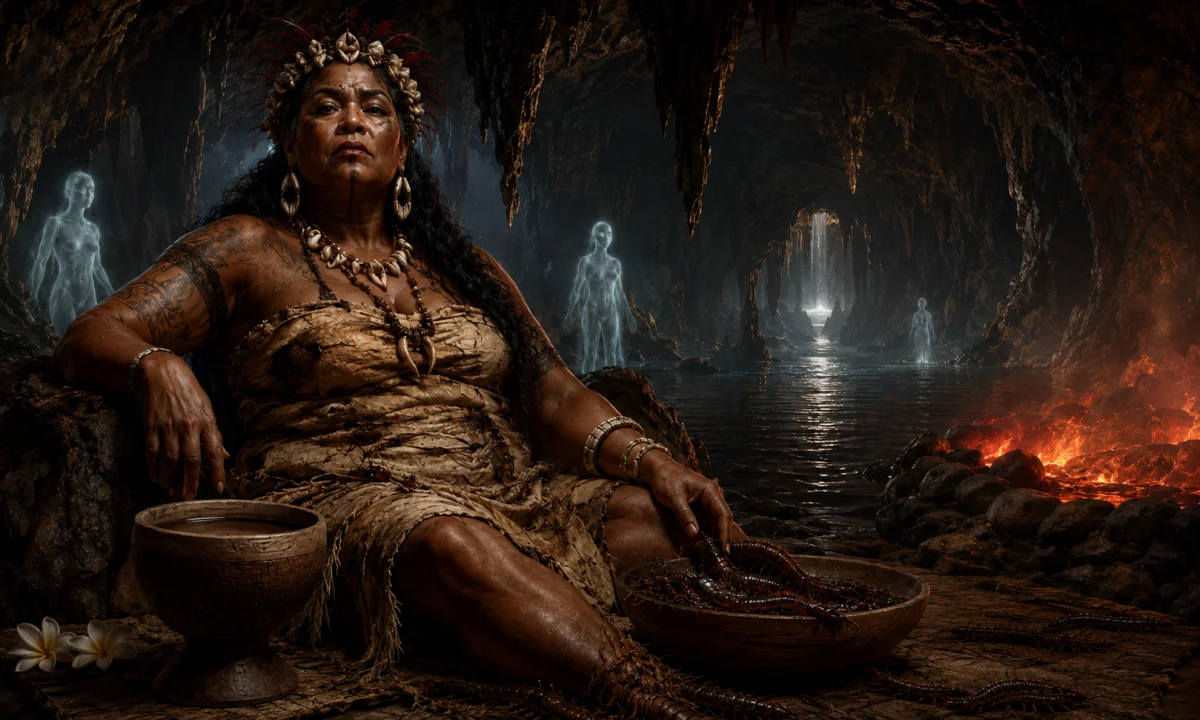
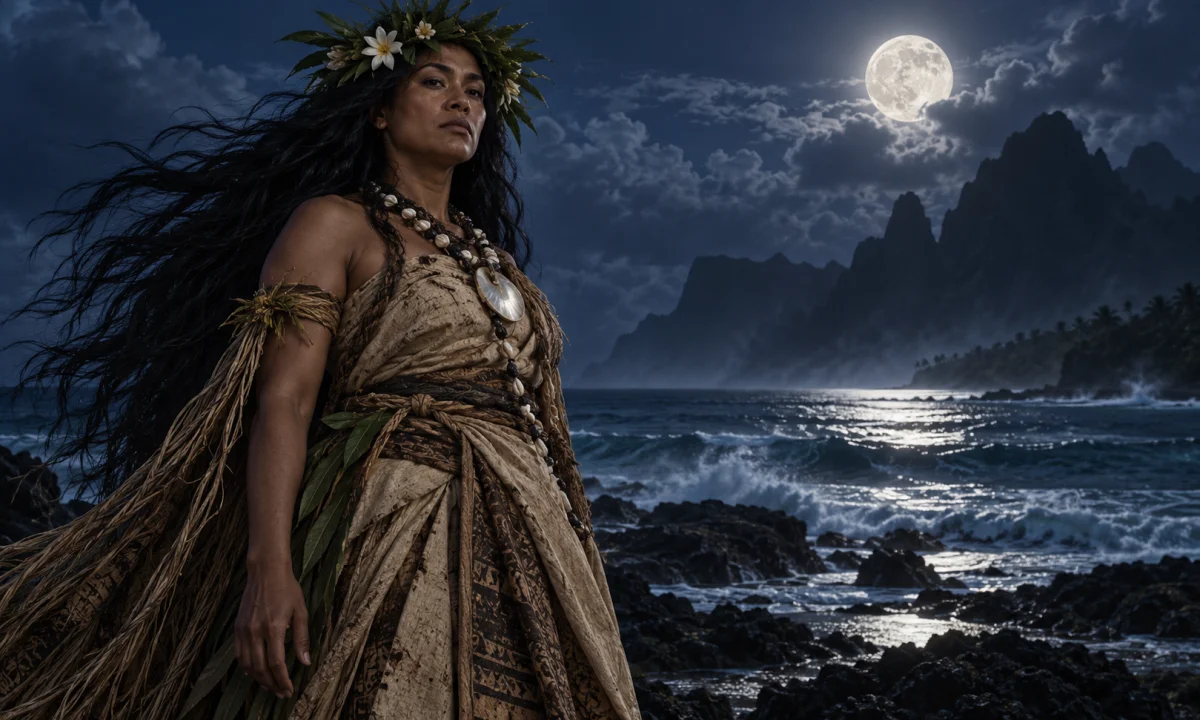
Miru is a name associated chiefly with the underworld in traditions from eastern Polynesia, especially the island of Mangaia in the Cook Islands. In these traditions, Miru is a powerful female being who rules or inhabits Avaiki, the realm beneath the world of the living. She is linked with death, the treatment of the dead, danger, feasting and the boundary between human society and the supernatural world.
The name should not automatically be treated as referring to one universally defined Polynesian goddess. Polynesian traditions were preserved through distinct island cultures, languages and oral histories, and figures with similar names can differ considerably from one place to another. The best-known accounts of Miru concern Mangaia, while references to a Miru-like figure in other Polynesian settings may represent a related name, a local variation or a separate being. Details also vary between traditional accounts and later written summaries.
Miru in the Mangaian underworld
Mangaia is one of the southern Cook Islands. Its traditional religious world included Avaiki, a term used in several Polynesian cultures for an ancestral homeland, origin place or underworld. In Mangaian traditions, Avaiki is not simply an abstract land of the dead. It is a layered and inhabited supernatural realm, connected to the island and to the deep places beneath it.
Miru is commonly described as a ruler or mistress of this underworld. The dead who passed from the human world could come under her power. Her presence expressed the danger of entering the world below: the dead were not necessarily imagined as peacefully detached from all earthly concerns, but as vulnerable to supernatural forces and to the authority of beings who controlled the afterlife.
European and later Polynesian accounts often describe Miru as a cannibalistic or devouring goddess. In these stories, she consumes the dead or prepares them as food. Such descriptions should be understood within the narrative and religious imagery of the underworld rather than as evidence that Mangaian religion reduced death to a single literal belief. The stories dramatise the loss of human identity and the power of the underworld to transform, absorb or destroy those who enter it.
Name, identity and classification
Miru is often classified as a goddess because she is female, supernatural and associated with dominion over the dead. That label is useful in general English, but it does not reproduce every distinction made by Polynesian religious traditions. Categories such as “goddess,” “spirit,” “ancestral being” and “demon” were not interchangeable in the cultures from which these stories came.
The spelling Miru is the most familiar form in English-language discussions, although related names and variant spellings may appear in records of Polynesian traditions. A similar-looking name does not by itself prove that two figures are the same. Polynesian languages are related, but vocabulary and pronunciation differ from island to island, and early observers did not always record indigenous names consistently.
Miru is therefore best identified specifically as a figure of Mangaian tradition unless a source gives a clearer local setting. Describing her simply as “the Polynesian goddess of death” is misleading. Polynesia contains many different ideas about death and the afterlife, and the underworld rulers of one island tradition should not be presented as a single pan-Polynesian deity.
Appearance and supernatural character
Traditional accounts do not provide one universally agreed physical portrait of Miru. She is generally important because of her position and actions rather than because of a fixed appearance. Her character is defined by her control of the underworld, her association with the dead and her threatening treatment of those who come into her domain.
The image of a female ruler who feeds upon the dead gives Miru a particularly ominous character. She is not merely a guardian who protects a sacred boundary. She can also be a predator, host and sovereign. These roles overlap in underworld stories: the being who receives the dead may also determine whether they remain recognisable, whether they can return and whether they are incorporated into the realm below.
Her supernatural power is consequently expressed through control over transition. Death marks movement from one condition of existence to another, and Miru stands at the point where that movement becomes irreversible. The danger associated with her is not only physical destruction. It is the loss of independence and the subjection of the dead to the laws of Avaiki.
Stories of the dead and the underworld
The central narrative pattern connected with Miru is the arrival of the dead in Avaiki. Once a person has entered the underworld, Miru and the beings around her determine what happens next. In versions that emphasise her cannibalism, the dead are treated as food and may be cooked or consumed. This imagery makes the underworld a place of terrifying hospitality: the deceased are received, but the reception is not benevolent.
Accounts of Miru sometimes include a household or group of female attendants and relatives in the underworld. However, the identities and number of such figures are not consistent across all retellings. Lists of daughters or companion beings found in one account should not be assumed to belong to every Mangaian version. Oral narratives can preserve several forms of the same story, while written collections may record only one performance or combine details from different informants.
Stories about journeys into the underworld are also connected with a broader Polynesian narrative pattern. Heroes, living visitors and culture-bringers may descend beneath the earth in search of knowledge, a lost person or a way to overcome death. A journey to an underworld can involve tests, contests, deception or an attempt to escape the authority of its ruler. Not every such Polynesian story concerns Miru, however, and names should not be added to a narrative merely because the general theme is similar.
The surviving material about Miru is less a single continuous mythology than a group of references preserved through oral tradition and later documentation. Missionaries, colonial officials, collectors and ethnographers recorded Polynesian traditions under very different conditions. Their accounts can be valuable, but they may omit ritual context, translate indigenous concepts into Christian terminology or arrange separate narratives as though they formed a complete system.
Avaiki and the meaning of the underworld
In many Polynesian traditions, words related to Avaiki, Hawaiki or similar forms refer to an ancestral homeland or sacred place of origin. The meaning is not identical everywhere. In some traditions the name is associated with a distant homeland from which ancestors came; in others it is strongly associated with the world below or the realm of the dead. Mangaian tradition is especially important for accounts in which Avaiki has a detailed underworld geography.
This connection between ancestry, origin and death is significant. The underworld is not necessarily imagined as a wholly foreign location. It can be connected to the beginnings of the people, to the depths of the island and to the continuing presence of ancestors. A realm beneath the living world may therefore be both remote and foundational: it is the destination of the dead and a place from which life, knowledge or ancestral authority may ultimately derive.
Within this setting, Miru represents the power that governs access to the ancestral realm. Her threatening nature does not mean that every aspect of the underworld was understood as evil. Polynesian religious traditions commonly included beings who were dangerous, sacred, useful, protective or destructive depending on their relationship with humans. Miru’s role reflects the seriousness of approaching a domain that ordinary people could not control.
Death, food and transformation
The stories of Miru’s feasting can be read on several levels, although interpretation must remain cautious. At the narrative level, devouring is a vivid form of death: the person is not simply absent but physically incorporated into the underworld. It also reverses the normal relationship between humans and food. The dead, who belonged to a community of living people, become resources for a supernatural household.
At a symbolic level, this imagery can express the transformation of the human body after death and the inability of the living to preserve ordinary social identity forever. The underworld consumes distinctions that matter above ground. Rank, courage and worldly possessions do not necessarily protect a person from Miru’s authority.
It would be misleading, however, to describe Miru only as a “cannibal goddess” and leave out her religious setting. That label comes largely from the most dramatic episodes recorded in English. It can make the tradition appear sensational while obscuring the broader ideas of ancestry, sacred geography, death and the limits placed on human beings. Miru’s importance lies in her position within the order of the underworld, not merely in the frightening image of eating the dead.
Miru and similar Polynesian figures
Miru is sometimes confused with other female beings associated with death, darkness or the underworld. The most important distinction is between Miru and Hine-nui-te-pō, a major figure in Māori traditions. Hine-nui-te-pō is commonly described as the great woman of the night and a ruler or personification of the realm of the dead. She is especially connected with the death of Māui in Māori mythology. She is not simply another name for the Mangaian Miru.
Māori traditions also contain other underworld beings and narratives, and their conception of the afterlife cannot be collapsed into Mangaian accounts of Avaiki. Likewise, figures such as Hades from ancient Greek religion, Hel from Norse tradition and various underworld goddesses from other cultures may perform broadly comparable narrative functions, but they are not cultural equivalents of Miru.
Similar names across Oceania require the same caution. A being called Miru, Muru or by another related form in a different island tradition may have a different role, genealogy or story cycle. Language comparison can suggest historical relationships between words, but it cannot establish that every figure bearing a similar name is one deity.
Sources and historical transmission
Knowledge of Miru comes primarily through records of Polynesian oral traditions rather than through an ancient written scripture. The stories were transmitted by knowledgeable members of island communities and later written down by outsiders or by scholars working with local informants. Such records preserve important material, but they are not neutral transcripts of an unchanged mythology.
Early written descriptions were shaped by the purposes and assumptions of their authors. Christian missionaries sometimes judged indigenous gods through the categories of Christian theology, while nineteenth- and twentieth-century collectors often sought neatly organised pantheons that did not reflect the flexible nature of oral storytelling. Translation could also turn a complex supernatural being into a familiar English category such as “goddess,” “devil” or “witch.”
For this reason, statements about Miru should distinguish between what the traditions consistently associate with her and what appears only in a particular retelling. Her connection with Mangaian Avaiki and the dangerous treatment of the dead is central to her received identity. Exact genealogies, the names of attendants, the structure of her underworld household and the details of individual episodes may vary.
Cultural significance
Miru’s tradition gives form to a basic religious question: what happens when a human being crosses the boundary between the visible world and the realm of ancestors? Her answer is severe. Death brings the person into a domain governed by powers that cannot be negotiated with through ordinary social rules. The dead enter a new order, and Miru embodies its authority.
Her stories also show how Polynesian mythology connects geography with religion. The underworld is not an interchangeable fantasy setting but part of a cultural landscape shaped by islands, caves, depths, ancestral places and routes between worlds. Miru’s presence makes Avaiki a place of both origin and danger, where the dead may be received but are no longer autonomous.
Miru has not become a universally recognised figure in modern international popular culture in the way that some Greek, Norse or Egyptian deities have. When she appears in modern fiction, games, online mythology lists or generalized accounts of Polynesian religion, she is often detached from Mangaian tradition and presented as a generic Polynesian death goddess. Such portrayals may use her name, but they should not be mistaken for the surviving traditional context in which Miru belongs.