In the vast and intricate tapestry of Hindu mythology, one of the most revered figures is Manu. Manu is often considered the progenitor of humanity and is a pivotal character in various ancient texts, including the Manusmriti and the Mahabharata. His stories and teachings provide insight into the moral and ethical frameworks that underpin Hindu philosophy. The tales of Manu are not just about creation; they also explore themes of duty, righteousness, and the relationship between humanity and the divine. In this article, we will delve into the life, teachings, and significance of Manu in Hindu mythology.
The Origin of Manu
According to Hindu texts, Manu is regarded as the first man and the ancestor of all humans. His origins are steeped in cosmic significance. Manu is often described as the son of Vivasvan, the sun god, and he is also associated with the Vedic concept of creation. In the beginning, when the universe was in chaos, Manu was created by the divine to bring order and establish the principles of dharma (righteousness). This role as a lawgiver and moral guide underscores his importance in Hindu mythology.
 Mânasâ-putras
The story of Manu’s creation varies across different texts. In some accounts, he is born from the mind of Brahma, the creator god, while in others, he emerges from the cosmic waters. This duality highlights the idea that Manu is not just a historical figure but also a symbol of the divine order that governs the universe. His very existence represents the transition from chaos to order, making him a central figure in the mythology surrounding creation.
The Manusmriti: Manu’s Teachings
One of the most significant texts attributed to Manu is the Manusmriti, also known as the Laws of Manu. This ancient legal text outlines the moral and ethical guidelines that govern human behavior. It covers various aspects of life, including family duties, social responsibilities, and the importance of adhering to dharma. The Manusmriti is divided into twelve chapters, each addressing different facets of life and society.
The teachings in the Manusmriti emphasize the importance of righteousness and the need for individuals to fulfill their duties according to their roles in society. It categorizes people into four main groups, known as varnas, which are Brahmins (priests), Kshatriyas (warriors), Vaishyas (merchants), and Shudras (laborers). Each group has specific responsibilities and duties, and fulfilling these roles is considered essential for maintaining societal harmony.
 Manasa
- Brahmins: Responsible for spiritual guidance and teaching.
- Kshatriyas: Tasked with protection and governance.
- Vaishyas: Engaged in commerce and agriculture.
- Shudras: Support the other three varnas through labor.
Furthermore, the Manusmriti discusses the importance of rituals and sacrifices, illustrating how they play a role in maintaining cosmic order. It emphasizes that by performing their duties and adhering to the prescribed laws, individuals contribute to the overall stability of the universe. Thus, the Manusmriti serves as a comprehensive guide for ethical living and societal structure.
Manu and the Great Flood
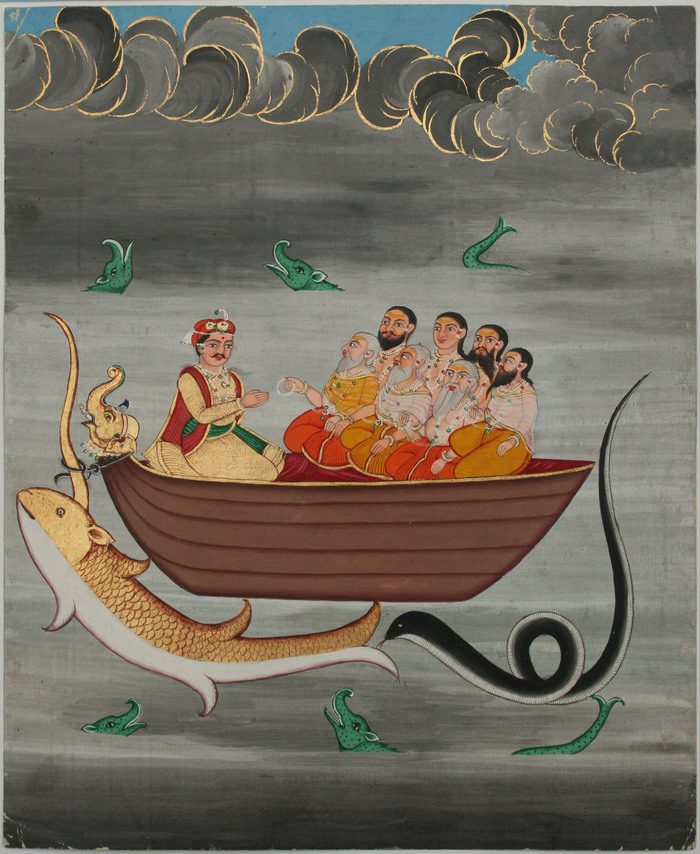
One of the most famous stories involving Manu is that of the great flood, which parallels the biblical tale of Noah. According to Hindu mythology, the world became corrupted with sin, prompting the gods to cleanse it through a massive flood. Manu was forewarned by Lord Vishnu, who took the form of a fish, instructing him to build a large boat to save himself, his family, and the seeds of all living creatures.
As the floodwaters rose, Manu’s boat was guided by Vishnu to safety. This story symbolizes the themes of rebirth and renewal, as Manu emerges from the flood to repopulate the earth. It emphasizes the idea that even in times of great destruction, there is hope for regeneration and the continuation of life. Manu’s survival and subsequent actions illustrate his role as a caretaker of humanity and the natural world.
 Mâmsa
MâmsaManu in Different Texts
Manu appears in various ancient texts, each presenting different aspects of his character and teachings. Apart from the Manusmriti, he is mentioned in the Mahabharata, where his wisdom and guidance are sought by the characters in times of crisis. The Mahabharata portrays Manu as a figure of great insight, whose teachings resonate with the moral dilemmas faced by the epic’s heroes.
Another significant text is the Puranas, which elaborate on the genealogies of gods and heroes. The Bhagavata Purana discusses Manu in the context of divine creation and the cyclical nature of time, where he is associated with the Manvantara, a cosmic cycle during which a particular Manu rules. This portrayal emphasizes the cyclical nature of creation and destruction, reinforcing the idea that Manu is a timeless figure whose relevance transcends individual stories.
The Symbolism of Manu
Manu’s character is rich in symbolism, representing not only the first man but also the archetype of the ideal human. He embodies the principles of dharma and moral responsibility. In many ways, Manu serves as a reminder of the ethical obligations that individuals have towards their families, communities, and the environment. His teachings advocate for a balanced life, where personal desires align with the greater good.
Moreover, Manu’s journey from chaos to order symbolizes the human quest for meaning and purpose. In a world filled with challenges, his story encourages individuals to seek righteousness and uphold their duties. The moral dilemmas faced by Manu resonate with the struggles of humanity, making his teachings timeless and relevant across generations.
Modern Interpretations of Manu
In contemporary discussions, Manu’s teachings are often revisited in the context of modern ethics and social justice. While some aspects of the Manusmriti have been criticized for promoting caste discrimination, many scholars emphasize the underlying principles of justice and equity present in Manu’s teachings. They argue that the essence of Manu’s wisdom can be applied to address current social issues.
Modern interpretations often focus on the importance of environmental stewardship and the ethical treatment of all beings. Manu’s role as the caretaker of creation can inspire contemporary movements that advocate for sustainability and respect for nature. By drawing parallels between Manu’s teachings and current challenges, individuals can find guidance in ancient wisdom while striving for a more just and equitable society.
Conclusion: The Enduring Legacy of Manu
Manu’s legacy continues to be felt in various aspects of life, from philosophy to law and environmental ethics. His teachings remind us of the importance of fulfilling our duties and adhering to the principles of righteousness. As humanity navigates the complexities of modern life, the wisdom of Manu offers valuable insights into living a life of purpose and integrity. The stories of Manu, steeped in rich symbolism and moral teachings, serve as a guiding light for those seeking to understand their place in the world and their responsibilities towards others.