WORLD
WORLD
Mamu
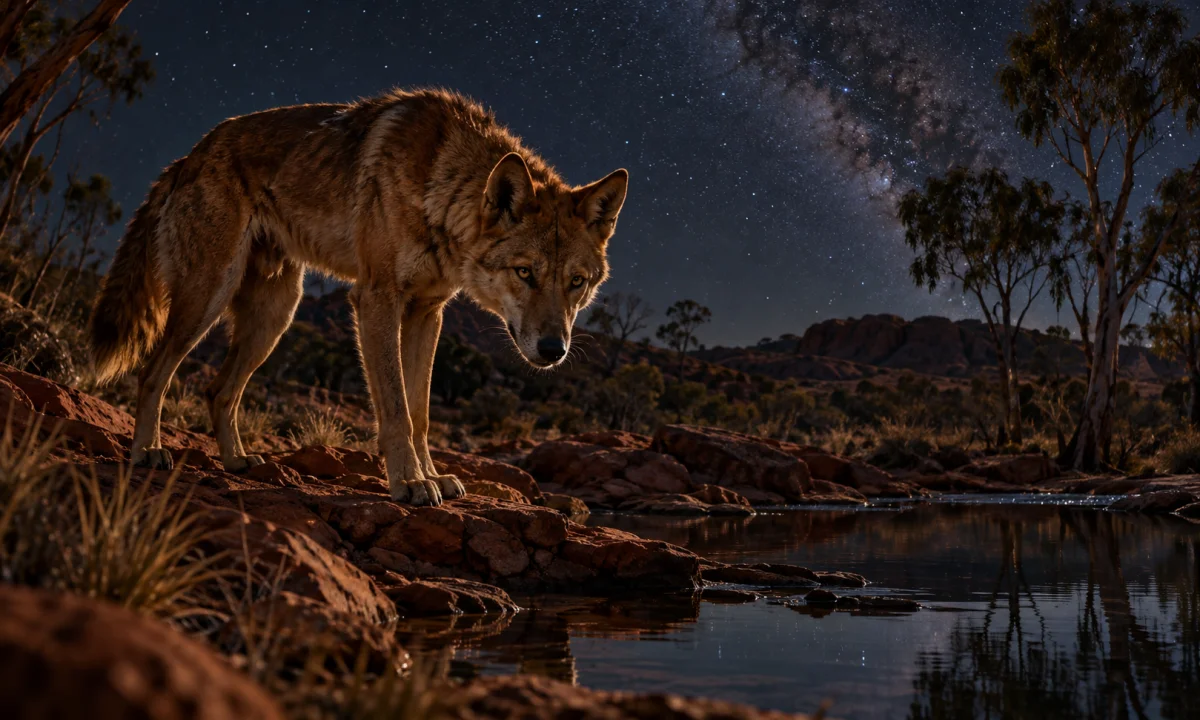
Mamu is a name recorded in several Australian Aboriginal cultural and linguistic contexts for a dangerous spirit, ghost, or supernatural being. It is most often associated with the inland and desert regions of central Australia, where related terms have been translated into English as “devil,” “bogey,” “evil spirit,” or “bush spirit.” These translations are useful only as approximate descriptions. Mamu is not one universally defined figure belonging to all Aboriginal peoples, and the meaning of the name varies between languages, communities, and sources.
Australian Aboriginal religious traditions are extraordinarily diverse. They include hundreds of language groups, each with its own histories, ceremonial practices, ancestral beings, sacred places, and systems of knowledge. Consequently, the word Mamu should not be treated as the name of a single pan-Aboriginal monster. In some records it describes a class of threatening spirits; in others it may refer to a particular supernatural presence, a ghost, or a being associated with sickness and danger.
Origins and cultural setting
Knowledge about Mamu comes primarily from oral traditions, Indigenous languages, explanations given to anthropologists and other researchers, and accounts recorded by missionaries, government officers, linguists, and later cultural historians. Such records must be read carefully. Early European observers frequently used familiar Christian or European categories—such as “devil,” “demon,” “ghost,” or “goblin”—to describe Aboriginal beings that did not fit those categories exactly.
The traditions in which Mamu is mentioned belong to living cultural systems rather than to a single ancient mythology preserved in one canonical book. Many Aboriginal communities understand ancestral and spiritual knowledge through relationships among people, country, law, ceremony, language, and particular places. Stories may be restricted according to age, gender, initiation, kinship, or custodial rights. Public descriptions therefore represent only part of the knowledge associated with a being or name.
In desert and central Australian contexts, a mamu is commonly presented as a dangerous presence in the bush or at night. The being may be associated with places away from camp, isolated waterholes, caves, rocks, trees, or other locations regarded as spiritually hazardous. The precise associations are not identical everywhere. A description that is accurate for one language group should not automatically be applied to all communities using a similar word.
Name and identity
The spelling Mamu reflects English-language writing conventions rather than a single standardized Aboriginal spelling. The word may appear as mamu, with capitalization depending on whether an author treats it as a proper name or a common noun. Aboriginal languages use different sound systems and orthographies, and a term written in one way by an early recorder may be represented differently by a later linguist or by the community itself.
Translation also creates difficulties. “Spirit” may be the least misleading English equivalent, but it can still suggest a particular European idea of an immaterial being. “Ghost” may imply the dead person of Christian or popular belief, while “devil” can suggest a moral opponent of God. Neither meaning necessarily corresponds to the Indigenous concept. In some contexts, Mamu is better understood as a dangerous supernatural agent connected with country and social law than as a devil in the Christian sense.
The term may also be used in more than one grammatical way. It can refer to an individual being, a type of being, or a general class of harmful spirits, depending on the language and context. English-language summaries sometimes turn a category into a single named character and then give it a fixed appearance and biography. That process can create a false impression of unity.
Appearance and behaviour
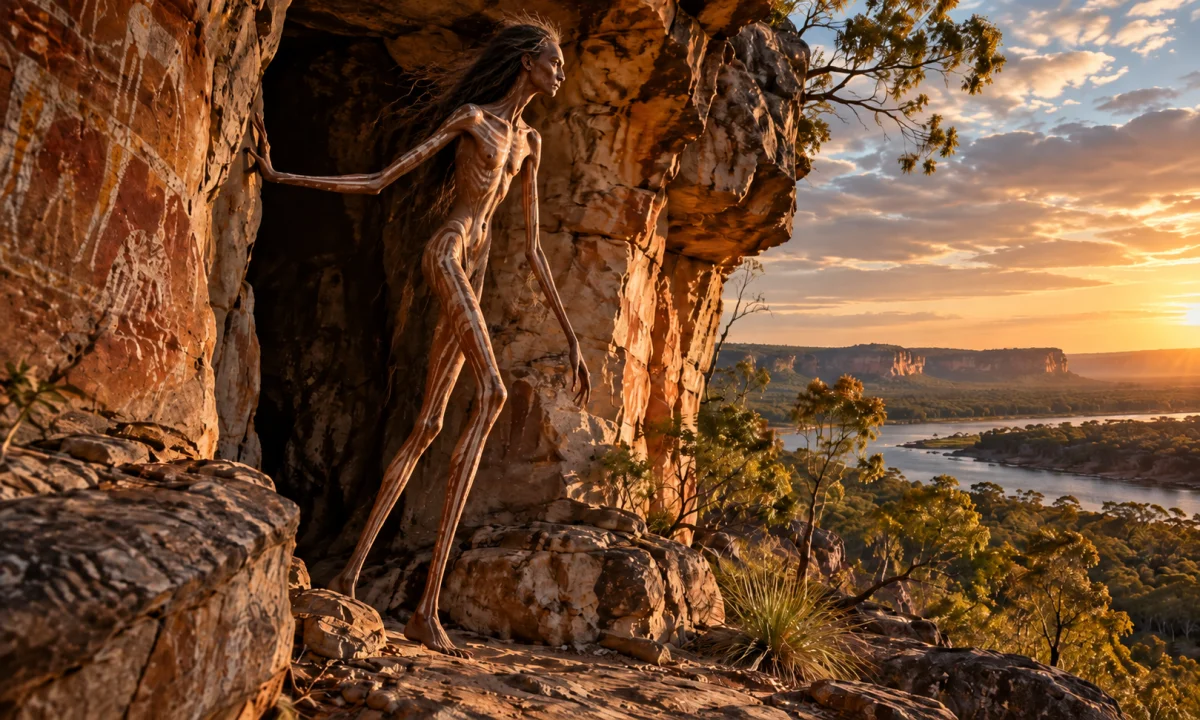
There is no securely documented, universal physical form for Mamu. Popular summaries often describe a hairy, shadowy, cannibalistic, or humanoid creature, but these details should not be assumed to belong to every tradition in which the name occurs. Some accounts emphasize its presence and actions rather than its appearance. It may be sensed at night, heard in the surrounding country, or recognized through the danger associated with a particular place.
Where Mamu is described as a harmful spirit, its threatening qualities may include frightening people, attacking those who travel alone, causing illness, or punishing people who violate cultural rules. Stories about such beings can warn children and adults not to wander into dangerous country, approach sacred places without permission, travel after dark, or disregard the instructions of elders. The fear involved is therefore not merely entertainment. It can communicate practical knowledge and reinforce obligations to people and country.
Some English accounts characterize Mamu as a child-stealing or cannibalistic monster. Such motifs do occur in Aboriginal narratives about dangerous beings, but they cannot safely be presented as defining features of every Mamu tradition. They may result from a particular local story, a translation choice, or the merging of Mamu with another being. A responsible description distinguishes what is broadly reported from what is specific to one account.
The supernatural danger associated with Mamu may also overlap with ideas about death, illness, sorcery, and the continuing presence of the dead. These subjects are culturally sensitive and cannot be reduced to a simple division between “good spirits” and “evil spirits.” A being described by an outsider as malevolent might, within its original setting, be understood through a more complex relationship involving law, taboo, territory, and consequences.
Stories and regional variation
No single, authoritative Mamu narrative is known across Aboriginal Australia. Instead, references to the name occur in different regional settings and must be interpreted locally. One community may describe mamu as nocturnal spirits connected with the bush, while another may use a related word for a frightening or harmful supernatural presence. The stories may differ in the being’s powers, habitat, relationship to the dead, and response to human behaviour.
For this reason, it is misleading to describe Mamu as having one fixed set of family relationships or a single origin story. There is no reliable basis for assigning the figure a universal parent, spouse, enemy, or creator. Nor should Mamu be placed automatically within the genealogies of well-known Aboriginal ancestral beings such as the Rainbow Serpent. Those traditions belong to particular peoples and countries, and apparent similarities do not establish a shared mythology.
In oral traditions, a name may also be connected to a story that is not intended for unrestricted publication. The absence of a public version does not mean that the tradition is incomplete or less important. It may reflect cultural protocols governing who can hear, repeat, perform, or interpret particular knowledge. Written references are consequently selective records rather than complete accounts of Mamu belief.
Role in social and religious life
Mamu traditions can be understood in relation to the Aboriginal concept of country as a living, storied environment. Country is not simply wilderness or scenery. It may contain ancestral power, law, memory, obligations, and danger. A threatening spirit associated with a site can therefore help express why a place must be approached carefully and why knowledge of the land should be learned from the appropriate people.
Stories about Mamu may serve several purposes at once:
- Protection: warnings about Mamu can discourage people from travelling alone or entering hazardous places.
- Education: narratives can teach children where they may go, when they should return, and whom they should obey.
- Law and conduct: supernatural consequences can communicate the seriousness of breaking social or ceremonial rules.
- Explanation: the figure may provide a cultural framework for frightening experiences, illness, unexplained sounds, or encounters in remote country.
- Connection to place: references to Mamu can preserve knowledge about particular landscapes and the obligations attached to them.
These functions do not mean that Mamu is merely a fictional teaching device. In a religious worldview, a supernatural being can be real and socially consequential even when its role includes warning or instruction. The distinction between “myth” and “belief,” often assumed in English-language writing, may not reflect how the tradition is understood by its custodians.
Distinguishing Mamu from similar figures
Mamu is sometimes confused with other Aboriginal beings because English-language writers have grouped many different spirits under broad labels such as “monster,” “devil,” or “bush creature.” Such classification can conceal important differences.
It should not automatically be identified with the yowie, a modern Australian monster figure that developed through a mixture of Aboriginal references, colonial folklore, and later popular culture. Yowie stories generally focus on a large, hairy, human-like creature, whereas Mamu is more often recorded as a spirit or dangerous supernatural presence. A particular modern writer may connect the two, but that does not establish an equivalence in traditional Aboriginal belief.
Mamu should also be distinguished from the many local water beings, ancestral serpents, sky beings, and spirits of the dead found in specific Aboriginal traditions. Similar functions—such as frightening trespassers or punishing misconduct—do not prove that the beings are the same. Names, meanings, and relationships belong to particular languages and countries.
The word Mamu can also refer to the Mamu people, an Aboriginal people of the tropical north Queensland region, and to their language or cultural identity. This ethnonym is not evidence that the Mamu people are named after the supernatural being described in central Australian or other folklore records. The human community and the spirit term must be kept separate unless Indigenous sources explicitly connect them.
Interpretation and cultural significance
Scholars have sometimes interpreted Mamu as a figure of the boundary between the safe social world of the camp and the uncertain spaces beyond it. Night, solitude, unfamiliar country, and restricted places can all become associated with danger. From this perspective, Mamu stories express both fear and knowledge: they remind people that survival depends on attention to country, respect for authority, and awareness of where one is permitted to go.
That interpretation should remain provisional. A scholarly reading can identify recurring themes, but it cannot replace the meanings maintained by the relevant Aboriginal communities. Nor should the figure be reduced to a psychological symbol or a colonial category. The significance of Mamu is likely to vary according to language, locality, speaker, and context.
Colonial descriptions often portrayed Aboriginal spiritual beings as “superstition” or as evidence of primitiveness. Later popular accounts sometimes made the opposite mistake by presenting them as universal monsters for entertainment. Both approaches remove Mamu from its cultural setting. A more accurate treatment recognizes the term as part of diverse Indigenous knowledge systems and respects the authority of communities over sacred or restricted material.
Modern representation
Mamu has appeared occasionally in general books, websites, horror writing, and discussions of Australian monsters. In these settings, the name may be given a standardized appearance, a dramatic origin story, or supernatural powers drawn from several unrelated traditions. Such adaptations belong to modern folklore and popular culture, not necessarily to the Aboriginal traditions in which the term was recorded.
Contemporary use of Indigenous names also raises questions of cultural authority. A frightening figure removed from its language, country, and community may become a marketable monster while the cultural context that gives it meaning is ignored. Representations that identify the relevant people, avoid invented details, and distinguish documented tradition from creative invention are more respectful and more accurate.
Mamu is therefore best understood not as a single Australian equivalent of a demon or bogeyman, but as a variable term for dangerous supernatural beings in particular Aboriginal cultural contexts. Its meaning depends on language, country, oral tradition, and the knowledge of the people who maintain that tradition. Any account that supplies one universal appearance, origin, or mythology without identifying its regional basis should be treated with caution.