WORLD
WORLD
Makemake
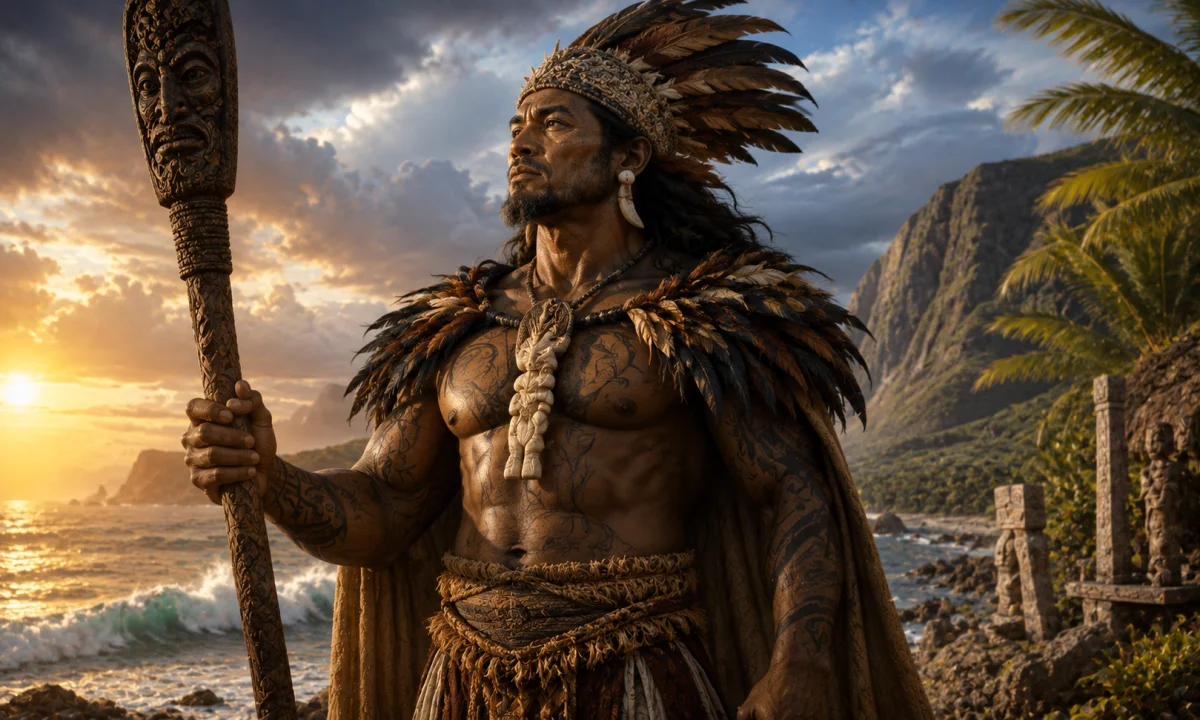
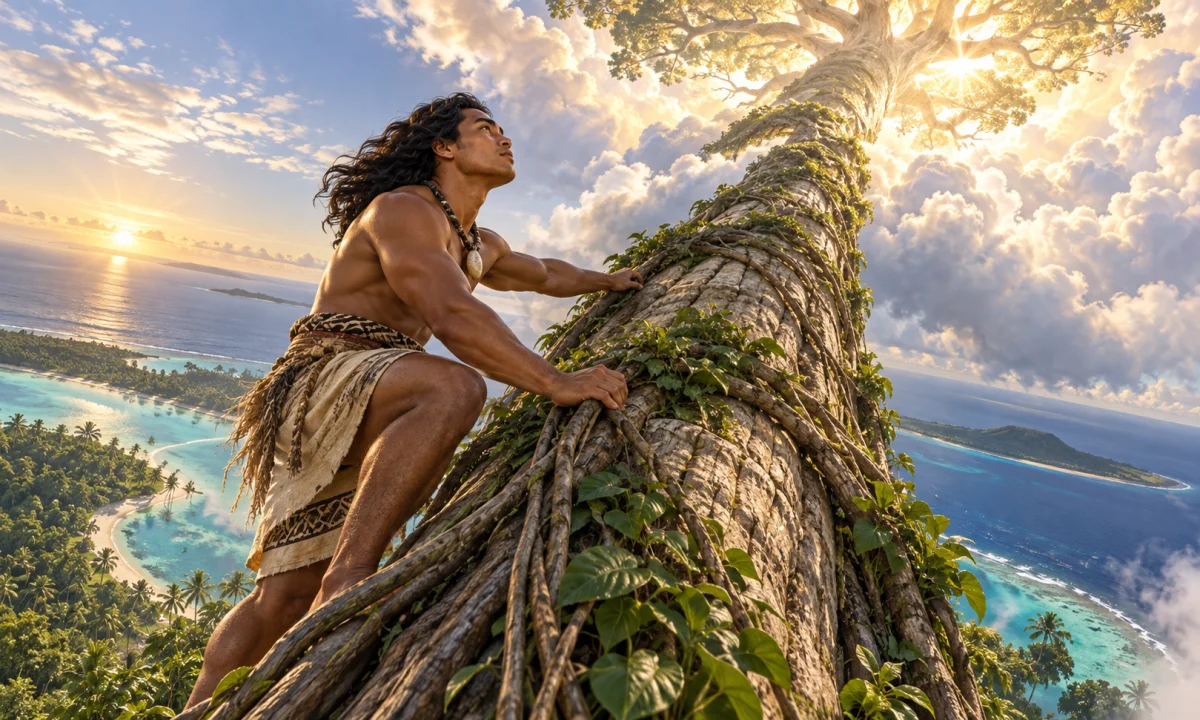
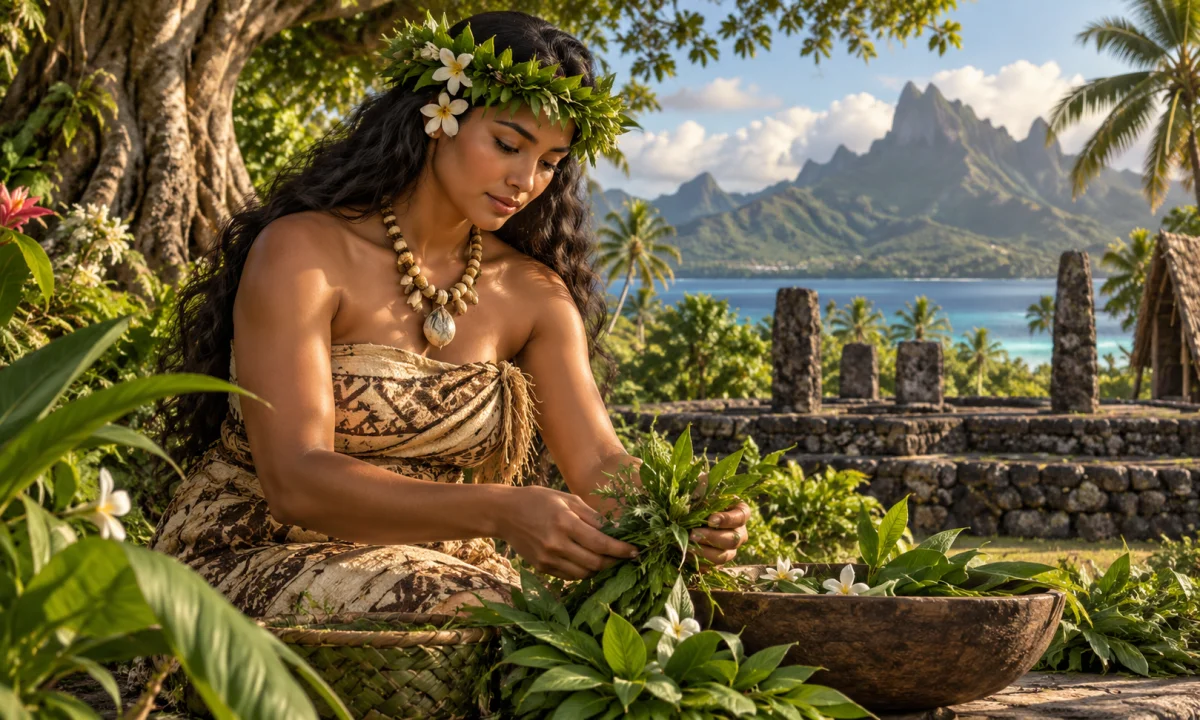
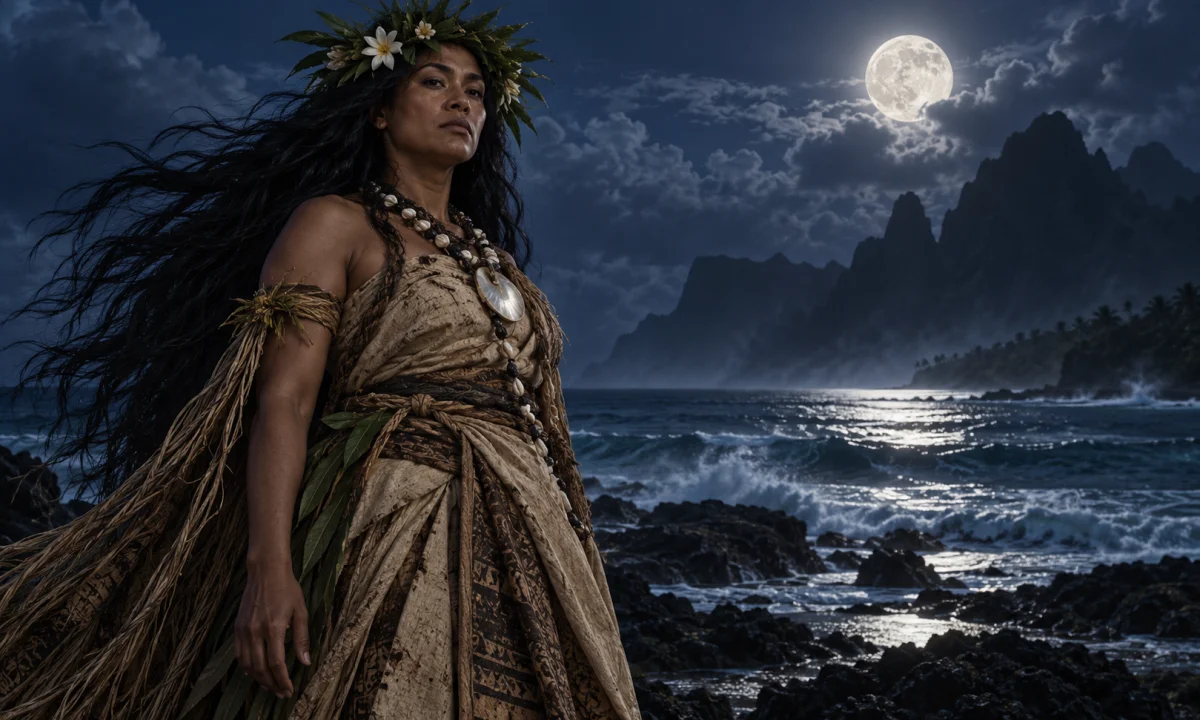
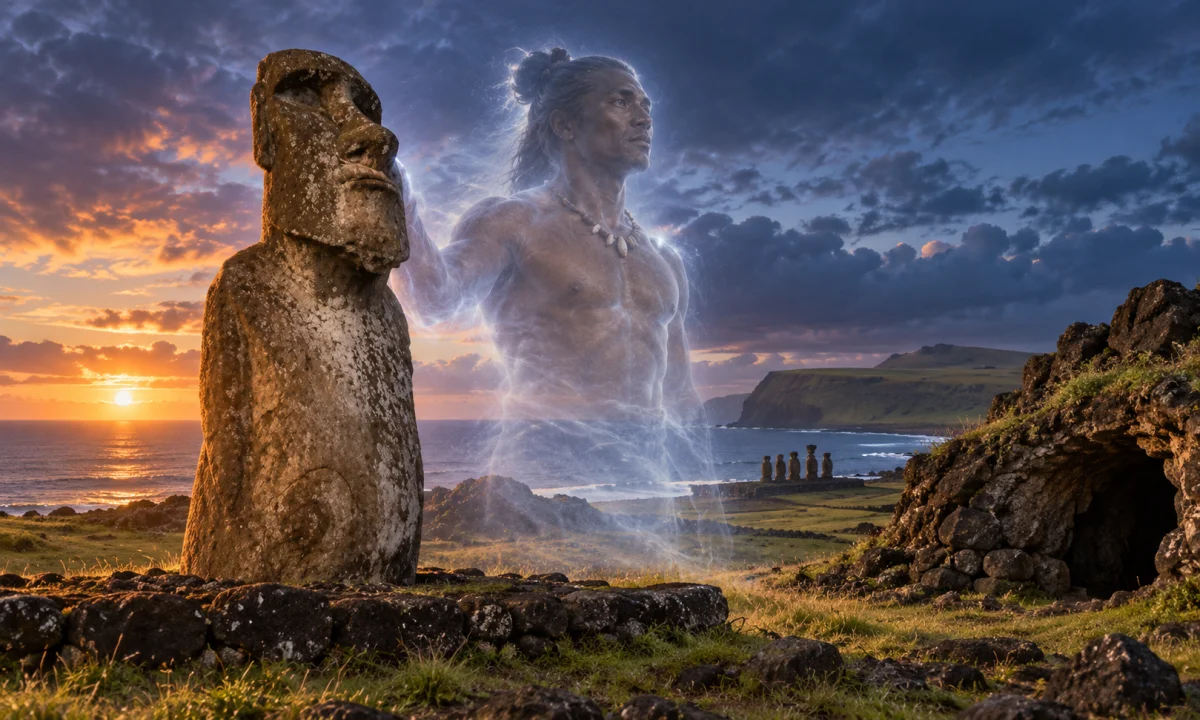
Makemake is one of the principal deities of Rapa Nui, the Polynesian culture of Easter Island in the southeastern Pacific. In traditional accounts, he is associated with creation, fertility, the sea, and the birds whose arrival once governed an important ceremonial competition. Makemake is especially connected with the tangata manu, or “birdman”, tradition centred on the ceremonial village of Orongo and the offshore islet of Motu Nui.
Rapa Nui cultural setting
Rapa Nui lies far to the east of the main Polynesian island groups. Its people developed a distinctive society, language, religious tradition, and artistic style, although these remained part of the wider Polynesian cultural world. Religious knowledge was transmitted through oral teaching, ritual, genealogies, place names, chants, carvings, and sacred landscapes.
Much of what is now written about Rapa Nui religion was recorded after European contact, especially by missionaries, explorers, and later ethnographers. These accounts do not provide a single, complete version of ancient belief. They were produced at different times, through translation and cultural misunderstanding, and after major social and religious changes had already taken place. As a result, stories about Makemake may differ in their details, sequence, and emphasis.
Rapa Nui religious life included reverence for ancestors, chiefly lineages, sacred places, spirits, and powerful beings often described in English as gods. The word “god” is useful for communication, but it does not always reproduce the exact meaning of a Rapa Nui religious category. Makemake should therefore be understood within Rapa Nui cosmology rather than treated as a simple equivalent of a deity from another Polynesian tradition.
The name and identity of Makemake
The name appears in several forms, including Makemake and Make-make. Differences in spelling reflect older systems of transcription and attempts to represent the Rapa Nui language in European writing. These forms generally refer to the same principal Rapa Nui deity, not to a group of separate beings.
Makemake is often identified as a creator deity and as the highest-ranking or most important god in accounts of traditional Rapa Nui religion. Some descriptions also associate him with fertility and the generation of life. His character is not identical in every surviving account, however. In some traditions, his creative role is prominent; in others, his relationship with sea birds and the birdman ceremony receives greater attention.
Makemake is sometimes discussed together with Haua, a female divine figure or companion. Their relationship varies in the recorded traditions. Some accounts present them as a pair connected with the creation or ordering of life, while others give Haua a more specific association with the birds and their seasonal arrival. Because the surviving evidence is fragmentary, it is difficult to reconstruct a single authoritative theology of Makemake and Haua.
Creation and the making of life
Rapa Nui traditions describe Makemake as having a central role in the origin of human beings and the living world. One widely repeated account says that he formed humans from red earth or red clay, although the exact details vary. Other versions use imagery involving bodily substance, sexual generation, or the transformation of natural matter. Such differences may reflect separate strands of oral tradition, changes introduced during retelling, or the way early recorders translated concepts unfamiliar to them.
Some narratives describe Makemake as encountering or producing the first human being and then seeking a partner or means of reproduction. The stories should not be forced into one fixed sequence, since Rapa Nui mythology was preserved primarily through oral transmission rather than a single canonical scripture. The creative stories nevertheless show Makemake as a power responsible for making life possible and for establishing relationships between humans, the land, the sea, and the birds.
The emphasis on red earth has particular symbolic force in an island environment where soil, volcanic rock, bodily life, and ancestral presence were closely connected. It is unsafe to assign one universal meaning to the colour, but the creation imagery links human existence to the physical substance of Rapa Nui rather than to an abstract or distant heaven.
Makemake, birds, and the birdman tradition
Makemake’s best-known ritual association is the tangata manu ceremony. This was a competitive religious and political institution connected with the annual arrival of migratory seabirds, especially the sooty tern at Motu Nui. Representatives of competing groups travelled from Orongo down the cliffs, swam to the offshore islet, and attempted to obtain the first egg of the season. The successful competitor returned with the egg intact and presented it to his sponsoring chief or leader.
The winner’s sponsor became the tangata manu, or birdman, for the following period. This title involved prestige, ritual authority, and a period of separation or special observance. The ceremony was not merely a sporting contest. It connected political power with sacred timing, the fertility of the island, and the renewal of relationships between human communities and the divine world.
Makemake is commonly regarded as the principal deity honoured through this ritual system. Haua is also associated with the ceremony in some accounts. The exact theological roles of the two figures are not uniform in the evidence, and it is not always possible to determine whether every ritual reference to birds belonged exclusively to Makemake or to a broader group of sacred powers.
Orongo contains rock carvings, or petroglyphs, depicting bird-human forms and other figures connected with the ceremonial landscape. These images are important evidence for the religious significance of birds and the birdman institution, but they do not function as a complete written explanation of the myths. Interpreting them requires care because the meanings of individual carvings are not always certain.
Attributes and symbolic associations
Makemake does not have one universally fixed appearance comparable to the standardised forms of some figures in later artistic traditions. Rapa Nui religious images and carvings may represent beings in symbolic, human, birdlike, or hybrid forms, but an image cannot automatically be identified as Makemake merely because it has avian features.
The most important associations connected with Makemake include:
- Creation: he is described in many accounts as a maker of humans or a power involved in the beginning of life.
- Fertility: his creative role extends to reproduction, abundance, and the continuation of living communities.
- The sea: the ocean was central to Rapa Nui survival, voyaging, fishing, and communication with the offshore islets.
- Sea birds: birds arriving at Motu Nui were treated as signs of seasonal renewal and formed the focus of the birdman competition.
- Political authority: the birdman institution linked religious legitimacy with chiefly power and competition between social groups.
These associations should not be mistaken for a rigid list of “domains” in the manner of a modern encyclopaedia. Polynesian deities often participate in overlapping relationships involving ancestors, natural forces, social institutions, and ritual specialists. Makemake’s significance emerges from these relationships rather than from a narrowly defined portfolio.
Myths, relationships, and differing accounts
The surviving stories about Makemake are not preserved in a single traditional epic. They occur in collections of oral narratives and ethnographic reports, many of which were recorded after Rapa Nui society had undergone epidemics, slave raids, missionary activity, demographic collapse, and conversion to Christianity. These events disrupted the transmission of religious knowledge and affected how informants described earlier beliefs.
In some accounts, Makemake is portrayed as the principal creator who establishes the first humans. In others, the story focuses on his discovery of a human or on his efforts to bring human reproduction into being. Haua may appear as his companion, counterpart, or a separate sacred power connected with birds. The recorded narratives do not justify treating every version as a chapter in one consistent mythology.
There is also uncertainty about how the names and functions of divine beings changed over time. A name could have religious, genealogical, or local significance, and a European recorder might use a familiar category such as “god”, “spirit”, or “idol” for a concept that did not have a precise equivalent in European religion. For this reason, statements about Makemake should distinguish between widely repeated traditions and details found only in particular records.
Religious and cultural significance
Makemake’s importance lies partly in the way his traditions connect origins, ecology, and social order. The seasonal seabirds were not only natural resources. Their appearance at Motu Nui marked a moment when the human world, the sea, the island, and the sacred powers were brought into relation. The birdman ceremony transformed this event into a system of authority and ritual competition.
The tradition also illustrates the importance of place in Rapa Nui religion. Orongo was not simply a backdrop for a myth. Its cliffs, views toward Motu Nui, carvings, and position above the sea formed part of the sacred setting. Motu Nui itself was central to the ritual action, and the journey between the island and the islet carried danger as well as religious meaning.
Makemake’s creator role similarly reflects a close connection between people and the island. The traditions do not present humanity as detached from the landscape. Human life emerges from earth, depends on the sea, and is renewed through relationships with animals and seasonal cycles. This does not amount to a modern ecological doctrine, but it does show how religious meaning was embedded in the material conditions of Rapa Nui life.
Distinguishing Makemake from similar names and figures
Makemake should not be confused with deities from other Polynesian traditions who have similar sounding names or overlapping creative roles. Polynesian languages share inherited words and naming patterns, but similar names do not prove that two figures are the same. Makemake is specifically associated with Rapa Nui traditions and should not be casually merged with gods from Māori, Hawaiian, Tahitian, or other Polynesian mythologies.
Nor should every Rapa Nui bird-human image be labelled Makemake. Bird symbolism belonged to a wider religious system, and the birdman ceremony involved several participants, places, and sacred relationships. Makemake is the major deity most often connected with that system, but the surviving evidence does not support identifying every avian figure with him.
Makemake in modern culture
In 2005, the dwarf planet now known as Makemake was discovered and initially received a provisional designation. It was officially named after the Rapa Nui creator deity in 2008. The astronomical name is a modern reference to Rapa Nui cultural heritage, not evidence that the deity was understood as an astronomical body in traditional religion.
Modern illustrations, fantasy works, games, and popular discussions sometimes portray Makemake as a generic Polynesian creator or as a bird-headed supernatural being. Such representations may draw on genuine elements of Rapa Nui tradition, but they often combine them with imagery from other cultures or with modern fantasy conventions. The historical figure is better understood through the specific religious landscape of Rapa Nui, the traditions of Makemake and Haua, and the ritual world of Orongo and Motu Nui.