WORLD
WORLD
Maga
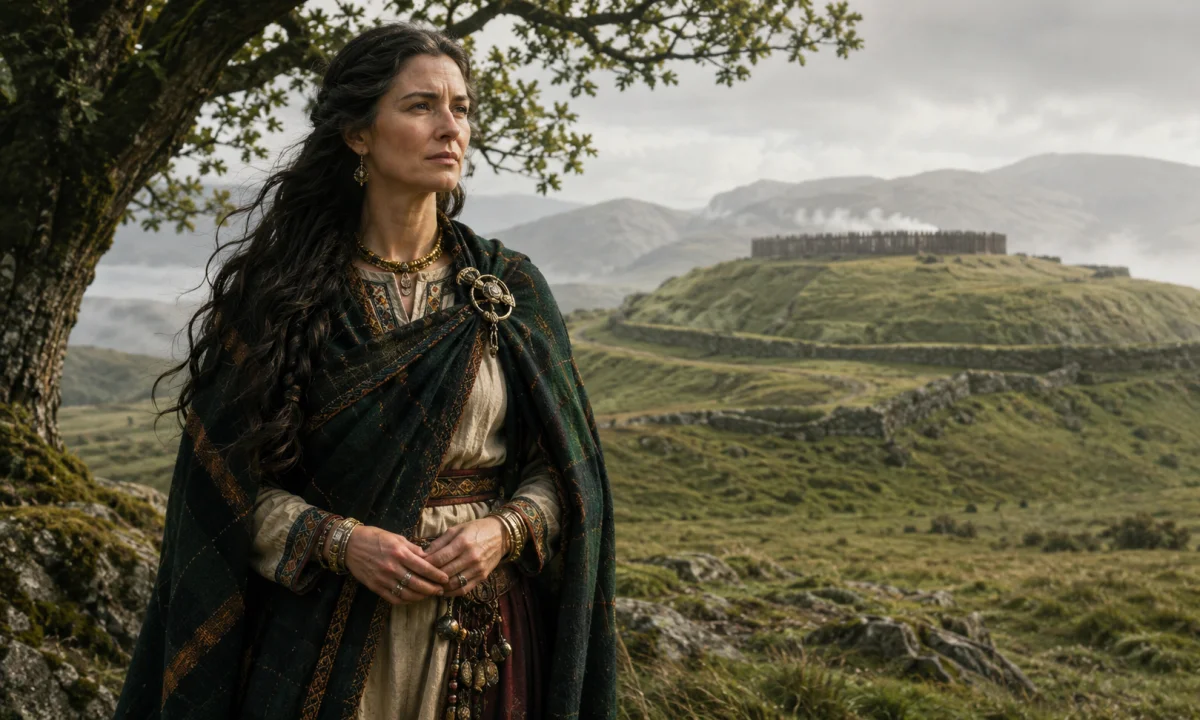
Maga is an obscure name associated with Irish mythological tradition. Unlike figures such as Macha, the Morrígan, Brigid or Medb, Maga does not possess a clearly established biography, mythology or cult in the surviving medieval Irish literature. The name appears in discussions of Irish legendary genealogy and is sometimes presented in modern summaries as belonging to a warlike goddess or to the Tuatha Dé Danann. Those descriptions are uncertain, and often result from confusion with better-attested figures whose names resemble Maga.
Origins and cultural setting
Irish mythology survives mainly through medieval manuscripts written by Christian scribes. These manuscripts preserve stories that originated in pre-Christian oral tradition, but they do not provide a single, consistent religious system. Names, genealogies and episodes can vary between texts, and scribes sometimes combined traditions from different regions or periods.
Within this material, some figures are richly developed through stories, genealogies and place-lore. Others appear only briefly, perhaps as a name in a family list or as part of a catalogue of supernatural beings. Maga belongs, as far as the surviving evidence allows, to this second and much less certain category.
There is no universally accepted medieval narrative in which Maga acts as a major protagonist. No securely identified story describes her birth, appearance, powers, marriage, death or principal deeds. As a result, statements that define Maga as a major Irish goddess should be treated cautiously unless they specify the particular manuscript, spelling or modern interpretation involved.
Name and identity
The identity of Maga is disputed. In modern writing, the name may be treated in several different ways:
- as the name of an obscure female figure in Irish legendary tradition;
- as a variant, corruption or mistaken reading of another Irish name;
- as a figure connected by modern authors with the war goddesses or sovereignty figures of Irish mythology;
- or as a name detached from its original manuscript context and given a more definite personality than the evidence supports.
Medieval Irish spelling was not completely uniform. The same name could appear in different forms, especially when copied by scribes working at different times. However, variation in spelling does not automatically prove that two names refer to the same being. Maga should not simply be identified with Macha, Badb, the Morrígan or any other famous female figure without evidence from the specific text under discussion.
The word may also be confused with Irish place-name elements such as mag or maige, meaning a plain or open country. Irish literature frequently uses landscape terms in the names of places and battles, including names beginning with Magh or Maige. A geographical name containing a similar sequence of letters is not necessarily evidence for a goddess called Maga.
Is Maga a goddess?
Some modern mythology websites and popular reference works describe Maga as a war goddess, sometimes placing her among the supernatural women associated with battle, prophecy and sovereignty. This classification reflects a broader pattern in popular treatments of Irish mythology: an obscure name is assigned a clear role based on its resemblance to more familiar figures.
The surviving evidence does not establish Maga as an independent goddess with the same confidence possible for better-attested divine or semi-divine figures. Irish mythological texts do contain powerful women connected with warfare, kingship, death and the land, but their identities are frequently fluid. A name can occur in one genealogy, be associated with another figure in a separate text, or be absorbed into a group of related names.
It is therefore more accurate to describe Maga as an uncertain or poorly documented mythological name than to present a fixed profile of a war goddess. If a source calls her a goddess, that description should be understood as an interpretation rather than an established fact shared by all Irish tradition.
Possible relationship to the warlike female figures
Irish literature contains several female figures associated with violence, battle and supernatural knowledge. The best known include Badb, Macha and the Morrígan, although the relationship between these names changes across the medieval texts. They may appear as separate beings, as members of a group or as overlapping aspects of a larger divine complex.
Because Maga is sometimes placed beside these names in modern lists, she is occasionally described as a sister or companion of them. Such claims should not be accepted automatically. The familiar groupings of Badb, Macha, Anand, Nemain and the Morrígan are themselves complicated by differences between texts; inserting Maga into that group requires specific textual support.
The association may have developed through one of several processes:
- a variant spelling being interpreted as a separate personal name;
- a damaged or ambiguous manuscript passage being regularised by a later editor;
- the transfer of attributes from Macha or the Morrígan to an otherwise unknown name;
- or the creation of a tidy goddess genealogy from several inconsistent medieval lists.
These possibilities do not make every reference to Maga meaningless. They do mean that the name cannot safely be given the complete set of attributes belonging to the better-known war goddesses.
Attributes and symbolism
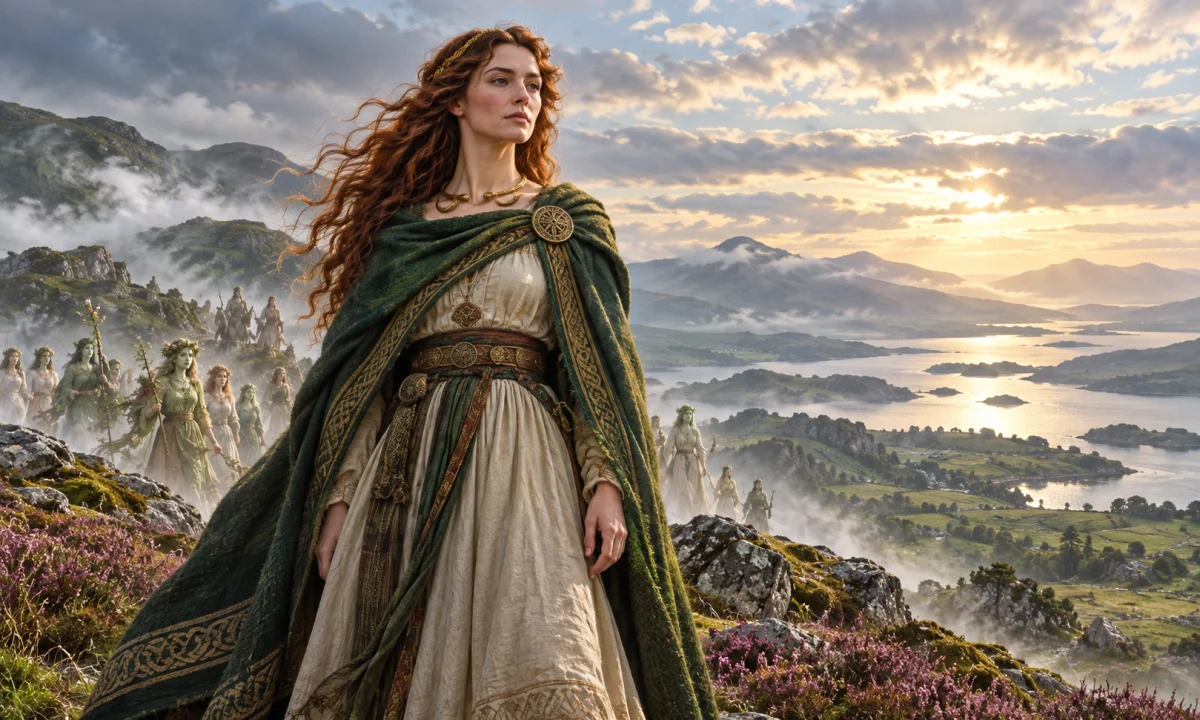
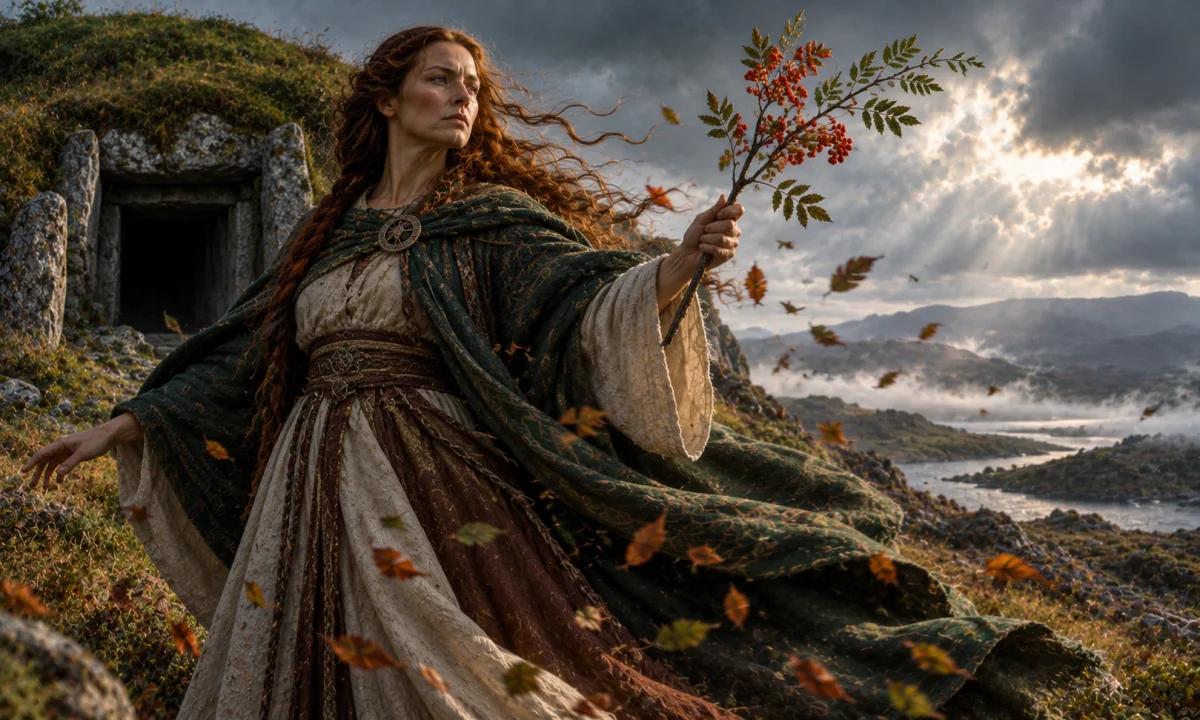
No reliable traditional description gives Maga a standard appearance. There is no securely attested account of her clothing, weapons, animal form, hair colour or physical transformation. Images portraying Maga as an armoured warrior woman, a raven-like battle spirit or a queen of the dead belong to modern reconstruction, fantasy art or the borrowing of attributes from other Irish figures.
The same caution applies to powers. Maga is sometimes said to control battle, prophecy, sovereignty or death, but these functions are not firmly established as her own. They are themes found elsewhere in Irish mythology, particularly in stories about the Morrígan, Badb and Macha. A modern description may therefore be symbolically plausible while still lacking direct traditional evidence.
If Maga preserves the trace of an older mythological figure, the surviving record is too fragmentary to determine her original function. She may have belonged to a genealogy of supernatural women, to a local tradition that was only briefly recorded, or to a textual variant of another name. The evidence does not permit a confident reconstruction of a separate religious cult or theology centred on her.
Stories and relationships
No major surviving Irish tale is securely centred on Maga. She is not a principal character in the best-known versions of the Ulster Cycle, the Fenian Cycle or the mythological narratives concerning the Tuatha Dé Danann. Nor is there a widely accepted episode in which she confronts a hero, rules a kingdom, curses a people or participates in a famous battle.
Her supposed relationships are consequently uncertain. Modern summaries may connect her with the Tuatha Dé Danann, the Morrígan or other supernatural women, but these connections are not equally supported. A name appearing in a genealogical catalogue does not necessarily indicate a developed family relationship in the narrative sense. Medieval genealogies could preserve names for reasons of learned classification, regional tradition or attempts to organise the supernatural past of Ireland.
This distinction is important. A figure can be “in Irish mythology” without having a complete myth of her own. Medieval Irish texts include many named ancestors, kings, queens, monsters and divine beings who are mentioned only once. Later retellings often turn these brief references into elaborate biographies, but the expansion belongs to later interpretation rather than to the early evidence.
Relationship to Macha
Macha is the figure most likely to be confused with Maga. Macha is a major and complex name in Irish tradition. Several women called Macha appear in different bodies of material, including Macha Mong Ruad, a legendary queen, and the Macha who is forced to race against the horses of a king of Ulster while pregnant. The latter curses the men of Ulster to suffer the pains of childbirth, an episode that helps explain the condition affecting the warriors in the Táin Bó Cúailnge.
Macha is also connected in some traditions with the warlike divine figures and with the province or landscape of Ulster. Her name has a substantial narrative presence and cannot be treated as interchangeable with Maga merely because the names look or sound somewhat similar in modern transcription.
Some popular sources may have used Maga as a variant spelling of Macha, while others may have created a separate entry from a difficult or unfamiliar manuscript reading. Without a precise textual context, it is impossible to know whether every occurrence of the name represents an independent being. The safest approach is to keep Maga and Macha separate unless a particular source explicitly demonstrates their identity.
Relationship to the Morrígan and Badb
The Morrígan and Badb are also frequent sources of confusion. Both names belong to a shifting group of powerful female figures connected with war, fate, battle terror and the transformation of the social order. In some interpretations, these figures represent related forms of a wider sovereignty or battle complex; in others, they remain distinct characters.
Maga does not have an equally secure place in that complex. Calling her “another name of the Morrígan” or “a sister of Badb” presents a disputed interpretation as fact. A more careful description is that Maga has sometimes been associated with this group by modern writers, probably because of the general similarity of her supposed role or because of uncertain name traditions.
Historical and religious significance
The uncertain status of Maga illustrates an important feature of Irish mythology: it is not a single canonical body of scripture. The surviving stories were transmitted through manuscripts, genealogies, poems, glosses and place-name traditions. Some material may preserve pre-Christian themes, but the documents themselves were produced in a Christian literary environment and shaped by medieval ideas about history, kingship and ancestry.
There is no clear evidence of a historical Irish cult dedicated specifically to Maga. No securely documented festival, shrine, prayer, offering practice or local ritual can be assigned to her. This does not prove that no older tradition ever existed, since much early Irish religious practice was not recorded in detail. It does mean that claims about Maga as a widely worshipped goddess go beyond the available evidence.
Her importance today lies largely in the questions raised by fragmentary tradition. Maga demonstrates how names can survive after stories have been lost, and how modern mythographies can unintentionally turn uncertainty into certainty. Studying such a name requires attention to spelling, manuscript context and the difference between a medieval reference and a modern character profile.
Later reception and popular culture
Maga has no major, widely recognised role in modern Irish-language literature, film or popular culture comparable to the Morrígan, Cú Chulainn, Fionn mac Cumhaill or Brigid. When she appears in contemporary fantasy, neopagan writing or online mythology collections, she is usually presented as a reconstructed battle goddess or as a lesser-known member of the Tuatha Dé Danann.
These portrayals can be creative and meaningful, but they should be distinguished from traditional evidence. A fantasy novel, game or modern spiritual interpretation may give Maga a defined appearance, weapon, animal companion or genealogy; those features belong to that adaptation unless they can be traced to an older source. The same caution applies to modern claims that assign her a specific feast day, rune, colour, sacred animal or devotional practice.
For historical purposes, Maga is best understood as an obscure and disputed name in the wider field of Irish mythological tradition. Her limited documentation makes confident biography impossible, and her supposed identity must be examined separately from Macha, Badb, the Morrígan and other female figures whose stories are much better preserved.