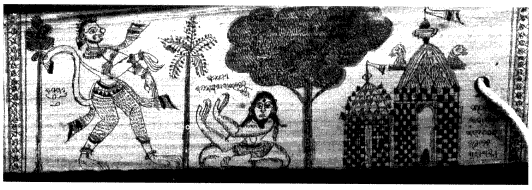
Kâlanemi is a significant figure in Hindu mythology, known for his association with various legends and stories that revolve around the themes of good versus evil. He is often depicted as a demon, representing the forces that challenge the divine and the heroic. His narratives are intertwined with the tales of other prominent characters, such as Lord Vishnu and the various incarnations he undertakes to restore dharma, or righteousness, in the world. Kâlanemi’s character serves as a reminder of the eternal struggle between light and darkness, a common theme in many mythological traditions.
The Origins of Kâlanemi
The origins of Kâlanemi can be traced back to ancient scriptures and texts that document the vast tapestry of Hindu mythology. According to some accounts, he is said to be a son of the demon king Hiranyakashipu, who was known for his tyranny and opposition to the gods. Kâlanemi’s birth was marked by a prophecy that foretold his destiny as a formidable adversary of the divine forces. This prophecy set the stage for his role in various mythological stories, where he would often confront deities and heroes, testing their strength and resolve.
 Katavul
In some versions of the mythology, Kâlanemi is depicted as a powerful sorcerer, capable of wielding dark magic to achieve his goals. His abilities made him a significant threat to the gods, particularly to Lord Vishnu, who frequently intervened to thwart Kâlanemi’s malicious plans. The struggle between Kâlanemi and the divine is emblematic of the broader conflict between good and evil that permeates Hindu beliefs, illustrating the idea that evil may temporarily gain power but will ultimately be defeated.
Kâlanemi and Lord Vishnu
One of the most notable aspects of Kâlanemi’s story is his interactions with Lord Vishnu, one of the principal deities in Hinduism, revered as the preserver of the universe. In various tales, Kâlanemi often finds himself in direct opposition to Vishnu’s incarnations. For instance, during the time of Lord Rama, Kâlanemi attempted to disrupt Rama’s mission to rescue his wife, Sita, from the demon king Ravana. This confrontation is pivotal as it showcases Kâlanemi’s role as an antagonist in the epic narrative of the Ramayana.
In the Ramayana, Kâlanemi is portrayed as a cunning and deceitful character. He attempts to trick Rama and his allies through various schemes, including disguises and traps. However, each of his plans ultimately fails, demonstrating the triumph of righteousness over malevolence. This recurring theme highlights the belief that divine intervention is essential in overcoming evil forces, a core principle in Hindu philosophy.
 Kadrû
KadrûKâlanemi’s Role in the Ramayana
- Kâlanemi’s plots against Rama.
- His encounters with the monkey army.
- The ultimate defeat of Kâlanemi.
In the context of the Ramayana, Kâlanemi’s attempts to thwart Rama are significant. His plots often involve creating obstacles for Rama and his allies, the Vanaras or monkey army, which plays a crucial role in the battle against Ravana. Despite his intelligence and magical prowess, Kâlanemi’s efforts are consistently foiled by Rama’s unwavering commitment to dharma and the assistance of his divine allies.
The ultimate defeat of Kâlanemi serves as a powerful narrative device, reinforcing the idea that evil cannot prevail against the forces of good. This theme resonates deeply within Hindu teachings, where the victory of righteousness is celebrated and seen as a testament to the enduring power of virtue. Kâlanemi’s demise is not just a personal defeat; it symbolizes the larger victory of dharma over adharma (unrighteousness).
Kâlanemi in Other Texts
Beyond the Ramayana, Kâlanemi appears in other Hindu texts, including the Mahabharata and various Puranas. His character is often depicted with variations, reflecting the diversity of stories within Hindu mythology. In some accounts, Kâlanemi is portrayed as a more complex figure, with motivations that extend beyond mere evil. This complexity adds depth to his character, making him a subject of interest for scholars and enthusiasts of mythology.
 Jatayu
In the Mahabharata, Kâlanemi’s lineage is sometimes linked to other demon kings, showcasing the interconnectedness of various mythological characters. This connection highlights the cyclical nature of good and evil within the stories, suggesting that characters like Kâlanemi are not merely one-dimensional villains but part of a larger cosmic drama. The narratives surrounding Kâlanemi serve to illustrate the moral lessons that are central to Hindu beliefs, emphasizing the importance of understanding the nuances of each character’s journey.
Kâlanemi and the Concept of Time
- The meaning of ‘Kâla’ in Kâlanemi.
- Kâlanemi as a representation of time.
- The philosophical implications of his name.
The name Kâlanemi itself carries significant meaning, as ‘Kâla’ translates to ‘time’ in Sanskrit. This connection to time adds another layer of interpretation to his character. Kâlanemi can be seen as a representation of the inevitable passage of time and the cycles of creation and destruction that govern the universe. In this sense, he embodies the darker aspects of time, such as decay and chaos, juxtaposed against the order and harmony represented by the divine.
The philosophical implications of Kâlanemi’s association with time are profound. His existence serves as a reminder of the transient nature of life and the continuous struggle between opposing forces. The stories surrounding Kâlanemi encourage reflection on the nature of existence, urging individuals to recognize the importance of balance and the need to confront the challenges posed by time and fate. In this way, Kâlanemi’s character transcends the role of a mere antagonist; he becomes a symbol of the complexities of life itself.
The Legacy of Kâlanemi
Kâlanemi’s legacy continues to resonate within Hindu culture and beyond. His stories are not only a part of ancient texts but also influence modern interpretations of mythology. The character of Kâlanemi has inspired various artistic expressions, including literature, theater, and visual arts. These adaptations often explore the themes of duality and the eternal battle between good and evil, drawing upon Kâlanemi’s rich narrative to convey timeless moral lessons.
In contemporary discussions about mythology, Kâlanemi serves as a reference point for exploring the nature of evil and the challenges faced by heroes. Scholars and enthusiasts often analyze his character to understand the psychological and philosophical dimensions of mythological narratives. This exploration sheds light on how ancient stories continue to inform modern beliefs and values, illustrating the enduring relevance of figures like Kâlanemi in the collective consciousness.
Modern Interpretations of Kâlanemi
- Kâlanemi in popular culture.
- Artistic representations of Kâlanemi.
- The role of Kâlanemi in modern literature.
In popular culture, Kâlanemi has been referenced in various forms of media, from films to television series. These adaptations often reinterpret his character, providing new contexts and perspectives on his role in Hindu mythology. Such portrayals can sometimes simplify or exaggerate aspects of his character, but they also serve to introduce Kâlanemi to new audiences, sparking interest in Hindu myths and their underlying themes.
Artistic representations of Kâlanemi vary widely, with artists depicting him in diverse styles that reflect both traditional and contemporary influences. These artworks often emphasize his demonic features, showcasing the tension between beauty and horror that is common in mythological art. Through visual storytelling, Kâlanemi’s character is brought to life, allowing viewers to engage with the narrative on a deeper level.
Lessons from Kâlanemi’s Story
The stories of Kâlanemi impart valuable lessons that resonate with audiences of all ages. One of the most prominent themes is the idea that evil may appear powerful, but it is ultimately no match for the forces of good. This message is crucial in a world where individuals often face challenges that seem insurmountable. The tales of Kâlanemi encourage perseverance and faith in the face of adversity, reinforcing the belief that righteousness will ultimately prevail.
Another important lesson from Kâlanemi’s story is the concept of redemption and the possibility of transformation. While Kâlanemi is primarily portrayed as a villain, his character invites reflection on the nature of evil and the potential for change. This perspective encourages individuals to consider the circumstances that lead to negative actions and the importance of compassion and understanding in addressing conflicts.
The Role of Good and Evil
- The duality of existence.
- Understanding moral complexities.
- The importance of dharma.
The duality of existence, as illustrated by Kâlanemi’s character, is a fundamental aspect of Hindu philosophy. The stories surrounding him remind us that good and evil are not always clear-cut; rather, they exist on a spectrum that reflects the complexities of human nature. By exploring these moral ambiguities, individuals can gain a deeper understanding of their own actions and the consequences that arise from them.
Moreover, Kâlanemi’s narrative emphasizes the importance of dharma—the ethical and moral principles that guide human behavior. The constant struggle between Kâlanemi and the divine forces serves as a reminder of the necessity of adhering to dharma in one’s own life. This adherence not only contributes to personal growth but also fosters harmony within the community and the world at large.
Kâlanemi stands as a complex figure within Hindu mythology, embodying the eternal struggle between good and evil. His interactions with deities like Lord Vishnu illustrate the importance of righteousness and the challenges faced by heroes in their quest to uphold dharma. Through the lens of Kâlanemi’s story, we gain valuable insights into the nature of existence, the complexities of morality, and the enduring relevance of ancient myths in contemporary society. The lessons derived from Kâlanemi’s narrative continue to inspire and guide individuals in their personal and spiritual journeys.