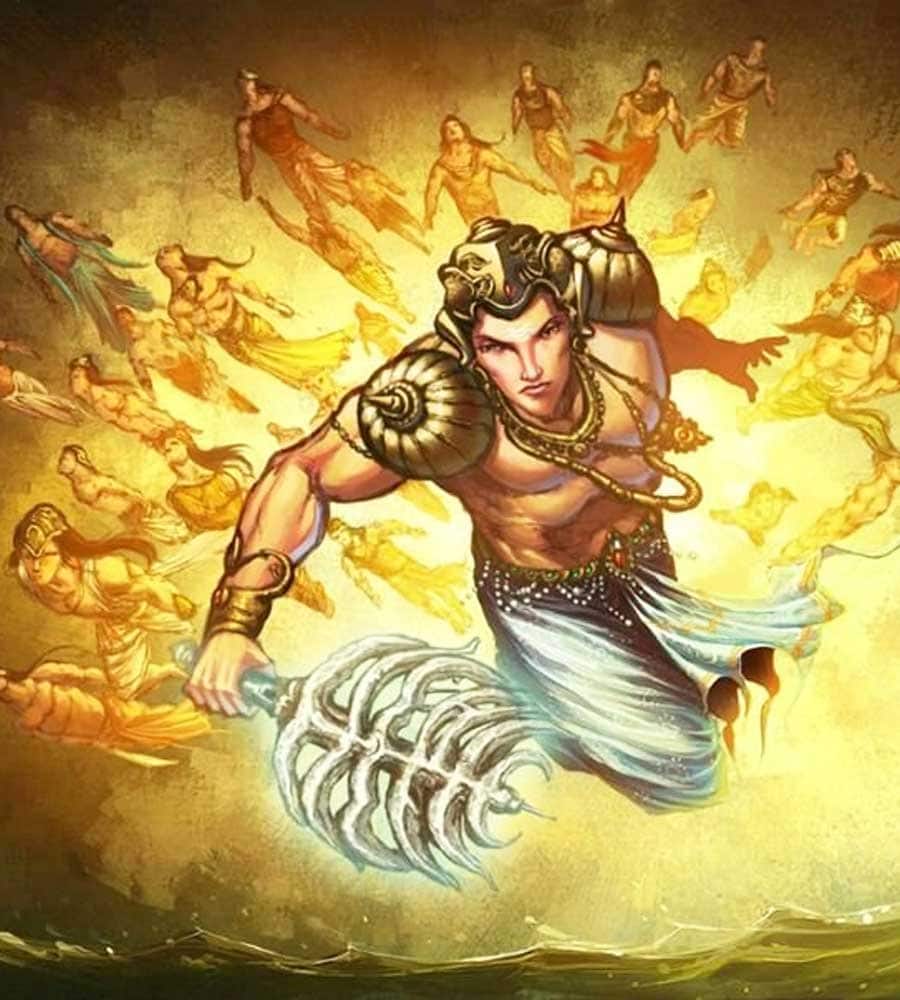
In Hindu mythology, Jalandhara is a significant figure known for his unique attributes and stories that reflect the complexities of good and evil. He is often depicted as a powerful demon who was born from the ocean and is associated with water, which is a vital element in many myths. Jalandhara is also known for his strength and cunning, making him a formidable opponent against the gods. His narrative intertwines with various deities and illustrates the eternal struggle between righteousness and malevolence.
Origins of Jalandhara
The story of Jalandhara begins in the cosmic ocean, where he was created from the saliva of Lord Shiva. This origin story highlights the connection between Jalandhara and the divine, as even a demon can arise from a god’s essence. According to the legends, after his birth, Jalandhara quickly grew in power and strength. His formidable nature posed a significant challenge to the gods, particularly to Brahma and Vishnu. They recognized that Jalandhara had the potential to disrupt the balance of the universe.
 Jagannath
To counteract Jalandhara’s growing power, the gods decided to take action. They summoned the goddess Parvati, who played a crucial role in the cosmic drama. Parvati, being the wife of Shiva, had the ability to influence the outcomes of many situations. The gods believed that only she could help them contain Jalandhara’s strength and prevent him from wreaking havoc across the heavens.
Jalandhara and the Gods
As Jalandhara began to establish his dominion, he created a magnificent kingdom that was filled with wealth and prosperity. His rule was marked by both fear and respect. Jalandhara’s confidence grew, and he began to challenge the authority of the gods, leading to a series of confrontations. He believed that he was invincible and that no deity could defeat him. This arrogance would ultimately lead to his downfall.
In one notable encounter, Jalandhara captured the goddess Parvati and imprisoned her in his palace. This act of defiance enraged Lord Shiva, who was determined to rescue his wife. The gods realized that Jalandhara needed to be confronted directly. They devised a plan to unite their powers and confront him. This alliance showcased the strength of unity among the gods, which is a recurring theme in Hindu mythology.
 Indrâni
The Battle Against Jalandhara
The battle against Jalandhara was fierce and intense. The gods, led by Shiva, engaged in a struggle that tested their strength and determination. Jalandhara used his cunning tactics and mastery over water to create obstacles for the gods. He summoned powerful waves and storms to hinder their progress, showcasing his command over the aquatic realm. The gods faced numerous challenges, but they remained steadfast in their mission to defeat the demon.
- Shiva: The primary force against Jalandhara.
- Brahma: Provided wisdom and guidance during the battle.
- Vishnu: Used his avatar to support the other gods.
- Parvati: Her presence motivated the gods to fight harder.
As the battle raged on, the gods realized that they needed to employ a strategy that would exploit Jalandhara’s weaknesses. They understood that his arrogance was his greatest flaw. By luring him into a false sense of security, they could create an opening for victory. This strategy emphasized the importance of intelligence and strategy over sheer brute force, a lesson that is often highlighted in various mythological tales.
The Role of Parvati
Parvati’s role in the myth of Jalandhara is pivotal. Not only was she a symbol of strength and resilience, but she also embodied the nurturing aspect of the divine. Her capture by Jalandhara served as a catalyst for the gods to unite and fight against the demon. It was her presence that reminded the gods of their duty to restore balance in the universe.
 Indrajit
During the battle, Parvati remained a source of inspiration for Shiva and the other gods. Her unwavering spirit and determination fueled their resolve. She represented the ultimate goal of their struggle: the protection of dharma, or righteousness. Parvati’s character reflects the idea that the divine feminine plays a crucial role in the cosmic balance, often serving as a motivator for male deities to act.
Jalandhara’s Defeat
The climax of the battle came when Shiva, using his supreme powers, confronted Jalandhara directly. In a moment of divine intervention, Shiva unleashed his third eye, a symbol of his ultimate power. This act not only demonstrated his strength but also symbolized the awakening of deeper consciousness. Jalandhara, caught off guard by the intensity of Shiva’s power, began to falter.
In a desperate attempt to save himself, Jalandhara used his cunning to plead for mercy. He offered to return Parvati and cease his attacks on the gods. However, the gods were aware that such promises were often made in vain, and they could not trust him. The gods, having united their strengths, delivered a final blow that ultimately led to Jalandhara’s defeat.
The Aftermath of Jalandhara’s Defeat
After Jalandhara’s defeat, the balance of the universe was restored. The gods celebrated their victory, but they also recognized the lessons learned from this encounter. Jalandhara’s story serves as a reminder of the dangers of arrogance and the importance of unity in the face of adversity. It also highlights the role of divine intervention in the cosmic order.
- Restoration of Dharma: The defeat of Jalandhara allowed righteousness to prevail.
- Unity Among Gods: The gods learned the strength of collaboration.
- Lessons in Arrogance: Jalandhara’s downfall serves as a warning.
- Role of the Feminine: Parvati’s influence was crucial in the battle.
The defeat of Jalandhara did not signify the end of challenges for the gods. Instead, it served as a precursor to future battles against other demons and adversaries. The lessons learned from this encounter became part of the ongoing narrative of good versus evil in Hindu mythology. The story of Jalandhara, thus, remains a vital chapter in understanding the complexities of divine and demonic forces.
Symbolism of Jalandhara
Jalandhara’s character is rich in symbolism, representing various aspects of the human experience. His birth from the ocean signifies the depths of consciousness and the potential for both creation and destruction. The ocean is often seen as a metaphor for the unconscious mind, where both positive and negative traits reside. Jalandhara embodies the chaotic nature of these elements, reminding us that darkness exists alongside light.
Moreover, Jalandhara’s struggle against the gods symbolizes the internal battles that individuals face. Each person has their own demons to confront, whether they are feelings of doubt, fear, or anger. The narrative encourages individuals to recognize these challenges and confront them with courage and wisdom. Jalandhara’s defeat serves as a powerful reminder that overcoming one’s inner demons is essential for personal growth and enlightenment.
Lessons from Jalandhara’s Story
The story of Jalandhara offers several valuable lessons that resonate across cultures and time periods. One of the primary teachings is the importance of humility. Jalandhara’s downfall stemmed from his arrogance and overconfidence. This serves as a cautionary tale for individuals who may become blinded by their own power or success. It reminds us to remain grounded and to recognize the interconnectedness of all beings.
Another significant lesson is the value of unity. The gods’ collaboration in the face of adversity emphasizes that working together can lead to greater strength and success. In today’s world, where division often prevails, this message is particularly relevant. It encourages individuals and communities to come together to address common challenges, fostering a spirit of cooperation and understanding.
The Role of Divine Intervention
The role of divine intervention in Jalandhara’s story highlights the belief in higher powers guiding the course of events. The gods, despite their immense strength, required the wisdom and support of one another to overcome Jalandhara. This collaboration serves as a reminder that seeking help and guidance from others is not a sign of weakness but a necessary step toward achieving one’s goals.
- Embrace Humility: Recognize the importance of staying grounded.
- Value Unity: Work together to overcome challenges.
- Seek Guidance: Don’t hesitate to ask for help when needed.
- Face Inner Demons: Confront personal challenges for growth.
In essence, Jalandhara’s narrative is a rich tapestry woven with themes of power, humility, unity, and the eternal struggle between good and evil. His story continues to resonate with individuals seeking to understand their own lives and the challenges they face. The lessons drawn from his tale remain timeless, encouraging self-reflection and growth.
Jalandhara in Contemporary Culture
The story of Jalandhara has transcended its mythological roots and found relevance in contemporary culture. His character has been interpreted in various forms of art, literature, and popular media. Artists and writers often draw upon the themes of Jalandhara’s narrative to explore issues of power, morality, and the human condition.
In literature, Jalandhara’s story has inspired authors to delve into the complexities of their characters. The duality of good and evil, as embodied by Jalandhara, serves as a powerful motif that resonates with readers. These themes encourage audiences to reflect on their own experiences and the moral dilemmas they face in their lives.
Representation in Art
In visual arts, Jalandhara is often depicted in vibrant colors and dynamic poses, symbolizing his energy and strength. Artists capture the essence of his character, showcasing both his fierce nature and the beauty of the ocean from which he was born. These representations not only serve as a tribute to the myth but also as a reminder of the underlying messages conveyed through his story.
- Dynamic Depictions: Artists capture Jalandhara’s energy.
- Thematic Exploration: Themes of power and morality are prevalent.
- Cultural Relevance: His story resonates with contemporary issues.
- Visual Symbolism: The ocean as a representation of the unconscious.
In film and theater, Jalandhara’s character has been adapted into various narratives that explore the battle between good and evil. These adaptations often take creative liberties, allowing for a modern interpretation of the ancient tale. Through these mediums, audiences are introduced to Jalandhara’s story, encouraging discussions about morality, ethics, and the nature of power.
Conclusion: The Enduring Legacy of Jalandhara
The legacy of Jalandhara in Hindu mythology is enduring and multifaceted. His story serves as a reminder of the complexities of human nature and the eternal struggle between good and evil. Through the lens of mythology, individuals can explore their own lives, confront their inner demons, and strive for personal growth.
As Jalandhara’s narrative continues to be told and retold, it adapts to the changing times while retaining its core messages. The themes of humility, unity, and the importance of confronting one’s challenges remain relevant, encouraging individuals to reflect on their journeys. Jalandhara’s character, with all its complexities, serves as a powerful symbol of the human experience, reminding us that the battle between light and darkness exists within us all.