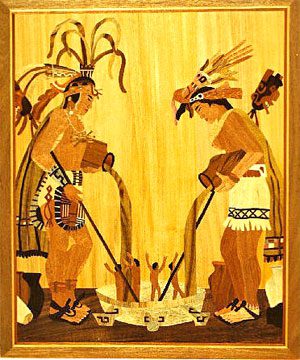
In the rich tapestry of Maya mythology, the figure of Hun-came stands out as a prominent character. He is often associated with the underworld and is known as one of the gods of death. The Maya civilization, which thrived in Mesoamerica, had a complex understanding of life, death, and the cosmos. Hun-came plays a significant role in this belief system, embodying the duality of life and death. His stories provide insight into the Maya’s views on mortality, the afterlife, and the rituals that accompanied these beliefs.
The Origins of Hun-came
Hun-came is considered one of the principal deities in the Maya pantheon. His name translates to “One Death,” which signifies his association with mortality and the afterlife. In many Maya texts, particularly the Popol Vuh, Hun-came is depicted as a powerful figure who governs the underworld known as Xibalba. Xibalba is often portrayed as a dark and foreboding place, filled with challenges and trials that souls must face after death. Understanding Hun-came’s origins helps us grasp the broader context of Maya spirituality and their perception of life beyond the physical realm.
 Hun Pic Tok
The mythology surrounding Hun-came often emphasizes the importance of death in the cycle of life. For the Maya, death was not an end but a transition to another form of existence. This belief is crucial in understanding the rituals and ceremonies that were performed to honor the dead. Many of these practices were designed to appease Hun-came and ensure safe passage for the deceased into the afterlife. Thus, Hun-came embodies not just death, but the continuity of life and the eternal nature of existence.
The Role of Hun-came in Maya Cosmology
In Maya cosmology, Hun-came is a vital figure who represents the balance between life and death. He is often depicted alongside his twin brother, Vucub-came, who is associated with the heavens. Together, they symbolize the dual nature of existence, where every life must eventually face death. This duality is essential to understanding the Maya’s worldview, which sees life as a continuous cycle. The interactions between Hun-came and other deities reflect the complexities of this belief system, illustrating how the Maya navigated their understanding of the universe.
 Hun Batz
Hun-came is also linked to the agricultural cycles that were so important to the Maya civilization. Agriculture was the foundation of their society, and the success of their crops depended on favorable conditions. The Maya believed that Hun-came played a role in these cycles, influencing the growth of crops and the fertility of the land. This connection between death and life is a recurring theme in Maya mythology, showing that even in death, there is potential for renewal and rebirth.
Myths and Legends Involving Hun-came
Numerous myths and legends feature Hun-came, each illustrating different aspects of his character and significance. One prominent story involves the trials faced by the Hero Twins, Hunahpú and Xbalanqué, who journey through Xibalba. In this narrative, Hun-came serves as one of the rulers of the underworld, presenting challenges that the twins must overcome. This story highlights the idea that death is not merely an endpoint but a series of trials that can lead to transformation and renewal.
- The Hero Twins’ Journey: The trials of the Hero Twins are crucial to understanding the challenges of facing death.
- Transformation: Overcoming Hun-came’s trials often leads to rebirth or transformation.
- Symbolism of Death: Hun-came represents the inevitability of death and the importance of confronting it.
Another story involves the creation of humanity, where Hun-came plays a role in shaping the souls of humans. According to the Popol Vuh, the gods attempted to create humans multiple times, with Hun-came overseeing these attempts. This narrative emphasizes the belief that humans are deeply connected to the divine, and even in death, they maintain a bond with the gods. The tales of Hun-came illustrate how the Maya viewed death not as a finality but as an integral part of the human experience.
 Hobnil
The Worship of Hun-came
The worship of Hun-came was an essential aspect of Maya religious life. Various rituals and ceremonies were dedicated to him, reflecting the community’s desire to honor and appease the god of death. These practices often involved offerings, prayers, and elaborate ceremonies aimed at ensuring the safe passage of the deceased into the afterlife. The Maya believed that by honoring Hun-came, they could mitigate the fears associated with death and secure a favorable outcome for their loved ones.
One common practice was the construction of elaborate tombs and burial sites. These sites often contained offerings, such as food, pottery, and other items deemed necessary for the journey into the afterlife. The positioning of these tombs was also significant, often aligned with celestial events or natural features. This careful attention to detail demonstrates the Maya’s deep respect for Hun-came and their understanding of the afterlife as a continuation of existence.
Hun-came in Art and Iconography
Hun-came’s presence is also felt in Maya art and iconography. He is often depicted in various forms, sometimes as a skeletal figure or with attributes that symbolize death and the underworld. These artistic representations serve to remind the Maya of the omnipresence of death in their lives and the importance of honoring the deceased. The imagery associated with Hun-came can be found in pottery, murals, and sculptures, each telling a part of the broader story of death and rebirth in Maya culture.
In many cases, artists used symbols associated with Hun-came to convey deeper meanings. For instance, the use of the color black often signifies the underworld and death, while the incorporation of certain animals, like jaguars or owls, can symbolize the connection to the spiritual realm. These artistic choices reflect the Maya’s intricate beliefs about life, death, and the cosmos, illustrating how they communicated their spirituality through visual means.
The Legacy of Hun-came
The legacy of Hun-came extends beyond the ancient Maya civilization, influencing contemporary interpretations of Maya mythology and spirituality. His stories and significance continue to resonate with those who study Mesoamerican cultures, providing insight into the complexities of human existence. The duality of life and death represented by Hun-came serves as a reminder of the cyclical nature of life, a theme that is relevant even in modern contexts.
Today, the figure of Hun-came is often referenced in discussions about indigenous spirituality and the importance of honoring ancestors. Many communities continue to practice rituals that pay homage to the deceased, drawing inspiration from the teachings of Hun-came. This enduring connection to the past highlights the importance of understanding and preserving Maya traditions, ensuring that the wisdom of these ancient beliefs remains alive in contemporary society.
Modern Interpretations of Hun-came
In recent years, there has been a growing interest in the interpretation of Hun-came within the context of modern spirituality. Many people are drawn to the idea of embracing death as a natural part of life rather than something to be feared. This perspective aligns with the Maya’s understanding of death as a transformative process. Workshops, seminars, and cultural events often explore these themes, encouraging individuals to reflect on their own beliefs about mortality and the afterlife.
Moreover, artists and writers continue to draw inspiration from Hun-came and other figures in Maya mythology. This creative engagement serves to keep the stories alive and relevant, allowing new generations to connect with their heritage. Through literature, film, and visual arts, the teachings of Hun-came are reinterpreted, ensuring that the essence of these ancient beliefs resonates in today’s world.
Hun-came is a multifaceted figure in Maya mythology, representing the complexities of life, death, and the afterlife. His stories and significance continue to influence contemporary understandings of spirituality, reminding us of the importance of honoring our ancestors and embracing the cycles of existence. Through rituals, art, and modern interpretations, the legacy of Hun-came endures, bridging the past and present in meaningful ways.