WORLD
WORLD
Foras
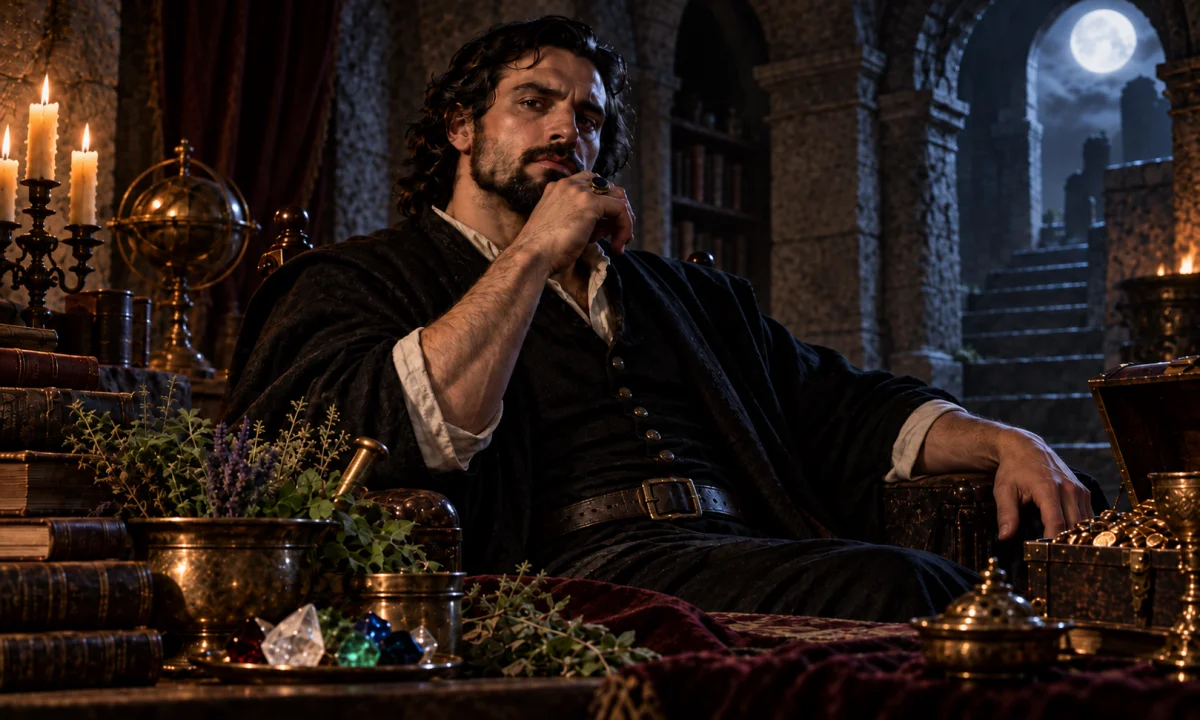
Foras, also written Forcas in some editions, is a demon listed in the Ars Goetia, the first section of the seventeenth-century grimoire commonly known as the Lesser Key of Solomon. He is described as a powerful president who appears in the form of a strong man. His attributed arts include logic, ethics, knowledge of herbs and precious stones, the discovery of hidden treasure, the recovery of lost objects, invisibility and the prolonging of life. Foras belongs to the learned demonology of early modern European grimoires rather than to an independent ancient mythology with a large body of stories.
Origins in European demonology
The tradition surrounding Foras developed within Christian European occult literature. Grimoires presented lists of spirits that could supposedly be summoned, questioned or compelled through prayers, names, seals and ritual procedures. These texts generally treated the spirits as demons or fallen beings, even when they assigned them abilities associated with scholarship, medicine, natural magic or the discovery of material wealth.
The best-known account of Foras appears in the Ars Goetia. This work forms part of the Lesser Key of Solomon, a compilation that took shape in the seventeenth century from earlier magical and demonological material. The Ars Goetia arranges seventy-two spirits according to names, ranks, functions, seals and numbers of infernal legions. Foras is usually numbered as the thirty-first spirit in that sequence.
Foras is not an invention that can be securely traced to a single ancient religion. His profile belongs to a textual tradition that combined Christian ideas about demons with older learned magic, astrology, ritual formulae and folklore about hidden knowledge. The cataloguing style also reflects the habits of early modern occult writers, who classified supernatural beings according to titles and offices in a hierarchy resembling a royal or bureaucratic court.
Earlier and related sources
The account of Foras is closely related to material found in Johann Weyer’s Pseudomonarchia Daemonum, a catalogue included with editions of his sixteenth-century work on demonic illusion. Weyer’s catalogue is one of the important predecessors of the Ars Goetia. The wording, ordering and details are not identical in every transmission, but the figure identified as Foras or Forcas appears within this broader literary family.
Because grimoires circulated in manuscripts and later printed editions, spelling and description can vary. Some versions use Foras, while others use Forcas. The difference does not necessarily indicate two separate demons. In the context of the Goetic catalogues, the names generally refer to the same listed spirit. At the same time, the spelling should not be treated as proof of a clear ancient etymology. No universally accepted origin for the name has been established.
Descriptions in occult books also differ in small details. Some versions emphasize his teaching of logic and ethics, while others include the virtues of herbs and stones more explicitly. The precise wording may depend on the manuscript or edition consulted. These variations are typical of grimoire transmission and make it unwise to treat every modern summary as an equally old or authoritative tradition.
Name and rank
Foras is classified as a president. In Goetic demonology, this is a rank within the imagined hierarchy of spirits. It should not be understood as a political office in the modern sense. The title places Foras among spirits said to command or govern other demons and indicates a relatively high status in the catalogue.
The standard description says that Foras rules over twenty-nine legions of spirits. A legion is a conventional unit used by demonological texts to express the scale of a spirit’s authority. It is not evidence for a literal military organization, and the number functions primarily as part of the grimoire’s system of classification.
Foras is sometimes called a king, duke or other rank in loose modern retellings, but the traditional Goetic designation is president. Such changes can result from simplified lists, occult reinterpretations or confusion with other spirits in the same catalogue.
Appearance
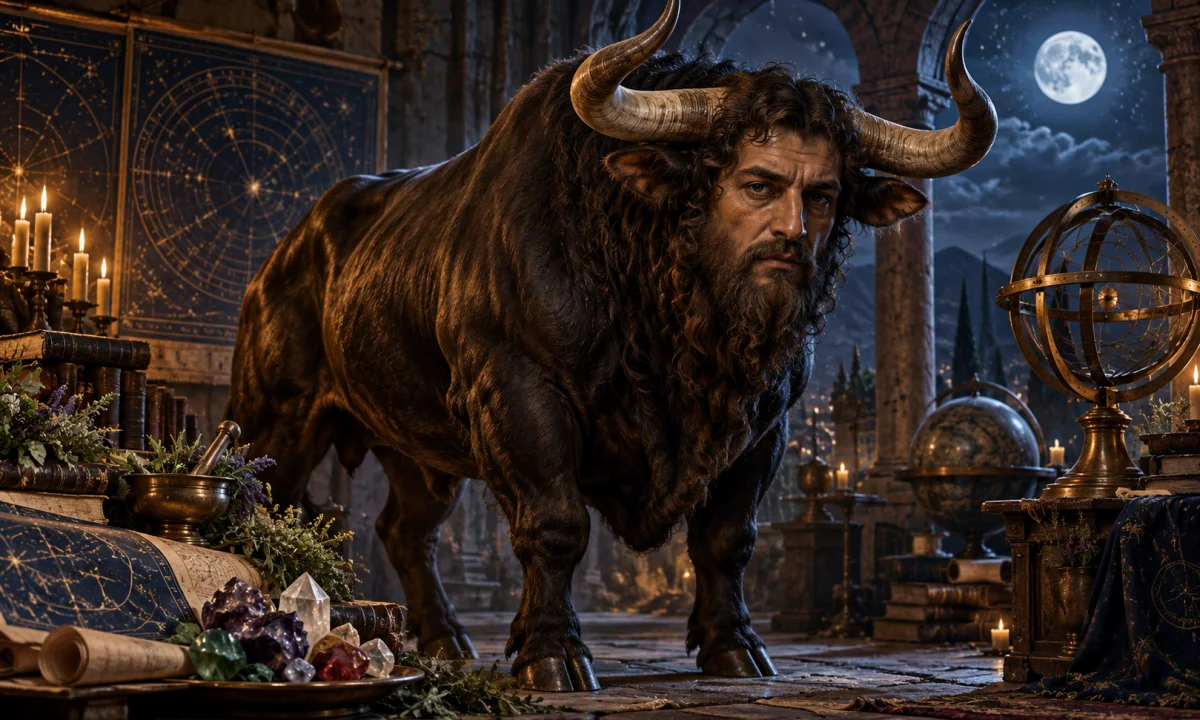
Foras is said to appear in the form of a strong man. The description is notably brief. Unlike some spirits in the catalogue, he is not given a detailed animal hybrid form, a monstrous body or a dramatic procession of symbols. The text does not establish a single canonical image with specific clothing, facial features, weapons or colors.
Modern illustrations often expand the short description into a more elaborate figure. An artist may portray Foras as a muscular human, a scholarly magician or a supernatural nobleman. These images can reflect the spirit’s association with knowledge and strength, but they are interpretations rather than details preserved consistently in the early sources.
Foras’s seal is also reproduced in many editions and modern occult manuals. As with the other seals of the Ars Goetia, the design can vary because manuscripts and printed books do not always agree. The seal is a ritual sign associated with the spirit in grimoire practice; it is not an ancient emblem independently attested in classical or medieval archaeology.
Abilities and functions
Logic, ethics and rhetoric
Foras is primarily presented as a teacher of learned disciplines. His listed subjects include logic and ethics, described as arts that he can teach in their various parts. Some versions or related summaries also connect him with rhetoric. These subjects belong to the traditional European curriculum of philosophy and education, rather than to a modern system of academic departments.
Logic concerned valid reasoning and the structure of arguments. Ethics concerned conduct, virtue and the principles governing human action. Their appearance in a demonic catalogue is significant because it shows how grimoires could assign intellectual authority to demons. Knowledge was not portrayed as automatically holy or safe; it could be acquired through forbidden or spiritually dangerous means.
Foras therefore differs from a demon characterized solely by violence, disease or temptation. His profile belongs to a recurring pattern in European demonology in which supernatural beings possess specialized expertise. A spirit might teach languages, reveal astronomy, explain metals or provide military knowledge. Such functions reflect both anxiety about illicit learning and fascination with hidden wisdom.
Herbs and precious stones
Foras is also associated in the tradition with the virtues of herbs and precious stones. In early modern occult thought, plants and minerals were believed to possess natural or occult properties. Some of these beliefs were connected with medicine, alchemy, astrology and the doctrine that the natural world contained hidden correspondences.
The phrase does not provide a complete herbal or mineral system, and the surviving descriptions do not name a fixed list of plants or stones taught by Foras. Claims that he is specifically the patron of a particular herb, crystal or modern healing practice go beyond the standard Goetic account unless they are clearly identified as later interpretation.
Invisibility and long life
The texts attribute to Foras the ability to make people invisible and to help them live for a long time. Invisibility is a familiar power in magical and folkloric literature. It can symbolize escape from observation, access to forbidden places or freedom from ordinary social restraints.
The promise of extended life belongs to another major theme of occult literature: the desire to overcome human limitations. It should not be confused with a promise of true immortality. The traditional wording concerns longevity or prolonged life, and it does not establish that Foras grants eternal existence or resurrection.
Hidden treasure and lost things
Foras is said to discover treasures and restore things that have been lost. These functions connect him with practical forms of magic that appear throughout European folklore and grimoires. Buried wealth, stolen property and missing objects were common subjects of supernatural inquiry, especially in societies where legal investigation and scientific methods were limited.
The description does not provide a famous narrative about a particular treasure or a named person whose possessions Foras recovered. His abilities are presented as entries in a catalogue, not as episodes in a developed mythology. Later stories that give him a personal history, a fixed kingdom or detailed adventures should therefore be treated as creative expansions.
Role in the Goetic system
Foras’s position among the seventy-two spirits gives him a defined place in a ritual hierarchy. The Ars Goetia combines three kinds of information: a spirit’s name and rank, the number of legions under its authority and the services it supposedly provides. It also supplies a seal and ritual instructions elsewhere in the work.
This structure reflects the worldview of the grimoire rather than a single continuous religious tradition. The spirits are organized as if they formed a court, with kings, princes, dukes, marquises, counts, knights, presidents and other officials. Such titles helped readers navigate the catalogue and may also have made supernatural forces appear subject to an orderly system of command.
The word Goetia is associated with practices of spirit conjuration and has often been translated in connection with sorcery or the evocation of spirits. In Christian moral contexts, these practices were normally condemned as demonic or illicit. The texts did not present Foras as a benevolent deity to be worshipped in an ordinary religious sense. His knowledge could be useful, but contact with him was framed within a dangerous and transgressive form of magic.
Interpretation and cultural significance
Foras illustrates the ambiguous place of knowledge in demonological literature. His abilities are not inherently destructive: logic, ethics, herbal knowledge and the recovery of lost property could all be beneficial. Yet the source places them under the authority of a demon. This contrast reflects a long-standing concern that useful knowledge might be obtained through morally forbidden methods or at an unacceptable spiritual cost.
His association with ethics is especially striking. A demon who teaches moral philosophy creates a tension between the content of the instruction and the identity of the instructor. The text does not resolve whether such knowledge should be trusted. It simply records the claim as part of Foras’s office. This characteristic is better understood as a feature of the catalogue’s imagination than as evidence of a coherent doctrine about demonic morality.
The combination of intellectual teaching, natural lore, hidden treasure and longevity also places Foras close to the interests of Renaissance and early modern occultism. Practitioners of that period could be interested simultaneously in classical philosophy, Christian theology, astrology, alchemy, medicine and ritual magic. The figure’s varied abilities reflect that mixed intellectual environment.
Distinguishing Foras from similar names
Foras should not automatically be identified with every spirit whose name begins with “For-” or “Fur-.” The most important possible confusion concerns Furcas, another spirit in the Ars Goetia. Furcas is usually ranked as a knight and is described as an old man riding a pale horse, with expertise in philosophy, astrology, rhetoric, logic, chiromancy and pyromancy. Although Forcas can appear as a spelling of Foras, Furcas is normally a separate entry with a different description and number.
Foras is also distinct from Forneus, another Goetic spirit. Forneus is generally listed as a great marquis and is associated with rhetoric, languages, good reputation and the favor of friends and enemies. Similar claims about eloquence or learning can make the two figures seem alike, but their names, ranks and catalogue entries are different.
These distinctions matter because modern lists sometimes normalize spellings, merge descriptions or repeat information without indicating which source supplied it. A careful account should identify the particular tradition being discussed and preserve the difference between a variant spelling and a separate demon.
Later occult and popular reception
Foras continued to appear in modern occult writing because the Ars Goetia became one of the most widely circulated sources for Western ceremonial demonology. Some practitioners treat the spirits symbolically, as representations of psychological forces or areas of knowledge. Others approach them as entities within a ritual cosmology. These interpretations are modern and should not be confused with the assumptions of the early modern texts.
Contemporary occult authors may expand Foras’s associations with study, herbalism, mineral lore, invisibility or personal transformation. They may also assign colors, planetary links, offerings, preferred ritual times or personality traits not stated in the older catalogues. Such additions belong to later systems of correspondence rather than to a stable ancient tradition.
Foras may also appear in fictional demonology, role-playing games, novels, visual art and online occult culture. In these settings he can be transformed into a villain, adviser, scholar or powerful monster. Fictional portrayals often borrow the name and a few abilities while inventing a new personality and history. The traditional Foras remains the comparatively spare figure recorded in Goetic demonological catalogues: a strong man, a president of twenty-nine legions and a spirit associated with learning, hidden things, invisibility and longevity.