WORLD

Eremiel
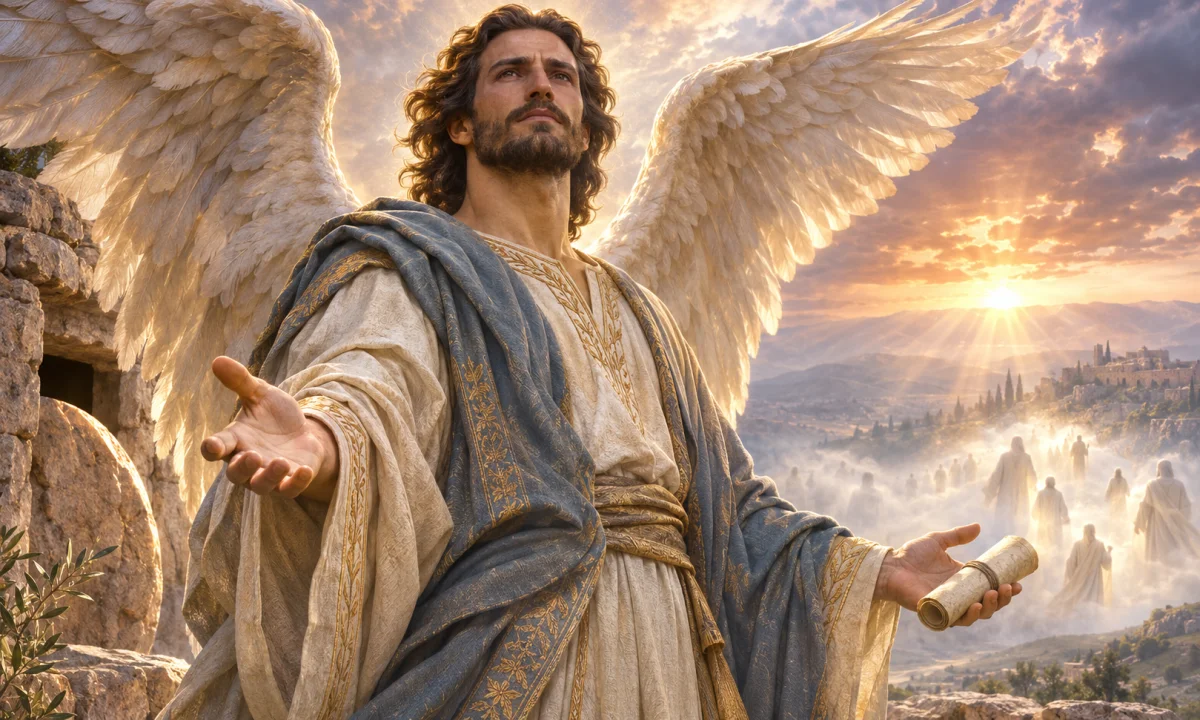
Eremiel is an angelic name found in some Jewish and Christian apocalyptic traditions, although its spelling, identity and precise role vary considerably between texts and later reference works. It is often connected with the names Remiel and Jeremiel, but these forms are not used consistently enough to assume that every mention refers to exactly the same figure. Eremiel is not one of the named angels of the Hebrew Bible or the New Testament, and the name belongs chiefly to the wider literature of Jewish apocalypticism, early Christian religious writing and later angelological interpretation.
Origins and religious setting
The traditions associated with Eremiel developed in a world where Jewish writers and communities were reflecting on angels, resurrection, judgment and the fate of the dead. These subjects became especially prominent in apocalyptic literature, a type of religious writing that presents heavenly revelations, visions of the end times and explanations of hidden realities. Such works often introduce angels as guides, interpreters and guardians of cosmic order.
Many of these writings were composed or transmitted outside the biblical canons recognised by most Jewish and Christian communities. Some were preserved in Greek, Syriac, Ethiopic, Coptic or other languages, and the same name could be transliterated differently when passed from one alphabet to another. As a result, an angel may appear as Remiel in one edition, Jeremiel in another and Eremiel in a later English presentation.
The name should therefore be approached as part of a developing tradition rather than as evidence for a single universally defined angel. Ancient religious texts do not provide a complete, standardised hierarchy in which every angel has a fixed office. Different authors assigned related names different duties, and later writers sometimes combined figures who had originally appeared separately.
The name Eremiel
The exact linguistic history of Eremiel is uncertain. The ending -el is a common element in Hebrew angelic names and refers to God. It appears in names such as Michael, Gabriel and Raphael. The first part of Eremiel is more difficult to establish because the form may reflect a scribal, transliteration or editorial variation.
Jeremiel is often interpreted as meaning something like “mercy of God” or “God has compassion,” although the precise derivation is debated. Remiel has sometimes been connected with a different meaning, commonly explained as “thunder of God.” These interpretations are not interchangeable, and they should not be presented as certain etymologies for Eremiel itself.
In modern lists of angels, Eremiel is frequently treated as an alternate spelling of Jeremiel or Remiel. That practice can be useful when comparing traditions, but it can also conceal important differences between the underlying texts. A name that looks similar in English may represent a distinct form in the original language, or it may have been produced by a copyist or translator attempting to reproduce an unfamiliar name.
Eremiel and Remiel in apocalyptic tradition
The closest ancient parallel to Eremiel is Remiel, who appears in the Ethiopic Book of Enoch, commonly called 1 Enoch. In a list of seven powerful angels, Remiel is associated with those who rise. This has generally been understood as a reference to the resurrection of the dead or to the heavenly supervision of the righteous awaiting resurrection.
The Book of Enoch does not present Remiel as a wandering spirit or a personal guardian angel in the later popular sense. He belongs to a larger heavenly administration in which angels oversee different aspects of creation, judgment and the world beyond ordinary human perception. His association with resurrection places him within one of the central concerns of apocalyptic religion: the conviction that death does not end the moral history of a person and that divine judgment will ultimately restore justice.
Whether this Remiel should always be called Eremiel is a matter of convention rather than settled fact. Some modern works use Eremiel as a variant form, while others keep the names separate. The spelling Remiel is more directly associated with the Ethiopic Enochic tradition, whereas Eremiel is often encountered in later catalogues, summaries or traditions influenced by several related texts.
Jeremiel and the fate of souls
Another important comparison is Jeremiel, an angel associated in some Jewish and Christian apocalyptic writings with visions of the dead and the future judgment. In traditions connected with 2 Baruch and related apocalyptic material, Jeremiel appears in a role involving heavenly revelation and the interpretation of events beyond the visible world. The details differ between manuscripts and translations, and the name is not always rendered in the same way.
Later descriptions often portray Jeremiel as an angel who observes or explains the condition of souls after death. This theme probably helped encourage the identification of Jeremiel with Remiel, since both names became associated with resurrection, judgment and the destiny of the dead. However, the existence of overlapping functions does not prove that the original authors intended a single angel.
The relationship between Eremiel, Jeremiel and Remiel is therefore best described as probable traditional overlap rather than a universally established identity. In a general discussion, it is reasonable to explain the connection; in a study of a particular manuscript, the exact spelling and context should be retained.
Possible appearances in other writings
Names resembling Eremiel or Jeremiel occur in several apocalyptic and visionary traditions, but their roles are not uniform. In some passages, a similarly named angel acts as a guide through heaven or through the places assigned to the dead. In others, the angel explains a vision, announces a divine decision or stands within a group of exalted heavenly beings.
These texts should not be treated as if they formed one continuous biography. An angel who explains a vision in one work is not automatically the same figure as an angel who governs the resurrected in another. Ancient authors frequently reused names, titles and symbolic functions while adapting them to their own theological concerns.
It is also important to distinguish between evidence from an ancient manuscript and an entry in a much later angelic catalogue. Later lists often organise angels according to ranks, planetary associations, virtues, days or magical functions. Such systems may preserve fragments of older tradition, but they may also reflect medieval, Renaissance or modern speculation. They do not necessarily tell us how Eremiel was understood in the earliest texts bearing a related name.
Roles and symbolism
Resurrection and renewal
The strongest traditional association connected with Remiel and related forms is the resurrection of the dead. This does not mean that Eremiel is a god of the dead or an independent ruler of the afterlife. In Jewish and Christian theology, angels remain servants and messengers of God. Their authority is delegated, and their work expresses divine judgment rather than replacing it.
As a symbol, an angel connected with resurrection represents the promise that the apparent finality of death will be overturned. The image also reflects the apocalyptic hope that hidden injustice will be revealed and corrected. The dead are not merely restored to life; they are brought into a process of moral reckoning in which the distinction between righteousness and wrongdoing becomes visible.
Judgment and the waiting dead
Some later interpretations give Eremiel a role in watching over souls before the final judgment. This idea should be expressed cautiously. The ancient traditions do not offer a single detailed map of the afterlife, and they do not consistently assign Eremiel a clearly defined office comparable to the roles later given to Michael as a heavenly champion or Raphael as a healer.
Where the name is connected with the dead, Eremiel is better understood as a figure of transition and expectation. The angel stands at the boundary between present mortality and future renewal, or between the hidden condition of the dead and the final revelation of divine justice.
Revelation and interpretation
Apocalyptic angels frequently serve as interpreters. They explain symbols, answer difficult questions and guide visionary figures through scenes that would otherwise be incomprehensible. When Eremiel or a related form appears in this capacity, the angel represents the belief that heavenly truth is too profound to be grasped without divine instruction.
This interpretive role is particularly significant in religious literature concerned with suffering. Human beings may see oppression, death and apparent disorder, while an angelic interpreter reveals that these events belong to a larger pattern of judgment and restoration. The angel does not remove uncertainty entirely, but places it within a theological framework.
Appearance and rank
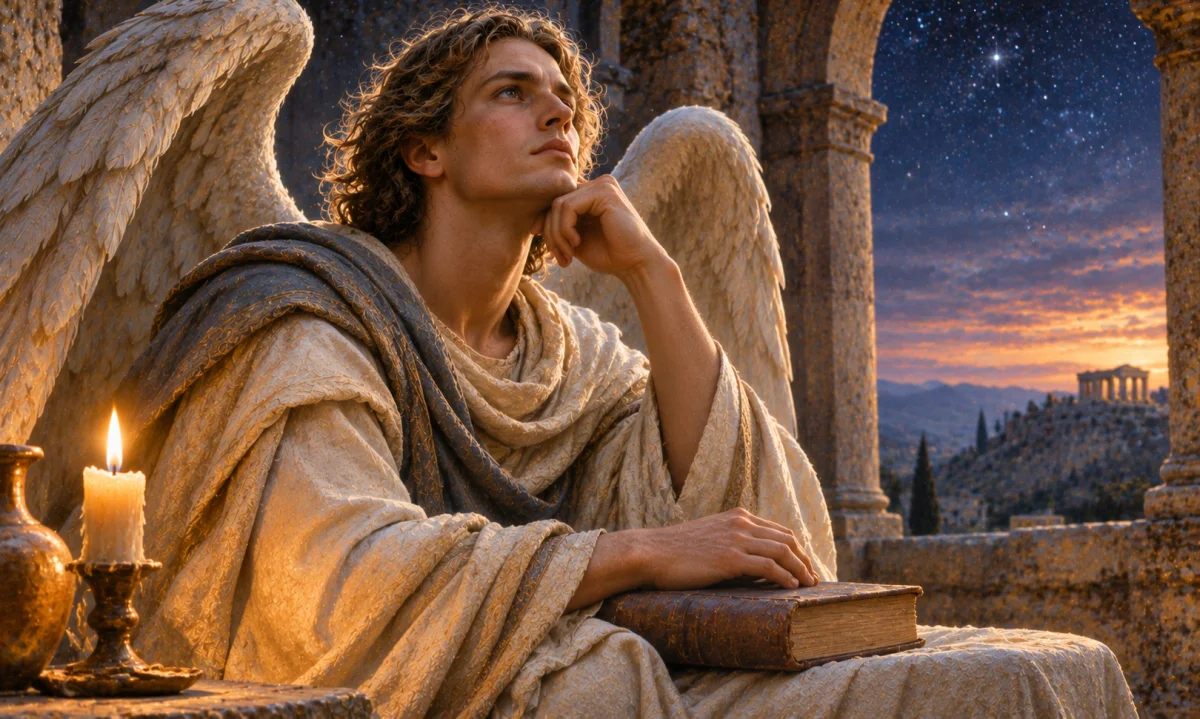
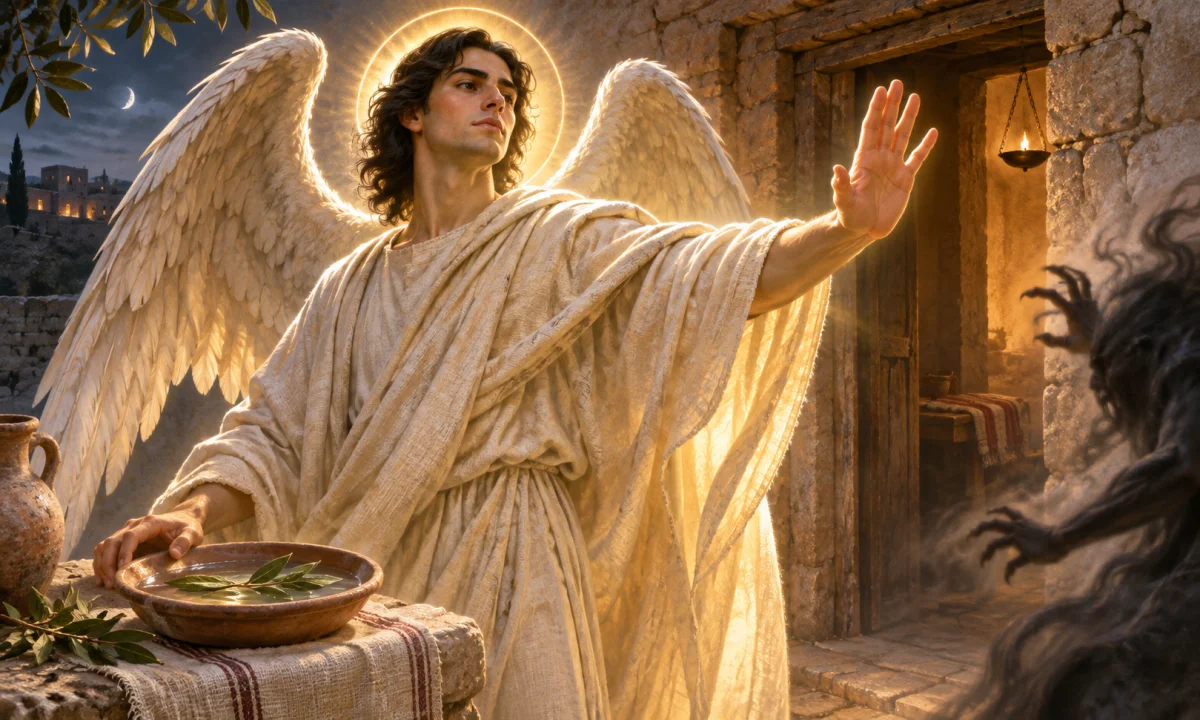
Ancient sources do not provide a stable physical description of Eremiel. There is no universally traditional portrait, colour scheme, weapon, garment or emblem that can be assigned to the angel with confidence. Images showing Eremiel with wings, a halo, a scroll or a radiant human form belong to general artistic conventions for angels or to later creative interpretation rather than to a single authoritative description.
Likewise, Eremiel does not possess a universally accepted rank. Some modern writers call the figure an archangel, partly because Remiel and Jeremiel appear in lists of highly exalted angels. Yet the term “archangel” is used differently across religious traditions, and the surviving texts do not establish one consistent hierarchy. It is safer to say that Eremiel is sometimes classified among the exalted or chief angels in later angelology.
Claims that Eremiel rules a particular planet, governs a specific weekday, carries a fixed colour or presides over a named magical sphere are generally products of later occult, esoteric or popular systems. They should not be confused with the earliest Jewish apocalyptic associations.
Distinguishing Eremiel from similar figures
Eremiel is most likely to be confused with Remiel and Jeremiel, but it should not automatically be merged with every angel whose name ends in -el. Similarity in spelling is not enough to establish identity.
- Remiel is the form most closely associated with resurrection in the Book of Enoch.
- Jeremiel appears in traditions involving revelation, the dead and the future judgment, although the details vary by text and translation.
- Uriel is a different angel, commonly portrayed in Jewish and Christian apocalyptic literature as a revealer of heavenly mysteries and an interpreter of visions.
- Raguel, another name in Enochic angel lists, has been associated with justice and the conduct of other angels; he is not simply another spelling of Eremiel.
- Azrael, widely known in later Islamic and Jewish-influenced traditions as an angel connected with death, is not the same figure as Eremiel.
Confusion is increased by the fact that lists of named angels were copied, translated and reorganised over many centuries. A name may shift position in a list, acquire a new meaning or be replaced by a similar form. Careful interpretation therefore depends on the particular text, language and period under discussion.
Cultural and religious significance
Eremiel is significant less because of a single famous story than because the traditions around the name express major religious questions. What happens to the dead? How will injustice be answered? Can human beings understand the hidden order of creation? Is renewal possible after catastrophe?
In these contexts, the angel is a figure of hope within judgment. Resurrection is not presented merely as personal survival, and judgment is not merely punishment. Together they describe a divine reordering of reality in which suffering, moral action and human destiny receive their proper meaning. An angel linked with this process functions as a sign that the boundary between death and life remains subject to divine power.
The uncertain identity of Eremiel is itself historically meaningful. It shows that angelology was not a single closed system. Jewish, Christian and later esoteric writers inherited names from earlier traditions, interpreted them according to new concerns and sometimes combined figures whose original roles had been distinct. Rather than weakening the subject, this complexity reveals how religious communities used angelic names to think about mysteries that could not be represented directly.
Later reception
In modern books, websites and fictional works, Eremiel is often described as an angel of hope, dreams, spiritual transformation, resurrection or the afterlife. These descriptions may draw on genuine ancient associations with Remiel or Jeremiel, but they frequently add details not found in the older sources. Modern systems may also give Eremiel a fixed appearance, a personal message for individual seekers or a specialised role in spiritual counselling.
Such uses belong to contemporary devotional, esoteric or fictional reception rather than to a single established ancient doctrine. The traditional material supports connections with heavenly revelation, resurrection and the destiny of the dead, but it does not provide a complete modern personality profile. Eremiel is best understood through the history of related names and texts, with the differences between those traditions kept visible rather than smoothed into one definitive character.