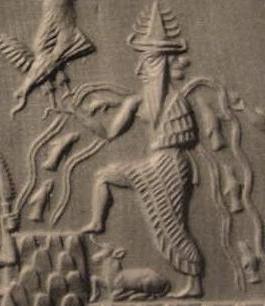
Enki, a prominent figure in Mesopotamian mythology, is often revered as the god of water, knowledge, mischief, and creation. He is known for his wisdom and his ability to navigate complex situations with intelligence and cunning. As one of the key deities in the ancient Sumerian pantheon, Enki’s influence extended to various aspects of life, including agriculture, crafts, and the arts. His role in mythology reflects the values and beliefs of the people who worshipped him, as well as the environmental conditions of the region. The stories surrounding Enki reveal a deep understanding of human nature and the natural world.
Origins of Enki
Enki’s origins can be traced back to ancient Sumer, where he was worshipped as a major god. He was often depicted as a figure with a human body and the head of a goat or a fish, symbolizing his connection to water and fertility. Water was a vital resource in Mesopotamia, and Enki’s association with it made him a central figure in the pantheon. He was believed to reside in the Apsu, the primordial sea, which was considered the source of all fresh water. This connection to water also linked him to the fertility of the land, as rivers and irrigation were crucial for agriculture in the region.
 Enkidu
Enki was one of the children of the sky god Anu and the earth goddess Ki. His siblings included other important deities, such as Enlil, the god of wind and air. The relationships between these gods often reflected the dynamics of human society, with themes of power, conflict, and cooperation. Enki’s wisdom and creativity set him apart from his siblings, as he was often seen as a mediator and problem solver in various myths.
Attributes and Symbolism
Enki is associated with several important attributes that highlight his multifaceted nature. One of the most significant symbols of Enki is water, which represents life, purity, and fertility. In many myths, he is depicted as controlling rivers and streams, ensuring that they flow freely to nourish the land. This connection to water also signifies his role as a source of knowledge, as water is often seen as a metaphor for wisdom and enlightenment.
 Enlil
EnlilAnother key attribute of Enki is his association with craftsmanship and the arts. He is often portrayed as a patron of artisans and builders, encouraging creativity and innovation. In this role, Enki embodies the spirit of invention, promoting the development of technologies that improve human life. His influence can be seen in various crafts, from pottery to metalwork, highlighting the importance of skill and artistry in Mesopotamian culture.
Enki in Creation Myths
One of the most famous stories involving Enki is the Enuma Elish, the Babylonian creation myth. In this narrative, Enki plays a crucial role in the formation of the world and the creation of humanity. According to the myth, the universe was initially a chaotic mass of water, and Enki, along with other gods, helped to separate the waters and create the earth. His wisdom was instrumental in bringing order to the cosmos, demonstrating his importance in the divine hierarchy.
In the Enuma Elish, Enki’s involvement continues as he assists in the creation of humans. The gods, burdened by their labor, decide to create a being that would serve them and take on their burdens. Enki, however, proposes that humans be created with a mix of divine and earthly elements. This act of creation reflects his belief in the potential of humanity and their capacity for intelligence and creativity.
 Ea
EaEnki and the Flood Myth
The flood myth is another significant story in which Enki plays a pivotal role. In this narrative, the gods decide to send a flood to cleanse the earth of its corruption. However, Enki, aware of the impending disaster, takes it upon himself to warn a righteous man named Utnapishtim (similar to Noah in the biblical story). Enki instructs him to build a large boat to save himself, his family, and a selection of animals.
This act of warning and protection illustrates Enki’s role as a benevolent deity who values life and seeks to preserve it. His actions contrast with the more destructive tendencies of other gods, emphasizing his wisdom and compassion. The flood myth serves as a reminder of the balance between divine power and human agency, as well as the importance of morality and righteousness in the face of adversity.
Enki’s Influence on Agriculture
As the god of water and fertility, Enki had a profound influence on agriculture in Mesopotamia. The region’s reliance on irrigation for farming made Enki’s role as a water deity essential for the success of crops. Farmers often prayed to Enki for favorable conditions, such as adequate rainfall and healthy soil. His blessings were believed to ensure bountiful harvests and the prosperity of communities.
Enki’s association with agriculture also extended to the teaching of farming techniques and practices. Myths often depict him as imparting knowledge to humanity, sharing secrets of planting and harvesting. This connection highlights the importance of knowledge in agricultural success and reflects the values of a society that depended on the land for survival.
Enki and Human Beings
Enki’s relationship with humanity is complex and multifaceted. He is often portrayed as a protector and benefactor, advocating for human rights and welfare. His creation of humanity was not merely an act of servitude; it was an acknowledgment of their potential and significance in the divine order. Enki’s narratives frequently emphasize the importance of wisdom and knowledge, encouraging humans to seek understanding and make moral choices.
In various myths, Enki interacts with humans, offering guidance and assistance in times of need. His willingness to help reflects a deep connection to humanity, contrasting with the more distant or wrathful nature of other deities. This aspect of Enki’s character resonates with the values of the Sumerian people, who sought a deity that embodied wisdom, compassion, and creativity.
Enki in Art and Culture
Enki’s influence is evident in various forms of art and culture throughout Mesopotamia. Temples dedicated to Enki, such as the one in Eridu, were centers of worship and community life. These temples often featured intricate carvings and sculptures depicting Enki in various poses, emphasizing his divine attributes. Artists sought to capture his essence, reflecting the reverence with which he was regarded.
Additionally, Enki’s stories were preserved in cuneiform texts, which served as a means of transmitting knowledge and culture across generations. These texts not only included myths but also practical information about agriculture, medicine, and crafts, showcasing Enki’s role as a source of wisdom. The preservation of these stories highlights the importance of Enki in the cultural identity of the Mesopotamian people.
Enki and Other Deities
Enki’s relationships with other deities in the Mesopotamian pantheon are significant for understanding his role within the mythology. His interactions with gods such as Enlil and Inanna often involve themes of conflict, cooperation, and negotiation. For instance, Enki and Enlil had differing views on how to manage humanity, leading to tensions between them. These dynamics reflect the complexities of power and authority in both divine and human realms.
Enki’s relationship with Inanna, the goddess of love and war, is particularly interesting. Their interactions often highlight themes of friendship and mutual respect. In some myths, Enki provides Inanna with the tools and knowledge she needs to succeed in her endeavors, showcasing his role as a mentor. This partnership exemplifies the collaborative nature of the gods and their shared responsibilities in maintaining order in the world.
The Legacy of Enki
The legacy of Enki extends beyond ancient Mesopotamia, influencing later cultures and religions. His attributes and stories have parallels in various mythologies, reflecting universal themes of creation, wisdom, and the relationship between gods and humans. The reverence for water and its life-giving properties can be seen in numerous cultures, emphasizing the significance of Enki’s role as a water deity.
In modern times, Enki continues to be a subject of interest for scholars and enthusiasts of mythology. His stories are studied for their insights into ancient beliefs, values, and the human experience. Enki’s character serves as a reminder of the enduring power of mythology to convey moral lessons and cultural identity.
Enki stands as a testament to the richness of Mesopotamian mythology and its reflections on the human condition. His attributes as a god of water, wisdom, and creation highlight the values of a society deeply connected to its environment. Through his stories, Enki embodies the ideals of knowledge, compassion, and creativity, serving as a guide for humanity in its quest for understanding and harmony.