
Demeter is one of the most significant figures in Greek mythology, known primarily as the goddess of the harvest and agriculture. She plays a crucial role in the ancient Greek understanding of the changing seasons and the cycle of life and death. Her influence extends beyond just farming; she is also associated with fertility, sacred law, and the seasons. The stories surrounding Demeter reflect the deep connection that the ancient Greeks had with nature and the importance of agriculture to their society. This article explores various aspects of Demeter’s character, her myths, and her impact on Greek culture.
Demeter’s Origins and Family
Demeter is one of the twelve Olympian deities and is often depicted as a mature woman, symbolizing her role as a nurturing figure. She is the daughter of the Titans Cronus and Rhea. In Greek mythology, Cronus is known for his cruel nature, as he swallowed his children to prevent them from overthrowing him. However, Rhea managed to save Demeter by hiding her away in Crete. This act of protection allowed Demeter to grow and eventually take her place among the Olympian gods.
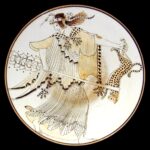 Maenads
Demeter has a daughter named Persephone, who is central to many of the myths associated with her mother. The bond between Demeter and Persephone is a significant theme in Greek mythology, highlighting the maternal instinct and the pain of separation. Persephone’s abduction by Hades, the god of the underworld, marks a pivotal moment in the stories of both deities. This event not only illustrates the relationship between mother and daughter but also serves as a metaphor for the changing seasons and the cycle of life.
The Myth of Persephone
The myth of Persephone’s abduction is one of the most famous stories involving Demeter. According to the legend, while Persephone was picking flowers in a field, Hades emerged from the underworld and took her away to be his queen. Demeter was devastated by the loss of her daughter and searched the earth tirelessly for her. During her search, she neglected her duties as the goddess of agriculture, which caused the earth to become barren and lifeless.
This period of mourning resulted in a great famine that affected both gods and mortals. The other gods recognized the dire situation and urged Hades to return Persephone to her mother. Hades agreed but tricked Persephone into eating pomegranate seeds, which bound her to the underworld. As a result, it was decreed that Persephone would spend a third of the year with Hades in the underworld and the remaining two-thirds with Demeter on earth.
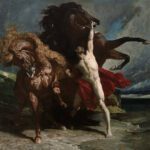 Balius
The Seasons Explained
- Winter: When Persephone is in the underworld, Demeter mourns her absence, causing the earth to become cold and barren.
- Spring: When Persephone returns, Demeter rejoices, and the earth blooms with flowers and crops.
- Summer: During this time, Demeter nurtures the crops, and the earth is full of life and abundance.
- Autumn: As Persephone prepares to return to the underworld, Demeter begins to mourn again, leading to the harvest season.
This cyclical pattern of Persephone’s journey between the underworld and the earth symbolizes the changing seasons and the agricultural cycle. The myth of Demeter and Persephone not only explains natural phenomena but also reflects the ancient Greeks’ understanding of life, death, and rebirth.
Demeter’s Cult and Worship
Demeter was widely worshiped in ancient Greece, with numerous temples and festivals dedicated to her. One of the most important festivals was the Eleusinian Mysteries, celebrated in Eleusis, near Athens. This festival honored both Demeter and Persephone and involved secret rituals that were believed to ensure a good harvest and the safe passage of souls to the afterlife. The mysteries were so sacred that they were only open to initiates who had undergone a purification process.
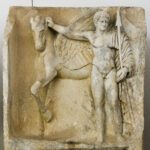 Bellerophon
During the Eleusinian Mysteries, participants engaged in various activities, including fasting, processions, and dramatic reenactments of the myth of Demeter and Persephone. These rituals were thought to provide initiates with profound insights into life, death, and the afterlife. The cult of Demeter emphasized the importance of agriculture and the earth, as well as the belief in the afterlife, making her worship integral to Greek society.
Symbols and Representations
Demeter is often associated with various symbols that represent her role as the goddess of agriculture. One of the most recognizable symbols is the sheaf of wheat, which signifies fertility and the harvest. In many depictions, she is shown holding a cornucopia, also known as the “horn of plenty,” symbolizing abundance and nourishment. Additionally, Demeter is often portrayed with a torch, representing the search for her daughter Persephone and the light of knowledge.
Artists throughout history have captured Demeter’s essence in various forms. In ancient sculptures and pottery, she is often depicted as a strong, maternal figure, embodying both the nurturing and fierce aspects of motherhood. These artistic representations have played a crucial role in shaping the cultural understanding of Demeter and her significance in Greek mythology.
Demeter’s Role in Greek Society
Demeter’s influence extended beyond mythology into the daily lives of the ancient Greeks. As the goddess of agriculture, she was revered by farmers and those who relied on the land for their livelihood. The changing seasons dictated agricultural practices, and Demeter’s myths provided explanations for these natural cycles. Farmers would offer sacrifices and prayers to Demeter in hopes of ensuring a bountiful harvest.
Moreover, Demeter’s role as a fertility goddess linked her to the well-being of families and communities. Her association with grain and sustenance made her a vital figure in rituals related to childbirth and family growth. The ancient Greeks believed that honoring Demeter would bring prosperity not only to their crops but also to their households.
Demeter in Literature and Art
Demeter’s stories have inspired countless works of literature and art throughout history. Ancient playwrights, such as Aeschylus and Sophocles, included her in their tragedies, often highlighting her maternal love and the emotional turmoil caused by Persephone’s abduction. These plays emphasized the themes of loss, grief, and the cyclical nature of life, resonating deeply with audiences.
In addition to theater, Demeter has been a prominent figure in visual arts. Renaissance artists often depicted her in various forms, showcasing her connection to nature and fertility. Paintings, sculptures, and mosaics illustrate her nurturing aspects and her relationship with Persephone. These artistic representations have helped to keep the myths of Demeter alive, allowing modern audiences to connect with the ancient stories.
Modern Interpretations of Demeter
In contemporary culture, Demeter continues to be a symbol of motherhood, fertility, and the earth’s bounty. Her story has been reinterpreted in various forms, including literature, film, and art. Modern feminist interpretations often highlight her role as a powerful woman who defies patriarchal norms, showcasing her strength and resilience in the face of adversity.
Additionally, Demeter’s connection to agriculture has made her a relevant figure in discussions about sustainability and environmentalism. As people become more aware of the importance of preserving the earth and its resources, Demeter’s role as the goddess of the harvest resonates with contemporary movements advocating for responsible farming and ecological balance.
Conclusion: The Enduring Legacy of Demeter
Demeter remains a vital figure in Greek mythology, representing the profound connections between life, death, and the natural world. Her myths reflect the agricultural practices and cultural beliefs of ancient Greece while continuing to inspire modern interpretations. As society grapples with issues related to the environment and the importance of nurturing relationships, Demeter’s legacy as a goddess of fertility and harvest remains relevant and impactful.