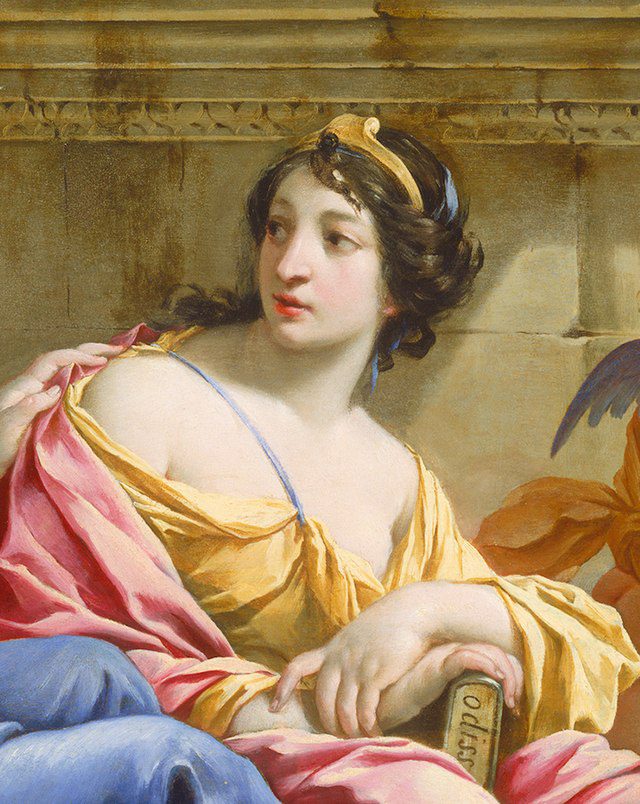
In the rich tapestry of Greek mythology, the Muses hold a special place, serving as the divine sources of inspiration for the arts and sciences. Among these Muses, Calliope stands out as the Muse of epic poetry. She is often depicted as a figure of great beauty and wisdom, wielding a writing tablet or a scroll. Calliope’s role in mythology extends beyond mere inspiration; she represents the ideals of eloquence and artistry, guiding poets and writers in their quest for greatness. Her name, derived from the Greek words for ‘beautiful voice’, reflects her profound influence on the art of storytelling.
The Significance of Calliope in Greek Mythology
Calliope is not just another Muse; she is often considered the leader of the nine Muses. Each Muse represents a different aspect of the arts and sciences, but Calliope’s domain over epic poetry gives her a unique significance. In ancient Greece, epic poetry was a revered art form, often used to convey history, mythology, and moral lessons. Calliope’s presence in this sphere ensured that the stories told were not only entertaining but also rich in cultural and ethical value. Her influence can be seen in works such as Homer’s “Iliad” and “Odyssey,” which have shaped Western literature for centuries.
 Callisto
As the Muse of epic poetry, Calliope embodies the qualities of strength and intellect. She is often invoked by poets and writers seeking to create lasting works that resonate with audiences. Her guidance is thought to help them tap into their creative potential, allowing them to craft narratives that are both profound and beautiful. The ancient Greeks believed that invoking Calliope before writing would result in a more powerful and impactful piece of work, which speaks to her importance in the creative process.
Calliope’s Family and Relationships
Calliope is one of the nine Muses, daughters of Zeus and Mnemosyne, the goddess of memory. Each Muse has her own unique domain, but they often work together, embodying the interconnectedness of the arts. Calliope is frequently associated with her sisters, such as Clio, the Muse of history, and Erato, the Muse of love poetry. Together, they represent a comprehensive view of artistic expression, from storytelling to music and dance. Their relationships highlight the collaborative nature of art, as different forms often inspire and influence one another.
Calliope is also known for her connection to famous figures in Greek mythology. One of her most notable relationships is with the hero Orpheus, who was renowned for his musical talents. According to some myths, Calliope was his mother, and it was her influence that inspired his extraordinary abilities. This connection emphasizes the idea that true artistic talent often comes from a divine source, a recurring theme in Greek mythology.
 Calypso
Symbolism and Iconography of Calliope
In art and literature, Calliope is often depicted with certain symbols that represent her domain over epic poetry. Commonly, she is shown holding a scroll or a writing tablet, tools that signify her role in the creative process. Sometimes, she is also portrayed with a lyre, a stringed instrument associated with music and poetry. These symbols are essential for understanding her character and the influence she wields over poets and storytellers.
Additionally, Calliope is frequently depicted as a beautiful woman, embodying the grace and elegance associated with the arts. Her attire often includes flowing robes, which symbolize the fluidity of creativity. Artists throughout history have used her image to inspire others, illustrating the timeless nature of her influence. The visual representations of Calliope serve not only to honor her but also to remind us of the power of storytelling and the arts in human culture.
 Castor
Calliope in Literature and Modern Culture
The legacy of Calliope extends beyond ancient texts and into modern literature and culture. Many contemporary writers and poets still invoke her name when seeking inspiration. In academic circles, Calliope is often discussed in the context of literary analysis, particularly regarding epic poetry. Her influence can be seen in works that draw on the themes of heroism, adventure, and moral lessons, which are hallmarks of epic storytelling.
Moreover, Calliope has inspired various forms of modern media, including films, music, and theater. Her character often appears in adaptations of ancient myths, where she is portrayed as a guiding force for the protagonists. The idea of a Muse, particularly Calliope, resonates with artists who seek to connect with the deeper aspects of creativity and expression. This connection highlights the enduring relevance of Greek mythology in contemporary culture.
Rituals and Worship of Calliope
In ancient Greece, the Muses were revered, and rituals were often conducted to honor them. Calliope, as the Muse of epic poetry, was particularly significant to poets and playwrights. These artists would offer sacrifices or dedicate their works to her in hopes of receiving her favor and inspiration. The worship of Calliope often took place in public spaces, such as theaters and amphitheaters, where her influence was most palpable.
During festivals dedicated to the Muses, such as the Panhellenic Games, poets would compete in various contests, reciting their works in hopes of winning glory and recognition. These events were not only a way to honor Calliope but also a means of celebrating the importance of poetry and storytelling in Greek society. The communal aspect of these rituals underscores the idea that art is a shared experience, one that connects individuals through shared narratives and emotions.
Calliope in Comparison with Other Muses
While Calliope is the Muse of epic poetry, each of her sisters embodies a different aspect of the arts. For example, Clio represents history, Erato symbolizes love poetry, and Thalia is associated with comedy. The diversity among the Muses illustrates the multifaceted nature of artistic expression. Each Muse has her own unique characteristics, yet they often collaborate, reflecting the interconnectedness of various art forms.
Calliope’s focus on epic poetry sets her apart from the other Muses, who may inspire different genres and styles. Her narratives often delve into themes of heroism, morality, and the human experience, while other Muses may inspire more personal or lighthearted expressions of art. This distinction highlights the significance of epic storytelling in preserving cultural heritage and conveying important life lessons.
Influence of Calliope on Education and the Arts
The influence of Calliope extends beyond the realm of mythology and into the fields of education and the arts. In ancient Greece, education often included a focus on the arts, with students being encouraged to study poetry, music, and drama. Calliope’s role as the Muse of epic poetry made her a central figure in this educational framework. Students were taught to appreciate the beauty of language and storytelling, often invoking Calliope for inspiration in their own creative endeavors.
Today, Calliope’s legacy continues in educational programs that emphasize the importance of literature and the arts. Schools and universities often celebrate poetry and storytelling through events, workshops, and competitions. By fostering a love for the arts, educators honor Calliope’s influence, encouraging students to explore their creativity and express themselves through writing and performance. This ongoing appreciation for the arts reflects the timeless relevance of Calliope and her sisters.
Calliope in Art and Sculpture
Throughout history, artists have depicted Calliope in various forms, capturing her essence as the Muse of epic poetry. Many sculptures and paintings portray her with traditional symbols, such as the writing tablet or lyre. These artistic representations serve to immortalize her influence and celebrate the beauty of creativity. In many artworks, Calliope is shown surrounded by her fellow Muses, highlighting their collaborative spirit and the shared pursuit of artistic excellence.
Famous artists, including the likes of Raphael and Michelangelo, have drawn inspiration from Calliope, creating works that embody her ideals. These artistic interpretations often emphasize her grace and beauty, reflecting the reverence with which she is regarded in the realm of the arts. Through these visual representations, Calliope continues to inspire not only artists but also anyone who seeks to express themselves creatively.
Modern Interpretations of Calliope
In contemporary culture, Calliope’s image and symbolism have been reinterpreted in various ways. Writers, filmmakers, and artists often draw on her legacy to explore themes of inspiration and creativity. For instance, in literature, characters inspired by Calliope may embody the struggles and triumphs of the creative process. These modern interpretations serve to connect audiences with the timeless nature of storytelling and the human experience.
Additionally, Calliope’s influence can be seen in popular media, such as films and television shows that explore artistic themes. Her character is often portrayed as a guiding force for protagonists who seek to overcome challenges in their creative journeys. This modern representation emphasizes the enduring relevance of Calliope, reminding us that the pursuit of art and creativity is a universal endeavor that transcends time and culture.
Calliope’s Legacy in Poetry and Literature
The legacy of Calliope is deeply embedded in the fabric of poetry and literature. Many poets and writers throughout history have acknowledged her influence in their works. They often reference Calliope as a source of inspiration, invoking her name as they embark on their creative journeys. This practice reflects the belief that the Muses, particularly Calliope, provide a connection to a higher realm of creativity and artistic expression.
Notable poets, such as John Keats and William Wordsworth, have celebrated Calliope in their writings, highlighting her role in shaping the art of poetry. Their works often explore themes of beauty, nature, and the human experience, echoing the ideals that Calliope embodies. By invoking her name, these poets seek to align themselves with the rich tradition of epic storytelling, reinforcing the idea that art is a powerful means of communication and connection.
Conclusion of Calliope’s Journey Through Time
As we reflect on the journey of Calliope through time, it becomes evident that her influence is far-reaching and enduring. From ancient Greece to modern literature and art, Calliope serves as a symbol of inspiration and creativity. Her legacy reminds us of the importance of storytelling and the arts in shaping our understanding of the world and ourselves. Whether through poetry, music, or visual art, Calliope continues to inspire generations, urging us to explore the depths of our creativity and express our unique voices.