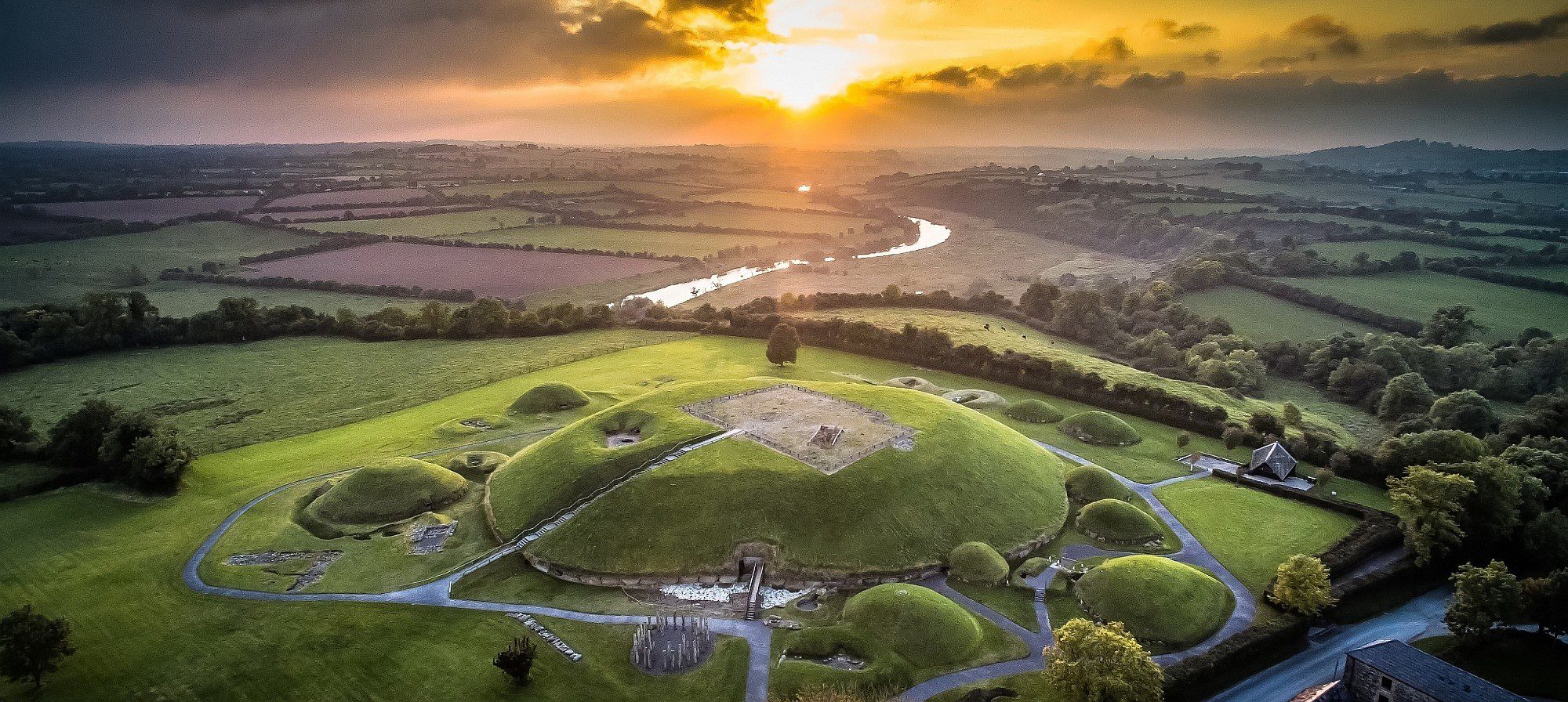
Brugh Na Bóinne, also known as the Brú na Bóinne, is an ancient archaeological site located in County Meath, Ireland. This site is not only significant for its impressive structures but also for its deep connections to Irish mythology. The area is home to some of the most famous prehistoric monuments in Europe, including the Newgrange passage tomb, which dates back to around 3200 BC. This makes it older than both Stonehenge and the Great Pyramids of Giza. The site is a UNESCO World Heritage Site, recognized for its cultural and historical importance.
The Mythological Significance of Brugh Na Bóinne
In Irish mythology, Brugh Na Bóinne is often linked to the Tuatha Dé Danann, a race of supernatural beings who were said to inhabit Ireland before the arrival of the Celts. According to legend, Brugh Na Bóinne was the home of the goddess Ériu and the site where the ancient kings of Ulster were buried. The myths surrounding this area highlight its importance as a sacred landscape, believed to be a gateway between the mortal world and the otherworld.
 Brigit
The Tuatha Dé Danann are central figures in many Irish myths, and they are often depicted as skilled in magic and warfare. Their connection to Brugh Na Bóinne emphasizes the site’s role as a spiritual and political center. The stories that emerge from this mythology often involve themes of death, rebirth, and the afterlife, reflecting the beliefs of ancient Irish society regarding the cycle of life.
Key Myths Associated with Brugh Na Bóinne
- The Story of the Dagda
- The Tale of the Morrigan
- The Legend of the Sidhe
One of the most notable figures in Irish mythology associated with Brugh Na Bóinne is the Dagda, the father god of the Tuatha Dé Danann. He is often described as a powerful and benevolent deity who possesses a magical cauldron that never runs empty. According to the myths, the Dagda was said to have built Brugh Na Bóinne as a palace where he could host feasts and celebrations. The site was believed to be a place where the divine and mortal realms intersected, allowing for communication and interaction between gods and humans.
Another prominent figure is the Morrigan, a goddess of war and fate. She is often depicted as a shape-shifter and is associated with prophecy and sovereignty. In some stories, the Morrigan is said to roam the fields of battle, foretelling the outcomes of conflicts. Her connection to Brugh Na Bóinne symbolizes the importance of this site as a place of both life and death, reflecting the duality of existence.
 Bricriu
The Archaeological Importance of Brugh Na Bóinne
Brugh Na Bóinne is not only a site of mythological significance but also a treasure trove of archaeological findings. The area contains several passage tombs, with Newgrange being the most famous. These tombs are characterized by their impressive stone structures and intricate carvings. The construction techniques used in these monuments demonstrate the advanced skills of the Neolithic people who built them. The passage tombs at Brugh Na Bóinne are considered some of the finest examples of prehistoric architecture in Europe.
Newgrange, in particular, is renowned for its astronomical alignment. Each year, during the winter solstice, sunlight illuminates the inner chamber of the tomb, creating a spectacular display that attracts thousands of visitors. This event is not only a testament to the engineering prowess of the ancient builders but also highlights their deep understanding of the natural world and its cycles. The alignment of Newgrange with the rising sun suggests that the builders had a sophisticated knowledge of astronomy, which played a significant role in their cultural and religious practices.
 Brian
BrianOther Notable Monuments in Brugh Na Bóinne
- Knowth
- Dowth
- Various standing stones
In addition to Newgrange, the Brugh Na Bóinne complex includes other notable monuments, such as Knowth and Dowth. Knowth is particularly famous for its dual passage tombs and over 200 decorated stones, many of which feature intricate carvings. These carvings are believed to hold significant meaning, possibly related to the rituals and beliefs of the people who built the site. The presence of multiple tombs in close proximity suggests that Brugh Na Bóinne was a significant ceremonial center, where communities gathered for important rituals and events.
Dowth, on the other hand, is less well-known but equally important. Its tomb features a large mound with a passage that leads to a central chamber. The site is surrounded by a series of standing stones, some of which bear carvings similar to those found at Newgrange and Knowth. These stones may have served as markers for rituals or as memorials for the dead, further emphasizing the site’s role in the spiritual life of ancient Irish society.
The Modern Interpretation of Brugh Na Bóinne
Today, Brugh Na Bóinne continues to captivate the imagination of visitors and scholars alike. The site has become a focal point for those interested in archaeology, history, and mythology. The stories and legends associated with Brugh Na Bóinne are now part of a broader cultural narrative that connects modern Ireland to its ancient past. The continued interest in this site has sparked numerous studies and publications, helping to shed light on the lives and beliefs of the people who once inhabited this sacred landscape.
Many visitors come to Brugh Na Bóinne not only to explore the archaeological features but also to engage with the myths and stories that have emerged from the site. Guided tours often include discussions of the significance of the monuments, as well as the various legends associated with them. This blend of history and mythology enriches the visitor experience, allowing for a deeper understanding of the cultural heritage of Ireland.
Preservation Efforts
- UNESCO World Heritage Status
- Visitor Management
- Archaeological Research
Preservation efforts at Brugh Na Bóinne are critical to ensuring that future generations can appreciate this remarkable site. The designation of Brugh Na Bóinne as a UNESCO World Heritage Site has helped to raise awareness of its significance and has provided resources for its conservation. Ongoing archaeological research continues to uncover new findings, contributing to our understanding of the site’s history and its role in ancient Irish society.
Visitor management is also a key aspect of preservation. As the site attracts a growing number of tourists, it is essential to implement strategies that protect the monuments while allowing for public access. This includes guided tours that educate visitors about the importance of the site and the need for responsible behavior while exploring the area. By fostering a sense of respect for the site, efforts can be made to minimize the impact of tourism on these ancient structures.
Brugh Na Bóinne in Popular Culture
Brugh Na Bóinne has also made its mark in popular culture, appearing in various forms of media, including literature, film, and art. The myths and legends associated with the site have inspired countless artists and writers, who have sought to capture the essence of this ancient place. The themes of magic, mystery, and the connection to the past resonate with audiences, making Brugh Na Bóinne a compelling subject for creative expression.
In literature, many authors have drawn upon the rich tapestry of Irish mythology, using Brugh Na Bóinne as a backdrop for their stories. The site serves as a symbol of the enduring connection between the past and the present, inviting readers to explore the complexities of identity, culture, and history. These narratives often weave together elements of the supernatural and the historical, creating a captivating blend that reflects the multifaceted nature of Irish heritage.
Brugh Na Bóinne in Film and Television
- Documentaries
- Feature Films
- Television Series
Brugh Na Bóinne has also been featured in various documentaries that explore the mysteries of ancient civilizations and their cultural practices. These films often highlight the archaeological significance of the site, showcasing the impressive structures and the artistry of the ancient builders. They also delve into the myths and legends that surround Brugh Na Bóinne, providing viewers with a deeper understanding of its importance in Irish mythology.
Feature films and television series have also drawn inspiration from the site, incorporating elements of its mythology into their plots. The allure of Brugh Na Bóinne, with its ancient tombs and rich history, provides a captivating setting for stories that explore themes of magic, adventure, and the supernatural. This connection to popular culture further enhances the site’s significance, as it continues to capture the imagination of people around the world.
The Legacy of Brugh Na Bóinne
The legacy of Brugh Na Bóinne extends far beyond its physical structures. It represents a profound connection to Ireland’s ancient past and serves as a reminder of the cultural and spiritual beliefs that shaped the lives of its early inhabitants. The stories and legends associated with the site continue to be passed down through generations, ensuring that the myths of the Tuatha Dé Danann and the significance of Brugh Na Bóinne remain alive in the collective consciousness of the Irish people.
As a site of archaeological and mythological importance, Brugh Na Bóinne serves as a bridge between the ancient and modern worlds. It invites exploration and contemplation, encouraging visitors to reflect on their own connections to history and culture. The ongoing research and preservation efforts ensure that this remarkable site will continue to inspire future generations, fostering a sense of wonder and curiosity about Ireland’s rich heritage.