
In the realm of Egyptian mythology, the concept of Anat stands out as a fascinating figure. Anat is often depicted as a fierce and powerful goddess associated with war and hunting. Her character embodies the duality of nurturing and destruction, making her a complex deity within the Egyptian pantheon. She is known to be a protector of the pharaoh and a symbol of strength and courage. This article delves deep into the significance of Anat in Egyptian mythology, exploring her origins, attributes, and the ways she was worshipped by the ancient Egyptians.
Origins of Anat
The origins of Anat can be traced back to the ancient Near East, particularly in Canaanite mythology. She was initially revered as a goddess of war and hunting in the Canaanite pantheon before being integrated into Egyptian beliefs. The Egyptians adopted her attributes, transforming her into a vital figure within their own religious practices. This integration reflects the cultural exchanges that occurred in the ancient world, particularly between neighboring civilizations.
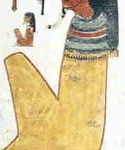 Imsety
In Egyptian texts, Anat is often associated with other deities, such as Set and Horus. Set, the god of chaos and storms, is sometimes depicted alongside Anat in battle scenes. This connection emphasizes her role as a warrior goddess, capable of both destruction and protection. Additionally, her relationship with Horus, the falcon-headed god, highlights her nurturing aspects, as she was seen as a protector of the young and vulnerable.
Attributes and Symbols
Anat’s attributes are diverse, reflecting her multifaceted nature. She is often depicted as a woman wearing a feathered headdress or a crown adorned with a lotus flower. These symbols represent her connection to both war and fertility. The feather is a significant symbol in Egyptian mythology, often associated with the concept of ma’at, which signifies truth and order. By wearing this headdress, Anat embodies the balance between chaos and harmony.
Another important symbol associated with Anat is the bow and arrow, representing her prowess in hunting and warfare. In various depictions, she is shown wielding these weapons, ready to defend her followers and vanquish her enemies. This imagery reinforces her reputation as a fierce warrior goddess, capable of bringing both victory and protection to those who seek her aid.
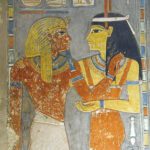 Ament
AmentAnat in Egyptian Texts
Anat appears in several ancient Egyptian texts, highlighting her significance in the religious landscape of the time. One of the most notable references can be found in the Pyramid Texts, a collection of spells and incantations meant to protect the pharaoh in the afterlife. In these texts, Anat is invoked for her strength and courage, emphasizing her role as a guardian deity.
Additionally, Anat is mentioned in various funerary inscriptions, where she is called upon to aid the deceased in their journey through the afterlife. Her presence in these texts indicates her importance not only as a warrior goddess but also as a nurturing figure who provides protection and guidance. This duality in her character is a recurring theme in Egyptian mythology, illustrating the complexities of divine figures in their belief system.
Worship and Rituals
The worship of Anat in ancient Egypt involved various rituals and offerings. Temples dedicated to her were often adorned with images of her fierce demeanor, showcasing her as a protector of the pharaoh and the people. Devotees would bring offerings such as food, incense, and flowers to honor her and seek her favor in times of need.
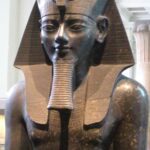 Amenhotep
Rituals often included prayers and chants that invoked her strength and protection. Priests and priestesses would perform these rituals, ensuring that the goddess’s presence was felt in the community. The act of worship was not only a way to honor Anat but also a means of reinforcing the societal values of courage and resilience that she embodied.
Anat’s Influence on Egyptian Culture
Anat’s influence extended beyond religious practices and into various aspects of Egyptian culture. Her representation in art and literature served as a source of inspiration for many artists and writers of the time. She was often depicted in scenes of battle, showcasing her strength and prowess as a warrior. These artistic representations helped to solidify her status as a significant deity within the Egyptian pantheon.
Moreover, Anat’s character influenced the way Egyptians viewed femininity and strength. She was a symbol of empowerment, demonstrating that women could embody both nurturing and fierce qualities. This duality in her character provided a broader understanding of gender roles in ancient Egypt, allowing women to be seen as protectors and warriors, rather than solely caregivers.
Comparative Analysis with Other Deities
When examining Anat’s role in Egyptian mythology, it is essential to compare her with other deities within the pantheon. For instance, Isis, another prominent goddess, is primarily known for her nurturing and healing attributes. While both goddesses embody strength, their expressions of power differ significantly. Isis is often associated with motherhood and magic, whereas Anat is depicted as a fierce warrior.
Similarly, the god Set shares some attributes with Anat, particularly in his association with chaos and warfare. However, Set is often portrayed as a malevolent figure, while Anat’s character leans towards protection and nurturing, despite her warrior nature. This distinction highlights the complexity of divine relationships in Egyptian mythology and how different deities could embody various aspects of life and death.
Anat’s Legacy
The legacy of Anat in Egyptian mythology continues to be a subject of interest for historians and scholars. Her integration into the Egyptian pantheon reflects the fluidity of ancient beliefs and the ways in which cultures influenced one another. The stories and attributes associated with Anat provide insight into the values and beliefs of ancient Egyptians, particularly their views on warfare, protection, and femininity.
As modern scholars explore the nuances of Egyptian mythology, Anat’s character serves as a reminder of the rich tapestry of beliefs that shaped the ancient world. Her duality as both a nurturing figure and a fierce warrior continues to resonate with contemporary discussions about gender and power dynamics. The exploration of her legacy allows for a deeper understanding of the complexities of ancient Egyptian culture and its enduring influence on modern society.
Anat remains a captivating figure in Egyptian mythology, representing the intricate balance between strength and nurturing. Her origins, attributes, and worship practices reflect the cultural exchanges that shaped ancient beliefs. As a goddess of war and hunting, Anat embodies the complexities of divine representation in Egyptian culture, offering insights into the values and ideals of the time. Through her legacy, we can continue to appreciate the rich tapestry of mythology that has influenced humanity throughout history.