
Avalokitesvara, also known as Guanyin in Chinese and Kannon in Japanese, is one of the most revered figures in Buddhist mythology. This bodhisattva embodies the qualities of compassion and mercy, making Avalokitesvara a central figure in many Buddhist traditions. The name Avalokitesvara translates to “the Lord who looks down,” signifying a being who observes the suffering of the world and responds with compassion. This article will explore the origins, symbolism, and various representations of Avalokitesvara across different cultures.
Origins of Avalokitesvara
The origins of Avalokitesvara can be traced back to early Buddhist texts, particularly the Lalitavistara Sutra, which describes the life of the Buddha and the emergence of bodhisattvas. Avalokitesvara is often seen as a manifestation of the Buddha’s compassion. In this context, the bodhisattva is not just a spiritual figure but a vital aspect of Buddhist philosophy, emphasizing the importance of helping others achieve enlightenment.
 App Chungdu
As Buddhism spread from India to other parts of Asia, Avalokitesvara took on various forms and interpretations. In India, Avalokitesvara is depicted as a male figure, often with multiple arms and heads, symbolizing the ability to help many beings simultaneously. The iconography of Avalokitesvara began to evolve as the bodhisattva traveled to China, Tibet, and Japan, adapting to local beliefs and practices.
Symbolism of Avalokitesvara
Avalokitesvara is rich in symbolism, with each aspect of the bodhisattva’s form representing different qualities and attributes. One of the most recognizable features of Avalokitesvara is the multiple arms, which symbolize the ability to reach out to all beings in need. The bodhisattva is often depicted with eleven heads, representing the vast wisdom and understanding required to perceive the suffering of all sentient beings.
In addition to the physical attributes, Avalokitesvara is also associated with various objects that carry symbolic meaning. For instance, the lotus flower is often shown in Avalokitesvara’s hand, representing purity and enlightenment. The lotus grows in muddy waters, yet blooms beautifully above the surface, symbolizing the potential for all beings to achieve enlightenment despite their circumstances.
 Ananda
Attributes of Avalokitesvara
- Compassion: The core attribute of Avalokitesvara is compassion, serving as a reminder for practitioners to cultivate this quality in their own lives.
- Wisdom: The multiple heads of Avalokitesvara signify the deep wisdom necessary to understand the complexities of suffering.
- Skillful Means: Avalokitesvara’s many arms illustrate the ability to use various methods to help others on their spiritual journeys.
Each of these attributes plays a crucial role in the way Avalokitesvara is perceived and worshipped in different cultures. The bodhisattva serves as a model for those seeking to embody these qualities in their own lives, encouraging followers to act with compassion and understanding.
Avalokitesvara in Different Cultures
Avalokitesvara’s journey across Asia has resulted in a rich tapestry of representations and interpretations. In Chinese Buddhism, Avalokitesvara is often depicted as a female figure known as Guanyin. This transformation reflects the cultural emphasis on femininity and nurturing, aligning Guanyin with the qualities of a mother figure. Guanyin is often portrayed holding a vase filled with pure water, symbolizing the ability to cleanse suffering.
In Tibetan Buddhism, Avalokitesvara is known as Chenrezig. The deity is considered the embodiment of the compassion of all Buddhas and is associated with the mantra “Om Mani Padme Hum.” This mantra is widely chanted by practitioners, believed to invoke Avalokitesvara’s blessings and assistance. Chenrezig is depicted with four arms, each holding different symbolic objects, such as a lotus, a mala (prayer beads), and a bell, which represent various aspects of the path to enlightenment.
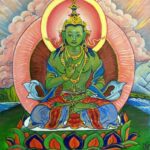 Amoghasiddhi
Guanyin in Chinese Buddhism
- Representation: Guanyin is often depicted as a beautiful woman, symbolizing grace and compassion.
- Iconography: Common images show Guanyin holding a willow branch and a vase, signifying her ability to heal and provide comfort.
- Worship: Guanyin is one of the most popular deities in China, with numerous temples dedicated to her worship.
The transformation of Avalokitesvara into Guanyin highlights the adaptability of Buddhist figures to local cultures. Guanyin’s popularity has resulted in a rich tradition of stories and practices centered around her, emphasizing the importance of compassion in everyday life.
Devotional Practices
Devotional practices associated with Avalokitesvara vary widely among different cultures, yet they all emphasize the bodhisattva’s compassionate nature. In many Buddhist traditions, practitioners engage in chanting the name of Avalokitesvara or reciting specific mantras to invoke the bodhisattva’s blessings. This practice is believed to cultivate compassion within the practitioner and to help alleviate the suffering of others.
In Tibetan Buddhism, the mantra “Om Mani Padme Hum” is central to devotion to Avalokitesvara. This six-syllable mantra is thought to encapsulate the essence of Avalokitesvara’s compassion and is often recited during meditation or prayer. Practitioners may also use prayer flags, which often bear the mantra, to spread blessings and positive energy throughout the environment.
Rituals and Offerings
- Offerings: Devotees often present offerings of flowers, fruits, and incense at altars dedicated to Avalokitesvara.
- Rituals: Special ceremonies may be held on auspicious days to honor Avalokitesvara, inviting community participation.
- Meditation: Guided meditations focusing on Avalokitesvara’s qualities are common, helping practitioners deepen their understanding of compassion.
These devotional practices foster a sense of connection to Avalokitesvara, encouraging practitioners to embody compassion in their daily lives. The rituals and offerings serve as reminders of the bodhisattva’s teachings and the importance of aiding others in their spiritual journeys.
Avalokitesvara in Art and Literature
Avalokitesvara has inspired countless works of art and literature throughout history. From ancient sculptures to modern paintings, the bodhisattva’s imagery conveys messages of compassion and mercy. In Indian art, Avalokitesvara is often depicted in intricate sculptures, showcasing the detailed craftsmanship of the time. These sculptures highlight the bodhisattva’s multiple arms and heads, emphasizing the divine qualities associated with Avalokitesvara.
In Chinese art, Guanyin is portrayed in a more serene and gentle manner, often surrounded by nature. Paintings and sculptures depict her in various poses, conveying a sense of tranquility and grace. The imagery of Guanyin has become a symbol of hope and compassion in Chinese culture, often found in homes and temples.
Literary Representations
- Sutras: Avalokitesvara is mentioned in several important Buddhist texts, including the Lotus Sutra and the Heart Sutra.
- Folktales: Numerous folktales and legends recount the compassionate deeds of Avalokitesvara, serving as moral lessons for followers.
- Poetry: Avalokitesvara has inspired poets and writers to explore themes of compassion and mercy in their works.
These artistic and literary representations not only celebrate the figure of Avalokitesvara but also serve to inspire practitioners to embody the qualities of compassion in their own lives. The stories and images associated with Avalokitesvara remind us of the potential for kindness and understanding in a world often filled with suffering.
The Relevance of Avalokitesvara Today
In contemporary society, the teachings and qualities embodied by Avalokitesvara remain highly relevant. As the world faces numerous challenges, including social injustice, environmental degradation, and personal suffering, the message of compassion is more important than ever. Avalokitesvara serves as a reminder that individuals have the power to make a difference in the lives of others through acts of kindness and understanding.
Many modern practitioners incorporate the teachings of Avalokitesvara into their daily lives, striving to cultivate compassion in their interactions with others. This can take many forms, from volunteering in local communities to simply offering a listening ear to someone in need. The essence of Avalokitesvara encourages individuals to recognize the interconnectedness of all beings and to respond to suffering with empathy and support.
Community Engagement
- Service: Many Buddhist organizations engage in community service projects, embodying the compassionate spirit of Avalokitesvara.
- Education: Workshops and teachings on compassion and mindfulness are offered to promote awareness and understanding.
- Advocacy: Activism for social justice and environmental issues often draws inspiration from the teachings of Avalokitesvara.
By engaging in these practices, individuals not only honor Avalokitesvara but also contribute to the well-being of their communities. The teachings of Avalokitesvara encourage a proactive approach to compassion, inspiring individuals to take action in a world that often feels overwhelming.
Avalokitesvara in Meditation
Meditation practices centered around Avalokitesvara provide a powerful way to cultivate compassion and mindfulness. Many practitioners find solace in visualizing the bodhisattva during meditation, allowing them to connect with the qualities that Avalokitesvara embodies. This practice often involves focusing on the bodhisattva’s image, reciting mantras, or reflecting on the meaning of compassion in one’s life.
One common meditation technique involves the use of the mantra “Om Mani Padme Hum.” As practitioners chant this mantra, they are encouraged to visualize Avalokitesvara and to cultivate feelings of love and compassion for themselves and others. This meditation not only helps to center the mind but also reinforces the importance of compassion as a guiding principle in daily life.
Guided Meditations
- Visualizations: Guided meditations often include visualizations of Avalokitesvara, helping practitioners to connect with the bodhisattva’s qualities.
- Compassion Practices: Exercises focusing on loving-kindness and compassion are commonly incorporated into meditation sessions.
- Group Meditations: Many Buddhist centers offer group meditations dedicated to Avalokitesvara, fostering a sense of community and shared intention.
Through these meditation practices, individuals can deepen their understanding of Avalokitesvara’s teachings and integrate the qualities of compassion into their everyday lives. The meditative focus on Avalokitesvara serves as a reminder of the potential for kindness and understanding in a world that often feels chaotic.
Avalokitesvara remains a profound symbol of compassion in Buddhist mythology, inspiring countless individuals across cultures to embody the qualities of mercy and understanding. Through the exploration of Avalokitesvara’s origins, symbolism, and practices, it becomes clear that the bodhisattva’s teachings are not only relevant but essential in today’s world. By honoring Avalokitesvara through devotion, meditation, and compassionate action, individuals can contribute to a more harmonious and empathetic society.