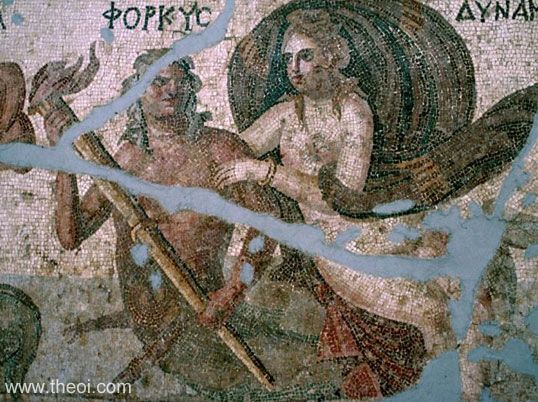
In Greek mythology, Phorcys is a fascinating figure known for his role as a primordial sea god. He is often associated with the hidden dangers of the ocean and the mysteries that lie beneath the waves. Phorcys is frequently depicted as a monstrous being, embodying the chaotic and unpredictable nature of the sea. His lineage includes many other notable mythological figures, making him a significant part of the rich tapestry of Greek mythology.
The Origins of Phorcys
Phorcys is said to be one of the offspring of Gaia (Earth) and Uranus (Sky). This makes him part of the ancient generation of gods that existed before the more commonly known Olympian gods. His primordial status links him to the fundamental elements of the world, and he represents the darker aspects of nature. In various myths, he is depicted as the father of several monstrous creatures, showcasing his connection to the wild and untamed aspects of the sea.
 Phospheros
Phorcys is often associated with the deep sea and its enigmatic creatures. His most famous offspring include the Gorgons, such as Medusa, and the Graeae, who are often portrayed as old women sharing one eye and one tooth among them. These connections illustrate Phorcys’s role as a progenitor of beings that are both fearsome and captivating. His legacy is intertwined with the themes of transformation and the duality of beauty and terror found in the depths of the ocean.
Phorcys in Mythology
In Greek mythology, Phorcys is often depicted in relation to his offspring and their adventures. His daughters, the Gorgons, are perhaps the most famous of his children. These creatures are known for their hair made of snakes and their ability to turn anyone who looks at them into stone. This connection to transformation highlights the complex nature of Phorcys himself, as he embodies both creation and destruction. The Gorgons serve as a reminder of the dangers that lurk in the depths of the ocean, just as their father represents the unknown.
 Pleione
Another significant aspect of Phorcys’s mythology is his relationship with the Hesperides. The Hesperides are the nymphs who tend to the golden apples that grant immortality. In some myths, Phorcys is considered their father, linking him to the themes of fertility and abundance. This relationship adds another layer to his character, showing that he is not just a figure of fear but also one of nurturing and life-giving forces.
Symbolism and Representation
Phorcys is often depicted in art and literature as a creature that embodies the chaotic nature of the sea. His monstrous appearance serves as a symbol of the unpredictability and danger associated with ocean travel. In ancient times, sailors would often tell tales of sea monsters to explain the treacherous waters they encountered. Phorcys, as a primordial sea god, fits into this narrative perfectly, representing the fears and uncertainties that accompany life at sea.
In addition to his monstrous form, Phorcys’s role as a progenitor of mythical creatures emphasizes the idea of transformation. Many of his children, such as the Gorgons, are not just terrifying; they also possess unique abilities and characteristics that reflect their father’s nature. This duality highlights the complexity of Phorcys’s character and his significance in Greek mythology as a figure who embodies both creation and destruction.
 Plutus
Phorcys and Other Mythological Figures
Phorcys is often mentioned alongside other primordial deities in Greek mythology. His siblings include powerful beings like Ceto, the goddess of the dangers of the ocean, and Typhon, a monstrous giant often associated with storms and chaos. These connections illustrate the interconnectedness of the mythological world, where each figure plays a role in the larger narrative of creation and destruction.
Phorcys’s relationship with his siblings also reflects the balance of nature. While he represents the chaotic and dangerous aspects of the sea, Ceto embodies the more nurturing aspects of the ocean. This duality is crucial in understanding the ancient Greek perspective on the natural world, where gods and monsters coexist in a delicate balance.
Phorcys in Literature and Art
The figure of Phorcys has been referenced in various works of literature and art throughout history. In ancient texts, he is often mentioned in the context of sea voyages and the perils faced by sailors. His monstrous nature serves as a cautionary tale, warning against the dangers of venturing too far into the unknown. This theme is prevalent in many Greek tragedies and epic poems, where the ocean is depicted as a vast and unpredictable force.
In art, Phorcys is often depicted alongside his monstrous offspring. Artists have portrayed him as a fearsome figure, reflecting the ancient Greek fascination with the duality of beauty and terror. Statues and paintings often capture the essence of his character, showcasing the wildness of the sea and the creatures that inhabit it. These representations serve to reinforce the idea that Phorcys is not just a figure of fear, but also a symbol of the mysterious and awe-inspiring nature of the ocean.
Legacy of Phorcys
Phorcys’s legacy continues to influence modern interpretations of mythology and literature. His character serves as a reminder of the power of nature and the mysteries that lie beneath the surface. In contemporary storytelling, elements of Phorcys’s mythology can be seen in various forms, from movies to novels that explore themes of transformation and the unknown.
The enduring fascination with sea monsters and the dangers of the ocean can be traced back to figures like Phorcys. His story resonates with audiences today, as it encapsulates the timeless struggle between humanity and the natural world. The character of Phorcys reminds us of the beauty and terror that coexist in nature, a theme that remains relevant in our understanding of the environment.
Phorcys and the Ocean
The ocean, often considered a character in its own right in Greek mythology, is intricately linked to Phorcys. He represents the untamed and unpredictable aspects of the sea, embodying the fears that sailors faced in ancient times. The vastness of the ocean was both a source of life and a potential danger, making Phorcys a fitting symbol of this duality.
In many myths, the ocean is depicted as a realm filled with unknown creatures and hidden dangers. Phorcys, as a primordial sea god, is a reflection of these fears. His monstrous appearance and the fearsome nature of his offspring serve as a reminder of the power that the ocean holds. This connection between Phorcys and the sea reinforces the idea that the ocean is a source of both inspiration and trepidation.
Conclusion of Phorcys’s Myth
The myth of Phorcys is a captivating exploration of the complexities of nature and the human experience. His character embodies the themes of creation, destruction, and transformation, making him a significant figure in Greek mythology. The stories surrounding Phorcys and his offspring serve as cautionary tales, reminding us of the dangers that lie in the unknown. As we continue to explore the mysteries of the ocean, the legacy of Phorcys remains a powerful symbol of the relationship between humanity and the natural world.