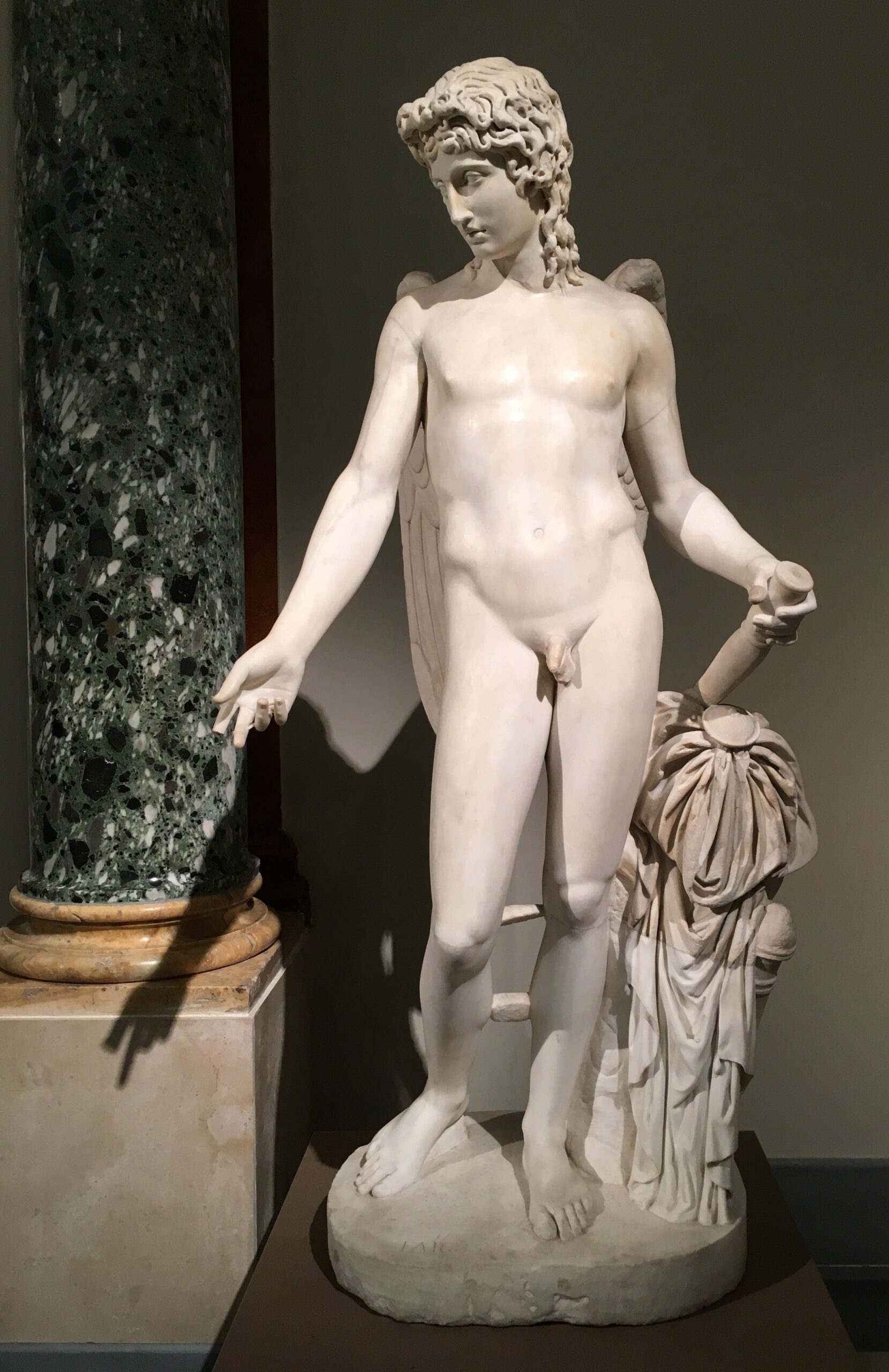
In Greek mythology, Eros is a significant figure often associated with love and desire. He is frequently depicted as a young man with wings, carrying a bow and arrows. These arrows symbolize the power of love, capable of striking individuals and igniting feelings of passion and attraction. Eros is not just a representation of romantic love; he embodies the various forms of love that exist in human relationships. His presence in myths serves to illustrate the complexities and nuances of love, making him an essential character in the pantheon of Greek gods and goddesses.

The Origins of Eros
The origins of Eros are fascinating and somewhat complex. According to one of the earliest sources, Hesiod’s “Theogony,” Eros was born from Chaos, the primordial void that existed before anything else. This version of Eros is often seen as a primordial force, embodying the very essence of love and attraction that drives creation. In this context, Eros is not merely a god of romantic love but a fundamental force of nature that brings order to chaos. The idea that love is a driving force behind creation is a recurring theme in many cultures, and Eros represents this beautifully in Greek mythology.
In contrast to Hesiod’s portrayal, later traditions depict Eros as the son of Aphrodite, the goddess of love and beauty. This view emphasizes his role as a mischievous and playful figure who delights in causing chaos in the affairs of gods and mortals alike. In this narrative, Eros is often seen as a child, a cute and mischievous boy who uses his arrows to instill love and desire in those around him. This duality in Eros’s origins reflects the different aspects of love—both the serious, powerful force of creation and the playful, sometimes chaotic nature of romantic attraction.
Eros in Art and Literature
Eros has been a popular subject in art and literature throughout history. Artists have depicted him in various ways, from a delicate, winged child to a more mature and powerful figure. In ancient Greek pottery, Eros is often shown in scenes of love and romance, highlighting his role in human relationships. These artistic representations emphasize the beauty and complexity of love, illustrating how Eros can inspire both joy and turmoil in the lives of those he touches.
 Erytheia
In literature, Eros appears in numerous myths and stories, often as a catalyst for the events that unfold. For instance, in the myth of Psyche, Eros falls in love with a mortal woman named Psyche. Their love story is filled with trials and tribulations, showcasing the challenges that love can bring. Eros’s desire for Psyche leads to a series of events that test their love, ultimately resulting in a deeper understanding of trust and commitment. This myth not only highlights the power of Eros but also illustrates the transformative nature of love, which can lead individuals to grow and evolve.
The Symbolism of Eros
Eros is rich in symbolism, representing various aspects of love and desire. His arrows, for example, symbolize the sudden and often uncontrollable nature of love. When struck by one of Eros’s arrows, individuals can experience overwhelming feelings of attraction, sometimes to the point of irrationality. This notion reflects the idea that love can be both beautiful and chaotic, capable of bringing people together while also leading to conflict and heartache.
Additionally, Eros is often associated with the concept of passion. The fire of desire that Eros ignites can lead to intense emotions and experiences, driving individuals to pursue their romantic interests fervently. This passionate aspect of love is not always easy to manage; it can lead to both joy and pain. Eros serves as a reminder that love is a powerful force that can shape our lives in profound ways, for better or worse.
 Eunomia
The Role of Eros in Relationships
Eros plays a crucial role in human relationships, particularly in romantic partnerships. The presence of Eros can be felt in the initial stages of attraction, where individuals experience a strong desire for one another. This feeling of infatuation is often characterized by excitement and passion, as people are drawn together by their mutual attraction. However, the influence of Eros does not end there; it continues to shape relationships as they evolve.
As relationships develop, the initial spark of Eros can transform into a deeper, more enduring love. This transition often involves a shift from the physical aspects of attraction to a more emotional connection. Eros teaches us that love is not merely about physical desire but also about emotional intimacy, trust, and commitment. The lessons learned from Eros can help individuals navigate the complexities of love, fostering healthy and lasting relationships.
The Dual Nature of Eros
The dual nature of Eros is a central theme in Greek mythology. On one hand, he represents the beauty and joy of love, while on the other hand, he embodies the chaos and unpredictability that can accompany romantic relationships. This duality is essential to understanding the full scope of love’s impact on human lives. Eros’s ability to inspire passion and desire can lead to moments of happiness and fulfillment, but it can also result in heartache and turmoil.
This complexity is evident in various myths, where Eros’s actions lead to both positive and negative outcomes. For example, his involvement in the story of Orpheus and Eurydice highlights the tragic consequences of love. Orpheus’s deep love for Eurydice drives him to the underworld in search of her, demonstrating the lengths to which love can compel individuals to go. However, the story also serves as a cautionary tale, illustrating how love can lead to despair and loss when not managed wisely.
Eros and Other Deities
Eros often interacts with other deities in Greek mythology, highlighting the interconnectedness of love and other aspects of life. One of his most notable relationships is with Aphrodite, his mother. Their bond represents the duality of love—Aphrodite embodies the ideal of beauty and romantic love, while Eros represents the chaotic and passionate side of desire. Together, they illustrate the multifaceted nature of love and its ability to inspire both joy and turmoil.
Additionally, Eros is sometimes associated with Hymen, the god of marriage. This connection emphasizes the idea that love is not only about passion but also about commitment and partnership. In this context, Eros’s role expands beyond mere attraction to encompass the deeper emotional bonds that form between individuals. The interplay between Eros and other deities serves to reinforce the idea that love is a central theme in human experience, influencing relationships in various ways.
The Legacy of Eros
The legacy of Eros endures in modern culture, as the themes of love and desire continue to resonate with people today. Eros has inspired countless works of art, literature, and music, reflecting the timeless nature of love. From romantic poetry to contemporary films, the essence of Eros remains relevant, as individuals continue to explore the complexities of love and relationships.
Moreover, the symbol of Eros, often depicted as Cupid, has become a universal representation of love. The image of a cherubic figure with a bow and arrow is instantly recognizable, serving as a reminder of the power of love to connect people. This enduring legacy highlights the importance of Eros in shaping our understanding of love, passion, and desire throughout history and into the present day.
Eros is a multifaceted figure in Greek mythology, representing the various aspects of love and desire. His origins, symbolism, and interactions with other deities illustrate the complexities of love, making him a compelling character in the pantheon of Greek gods and goddesses. The legacy of Eros continues to influence our understanding of love, reminding us of its power to inspire, connect, and sometimes challenge us in our relationships.