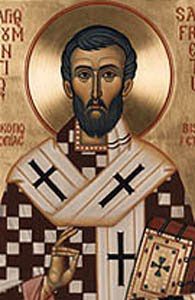
St. Frumentius, also known as Abbo, is a significant figure in Christian mythology, particularly within the history of the Ethiopian Orthodox Church. His story is one of faith, perseverance, and the spread of Christianity in Africa. Frumentius was born in the early 4th century in Tyre, a city in modern-day Lebanon. He and his brother, Aedesius, were taken to Ethiopia as children after a voyage went awry. This twist of fate led them to a land that was ripe for the seeds of Christianity, which Frumentius would help to plant and nurture.
Early Life and Background
 St. Fridolin
Frumentius was born into a wealthy family in Tyre, which was a center of early Christianity. The city was known for its vibrant trade and cultural exchanges. Frumentius, alongside his brother, was exposed to various religious beliefs from a young age. This diverse environment allowed him to develop a deep understanding of Christian teachings. After the death of their parents, the brothers embarked on a journey that would ultimately change the course of their lives. They set sail for Ethiopia, unaware of the challenges and opportunities that awaited them.
During their journey, the ship was attacked by pirates, leading to their capture. The brothers were taken to the court of the Ethiopian king, who was intrigued by their knowledge and background. Aedesius, being the elder, took on the role of a courtier, while Frumentius quickly earned the king’s trust through his wisdom and gentle demeanor. The brothers’ ability to communicate and connect with the local people played a crucial role in their acceptance within the Ethiopian court.
Missionary Work in Ethiopia
Frumentius’ journey from a captive to a key figure in the Ethiopian Christian community is remarkable. As he lived in the royal court, he observed the spiritual needs of the people and began to share his faith. Frumentius saw an opportunity to introduce Christianity to a land that was predominantly pagan. He was passionate about his mission and devoted himself to teaching the king and his court about the Christian faith. His approach was not forceful; instead, he used compassion and understanding to engage with the local culture.
 St. Francis Xavier
Frumentius’ dedication bore fruit when the king converted to Christianity. This monumental event marked the beginning of a significant transformation in Ethiopia. As a new Christian ruler, the king encouraged the spread of the faith throughout his kingdom. Frumentius was appointed as a deacon and eventually became the first bishop of Ethiopia. His leadership was characterized by a deep commitment to the spiritual growth of the Ethiopian people.
Establishing the Ethiopian Church
With the support of the king, Frumentius set out to establish a structured church in Ethiopia. He recognized the importance of having a solid foundation for the Christian community. Frumentius began by appointing clergy and organizing local congregations. He understood that a thriving church needed educated leaders who could teach and guide the faithful. This vision led him to seek assistance from the wider Christian world.
Frumentius traveled to Alexandria, Egypt, to request support from the Patriarch of Alexandria, Athanasius. His journey was not just about seeking help; it was also a testament to his commitment to the unity of the Christian faith. Athanasius recognized Frumentius’ dedication and appointed him as the bishop of Ethiopia. This formal recognition was crucial in legitimizing the Ethiopian Church and connecting it to the broader Christian community.
 St. Francis Of Assisi
Legacy of St. Frumentius
The legacy of St. Frumentius is profound and far-reaching. He is often referred to as the “Apostle of Ethiopia” due to his pivotal role in establishing Christianity in the region. His efforts laid the groundwork for the Ethiopian Orthodox Church, which remains one of the oldest Christian communities in the world. The church has its own unique traditions and practices that have been preserved over centuries, reflecting the influence of Frumentius and his teachings.
Frumentius is also celebrated for his dedication to education and literacy. He believed that understanding the scriptures was essential for the growth of the Christian faith. Under his guidance, many schools were established to educate the clergy and laypeople. This emphasis on education contributed to the rich literary tradition of the Ethiopian Church, which includes ancient texts, hymns, and theological writings.
Feast Day and Veneration
St. Frumentius is venerated as a saint in both the Ethiopian Orthodox Church and the Coptic Orthodox Church. His feast day is celebrated on the 27th of Genbot in the Ethiopian calendar, which typically falls in May. On this day, the faithful commemorate his life, teachings, and contributions to the spread of Christianity in Ethiopia. Special services are held in churches, and people come together to honor his memory through prayers and hymns.
The veneration of St. Frumentius extends beyond Ethiopia. His story has inspired countless Christians around the world. Many churches and institutions have been named in his honor, reflecting the impact he had on the Christian faith. His life serves as a reminder of the power of faith and the importance of perseverance in the face of challenges.
Impact on Ethiopian Culture
The influence of St. Frumentius on Ethiopian culture is significant. His teachings and the establishment of Christianity brought about profound changes in the social and cultural fabric of the nation. The Ethiopian Orthodox Church became a central institution that shaped the identity of the Ethiopian people. It played a crucial role in uniting diverse ethnic groups under a common faith, fostering a sense of national pride and unity.
Moreover, the introduction of Christianity led to the development of unique artistic expressions, including religious art, music, and literature. The Ethiopian Church has a rich tradition of iconography, with vibrant paintings depicting biblical stories and saints. These artistic representations are not just decorative; they serve as teaching tools that convey the essence of the Christian faith to the community.
Conclusion of His Life
St. Frumentius’ life came to a close in Ethiopia, where he continued to serve as bishop until his death. His dedication to the Christian faith and the people of Ethiopia left an indelible mark on the nation. He is remembered not only as a religious leader but also as a cultural icon who bridged the gap between different worlds. His journey from a captive to a revered saint illustrates the transformative power of faith and the impact one individual can have on the course of history.
Modern-Day Relevance
The story of St. Frumentius remains relevant in today’s world. His life serves as an example of how faith can lead to positive change in society. In an era where divisions often overshadow unity, Frumentius’ message of compassion and understanding resonates deeply. His approach to spreading Christianity was rooted in love and respect for local customs, a lesson that is invaluable in contemporary interfaith dialogues.
Furthermore, the Ethiopian Orthodox Church continues to thrive, with millions of followers who uphold the teachings of St. Frumentius. The church plays a vital role in the spiritual and social lives of the Ethiopian people, providing guidance and support in various aspects of life. The enduring legacy of Frumentius is a testament to the lasting impact of faith on individuals and communities.