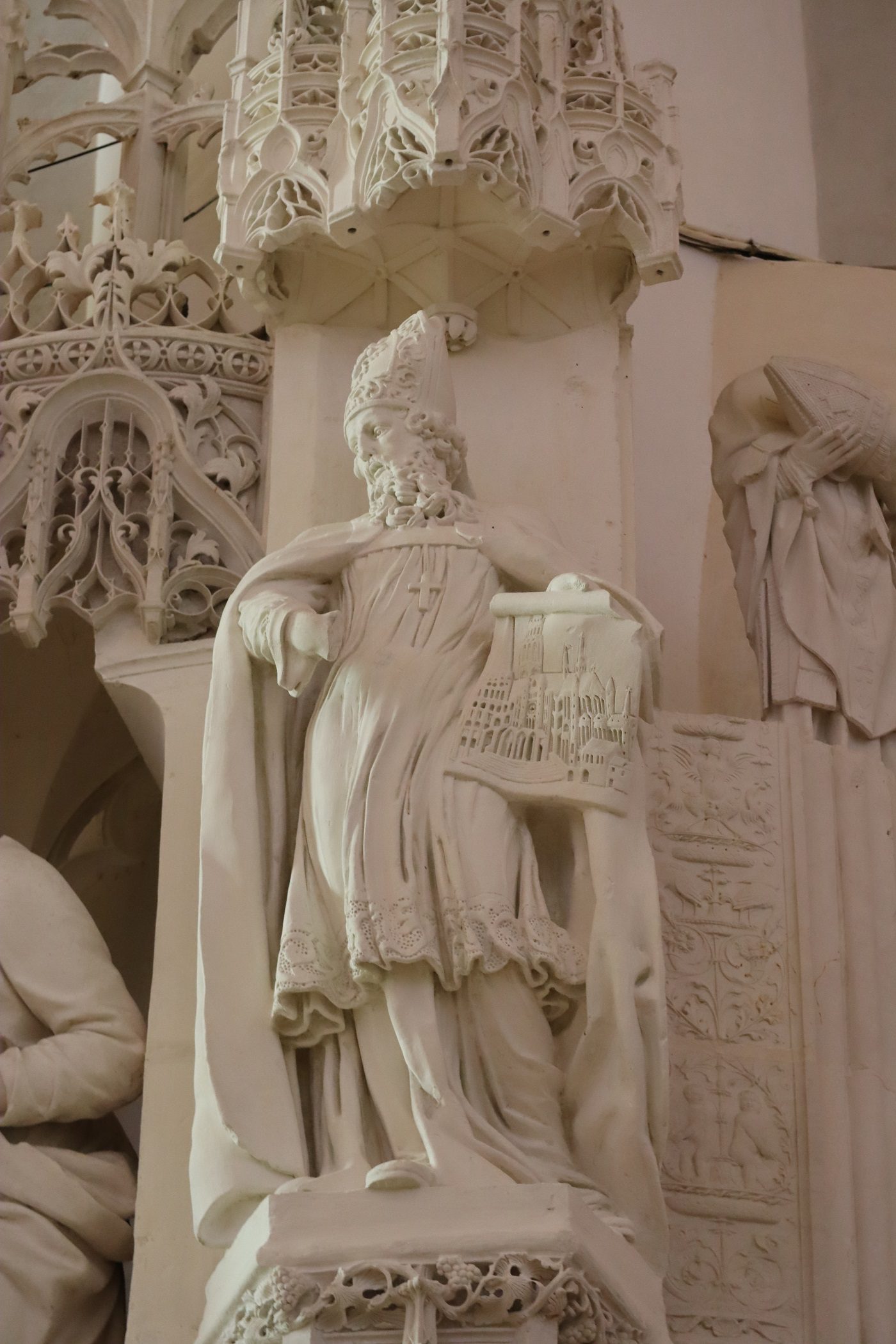
St. Fulbert of Chartres was a significant figure in the early medieval period, known for his role as a bishop, scholar, and a prominent church leader. His life and works are often discussed in the context of Christian mythology and the development of ecclesiastical structures during the time. Born around the year 960 in the region of Chartres, France, Fulbert’s contributions to theology, education, and church governance have left a lasting legacy. His writings, sermons, and the influence he had on the clergy and laity alike are essential for understanding the religious landscape of medieval Europe.
Early Life and Education
St. Fulbert’s early life is somewhat shrouded in mystery, but it is believed that he came from a noble family. His education likely began in the cathedral school of Chartres, where he was exposed to the teachings of the Church and classical philosophy. This educational background played a crucial role in shaping his intellectual pursuits. He became well-versed in various subjects, including theology, rhetoric, and grammar. The cathedral school was known for its rigorous academic standards, which helped Fulbert develop a strong foundation for his future work.
 St. Frumentius
As a young man, Fulbert showed great promise as a scholar. His passion for learning and his commitment to the Church were evident in his early studies. He was particularly influenced by the works of the Church Fathers and the early theologians. This exposure to foundational Christian texts would later inform his own writings and sermons. The intellectual environment of Chartres at the time was vibrant, and Fulbert was well-positioned to take advantage of the opportunities for scholarly growth that were available to him.
Role as a Bishop
In the year 1006, St. Fulbert was appointed the Bishop of Chartres, a position that carried significant responsibility. As bishop, he was tasked with overseeing the spiritual and administrative needs of his diocese. His leadership was marked by a commitment to pastoral care and the spiritual development of his congregation. Fulbert was known for his dedication to improving the lives of the people within his diocese, often advocating for the poor and marginalized. He believed that the role of a bishop extended beyond mere governance; it was also about serving the community and fostering a deep sense of faith among the people.
During his tenure as bishop, Fulbert implemented various reforms aimed at enhancing the moral and spiritual standards of the clergy. He recognized the need for a well-educated clergy who could effectively lead their congregations. To this end, he established schools and encouraged the study of theology and the liberal arts. His efforts contributed to the rise of Chartres as a center of learning during the medieval period, attracting students and scholars from far and wide. The emphasis on education and moral integrity within the clergy was a hallmark of Fulbert’s episcopate.
 St. Fridolin
Theological Contributions
St. Fulbert was not only a bishop but also a prolific writer and theologian. His works include sermons, letters, and theological treatises that reflect his deep understanding of Christian doctrine. One of his most notable contributions was his exploration of the relationship between faith and reason. He argued that faith and reason are not in conflict but rather complement each other in the pursuit of truth. This perspective was crucial during a time when many scholars were grappling with the tension between religious beliefs and emerging philosophical ideas.
In his writings, Fulbert often emphasized the importance of the sacraments and their role in the spiritual life of believers. He believed that the sacraments were not merely symbolic but were essential means of grace that connected the faithful to God. His theological insights were grounded in Scripture and the teachings of the Church Fathers, making them relevant for both his contemporaries and future generations. Fulbert’s ability to articulate complex theological concepts in a clear and accessible manner made his works influential in the development of medieval Christian thought.
Fulbert’s Influence on Education
One of the most significant aspects of St. Fulbert’s legacy is his impact on education. He recognized the need for a well-educated clergy and laypeople who could engage with the complexities of faith and morality. To address this need, Fulbert established schools that provided a rigorous education in both theology and the liberal arts. These schools became vital centers of learning, where students could study a wide range of subjects, including philosophy, literature, and science.
 St. Francis Xavier
Fulbert’s commitment to education extended beyond the clergy. He believed that laypeople also needed access to education to fully participate in the life of the Church. As a result, he encouraged the establishment of educational programs for the laity, which included catechetical instruction and opportunities for spiritual formation. This inclusive approach to education helped foster a more informed and engaged Christian community in Chartres and beyond.
Liturgical Contributions
St. Fulbert also made significant contributions to the liturgical life of the Church. He was known for his efforts to enhance the quality of worship within his diocese. Fulbert understood that liturgy was not merely a series of rituals but a profound expression of faith that could inspire and uplift the congregation. He advocated for the use of beautiful music, art, and architecture in the liturgical setting, believing that these elements could enhance the worship experience and draw people closer to God.
His influence on liturgical practices extended to the formulation of prayers and hymns. Fulbert composed various liturgical texts that were used in the celebration of the sacraments and the daily office. These texts reflected his theological insights and pastoral concerns, making them valuable resources for worship. The richness of his liturgical contributions helped shape the worship life of the Church during the medieval period and left a lasting imprint on the liturgical traditions of the region.
St. Fulbert’s Legacy
The legacy of St. Fulbert of Chartres is multifaceted and continues to resonate within the Christian tradition. His contributions to education, theology, and liturgy have had a profound impact on the Church and society. The schools he established in Chartres laid the groundwork for the later development of universities in Europe. His emphasis on the integration of faith and reason influenced subsequent thinkers and theologians, paving the way for a richer intellectual tradition within Christianity.
Furthermore, Fulbert’s commitment to pastoral care and social justice remains relevant today. His advocacy for the poor and marginalized serves as a model for contemporary Christians seeking to live out their faith in action. The principles he championed regarding education and the importance of a well-formed clergy continue to be vital in discussions about the role of the Church in the modern world. St. Fulbert’s life and work exemplify the enduring impact of faith on culture, education, and social responsibility.
Celebration of St. Fulbert
The feast day of St. Fulbert is celebrated on April 10th each year. This day serves as an opportunity for Christians to reflect on his life and contributions to the Church. Many congregations commemorate his feast with special liturgical services that include readings from his writings and hymns inspired by his teachings. The celebration often involves a renewed commitment to the values he espoused, such as education, pastoral care, and social justice.
In addition to church services, some communities may organize educational events or lectures focused on St. Fulbert’s contributions to theology and education. These gatherings provide a space for dialogue and reflection on the relevance of his teachings in contemporary society. By celebrating his legacy, Christians are reminded of the importance of integrating faith with action and the ongoing need for education and formation within the Church.
St. Fulbert in Christian Art
St. Fulbert’s influence can also be seen in Christian art, particularly in depictions of him in medieval manuscripts and stained glass windows. Artists often portrayed him with symbols that represented his role as a bishop and educator. Common iconographic elements include the mitre, crozier, and books, which signify his ecclesiastical authority and commitment to learning. These artistic representations serve as visual reminders of his contributions to the Church and the enduring significance of his life and work.
Many cathedrals and churches dedicated to St. Fulbert feature artwork that highlights his legacy. These works not only celebrate his life but also inspire the faithful to embody the values he championed. Through art, the story of St. Fulbert continues to be told, allowing future generations to connect with his teachings and example. His presence in Christian art serves as a bridge between the past and the present, reminding believers of the rich tapestry of faith and scholarship that characterizes the Christian tradition.
St. Fulbert’s Writings and Their Impact
St. Fulbert’s writings are an essential aspect of his legacy. His sermons and theological treatises are characterized by clarity, depth, and pastoral concern. Many of his works addressed the spiritual needs of his congregation, providing guidance on how to live a faithful Christian life. His ability to articulate complex theological ideas in a straightforward manner made his writings accessible to a wide audience, from clergy to laypeople.
Among his notable works is a series of letters to various church leaders, where he discussed matters of theology, liturgy, and pastoral care. These letters not only reflect his theological insights but also demonstrate his commitment to fostering unity within the Church. Fulbert’s writings have been studied by theologians and scholars throughout history, contributing to the ongoing dialogue about faith, reason, and the role of the Church in society.
Conclusion: The Relevance of St. Fulbert Today
St. Fulbert of Chartres remains a relevant figure in contemporary Christian thought and practice. His emphasis on education, pastoral care, and the integration of faith and reason speaks to the challenges faced by the Church today. As Christians navigate the complexities of modern life, the teachings and example of St. Fulbert offer valuable insights into how to live a life of faith in action. His legacy serves as a reminder that the pursuit of knowledge, compassion for the marginalized, and a commitment to worship are essential components of a vibrant Christian life.
In a world that often prioritizes individualism and materialism, St. Fulbert’s call to community, education, and social responsibility resonates deeply. His life encourages believers to engage with the world around them, seeking to embody the values of the Gospel in their daily lives. As the Church continues to evolve, the teachings of St. Fulbert serve as a guiding light, illuminating the path toward a more just and compassionate society.