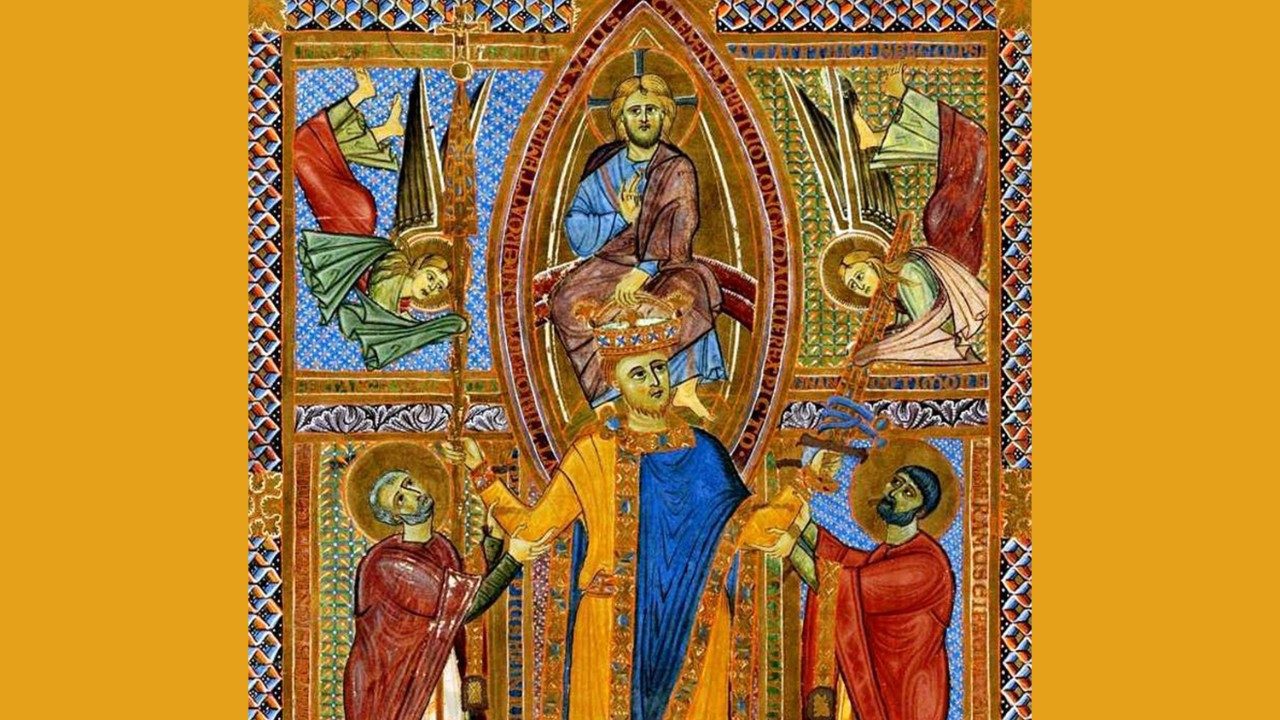
St. Henry II, also known as Saint Heinrich, is a significant figure in Christian mythology and history. He was born in 972 and became the Duke of Bavaria before eventually becoming the Holy Roman Emperor in 1014. His reign is marked by his dedication to the Christian faith and his efforts to promote peace and justice in his empire. St. Henry II is celebrated for his deep spirituality and his commitment to the Church. His life and legacy continue to inspire many Christians today.
The Early Life of St. Henry II
 St. Hegesippus
St. Henry II was born into a noble family in the region of Bavaria. His father, Duke Henry the Quarrelsome, was known for his fierce temperament, which often led to conflicts with other nobles. From a young age, Henry was exposed to the complexities of power and politics. However, despite the turbulent environment, he was raised with strong Christian values. His mother, Gisela, played a crucial role in shaping his faith. She instilled in him the importance of compassion and charity, values that would guide him throughout his life.
As a young man, Henry was educated in various disciplines, including theology, philosophy, and the arts. His education was instrumental in developing his leadership skills and understanding of the Church’s teachings. He became known for his intelligence and wisdom, which earned him respect among his peers. This foundation set the stage for his future roles as a leader and a devoted Christian.
Rise to Power
Henry’s journey to power began when he became the Duke of Bavaria in 995 after the death of his father. His ascent was not without challenges, as he faced opposition from rival noble families. However, he was able to consolidate his power through strategic alliances and military prowess. Henry’s leadership was characterized by his ability to navigate the complex political landscape of medieval Europe, often using diplomacy rather than force to achieve his goals.
 St. Hedwig
In 1002, Henry was elected as the King of Germany, further solidifying his influence in the region. His reign as king was marked by efforts to strengthen the ties between the monarchy and the Church. He understood that a strong alliance with the Church was essential for maintaining stability in his kingdom. This partnership allowed him to promote Christianity throughout his territories, leading to the conversion of many pagan communities.
St. Henry II as Holy Roman Emperor
In 1014, Henry was crowned Holy Roman Emperor by Pope Benedict VIII. This event marked a significant moment in his life, as it symbolized the Church’s recognition of his authority and commitment to Christianity. As emperor, Henry faced numerous challenges, including internal conflicts and external threats from neighboring kingdoms. However, his dedication to peace and justice guided his decisions during this tumultuous period.
One of Henry’s notable achievements as emperor was his efforts to reform the Church. He worked to eliminate corruption and promote clerical celibacy, which he believed was essential for maintaining the integrity of the Church. Henry also established new bishoprics and supported monastic communities, helping to spread Christianity throughout his empire. His commitment to the Church earned him the admiration of many, but it also created tensions with those who opposed his reforms.
 St. Hervé
The Spiritual Life of St. Henry II
St. Henry II was not only a political leader but also a deeply spiritual man. His faith was a guiding force in his life, influencing his decisions and actions. He was known for his humility and devotion to God, often engaging in prayer and reflection. Henry believed that his role as a leader was to serve others, and he sought to embody the teachings of Christ in his daily life.
Throughout his reign, Henry was a patron of the arts and education, believing that knowledge and beauty were essential to a thriving society. He supported the construction of churches and monasteries, which became centers of learning and spiritual growth. His dedication to education was evident in his establishment of schools for the clergy, ensuring that future generations of leaders would be well-versed in Christian teachings.
The Legacy of St. Henry II
St. Henry II’s legacy extends far beyond his reign as emperor. He was canonized as a saint by Pope Clement II in 1146, and his feast day is celebrated on July 13. His life serves as a model for Christian leadership, emphasizing the importance of faith, humility, and service to others. Many Christians look to St. Henry II as an example of how to balance the responsibilities of leadership with a deep commitment to their faith.
His influence can be seen in various aspects of Christian mythology and tradition. St. Henry II is often depicted in art and literature as a figure of virtue and piety. He is also remembered for his role in promoting peace and reconciliation, often advocating for dialogue between conflicting parties. His efforts to strengthen the Church and promote education have had a lasting impact on the Christian community.
St. Henry II in Christian Mythology
In Christian mythology, St. Henry II is often associated with themes of sacrifice and redemption. His life story is seen as a testament to the transformative power of faith. Many believe that his commitment to God allowed him to overcome the challenges he faced during his reign. His narrative is frequently used in sermons and teachings to illustrate the importance of faith in times of adversity.
St. Henry II is also considered a patron saint of various causes, including the military and the nobility. His life is often invoked in prayers for guidance and protection, particularly by those in positions of authority. His legacy continues to resonate with those who seek to lead with integrity and faith, making him a revered figure in Christian mythology.
The Impact of St. Henry II on Modern Christianity
The teachings and values embodied by St. Henry II have had a profound impact on modern Christianity. His emphasis on social justice and the importance of serving others has inspired countless individuals and organizations. Many Christian groups today focus on issues such as poverty alleviation, education, and community service, drawing inspiration from St. Henry II’s example.
Moreover, his life story is often used in discussions about leadership within the Church. Many contemporary leaders look to St. Henry II as a model for how to balance the demands of leadership with a commitment to faith and service. His legacy serves as a reminder that true leadership is not about power or control, but about serving others and promoting the common good.
St. Henry II remains a pivotal figure in Christian mythology and history. His life is a testament to the power of faith, leadership, and service. Through his dedication to the Church and his commitment to justice, he has left an indelible mark on Christianity that continues to inspire believers today. Whether through his role as a ruler or his spiritual journey, St. Henry II’s legacy serves as a guiding light for those seeking to live out their faith in a meaningful way.