WORLD

St. Pammachius
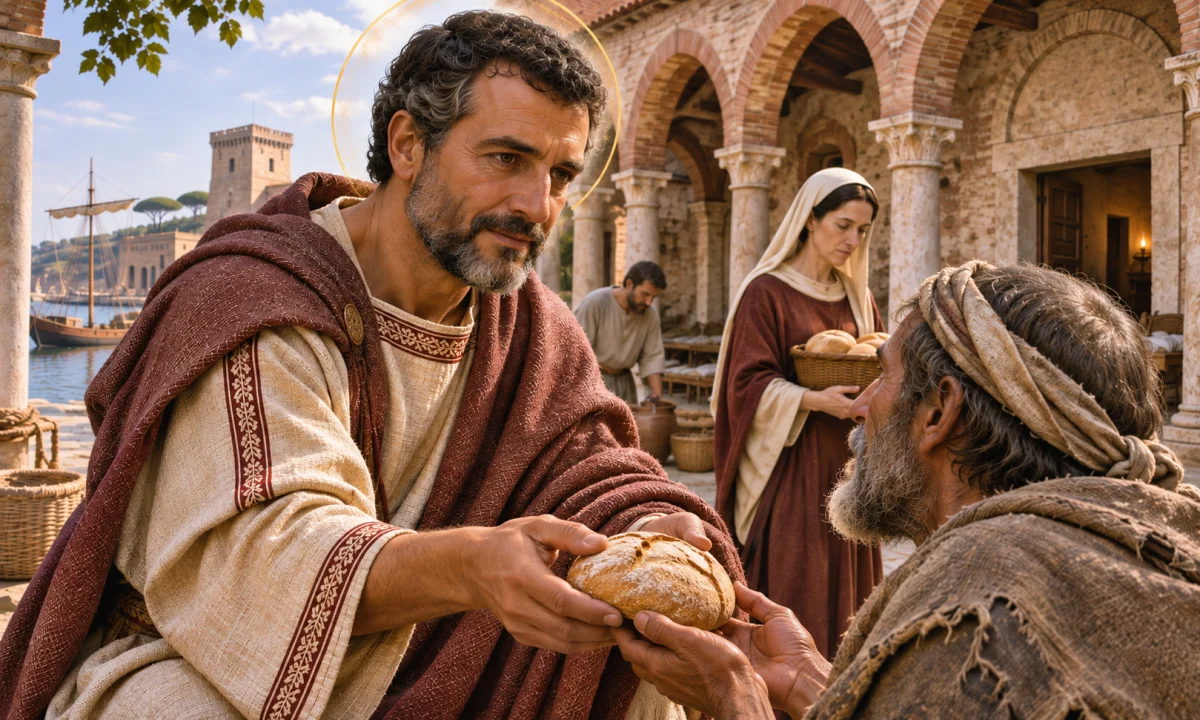
St. Pammachius was a Christian senator of late-fourth-century Rome who became known for ascetic devotion, charitable work and support for Christian learning. He belonged to the Roman aristocracy but used his wealth and social position in the service of the poor, pilgrims and the Church. His life is known chiefly through the writings of St. Jerome and through Roman ecclesiastical tradition.
Historical setting
Pammachius lived during a period when Christianity was becoming firmly established within the Roman Empire. The legal position of Christians had changed dramatically since the reigns of Constantine and his successors, but the religion was still developing its institutions, public identity and forms of religious life. Wealthy Christian families in Rome played an important part in this process. They funded churches, supported clergy, cared for the poor and sometimes adopted forms of asceticism that had previously been associated especially with the Egyptian and Syrian deserts.
Roman aristocratic Christianity often combined traditional social responsibilities with intense religious commitment. A man such as Pammachius could remain connected to the senatorial elite while devoting himself to fasting, prayer, theological study and charitable foundations. His career illustrates the growing importance of Christian patronage: wealthy believers did not merely attend church, but helped create the institutions through which Christian communities served society.
The principal evidence for Pammachius comes from Jerome, a biblical scholar and controversial Christian writer who maintained a substantial correspondence with members of the Roman aristocracy. Jerome knew Pammachius personally and addressed several letters to him. These writings are valuable because they provide a near-contemporary portrait, although they also reflect Jerome’s own ideals and rhetorical purposes rather than a complete biography.
Name and identity
The name appears in Latin as Pammachius and in Greek forms such as Pammachios. It was a personal name in the Roman world, not a title or a descriptive word for a type of saint. English-language works generally use St. Pammachius, although spellings can vary in translations and historical discussions.
Pammachius was a Roman senator or member of the senatorial aristocracy. Some later descriptions give him the title vir consularis, indicating high social rank, but the details of his public career are not securely known. It is safer to describe him as a prominent Roman aristocrat and senator than to assign him a specific magistracy without reliable evidence.
He married Paulina, the daughter of St. Paula. Paula was one of the most influential Christian women in late-fourth-century Rome and later became famous for her ascetic life in Bethlehem. Through Paulina, Pammachius was connected to a family that included several notable Christian figures, among them Eustochium and the wider circle associated with Jerome. This marriage placed him within one of the most important Christian networks of the Roman aristocracy.
Marriage, bereavement and ascetic life
After Paulina’s death in the late fourth century, Pammachius devoted himself more completely to Christian asceticism and charity. The surviving accounts do not present him as abandoning every aspect of his social identity. Rather, he transformed the resources and responsibilities of an aristocratic Roman into a form of Christian service.
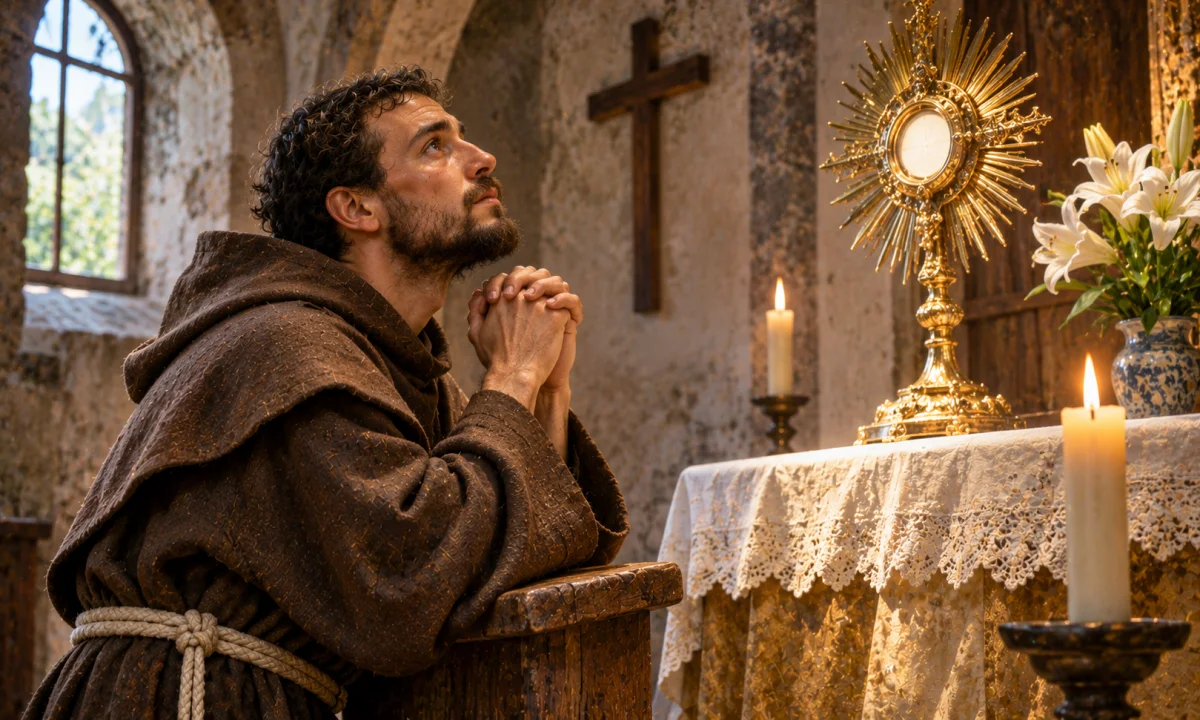
Late antique asceticism had several forms. Some Christians withdrew into monasteries or remote deserts, while others remained in cities and practised disciplined prayer, fasting and generosity. Pammachius represents the second pattern. His religious life was connected with Rome’s churches, clergy and charitable institutions. He is sometimes described as having become a priest, but the exact chronology and nature of his ordination are not equally clear in all accounts. Later Christian tradition treats him as a priestly and ascetic figure, while the contemporary evidence emphasizes his aristocratic status, religious seriousness and charitable activity.
Jerome presented Pammachius as a man capable of turning grief into spiritual action. The death of Paulina became, in this interpretation, a decisive moment in which personal loss led him toward a life of greater service. Such portrayals were common in Christian writing of the period, but they should not be read as a complete record of his inner life. They show how Pammachius was remembered within the ideals of late antique Christian literature.
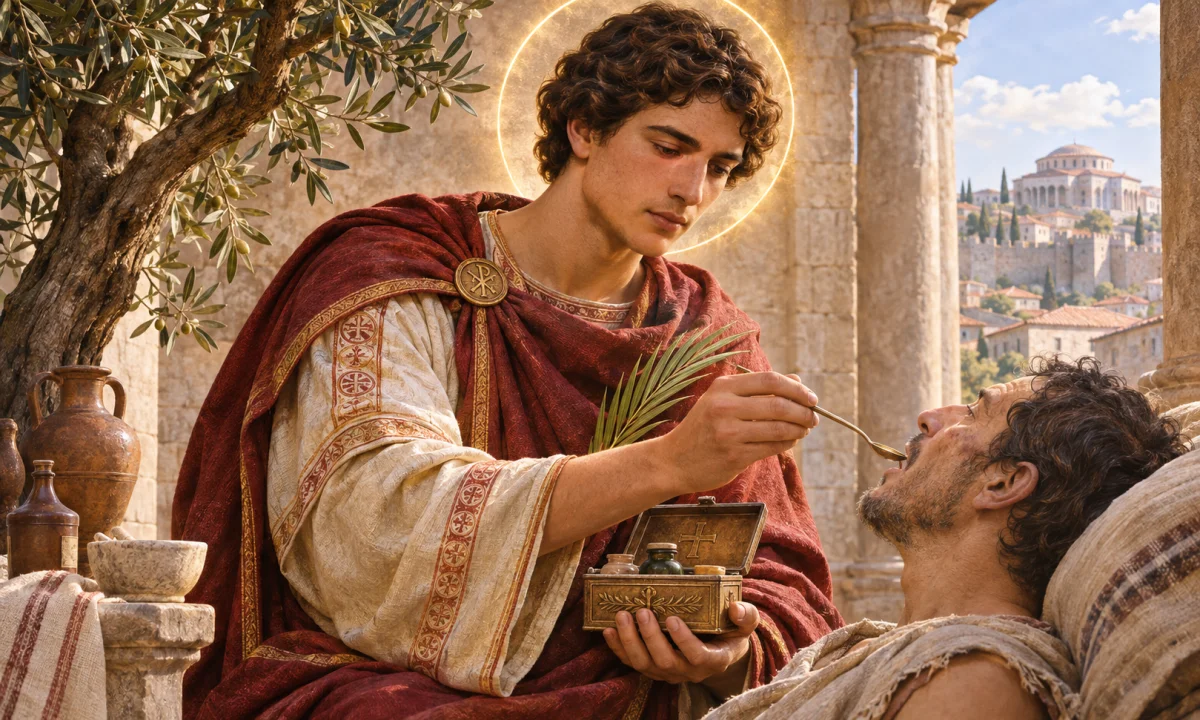
Charity and the hospice at Porto
Pammachius is especially associated with a charitable institution at Porto, the port settlement near Rome. Ports were places where travellers, sailors, merchants, the poor and the sick regularly gathered. They could be dangerous and unhealthy environments, and Christian communities increasingly established hostels, shelters and care facilities for people who lacked family protection or financial resources.
The institution associated with Pammachius is often described as a hospice or xenodochium, a Greek-derived term meaning a place for strangers or visitors. Its purpose was not simply to provide lodging to respectable travellers. The Christian ideal of hospitality included the poor, the sick and displaced people who could not repay their hosts. By supporting such a foundation, Pammachius used his wealth to express the Christian duty of caring for vulnerable strangers.
The Porto foundation also demonstrates that early Christian charity was not limited to private almsgiving. Wealthy patrons could establish permanent places of assistance, while clergy and attendants managed their daily operation. These institutions formed part of the developing Christian infrastructure of the late Roman world. They should not be equated exactly with modern hospitals or social-service centres, since their organization and medical functions varied, but they provided practical care in a religious setting.
Some accounts connect Pammachius with other aristocratic Christians involved in charitable work at Porto, including Fabiola, another prominent Roman Christian woman. The exact division of responsibility between different benefactors is not always clear. What is well established in the tradition is Pammachius’s association with Christian hospitality and care for the poor.
The church associated with Pammachius
Pammachius is also linked with a church in Rome known as the titulus Pammachii, or the title of Pammachius. In late antique Rome, a titulus was a recognized Christian centre, usually associated with a church and its clergy. The name indicates a connection with Pammachius as founder, patron or benefactor, although the precise legal and architectural history is difficult to reconstruct.
The church traditionally associated with this title is the Basilica of Saints John and Paul on the Caelian Hill, now commonly known in Italian as San Giovanni e Paolo. The present building has undergone many alterations, and its surviving form cannot simply be treated as an unchanged fourth-century structure. Beneath and around the church, however, archaeological remains preserve evidence of earlier Roman houses and Christian activity. The identification with Pammachius belongs to a long-standing Roman tradition supported by textual and archaeological considerations, though details of the original foundation remain uncertain.
Churches such as this were more than places for worship. They could serve as centres for the distribution of food, the organization of charitable aid, the instruction of catechumens and the commemoration of the dead. A wealthy patron’s name attached to a church reflected both material support and continuing memory. In Pammachius’s case, the association helped preserve his identity as a Christian benefactor within the urban landscape of Rome.
Relationship with St. Jerome
Pammachius was one of Jerome’s correspondents and supporters. Their relationship connects Pammachius with major debates in the Latin-speaking Church, especially questions concerning asceticism, marriage, virginity and the interpretation of Christian Scripture.
Jerome wrote to Pammachius in connection with the controversy surrounding Jerome’s work Against Jovinian. Jovinian had criticized certain forms of ascetic teaching and argued against the idea that virginity was spiritually superior to marriage. Jerome’s response was forceful and, in places, extreme. Pammachius objected to aspects of the work’s presentation and helped draw attention to it within ecclesiastical circles. This does not mean that Pammachius rejected asceticism; rather, he appears to have been concerned about the work’s tone and possible effects.
The episode shows that Pammachius was not merely a passive recipient of religious instruction. He was educated, engaged in theological questions and willing to challenge a famous author. Jerome respected his judgment even when defending his own position. Their correspondence reveals the intellectual role played by elite Christian laymen in the period before the clearer separation of theological scholarship from other forms of ecclesiastical authority.
Jerome also wrote to Pammachius after the death of Paulina. The letter treats mourning through the language of Christian hope, spiritual discipline and charitable remembrance. It helped shape the later image of Pammachius as a widower who redirected his grief into religious service.
Religious ideals and symbolism
Pammachius has no distinctive supernatural powers, legendary weapon or fixed visual attribute comparable to those of many martyrs and miracle-working saints. His significance lies in the pattern of life associated with him: wealth converted into charity, public status transformed into service, and bereavement answered through religious dedication.
His story reflects several important Christian ideals of late antiquity:
- Almsgiving: Material wealth was understood as a responsibility toward the poor rather than solely as a sign of personal success.
- Hospitality: Caring for strangers was treated as a direct expression of Christian love and obedience to the teachings of Jesus.
- Ascetic discipline: Prayer, fasting and restraint could be practised within the city, not only in remote monasteries.
- Memory through benefaction: Churches and charitable foundations preserved the names of their patrons while serving the wider Christian community.
- Christian aristocratic identity: Roman rank and family connections could be redirected toward ecclesiastical and charitable purposes.
For this reason, Pammachius is a useful example of urban asceticism. He was not remembered primarily as a hermit who escaped society, but as a Christian who remained engaged with the city and its needs. His holiness was expressed through institutions, relationships and practical generosity.
Death and commemoration
Pammachius died around the beginning of the fifth century, traditionally in 410. The date is connected with the period when the Western Roman Empire was facing severe political and military disruption, including the Gothic invasion of Italy and the sack of Rome in 410. The precise circumstances of his death are not securely recorded, and later retellings should not be treated as a detailed death narrative.
His liturgical commemoration is generally observed on 30 August. The Roman tradition remembers him as a holy Roman senator, priestly figure and benefactor of the poor. His commemoration is more prominent in historical and ecclesiastical contexts than in popular devotional legend. Unlike saints whose cults grew around abundant miracle stories, Pammachius is chiefly known through documentary memory, church foundations and the testimony of Christian writers who knew his circle.
Distinguishing Pammachius from similar names
Pammachius should not automatically be identified with every saint or martyr whose name appears in a similar form. Late antique and medieval calendars sometimes preserve variant spellings, abbreviated notices or separate entries whose relationships are not obvious in translation. The Roman aristocrat associated with Jerome, Paulina, Porto and the titulus Pammachii is the principal figure meant by references to St. Pammachius in discussions of late-fourth-century Roman Christianity.
He should also be distinguished from unrelated figures named Pamachius, Pammachios or similar variants in Greek and Latin records. Differences in spelling do not by themselves prove that two entries refer to the same person. In particular, a brief calendar notice naming a martyr cannot be merged with the Roman senator without supporting evidence.
Later reception
Pammachius’s later reputation remained tied to Rome’s churches and to the ideal of the wealthy Christian patron. Writers and ecclesiastical traditions valued him as an example of how an aristocrat could pursue holiness without withdrawing entirely from civic life. His memory also supported the Christian claim that care for the poor and the stranger was a central part of religious practice rather than an optional act of private generosity.
There is no substantial modern popular-culture tradition surrounding St. Pammachius. He does not commonly appear in films, fantasy literature or supernatural legends. His continuing importance is primarily historical and religious: he offers evidence for the formation of Christian charitable institutions, the participation of Roman elites in ascetic movements and the close relationship between theological debate, family networks and public benefaction in late antique Rome.