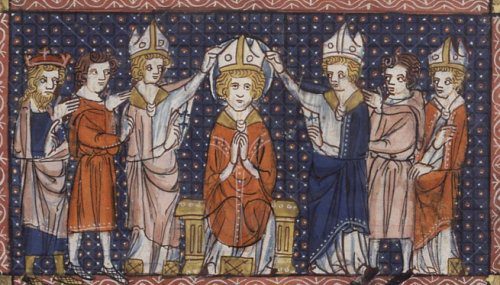
St. Hilary of Poitiers, also known as the “Athanasius of the West,” is a significant figure in Christian mythology and theology. Born around 300 AD in the region of what is now France, he became a prominent bishop and theologian. His life and work were instrumental in shaping early Christian thought, particularly regarding the doctrine of the Trinity. Hilary’s writings addressed various theological disputes of his time, including the controversial Arianism, which denied the full divinity of Jesus Christ. His commitment to defending the faith earned him a revered place in the history of the Church.
Early Life and Background
Hilary was born into a pagan family, which was typical for many Christians of his era. His early life was marked by a pursuit of knowledge, and he eventually became a well-educated man. His education likely included studies in philosophy and rhetoric, which were essential subjects in ancient Roman society. Despite his pagan upbringing, Hilary experienced a profound conversion to Christianity, which transformed his life. This change was not merely personal; it also propelled him into a path of theological inquiry and ecclesiastical leadership.
After his conversion, Hilary became deeply involved in the Christian community. His passion for the faith led him to become a catechist, guiding new believers in their understanding of Christian teachings. His dedication to learning and teaching the Scriptures laid a strong foundation for his future role as a bishop. This early commitment to Christianity was crucial, as it prepared him for the challenges he would face later in life, particularly during the theological controversies that characterized the 4th century.
Bishopric of Poitiers
In 350 AD, Hilary was elected as the Bishop of Poitiers, a significant ecclesiastical position. His tenure as bishop was marked by a vigorous defense of orthodox Christianity against various heresies, especially Arianism. Arianism, which argued that Jesus Christ was not of the same substance as God the Father, posed a serious threat to the unity of the Church. Hilary took a firm stand against this doctrine, emphasizing the importance of the Trinity and the full divinity of Christ. His writings during this period became essential resources for the Church’s understanding of these complex theological issues.
 St. Hilarion
As bishop, Hilary was not only a theologian but also a pastoral leader. He worked diligently to care for his flock, addressing their spiritual needs and guiding them in their faith. His leadership was characterized by a commitment to teaching and preaching the Gospel. He often emphasized the importance of love and unity among believers, urging them to remain steadfast in their faith amidst growing challenges. His pastoral approach helped to strengthen the Christian community in Poitiers during a tumultuous time in the Church’s history.
Theological Contributions
Hilary’s theological contributions are vast and varied. One of his most notable works is the “On the Trinity,” where he systematically addresses the relationship between the Father, Son, and Holy Spirit. In this work, he argues for the co-equality and co-eternity of the three persons of the Trinity, a foundational concept for Christian orthodoxy. Hilary’s use of Scripture and his philosophical insights provided a robust defense against Arian claims. His ability to articulate complex theological ideas in a clear and accessible manner made his writings influential for both his contemporaries and future generations.
In addition to “On the Trinity,” Hilary wrote several other significant texts, including “The Treatise on the Psalms.” In this work, he reflects on the Psalms, offering spiritual insights and practical applications for Christian living. His writings often combine rigorous theological reflection with pastoral care, demonstrating his deep concern for the spiritual well-being of his readers. Hilary’s ability to connect theology with everyday life is one of the reasons his works have endured through the centuries.
 St. Hermengild
Exile and Return
Hilary’s strong opposition to Arianism eventually led to his exile. In 356 AD, he was exiled by Emperor Constantius II, who favored Arianism and sought to suppress orthodox Christianity. Hilary’s exile was a challenging period in his life, but it did not deter him from his mission. During this time, he continued to write and defend the faith, using his exile as an opportunity to deepen his theological insights. His resilience and unwavering commitment to the truth of the Gospel are hallmarks of his character.
While in exile, Hilary engaged in theological discussions with various leaders and scholars, further developing his understanding of the Trinity and the nature of Christ. He also maintained correspondence with the Christian communities, encouraging them to remain steadfast in their faith. After several years, he was allowed to return to Poitiers, where he continued his pastoral work and theological writings. His return was celebrated by the Christian community, who recognized him as a courageous defender of the faith.
Legacy and Influence
St. Hilary of Poitiers left an indelible mark on Christian theology and the Church. His writings were influential in shaping the doctrine of the Trinity and countering Arianism. Many of his ideas were later adopted by the Church Fathers and played a crucial role in the formulation of the Nicene Creed. His commitment to orthodoxy and his ability to articulate complex theological concepts in a relatable manner contributed to the development of Christian thought.
In addition to his theological contributions, Hilary is remembered for his pastoral care and leadership. His emphasis on love, unity, and the importance of community continues to resonate within the Church today. Hilary’s life serves as an example of faithfulness in the face of adversity, inspiring countless believers to stand firm in their convictions. His legacy is celebrated in various liturgical calendars, and he is venerated as a saint in both the Roman Catholic and Eastern Orthodox traditions.
Feast Day and Veneration
St. Hilary’s feast day is celebrated on January 13th, a date that commemorates his life and contributions to the Church. On this day, Christians reflect on his teachings and seek to emulate his example of faithfulness. Many churches hold special services, readings, and prayers in honor of St. Hilary, encouraging congregations to deepen their understanding of the Trinity and the importance of unity in the faith.
In addition to his feast day, St. Hilary is venerated in various ways throughout the Christian world. Churches dedicated to him often highlight his teachings and life story, providing opportunities for believers to learn from his example. His writings continue to be studied in theological seminaries and institutions, ensuring that his contributions to Christian thought remain relevant for future generations.
St. Hilary of Poitiers stands as a towering figure in Christian mythology and theology. His life and work exemplify the struggles and triumphs of early Christianity, showcasing the importance of defending the faith and fostering community among believers. Through his writings, pastoral leadership, and unwavering commitment to the truth, Hilary has left a legacy that continues to inspire and challenge Christians around the world. As believers reflect on his life, they are reminded of the importance of love, unity, and faithfulness in their own journeys of faith.