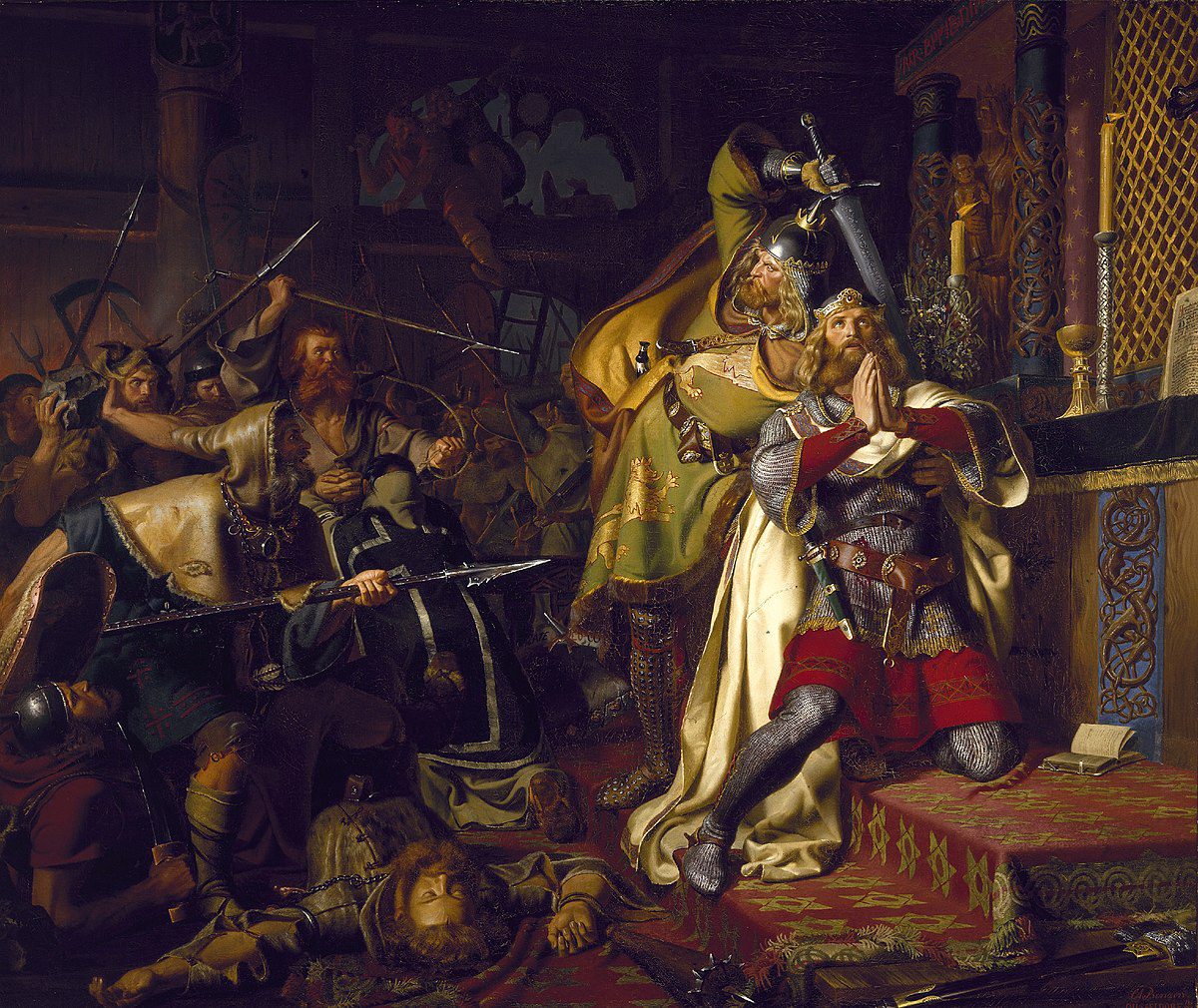
St. Canute IV, also known as Canute the Holy, is a significant figure in Christian mythology and history, particularly in Denmark. His life and legacy are intertwined with themes of faith, martyrdom, and the political landscape of medieval Europe. Born around 1042, Canute was the son of King Sweyn Estridson and Queen Świętosawa, a Polish princess. His early life was marked by the struggles of his family to maintain power in a turbulent political environment. Canute became king of Denmark in 1080, and his reign was characterized by efforts to strengthen the Christian faith and consolidate his rule. His dedication to the church and his efforts to spread Christianity earned him a place in the hearts of many.
The Early Life of St. Canute IV
The early years of St. Canute IV were not without challenges. He grew up during a time when Denmark was divided and faced numerous threats from neighboring countries. His family, particularly his father, King Sweyn, was involved in various conflicts to secure their reign. Canute was educated in both military and religious matters, which would later play a crucial role in his leadership. He was known for his intelligence and piety, traits that endeared him to many. The influence of his mother, who was deeply religious, also shaped his character and commitment to Christianity.
 St. Kenneth
As a young prince, Canute witnessed the complexities of governance and the importance of faith in unifying his people. He traveled across Europe, visiting various kingdoms and learning from different cultures. This exposure helped him understand the significance of a strong church in governance. Canute’s travels also reinforced his belief in the divine right of kings, a concept that would influence his rule. He was not just a warrior; he was also a thinker, contemplating the best ways to lead his people towards a prosperous and faithful future.
Canute’s Ascension to the Throne
In 1080, Canute ascended to the throne of Denmark after the death of his brother, King Harald. His ascension was not without controversy, as rival factions vied for power. Canute’s claim to the throne was supported by his pious reputation and his commitment to the Christian faith. He sought to establish a kingdom where the church played a central role in governance. This vision was not universally accepted, leading to conflicts with local nobles who were resistant to his reforms. Canute’s approach to leadership was characterized by a desire to balance power with piety, a challenging endeavor in a politically fragmented society.
Canute’s reign was marked by his efforts to consolidate power and promote Christianity. He implemented various reforms aimed at strengthening the church’s influence in Denmark. This included the establishment of bishoprics and the construction of churches throughout the kingdom. His commitment to the church was seen as a way to unify his people under a common faith. Canute also sought to improve the legal system, emphasizing justice and the protection of the vulnerable. His vision was to create a kingdom where faith and governance worked hand in hand, ensuring peace and prosperity for all.
 St. Camillus De Lillis
The Martyrdom of St. Canute IV
The turning point in Canute’s life came in 1086 when he faced opposition from a group of nobles who were unhappy with his reforms. These nobles viewed his efforts to strengthen the church as a threat to their power and influence. The tensions escalated, leading to a rebellion against Canute’s rule. Despite the challenges, Canute remained steadfast in his faith and his commitment to his vision for Denmark. He believed that his divine right to rule was supported by his dedication to God and the church.
On July 10, 1086, during a church service in Odense, Canute was assassinated by a group of rebels. His martyrdom shocked the kingdom and was seen as a tragic end to a ruler who sought to unify his people through faith. Canute’s death was not just a loss for Denmark; it was viewed as a profound moment in Christian history. The circumstances of his death led to his veneration as a saint, with many believing that he had sacrificed his life for the faith he held dear.
The Legacy of St. Canute IV
St. Canute IV’s legacy is profound and far-reaching. After his death, he was quickly recognized as a martyr, and his cult grew in popularity. Pilgrimages to his tomb in Odense became common, with many seeking his intercession for various needs. The veneration of St. Canute played a crucial role in the establishment of a strong Christian identity in Denmark. His life and martyrdom served as a powerful symbol of faith, sacrifice, and commitment to the Christian cause.
 St. Callistus I
Canute’s influence extended beyond Denmark. His story inspired other leaders and saints throughout Europe, highlighting the importance of faith in governance. The church recognized his contributions, and he was canonized in the early 12th century. Various churches and institutions were named in his honor, further solidifying his place in Christian mythology. The annual feast day of St. Canute is celebrated on January 19, commemorating his life and legacy.
St. Canute IV in Christian Art and Literature
The life and martyrdom of St. Canute IV have been depicted in various forms of art and literature throughout the centuries. Artists have portrayed him as a noble figure, often shown in royal attire, symbolizing his status as king and martyr. These artistic representations serve to remind the faithful of his dedication to God and the sacrifices he made for his people. St. Canute is often depicted holding a cross, emphasizing his commitment to the Christian faith.
In literature, St. Canute’s story has been recounted in various hagiographies and historical texts. These works highlight his virtues, struggles, and ultimate sacrifice. They serve not only as religious texts but also as historical accounts of the challenges faced by leaders in a turbulent era. His story has been used as a moral lesson, illustrating the importance of faith, integrity, and the willingness to stand up for one’s beliefs, even in the face of death.
The Role of St. Canute IV in Danish National Identity
St. Canute IV holds a special place in the heart of Danish national identity. His life and legacy are often invoked in discussions about the role of Christianity in shaping the Danish culture. The stories of his martyrdom and dedication to the church resonate with many Danes, serving as a source of inspiration and pride. His legacy has become intertwined with the narrative of Denmark as a Christian nation, highlighting the historical significance of faith in the country’s development.
Various monuments and memorials have been erected in honor of St. Canute throughout Denmark. These sites attract both pilgrims and tourists, serving as reminders of his contributions to the Christian faith and Danish identity. The ongoing celebration of his feast day further cements his place in the collective memory of the Danish people. St. Canute IV’s life serves as a testament to the enduring impact of faith on culture, politics, and national identity.
Modern Reflections on St. Canute IV
In contemporary discussions, St. Canute IV is often referenced in the context of faith and leadership. His story serves as a reminder of the challenges faced by those who seek to lead with integrity and faith. In a world where political power often clashes with moral obligations, Canute’s life offers valuable lessons on the importance of staying true to one’s beliefs. His martyrdom highlights the risks involved in standing up for one’s convictions, especially in the face of opposition.
Furthermore, St. Canute IV’s legacy continues to inspire various movements within the church. His commitment to social justice and the protection of the vulnerable resonates with modern Christian teachings. Many contemporary leaders look to his example as they navigate the complexities of governance and faith. The ongoing relevance of St. Canute’s story underscores the timeless nature of his message, reminding us of the importance of faith in shaping a just and compassionate society.
St. Canute IV in Ecumenical Dialogue
The life of St. Canute IV also plays a role in ecumenical dialogue among different Christian denominations. His commitment to the Christian faith transcends denominational boundaries, offering common ground for discussions about the nature of leadership, faith, and sacrifice. In an era where divisions often overshadow unity, Canute’s story serves as a reminder of the shared values that bind Christians together. His life encourages dialogue about the importance of faith in addressing contemporary issues.
Various Christian organizations have used the story of St. Canute IV to promote understanding and cooperation among different denominations. His legacy is invoked in discussions about the role of the church in society, emphasizing the need for collective action in the face of challenges. The ecumenical appreciation of St. Canute highlights the potential for unity in diversity, showcasing how shared beliefs can lead to collaborative efforts for the common good.
The Influence of St. Canute IV on Danish Literature and Folklore
The impact of St. Canute IV extends into Danish literature and folklore, where his story has been woven into the cultural fabric of the nation. Various tales and legends have emerged around his life, portraying him as a heroic figure who exemplifies the virtues of bravery, faith, and sacrifice. These narratives serve to reinforce the values associated with St. Canute, making him a beloved character in Danish folklore. His stories often highlight the struggles of the common people and their relationship with the monarchy.
In addition to folklore, St. Canute’s influence can be seen in modern literature. Authors have drawn inspiration from his life, using his story as a backdrop for exploring themes of faith, leadership, and moral dilemmas. His character often serves as a catalyst for discussions about the nature of power and the responsibilities that come with it. The ongoing fascination with St. Canute IV in literature reflects the enduring relevance of his story in contemporary society.
St. Canute IV’s Influence on Modern Danish Society
In modern Denmark, the legacy of St. Canute IV continues to influence societal values and norms. His commitment to justice and the protection of the vulnerable resonates with contemporary social movements. Many Danes see him as a model of ethical leadership, embodying the principles of integrity and compassion. His story serves as a reminder of the importance of standing up for what is right, even in the face of adversity.
St. Canute IV’s influence can also be seen in the realm of education. His life and teachings are often included in curricula that focus on Danish history and Christian values. Schools and universities use his story to encourage discussions about ethics, leadership, and the role of faith in public life. By examining the life of St. Canute, students are encouraged to reflect on their own values and the impact of their choices on society.
The Commemoration of St. Canute IV Today
Today, St. Canute IV is commemorated through various events and activities that celebrate his life and legacy. Churches across Denmark hold special services on his feast day, inviting the faithful to reflect on his contributions to the Christian faith. These commemorations often include prayers, hymns, and readings from scripture that highlight the virtues he embodied. Such gatherings serve to strengthen the community’s faith and connection to their heritage.
Additionally, various organizations promote awareness of St. Canute IV’s legacy through educational programs, lectures, and cultural events. These initiatives aim to keep his story alive and relevant for future generations. By engaging with the life of St. Canute, contemporary Danes are encouraged to consider the lessons of faith, leadership, and sacrifice that his story imparts. The ongoing commemoration of St. Canute IV underscores the importance of remembering and honoring those who have shaped the course of history through their faith and actions.