WORLD
WORLD
Radgridr
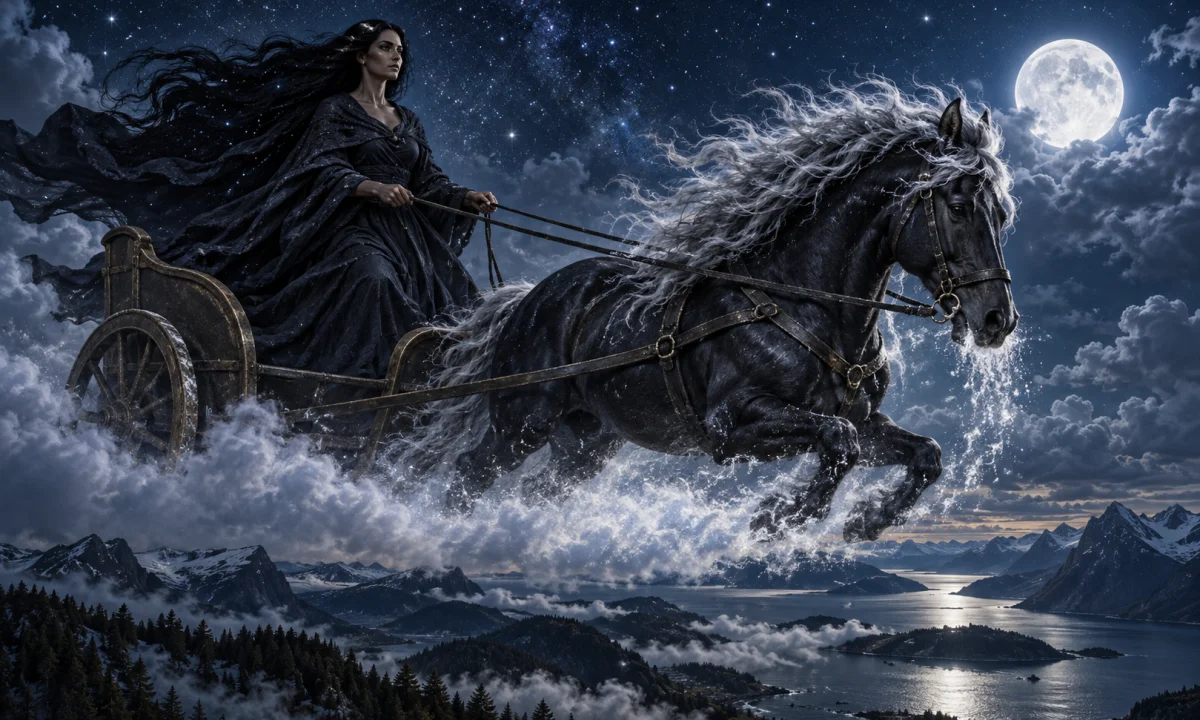
Radgridr, usually written Ráðgríðr in Old Norse, is a named valkyrie in the surviving literature of Norse mythology. She is one of the female figures associated with choosing or serving the fallen warriors who are taken to the halls of the gods. Unlike prominent valkyries such as Brynhildr, however, Radgridr has no surviving mythological narrative of her own. Her importance comes primarily from her appearance in lists of valkyries preserved in the Poetic Edda and Snorri Sturluson’s Prose Edda.
Radgridr in Norse tradition
The valkyries were supernatural women connected with battle, death and the destiny of warriors. Their name, valkyrja, is generally understood as “chooser of the slain,” from elements meaning “the slain” and “to choose.” In the traditional image preserved by Old Norse poetry, they select some of those who die in battle and bring them to the afterlife. The chosen dead, known as the einherjar, are associated especially with Valhǫll, the hall of Óðinn.
Radgridr belongs to this broad class of beings, but the surviving sources do not give her a detailed biography. She is not presented as the daughter, wife or companion of a particular god, nor is she assigned a distinctive weapon, animal, physical appearance or personal adventure. Statements about her should therefore remain limited to what the sources actually preserve: her name and her inclusion among the valkyries.
The valkyries occupy an important but varied place in Norse tradition. In some poems they appear as divine or semi-divine agents who determine the outcome of battles. In others they are connected with particular heroes and can resemble powerful supernatural women, prophetic figures or otherworldly brides. The word “valkyrie” consequently covers a range of related portrayals rather than a single, completely uniform type of character.
Surviving literary sources
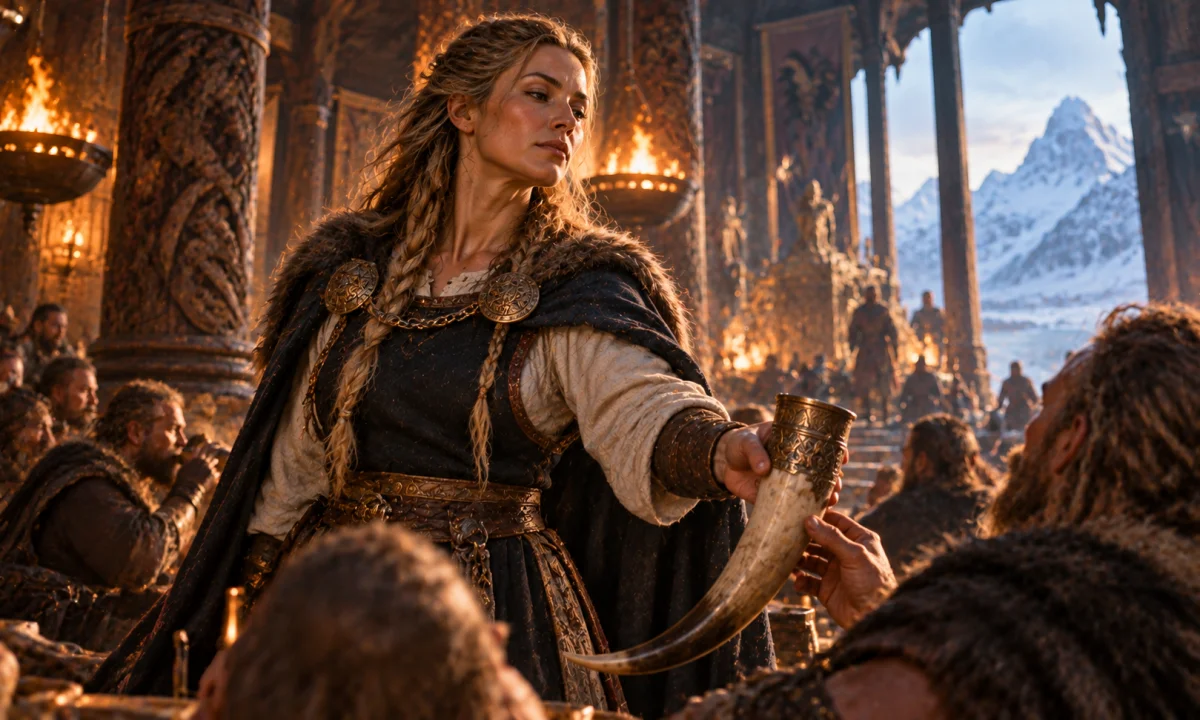
Radgridr is named in the poem usually called Grímnismál, preserved in the medieval Icelandic manuscript known as the Codex Regius of the Poetic Edda. In a passage describing the valkyries, the poem names a series of figures who carry ale to the einherjar. Radgridr appears near the end of this list alongside Randgríðr and Reginleif.
She is also named in Gylfaginning, the first major section of Snorri Sturluson’s Prose Edda. There, the speaker High explains that many valkyries serve in Valhǫll. Radgridr is included in a catalogue containing names such as Hrist, Mist, Skögul, Hildr, Þrúðr, Hlǫkk, Herfjǫtur, Göll and Geirahǫð.
These works were written down in medieval Iceland after the conversion of Iceland to Christianity. They preserve material derived from older Scandinavian poetic and mythological traditions, but they are not direct transcripts of pre-Christian religious practice. The manuscripts also reflect the interests, language and literary organisation of their medieval authors and scribes. Radgridr is therefore best understood as a figure of the surviving literary tradition, rather than as a deity whose worship or cult can be securely documented.
The two lists are not identical in wording or arrangement, and the manuscripts do not always provide a single fixed form for every mythological name. This is normal for Old Norse mythological catalogues. Names could vary through spelling, grammatical form, dialectal pronunciation and the decisions of modern editors and translators.
Name and spelling
The form Ráðgríðr represents the Old Norse spelling most commonly used in modern editions. Radgridr is an anglicised form that makes the name easier to read for English-speaking audiences. Other forms may appear in translations or reference works, including Radgrid, Radgridr and versions that preserve different choices for representing Old Norse letters.
The first element, ráð, is associated with counsel, advice or a decision. The second element is more difficult to interpret with certainty. It may be connected with grið, a word associated with peace, protection, truce or sanctuary, but the exact meaning of the compound is disputed. Some interpretations have therefore treated the name as referring to “counsel” combined with peace or protection, while others have proposed a more forceful or martial sense.
Translations of mythological names are often more tentative than they appear. A modern English rendering can suggest a precise meaning even when the Old Norse compound is ambiguous. There is no universally accepted translation of Ráðgríðr, and the name should not be used as firm evidence for a particular personality or power. Nothing in the surviving poems explicitly says that Radgridr gives strategic advice, protects warriors or creates truces merely because those ideas may be associated with elements of her name.
Role among the valkyries
Radgridr’s clearest traditional role is her participation in the valkyrie company connected with Valhǫll. In Grímnismál, the named valkyries carry ale to the einherjar. This image places them within the daily ceremonial life of the hall, where the slain warriors eat and drink while preparing for the events expected to precede Ragnarök.
In Gylfaginning, the valkyries are described as attending to those who fall in battle. The wider mythology presents the einherjar as warriors who fight during the day and are restored or renewed for feasting afterwards. The valkyries’ service is therefore linked not only with death but also with the organisation of the heroic afterlife.
It is important not to turn this brief evidence into a detailed individual profile. The sources do not say that Radgridr personally decides the fate of a named hero, rides a particular horse, carries a spear or commands the other valkyries. Such features are common in modern depictions of valkyries, and some have analogues in other Norse texts, but they are not specifically attributed to Radgridr in the surviving passages.
Nor does the name establish that she is a goddess in the same sense as Óðinn, Þórr or Freyja. “Valkyrie” is a functional and mythological category, and the figures within it may be portrayed as divine attendants, supernatural women or independent agents of fate. Radgridr is securely identifiable as a valkyrie by her placement in the lists, but her exact status within the wider hierarchy of supernatural beings is not explained.
Absence of individual stories
Several famous valkyries have developed recognisable identities because they appear in extended poems or heroic legends. Brynhildr, for example, is central to the Völsunga saga and related heroic traditions. Sigrún and Sváva are associated with particular heroic poems in the Poetic Edda. These figures have relationships, conflicts and narrative choices that allow readers to distinguish their characters.
Radgridr is different. Her name occurs in a catalogue, not in a preserved episode. No surviving story records a meeting between Radgridr and Óðinn, a romance with a human warrior, a quarrel with another valkyrie or a transformation into a mortal woman. She should not be given the adventures of Brynhildr, Sigrún or other legendary figures simply because all of them are called valkyries.
This lack of narrative detail is itself significant. Medieval mythological catalogues often preserve names whose original stories have been lost, whose functions overlapped with those of other beings or whose names were valued as part of a poetic tradition. Radgridr may once have had a broader significance, but the surviving evidence does not allow that possibility to be reconstructed confidently.
Radgridr and Randgridr
Confusion is especially likely between Radgridr and Randgríðr, another valkyrie named in the same passages. Their names look and sound similar, and both are sometimes rendered inconsistently in English. They are nevertheless presented as separate figures in the lists.
Randgríðr is not an alternative name for Radgridr in the surviving sources. Nor is there evidence that one is a scribal mistake for the other in every occurrence. The two names appear together in Grímnismál, where treating them as one person would remove one of the distinct entries in the catalogue. Their exact name meanings are also uncertain, so proposed translations should not be used to collapse them into a single being.
Radgridr should likewise be distinguished from general references to valkyries. A statement about valkyries as a group—such as their relation to battle, Valhǫll or the einherjar—may apply to the category without proving that every named valkyrie possessed the same individual duties. In Radgridr’s case, the evidence is collective rather than biographical.
Religious and cultural significance
The valkyries reflect a Norse understanding of warfare in which death in battle could be connected with honour, destiny and participation in a divine or heroic order. Their presence does not mean that all warriors were believed to enter the same afterlife. Norse sources also associate the dead with other destinations, including the realm of Hel, and the criteria governing these destinations are not presented consistently across the surviving tradition.
Valhǫll itself is not simply a reward for every person who dies fighting. In the mythological framework of the Poetic Edda and Prose Edda, the chosen warriors have a future role: they are gathered, trained and prepared for the final conflict of Ragnarök. The valkyries are consequently linked with both the heroic ideal of battle and the larger cosmic narrative of the world’s destruction and renewal.
Radgridr’s place in this system is modest but revealing. Her name preserves the memory of a supernatural female figure associated with the institutional world of the war dead, even though her personal story has not survived. She demonstrates how Norse mythology includes not only major gods and celebrated heroes but also numerous named beings known from brief poetic references.
Later reception and modern usage
In modern fantasy, games, novels and popular treatments of Norse mythology, valkyries are often presented as a clearly organised sisterhood of armoured warrior women, each with a distinctive weapon, personality and supernatural ability. That image draws on genuine Norse material but also combines features from different poems, heroic legends, nineteenth-century art and modern fantasy conventions.
Radgridr is sometimes used in such settings as an individual warrior or named member of a fictional valkyrie order. These portrayals may be creative adaptations, but they should not be confused with the medieval evidence. The traditional sources do not provide a detailed appearance, weapon, temperament or set of powers for Radgridr. A modern depiction that supplies those details is interpreting or reinventing the figure rather than reproducing a known ancient biography.
For historical and mythological purposes, Radgridr is best described cautiously: she is a named valkyrie in Old Norse literary tradition, associated through the valkyrie lists with the slain warriors of Valhǫll and the serving of ale to the einherjar. Beyond that, the surviving sources leave her identity largely undefined.