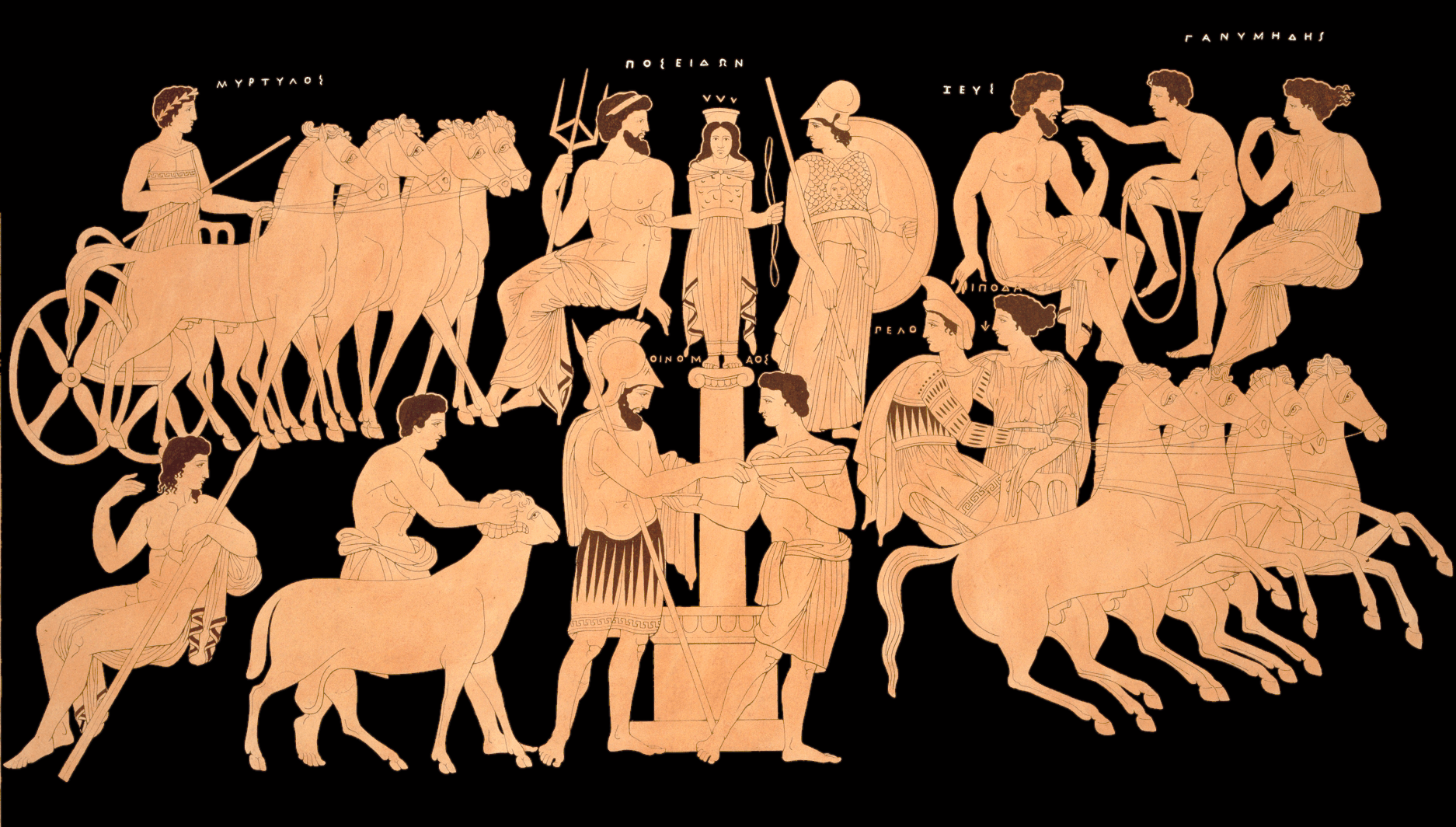
In the realm of Greek mythology, Oenomaus is a significant figure whose story intertwines themes of fate, competition, and the tragic consequences of pride. He is often remembered as the king of Pisa in the region of Elis, and his tale is closely associated with the myth of the Golden Fleece and the legendary hero Pelops. Oenomaus’s narrative is not just a tale of a king but also a reflection on the human condition, exploring the consequences of jealousy and the quest for glory. His life and deeds serve as a poignant reminder of the complexities of divine intervention and the inescapable nature of destiny.
The Background of Oenomaus
Oenomaus was the son of Ares, the god of war, and Hippodamia, a mortal woman. His lineage placed him in a unique position within the pantheon of Greek heroes, often highlighting the struggles between the divine and the human. As king, he ruled over Pisa, a city that held great significance in the ancient world, especially during the time of the Olympic Games. His kingdom was known for its wealth and prosperity, but it was also marked by Oenomaus’s fierce and often violent temperament.
 Omphale
One of the defining characteristics of Oenomaus was his fear of losing his kingdom and his daughter, Hippodamia. This fear stemmed from a prophecy he received, which foretold that he would be killed by his daughter’s future husband. In a desperate attempt to thwart this fate, Oenomaus devised a cruel challenge for all suitors seeking to marry Hippodamia. He challenged them to a chariot race, with the understanding that the loser would be executed. This brutal competition would set the stage for the events that would ultimately lead to his downfall.
The Chariot Race Challenge
The challenge Oenomaus created was not just a test of skill but also a reflection of his own insecurities. He believed that his prowess in chariot racing would ensure that no suitor could defeat him. His chariot was said to be drawn by magnificent horses, a gift from his father, Ares, making him nearly unbeatable. As suitors came from far and wide to compete for Hippodamia’s hand, many met their demise on the racetrack, reinforcing Oenomaus’s reputation as a formidable king.
Among the suitors was Pelops, a young hero known for his cunning and charm. Pelops was determined to win Hippodamia’s love, but he was also aware of the dangers posed by Oenomaus. To level the playing field, Pelops sought the help of Poseidon, the god of the sea. Poseidon provided Pelops with a chariot that was not only faster but also enchanted, ensuring that he had a fighting chance against Oenomaus’s superior skills.
 Undines
Pelops’ Strategy
In preparation for the race, Pelops devised a clever plan. He approached Oenomaus with a proposal: if he won the race, he would marry Hippodamia, but if he lost, he would forfeit his life. Oenomaus, confident in his abilities, accepted the challenge. However, Pelops knew that simply relying on speed would not be enough. He needed to outsmart the king.
- Pelops enlisted the help of a charioteer named Myrtilus.
- Myrtilus was the son of Hermes and had a deep understanding of chariot mechanics.
- He agreed to sabotage Oenomaus’s chariot in exchange for a promise of reward.
On the day of the race, the tension was palpable. Oenomaus, confident and arrogant, lined up at the starting point, unaware of Pelops’s treachery. As the race commenced, Pelops’s enchanted chariot sped ahead, but Myrtilus had done his work well. Just as Oenomaus was gaining on Pelops, his chariot broke apart due to the sabotage, sending him crashing to the ground. This incident not only resulted in Oenomaus’s death but also marked a turning point in Pelops’s journey.
The Aftermath of the Race
With Oenomaus dead, Pelops claimed victory and married Hippodamia, fulfilling his ambition. However, the death of Oenomaus was not without its consequences. The king’s demise stirred the wrath of the gods, particularly Ares, who was furious at the betrayal and death of his son. Pelops, now a king himself, found that the path to power was fraught with peril and divine retribution. The story of Oenomaus serves as a cautionary tale about the cost of ambition and the impact of divine forces on mortal lives.
 Oreads
Furthermore, Pelops’s marriage to Hippodamia was marked by a series of tragedies. The couple had several children, including Atreus and Thyestes, whose own stories are filled with betrayal and murder, illustrating the curse of the house of Atreus. The legacy of Oenomaus continued to haunt Pelops, as the sins of the father often cast long shadows over the lives of their descendants.
The Legacy of Oenomaus
Oenomaus’s story has been retold through various mediums, from ancient texts to modern adaptations. His character embodies the archetype of the tragic hero, whose flaws lead to his downfall. The themes present in his tale resonate with audiences across generations, emphasizing the timeless nature of Greek mythology. The lessons learned from Oenomaus’s life—about pride, the quest for power, and the inevitability of fate—continue to be relevant in contemporary discussions about morality and human behavior.
Moreover, the figure of Oenomaus is often used in literary analyses to explore the dynamics of father-son relationships. His interactions with Pelops serve as a reflection of the struggles that many fathers face in terms of legacy and the fear of being usurped by their children. This dynamic is a recurring theme in many mythological tales, where the desire to protect one’s legacy often leads to tragic outcomes.
Oenomaus in Art and Literature
The figure of Oenomaus has inspired countless artists and writers throughout history. His story has been depicted in various forms, including paintings, sculptures, and plays. Artists have often focused on the dramatic moments of his life, such as the chariot race and his tragic death. These artistic representations serve to immortalize his character and the themes associated with him.
In literature, Oenomaus is frequently referenced in discussions about fate and free will. His story raises questions about the extent to which individuals can control their destinies, especially in the face of prophecies and divine interventions. Writers have drawn upon his narrative to explore the complexities of human choices and the repercussions that follow. Oenomaus’s legacy continues to be a source of inspiration for those seeking to understand the intricacies of human nature and the challenges of life.
Conclusion of Oenomaus’s Tale
The tale of Oenomaus is a rich tapestry woven with themes of ambition, fate, and the human experience. His life serves as a reminder of the complexities of power and the often tragic consequences that accompany the pursuit of glory. As a figure in Greek mythology, Oenomaus remains relevant, offering valuable insights into the nature of humanity and the timeless struggles that define our existence.