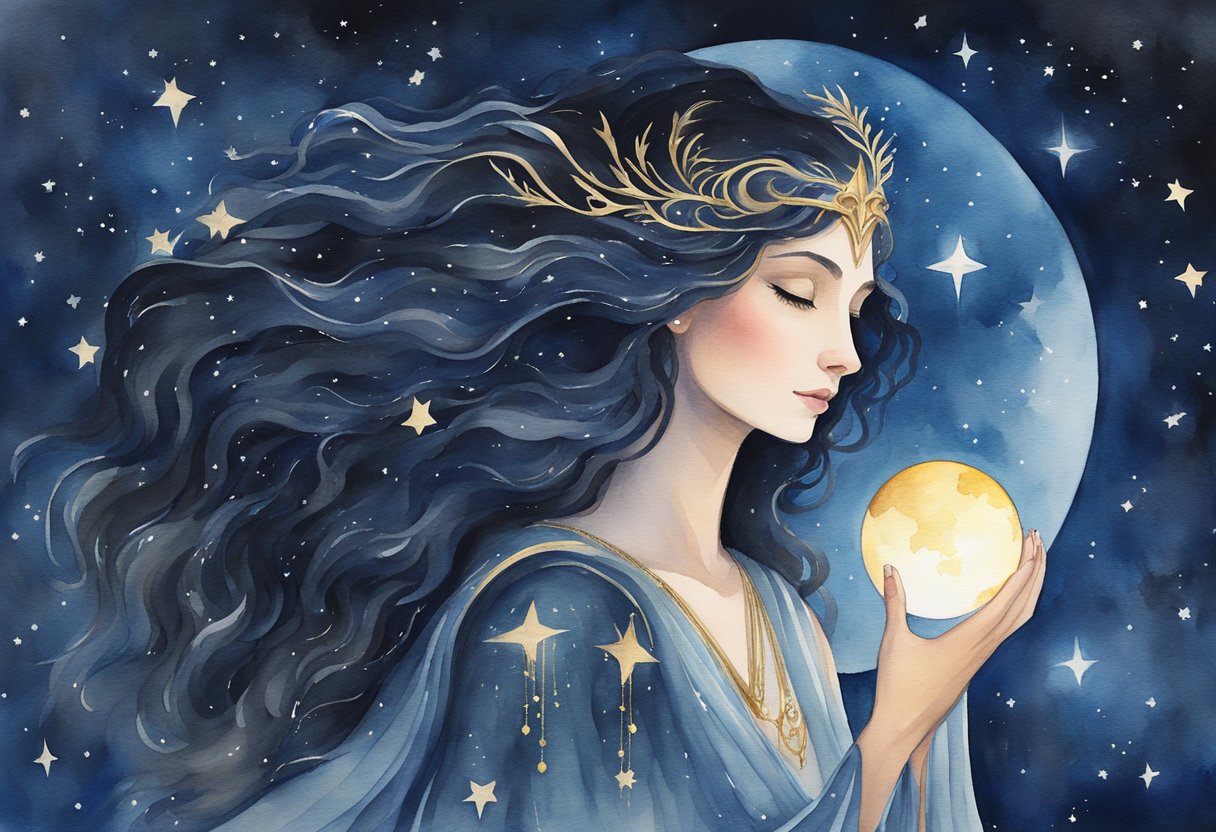
Nyx is one of the most intriguing figures in Greek mythology. She embodies the night and is often associated with darkness, mystery, and the unknown. Nyx is not just a simple personification of the night; she is a primordial deity, one of the first beings to emerge from the void of Chaos. Her presence is felt throughout many myths and stories, showcasing her importance in the ancient Greek pantheon. Her role and attributes are vast and complex, making her a fascinating subject of study for anyone interested in mythology.
Origins of Nyx
 Notus
NotusNyx’s origins can be traced back to the very beginning of the universe in Greek mythology. According to ancient texts, she is one of the first beings to come into existence after Chaos. Chaos is often depicted as a vast, empty void, and from it, several primordial deities emerged, including Gaia (the Earth) and Tartarus (the Abyss). Nyx is often seen as the personification of the night, emerging from this chaotic state. Her name itself is derived from the Greek word for night, highlighting her essential role in the natural order.
In various myths, Nyx is described as a powerful and mysterious figure. She is often portrayed as a dark and shadowy figure, cloaked in a veil of darkness. Her presence is not just limited to the night; she also represents the hidden aspects of the world, such as dreams and the unconscious mind. Nyx’s origins and her connection to the darkness of the night make her a significant character in the stories of other deities.
Characteristics of Nyx
Nyx is often depicted as a beautiful woman, embodying the essence of the night. She is usually shown with dark wings or a flowing gown that resembles the night sky. Her beauty is often contrasted with her enigmatic and sometimes terrifying nature. This duality makes her a complex character in Greek mythology. While she is a goddess of the night, she is also associated with fear and death, as night can evoke feelings of uncertainty and dread.
 Nymphs
In addition to her physical appearance, Nyx is also characterized by her profound powers. As a primordial deity, she has control over the night and its many aspects. This includes the ability to cast darkness over the world, influence dreams, and even control the fates of mortals. Her powers extend beyond the physical realm, touching on the spiritual and psychological aspects of existence. Many ancient texts highlight her ability to instill fear and awe in both gods and mortals alike.
Family and Offspring
Nyx is not only a powerful goddess but also a mother to many significant deities in Greek mythology. Her most notable offspring include Hypnos (the god of sleep), Thanatos (the god of death), and the Moirai (the Fates). Each of these children embodies aspects of the night and the unknown, showcasing Nyx’s influence over these critical elements of life and death. The relationship between Nyx and her children is often explored in various myths, emphasizing the interconnectedness of night, sleep, and death.
- Hypnos: The god of sleep, often depicted as a gentle figure who brings rest to mortals.
- Thanatos: The personification of death, representing the inevitable end that comes to all living beings.
- The Moirai: The Fates, who control the destiny of mortals, weaving the threads of life and death.
Nyx’s relationship with these deities further illustrates her importance in the Greek pantheon. Her children often play crucial roles in various myths, influencing the lives of both gods and mortals. This familial connection highlights how Nyx is not only a solitary figure but a central part of a larger mythological framework.
 Oannes
Nyx in Literature
Nyx has been referenced in various ancient texts, showcasing her significance in Greek literature. One of the most notable references to Nyx can be found in Hesiod’s “Theogony,” where she is described as a powerful deity who even the Olympian gods fear. Hesiod portrays her as a figure who commands respect and awe, further emphasizing her role as a primordial force of nature. Her mention in such foundational texts highlights her enduring presence in Greek mythology.
Another significant reference to Nyx is found in the works of Homer. In the “Iliad,” Nyx is invoked in the context of battles and the fates of warriors. The ancient Greeks often viewed the night as a time when great deeds could be accomplished, but also when danger lurked in the shadows. Nyx’s association with the night adds depth to the narrative, reflecting the duality of night as a time of both peace and peril.
Symbolism of Nyx
Nyx symbolizes various aspects of existence, particularly those related to darkness and the unknown. She represents the mystery of the night, embodying the fears and uncertainties that come with it. The night is often associated with dreams, secrets, and the subconscious, making Nyx a powerful symbol of these themes. Her presence in mythology serves as a reminder of the complexities of life and the inevitable cycle of day and night.
Moreover, Nyx is often seen as a symbol of transformation. The transition from day to night represents change and the passage of time. In many cultures, the night is a time for reflection and introspection, allowing individuals to confront their fears and desires. Nyx’s influence over the night encourages people to embrace the darkness and explore the hidden aspects of their lives.
Worship and Cult of Nyx
While Nyx may not have been worshipped as widely as other deities like Zeus or Athena, she still held a significant place in the hearts of ancient Greeks. Some communities honored her through rituals and offerings, particularly during the nighttime. These practices often involved invoking her name to seek protection during the night or to gain insight into dreams. Nyx was seen as a guardian of the night, and many believed that she could offer guidance through the darkness.
In ancient texts, there are references to altars and shrines dedicated to Nyx, where people would come to pay their respects. These sites were often adorned with symbols of the night, such as stars and crescent moons, further emphasizing her connection to the darkness. Worshippers believed that by honoring Nyx, they could gain favor and protection from the fears that the night might bring.
Nyx in Modern Culture
Nyx’s influence extends beyond ancient mythology and into modern culture. She has become a popular figure in literature, art, and even popular media. Many contemporary authors and artists draw inspiration from her character, exploring themes of darkness, mystery, and the complexities of human nature. Nyx often appears in fantasy novels, graphic novels, and films, where she is depicted as a powerful and enigmatic figure.
In addition to literature and art, Nyx is also referenced in various forms of entertainment, including video games and television shows. Her character is often portrayed as a strong, independent woman who embodies the strength of the night. This modern interpretation of Nyx highlights the enduring fascination with her character and the themes she represents.
Conclusion: The Enduring Legacy of Nyx
Nyx’s legacy in Greek mythology is profound and far-reaching. As a primordial deity, she plays a crucial role in the creation of the universe and the natural order of things. Her influence over the night, dreams, and death makes her a complex and multifaceted character. Throughout history, Nyx has captured the imagination of many, inspiring countless stories and interpretations. Her symbolism and characteristics continue to resonate with people today, highlighting the timeless nature of her presence in mythology.
Nyx is more than just a figure of the night; she embodies the mysteries and complexities of existence. From her origins in Chaos to her relationships with other deities, Nyx remains a significant part of Greek mythology. Her influence can be seen in literature, art, and modern culture, ensuring that her legacy endures for generations to come.