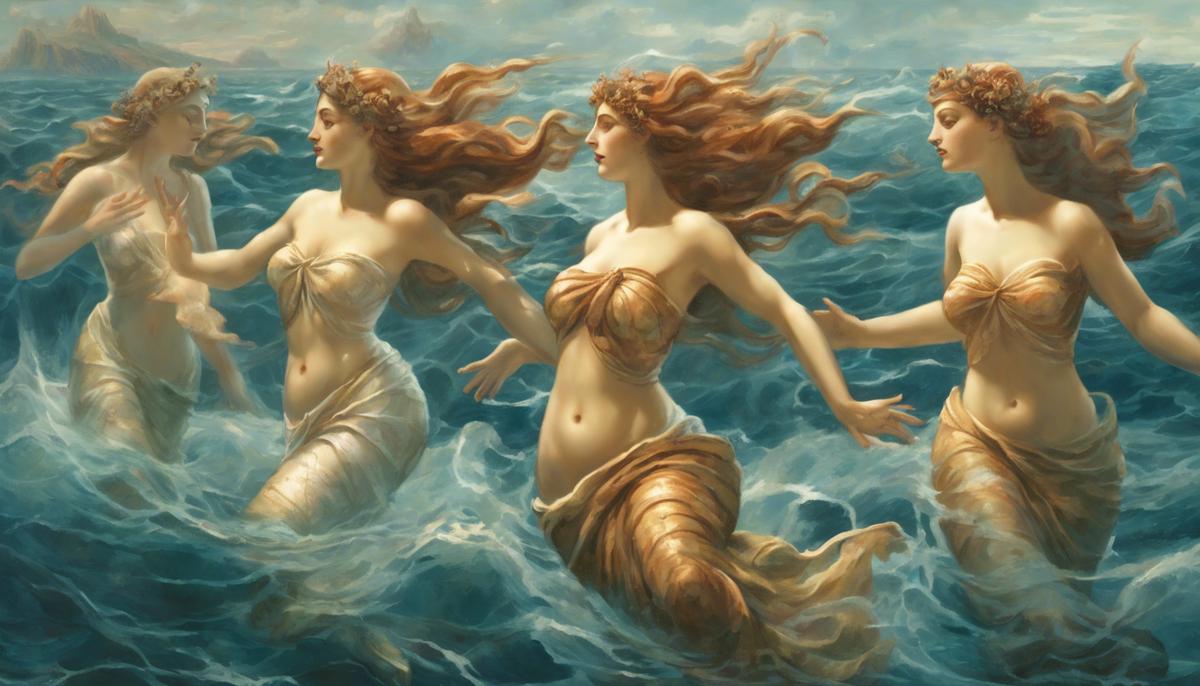
The Nereids are fascinating figures in Greek mythology. They are often depicted as beautiful sea nymphs, daughters of the ancient sea god Nereus and the Oceanid Doris. The Nereids are known for their kind and gentle nature, and they are associated with the Mediterranean Sea. In total, there are fifty Nereids, each with her own unique characteristics and attributes. Their names often reflect their individual personalities, and they play significant roles in various myths and stories, particularly those related to the sea and its mysteries.
Origins of the Nereids
The origins of the Nereids are deeply rooted in ancient Greek cosmology. According to myth, Nereus is known as the “Old Man of the Sea,” a wise and benevolent deity who represents the calm and gentle aspects of the ocean. He is often depicted with a long beard and a serene expression. His wife, Doris, is one of the daughters of the Titan Oceanus and Tethys, and she represents the nurturing qualities of the sea. Together, they created the Nereids, who embody the beauty and grace of the ocean.
 Nereus
The Nereids are often described as being both beautiful and ethereal, with long flowing hair and shimmering scales. They are usually depicted riding on the backs of dolphins or swimming alongside other sea creatures. Their beauty and charm have made them popular subjects in art and literature throughout the ages. The Nereids symbolize the enchanting and sometimes treacherous nature of the sea, which is both a source of life and a place of danger.
Characteristics of the Nereids
Each of the fifty Nereids possesses her own distinct personality and attributes. Some of the most notable Nereids include Thetis, Galatea, and Amphitrite. Thetis is perhaps the most famous of the Nereids; she is known for her beauty and her role as the mother of the great Greek hero Achilles. Thetis is often depicted as a protective and loving mother, deeply concerned for her son’s fate in the Trojan War.
Another well-known Nereid is Galatea, who is famous for her love story with the mortal sculptor Acis. Their love was tragically interrupted by the Cyclops Polyphemus, who was infatuated with Galatea. This myth highlights the theme of unrequited love and the conflict between mortals and divine beings. Galatea’s beauty and grace have made her a popular subject in art and poetry.
 Nike
NikeAmphitrite, another significant Nereid, is known as the queen of the sea and the wife of Poseidon, the god of the sea. She represents the majestic and powerful aspects of the ocean. Amphitrite is often depicted as a regal figure, adorned with seashells and seaweed. She plays a crucial role in maintaining balance in the underwater realm and is revered by both mortals and gods alike.
The Nereids in Mythology
The Nereids appear in numerous myths and legends, often coming to the aid of sailors and heroes in distress. One of the most famous stories involving the Nereids is the tale of Jason and the Argonauts. In their quest for the Golden Fleece, Jason and his crew encountered numerous challenges, including fierce storms and monstrous creatures. The Nereids, sympathetic to their plight, provided guidance and assistance. They helped Jason navigate treacherous waters and even offered him gifts to aid in his journey.
Another significant myth involving the Nereids is the story of Perseus and the sea monster Cetus. When Perseus set out to rescue Andromeda, who was chained to a rock as a sacrifice to Cetus, the Nereids played a vital role. They appeared to Perseus and provided him with advice on how to defeat the monster. Their intervention highlights their protective nature and their connection to the heroic deeds of mortals.
 Niobe
NiobeThe Nereids and Their Symbolism
The Nereids symbolize various aspects of the sea and human experience. They represent the beauty and allure of the ocean, but they also embody its unpredictability and danger. In many myths, the Nereids are seen as guardians of sailors, offering protection and guidance during treacherous journeys. Their gentle nature contrasts with the ferocity of the sea, making them complex figures in Greek mythology.
Additionally, the Nereids are often associated with themes of love, beauty, and femininity. They embody the nurturing qualities of the sea, representing the life-giving aspects of water. In art and literature, the Nereids are frequently depicted in romantic contexts, symbolizing the idealized beauty of nature and the deep connections between humans and the natural world.
The Nereids in Art and Literature
The Nereids have inspired countless works of art and literature throughout history. Their beauty and charm have been celebrated in poetry, painting, and sculpture. Artists from ancient Greece to the Renaissance and beyond have depicted the Nereids in various forms. They are often portrayed as graceful figures surrounded by marine life, emphasizing their connection to the sea.
In literature, the Nereids appear in the works of famous poets such as Homer and Ovid. In “The Iliad,” for example, Thetis plays a crucial role in the story of Achilles, showcasing the strong bond between mother and son. Ovid’s “Metamorphoses” also features Galatea and her tragic love story, illustrating the themes of love and loss that are central to many Nereid myths.
The Nereids and Modern Culture
Even in modern times, the Nereids continue to captivate the imagination. They appear in various forms of media, including films, television shows, and books. Their enchanting beauty and connection to the sea make them popular characters in fantasy and adventure stories. Many contemporary interpretations draw on the rich symbolism associated with the Nereids, exploring themes of love, loss, and the mysteries of the ocean.
Additionally, the Nereids have become symbols of environmental awareness, representing the need to protect our oceans and marine ecosystems. As climate change and pollution threaten the health of our seas, the Nereids serve as reminders of the beauty and fragility of the underwater world. Their stories encourage us to appreciate and safeguard the natural wonders of the ocean.
Conclusion: The Enduring Legacy of the Nereids
The Nereids remain significant figures in Greek mythology, embodying the beauty, mystery, and complexity of the sea. Their stories continue to resonate with audiences today, reminding us of the powerful connection between humans and the natural world. As we explore the myths and legends of the Nereids, we gain a deeper appreciation for the rich tapestry of Greek mythology and its enduring influence on culture and art.