WORLD
WORLD
Milesius

Milesius is the Latinized name commonly used for Míl Espáine, the legendary ancestor of the Gaels in medieval Irish literature. He is not a god or a fully developed hero with an independent cycle of adventures. Instead, Milesius occupies a central place in the genealogical and invasion traditions that explain how the ancestors of the Irish reached Ireland and became its ruling people.
In the surviving stories, Míl himself is usually a remote ancestral figure. The actual conquest of Ireland is carried out by his sons and their companions, known collectively as the Sons of Míl or the Milesians. Their arrival marks the final major invasion in the medieval Irish account of the island’s past. After defeating the Tuatha Dé Danann, the Milesians become the human rulers of Ireland, while the Tuatha Dé Danann retreat into the supernatural realm beneath the hills.
Name and identity
The Irish name is generally written Míl Espáine, often translated as “Míl of Spain” or “the Soldier of Spain.” The form Milesius is a Latinized version used in learned and later presentations of Irish tradition. “Milesian,” when applied to the Irish myth, means a descendant or follower of Míl rather than a separate supernatural species.
The meaning of Míl is not entirely straightforward in every interpretation. It is commonly associated with the Irish word for a soldier or warrior, which makes “Soldier of Spain” a natural translation. Some discussions treat the name as a title or descriptive designation rather than an ordinary personal name. The medieval texts themselves are not uniform in spelling, wording, or genealogy, so the precise linguistic history of the name should not be regarded as settled.
“Spain” also requires historical caution. In the medieval Irish imagination, the term could refer broadly to Iberia, and the stories often associate the Milesians with Galicia or the north-western part of the peninsula. This does not establish that a historically identifiable population migrated from modern Spain to Ireland. The Spanish origin belongs to a literary account of the Irish past, shaped by medieval geography, genealogy, and biblical history.
Sources and cultural setting
The principal source for Milesius and the Milesians is the Lebor Gabála Érenn, usually known in English as the Book of the Invasions of Ireland or the Book of the Taking of Ireland. It is a medieval compilation that presents Irish history as a succession of peoples who settle or conquer the island. Its accounts survive in manuscripts from the medieval period, although many of the traditions incorporated into it are likely older than the surviving written copies.
The Lebor Gabála Érenn was created within a Christian learned culture. Its authors and compilers placed Irish origin legends alongside material drawn from the Bible and from classical and late antique ideas about the history of the world. The successive peoples of Ireland are therefore fitted into a universal chronology that includes events such as the Flood and the dispersal of nations.
This setting helps explain why the Milesians are connected with places and peoples outside Ireland. A prestigious foreign ancestry could give the Irish a place within the wider history known to medieval scholars. The story also resembles other traditional accounts in which a people’s right to rule is explained through an ancestral migration, a conquest, or a divinely sanctioned settlement.
The written tradition is not a single, consistent narrative. Genealogies, names, relationships, and episodes vary between versions. Later writers, including the seventeenth-century historian Geoffrey Keating, retold and reorganized the material in ways that strongly influenced modern knowledge of Irish mythology. Keating’s account is important for the reception of the legend, but it should not be treated as identical to the earliest form of the tradition.
The ancestry of the Milesians
The Milesian genealogy connects the Gaels with a long chain of ancestors and migrations. In many versions, Míl is the son of Bile, a figure whose name and role are associated with the ancestral line of the Gaels. The family’s history is linked with Iberia, especially Galicia, and with an earlier ancestor named Ith.
Ith is often described as a kinsman or uncle of Míl, although the exact relationships differ between accounts. From a high tower in Galicia, Ith sees Ireland in the distance and travels there to investigate the land. The tower is commonly associated in later tradition with Breogán, a powerful ancestor and builder. However, the relationship between Breogán, Ith, and Míl varies in different retellings, and the famous tower is part of the developed literary tradition rather than a securely documented historical monument from the age described by the myth.
Ith reaches Ireland when it is ruled by the Tuatha Dé Danann. He attempts to settle a dispute concerning the island, but the Tuatha Dé Danann become suspicious of his intentions. In the usual account, Ith is killed, and his companions carry his body back to Iberia. His death leads his relatives to prepare a larger expedition against Ireland.
Míl himself is generally presented as the father or ancestor of the invading generation rather than as the leader of this final expedition. Some traditions provide a more elaborate account of his travels and family, while others concentrate on his sons. This difference is important: the name Milesius can suggest a conquering hero, but the Irish stories primarily use him as a genealogical source for the people who follow.
The voyage to Ireland
After Ith’s death, the sons of Míl sail from Iberia to Ireland. Their number and names are not identical in every source, but prominent figures include Eber Finn, Éremón, Amergin, and Donn. Other sons, including Ir and Colpa, appear in genealogical and narrative traditions. The women of the expedition are also significant, especially in the explanations of Ireland’s names and sovereignty.
When the Milesians arrive, they find Ireland in the possession of the Tuatha Dé Danann. The Tuatha Dé Danann are not represented as ordinary human inhabitants. They are the supernatural people associated with the divine or pre-Christian beings of Irish myth, although medieval Christian writers often described them as an ancient race rather than openly calling them gods.
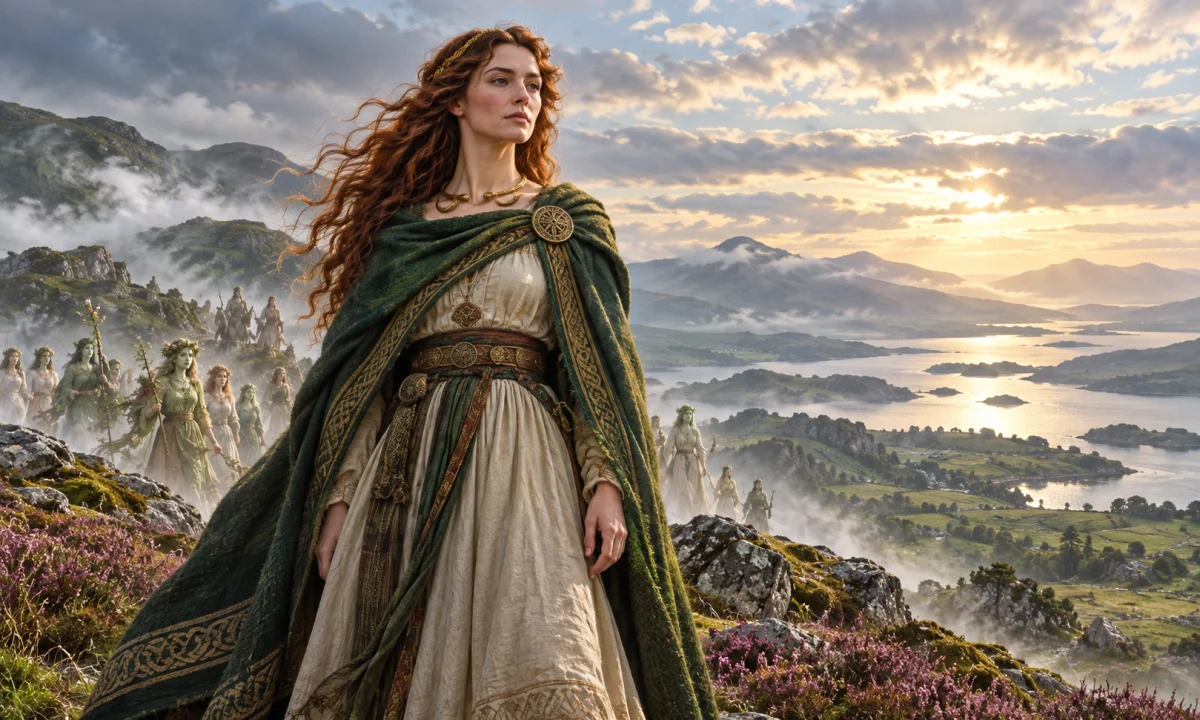
The Tuatha Dé Danann are ruled by three kings—Mac Cuill, Mac Cecht, and Mac Gréine—and by their three queens, Banba, Fódla, and Ériu. The queens ask that Ireland retain names connected with them. In particular, Ériu’s name becomes the source of Éire, the Irish name for Ireland. Banba and Fódla remain poetic names for the island.
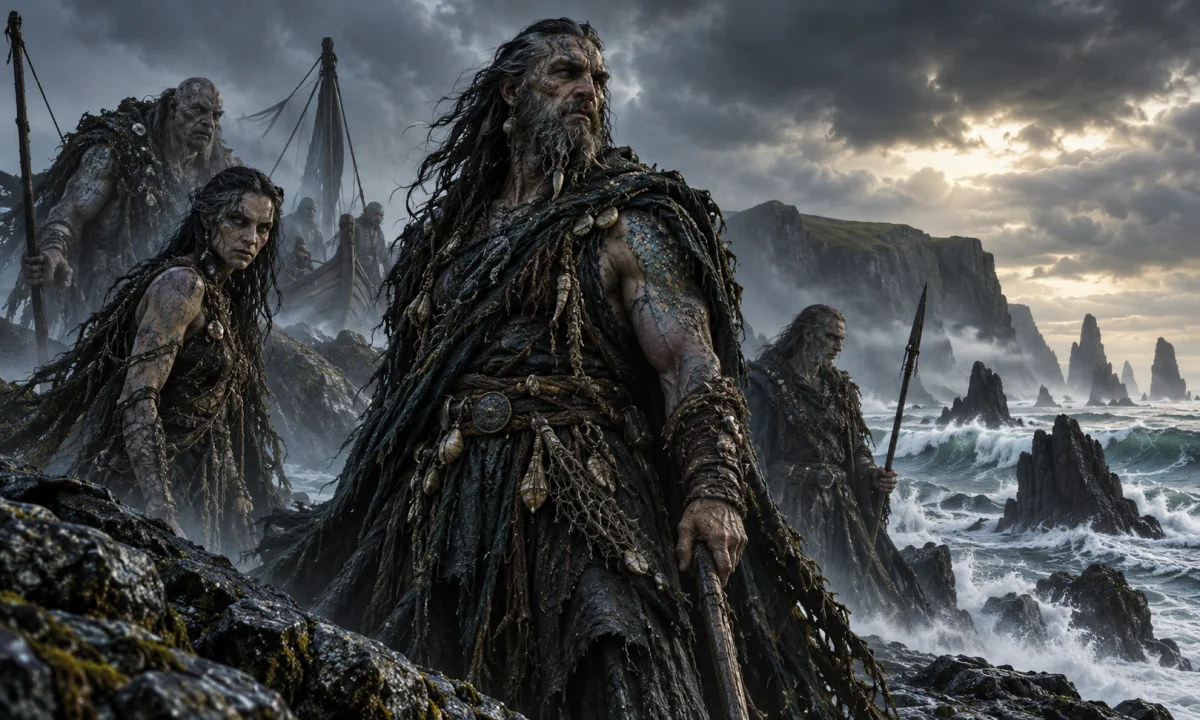
The Milesians agree to leave Ireland temporarily and sail a measured distance away from the shore. The Tuatha Dé Danann then use magic to raise a storm, hoping to prevent the invaders from landing. The episode tests the Milesians’ courage and endurance, but it also reveals the supernatural power of their opponents. In some versions, Donn and other members of the expedition are lost during the storm.
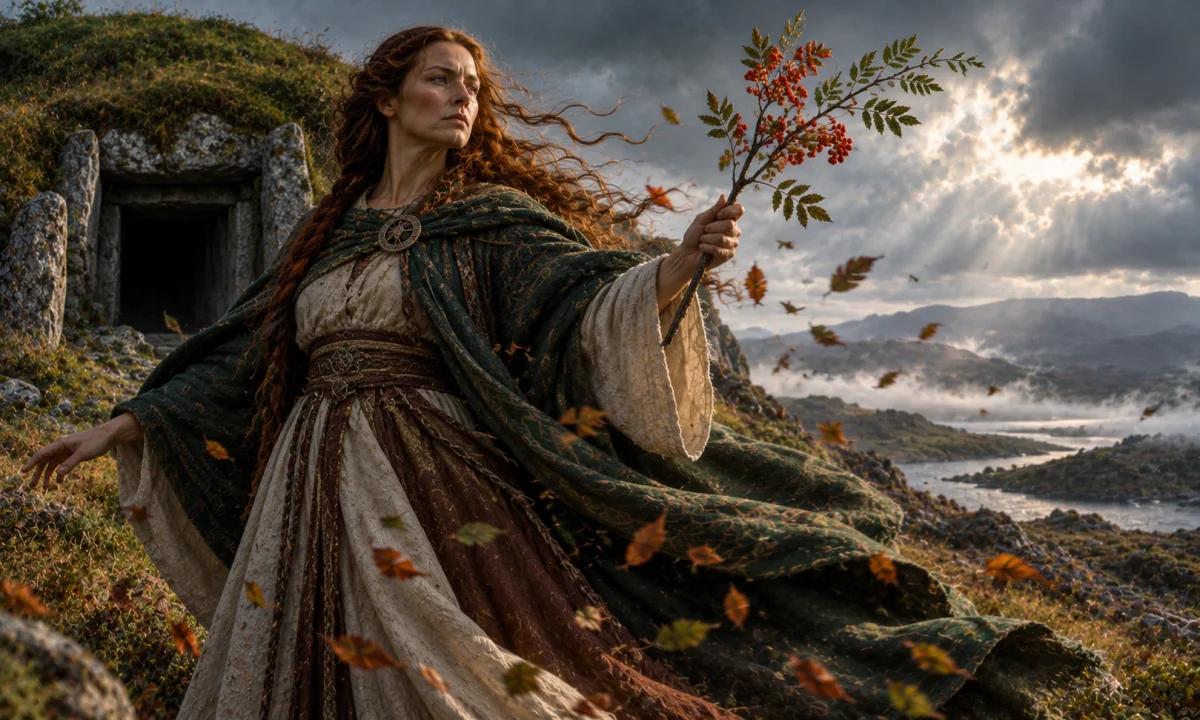
Amergin, one of Míl’s sons, survives and reaches the shore. He is described as a poet, judge, or inspired speaker, and he recites a celebrated invocation to Ireland. The poem identifies him with the land and its natural features, presenting the speaker as wind, wave, soil, and living territory. Amergin’s words form a ritual claim to the island and help establish the Milesian right to rule.
The defeat of the Tuatha Dé Danann
The Milesians eventually defeat the Tuatha Dé Danann in battle. The precise locations and sequence of the battles vary among texts, but the general pattern is stable: the supernatural inhabitants lose political control of Ireland, while the human invaders take possession of the surface world.
A settlement follows rather than a complete annihilation. The Tuatha Dé Danann withdraw into sídhe, the otherworldly hills or mounds that later become closely associated with fairies and hidden supernatural communities. This narrative transformation is one of the most important functions of the Milesian story. It explains how powerful beings from earlier Irish mythology can remain present in the landscape while no longer serving as the visible rulers of Ireland.
After the conquest, the brothers Eber Finn and Éremón divide the kingdom between them. Their rivalry becomes the source of later conflicts and dynastic divisions. In many accounts, Éremón rules in the north and Eber in the south, although the details are not consistent across all versions. The later ruling genealogies of Ireland are traced through these brothers, especially Éremón.
The story therefore does more than describe an invasion. It supplies an origin for human kingship, explains the displacement of the Tuatha Dé Danann, and provides ancestral lines for later Irish dynasties. The Milesians function as the mythic forefathers of the Gaelic political order.
Family and associated figures
The genealogy of Míl includes several figures whose prominence depends on the source. Amergin is perhaps the best-known of his sons because of his poetic role during the landing in Ireland. He is not simply a warrior: his speech gives symbolic and legal force to the invasion. In later interpretations, he can appear as a poet-priest, inspired judge, or master of sacred language.
Eber Finn and Éremón are the principal rival rulers among the Milesians. Their division of Ireland establishes a dynastic pattern that later genealogists use to organize the ancestry of Irish kings. Donn, often portrayed as an elder son, is associated in later tradition with Tech Duinn, “the House of Donn,” a place where the dead are said to gather. The identification and meaning of Tech Duinn vary, and the surviving sources do not offer a single uniform account of Donn’s fate.
Scota is another figure frequently linked with the Milesian genealogy. In some later traditions she is described as a wife of Míl or as the mother of certain Milesian leaders, and she is given an Egyptian origin, sometimes as the daughter of a pharaoh. These details belong to particular genealogical and antiquarian developments rather than to a universally consistent account. They should not be used to claim that Irish tradition had one fixed story about Míl’s marriage or descendants.
Attributes and symbolism
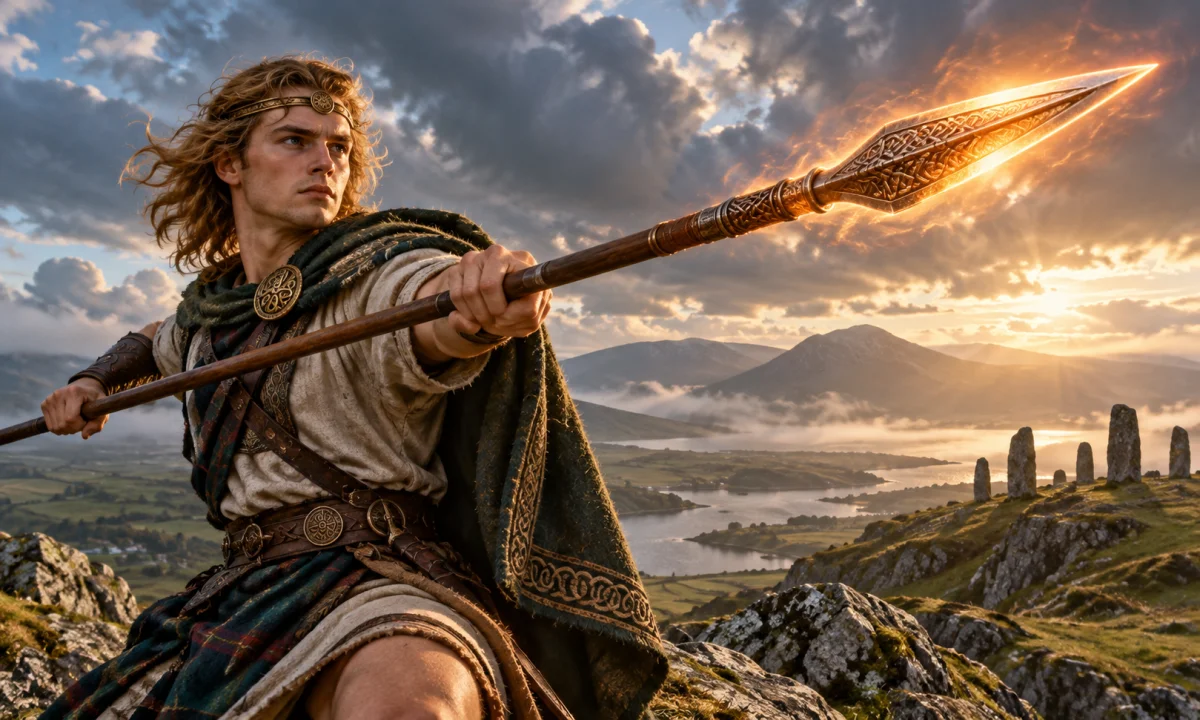
Milesius has no standard physical appearance, magical weapon, animal companion, or set of supernatural powers. Unlike figures such as Lugh, Nuada, or the Morrígan, he is not primarily characterized through individual heroic exploits. His importance is ancestral and political. He stands at the beginning of a line that the medieval tradition presents as the human Gaelic population of Ireland.
The name of Míl evokes the warrior and the conqueror, but the legends place greater emphasis on descent, migration, and legitimacy than on his personal character. His sons embody different aspects of the foundation story: Amergin represents poetry and ritual speech, Eber and Éremón represent kingship and dynastic division, and the larger company represents the arrival of a people.
The Milesian conquest also creates a layered picture of Irish sacred geography. The Tuatha Dé Danann do not vanish from the island; they become inhabitants of the sídhe, while the Milesians occupy the visible land. Hills, mounds, burial places, and ancient monuments can consequently be imagined as points of contact between the human world and the older supernatural order.
Historical interpretation
There is no reliable historical evidence that a king or warrior named Milesius led a Gaelic migration from Spain to Ireland. Archaeology, historical linguistics, and population history do not confirm the medieval invasion account as a literal record of one expedition. The story is best understood as a mythic genealogy and a learned origin narrative.
The Iberian setting may have had several attractions for medieval Irish writers. Spain was known through biblical, classical, and ecclesiastical learning, and Galicia was a plausible western location from which Ireland could be reached by sea. The association also gave the Gaels an ancestry outside Ireland while preserving a claim to the island through conquest and ritual recognition.
Scholars often interpret the Milesian story as an attempt to reconcile different layers of Irish tradition. The Tuatha Dé Danann preserve memories of powerful pre-Christian divine figures, while the Milesians provide a human, genealogical framework for the later Irish ruling population. The narrative thus converts a conflict between divine or supernatural beings and human ancestors into a succession of historical-looking peoples.
It is also useful to distinguish the medieval learned tradition from the beliefs of pre-Christian Irish communities. The Lebor Gabála Érenn is not a direct transcript of ancient pagan mythology. It is a Christian-era literary construction that arranges diverse legends, genealogies, poems, and historical ideas into a continuous account of Ireland’s past.
Distinction from similar names
Milesius should not be confused with the Milesian school of ancient Greek philosophy, which was associated with the city of Miletus in Asia Minor. The terms look similar in English because both ultimately involve forms related to the name Miletus or to Latinized naming conventions, but they belong to different historical and cultural contexts.
Nor should Milesius be confused with every use of the word “Milesian” in modern writing. In Irish mythology, a Milesian is a member or descendant of the people descended from Míl Espáine. In other contexts, “Milesian” may refer to inhabitants of Miletus, to a modern organization, or simply to a later literary interpretation of the Irish origin legend.
Later reception
The Milesian origin story became especially important in discussions of Irish identity and ancestry. Medieval and early modern genealogists used it to connect Irish dynasties with an ancient founding lineage. In the early modern period, the supposed Spanish connection was sometimes treated as historical fact, particularly in works that sought to place Ireland within the learned histories of Europe.
In modern times, Milesius and the Milesians appear mainly in retellings of Irish mythology, discussions of Celtic literature, and interpretations of Irish national and cultural origins. The figure may also be invoked in symbolic accounts of the Irish as a people formed through migration and settlement. Such uses draw on the traditional narrative but should be distinguished from the medieval text itself.
For traditional Irish mythology, Milesius is most significant not as an active god or hero but as the ancestral source of the people who establish human rule in Ireland. His name marks the transition from the supernatural age of the Tuatha Dé Danann to the genealogical and dynastic age of the Milesian Gaels.