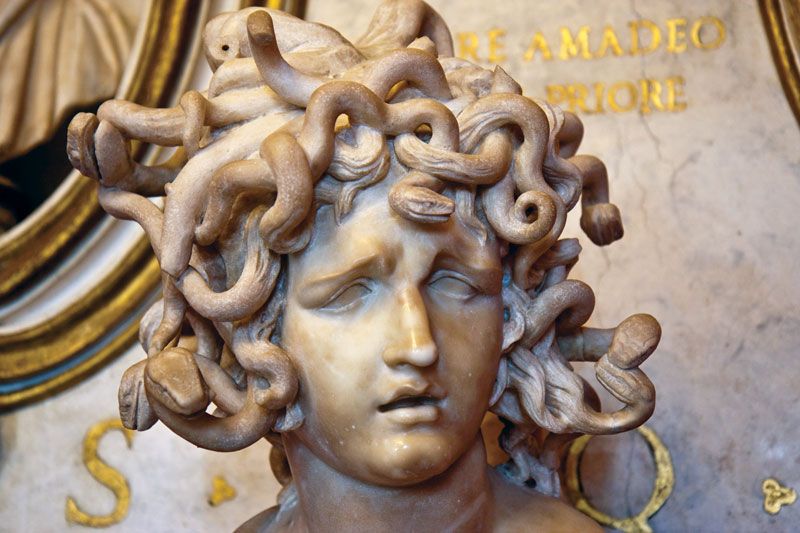
In Greek mythology, Medusa is one of the most famous figures, often depicted as a monster with snakes for hair. She is part of the trio of Gorgon sisters, which also includes Stheno and Euryale. Unlike her sisters, Medusa was mortal, which set her apart in many tales. The story of Medusa is filled with themes of beauty, transformation, and tragedy. Her legacy continues to be relevant today, appearing in various forms of art, literature, and popular culture. Understanding Medusa requires a deep dive into her origins, her curse, and her eventual fate.
Origins of Medusa
Medusa’s origins are rooted in ancient Greek mythology. According to the myths, she was born as a beautiful maiden. The most common version of her story states that she was the daughter of Phorcys and Ceto, primordial sea deities. Her beauty was so remarkable that it attracted the attention of many, including Poseidon, the god of the sea. This attraction would lead to her downfall, as it is said that Poseidon took her against her will in the temple of Athena.
 Melpomene
This act of violation did not go unnoticed. Athena, angered by what had happened in her temple, chose to punish Medusa rather than Poseidon. In a cruel twist of fate, she transformed Medusa’s beautiful hair into writhing snakes, making her a monster. This transformation was not just physical; it also represented a profound shift in Medusa’s identity. She went from being a symbol of beauty to a figure of horror, feared by many. Her once-adoring admirers now recoiled in terror, and she became isolated from the world.
The Curse of Medusa
The curse placed upon Medusa had severe consequences for her life. She was exiled to a remote island called Sicily, where she lived in solitude, away from the eyes of society. This isolation only deepened her despair. Medusa’s new form had a unique power: anyone who looked directly at her would turn to stone. This ability made her even more feared, as she became a literal embodiment of danger. Many heroes sought to defeat her, believing that killing Medusa would bring them glory and riches.
 Memnon
Medusa’s curse also symbolizes the broader themes of victimization and punishment in Greek mythology. Many interpretations suggest that her transformation was a reflection of society’s tendency to blame victims rather than perpetrators. Instead of holding Poseidon accountable, Athena’s punishment turned Medusa into a monster. This narrative highlights the complexities of victimhood and the often harsh realities faced by women in ancient myths.
Medusa in Art and Literature
The image of Medusa has been a popular subject in various forms of art and literature throughout history. From ancient pottery to Renaissance paintings, artists have been fascinated by her duality as both a monster and a tragic figure. One of the most famous representations is in the works of the Italian painter Caravaggio, who portrayed her with a striking realism that captures her anguish and ferocity.
In literature, Medusa has been reimagined in numerous ways. Writers have explored her character beyond the traditional monster narrative. For instance, in modern interpretations, she is often depicted as a symbol of female rage and empowerment. Authors like Rachel Smythe in her graphic novel “Lore Olympus” reframe Medusa’s story, presenting her as a complex character with depth and emotion. This shift in perspective allows readers to empathize with her plight rather than simply viewing her as a villain.
 Menoetius
Medusa in Modern Culture
Today, Medusa continues to resonate in popular culture. She appears in movies, television shows, and video games, often symbolizing female empowerment or the struggle against oppression. Films like “Clash of the Titans” and “Percy Jackson & the Olympians” have brought her story to new audiences, albeit with varying degrees of fidelity to the original myths. These adaptations often simplify her character into a mere antagonist, missing the rich narrative of her transformation and suffering.
Moreover, Medusa’s image has been embraced by feminist movements. She is often seen as a representation of women who have been wronged and transformed by society’s expectations. Art installations and performances frequently draw on her symbolism to address themes of female empowerment, victimization, and resilience. This contemporary interpretation allows for a broader conversation about gender and power dynamics in society.
The Legacy of Medusa
Medusa’s legacy extends far beyond her mythological origins. She has become a cultural icon, representing various themes that resonate with audiences across generations. Her story has sparked discussions about beauty, power, and the consequences of victimization. Medusa serves as a reminder of the complexities of human experience, particularly the struggles faced by women throughout history.
In academia, Medusa has been the subject of numerous scholarly analyses. Scholars examine her role in mythology and its implications for understanding gender dynamics in ancient Greece. By studying Medusa, researchers gain insight into the cultural attitudes toward women, beauty, and power during that time. This academic interest further solidifies her status as a significant figure in both mythology and cultural studies.
Medusa in Popular Media
Medusa’s influence can be seen in various forms of media, including video games and comic books. In games like “God of War,” she is portrayed as a formidable enemy, while in “Hades,” her character is given more depth and personality. These adaptations often blend her mythological roots with modern storytelling techniques, allowing for a richer exploration of her character.
Comic books also play a significant role in Medusa’s modern representation. Titles like “Wonder Woman” and “The Sandman” have featured her as a character, exploring her complexities and the impact of her curse. These narratives often challenge the traditional villainous portrayal, instead presenting her as a tragic figure shaped by her circumstances. This evolution of Medusa’s character in popular media reflects broader societal changes in how we view women and power.
Medusa’s story is a powerful tale of beauty, tragedy, and transformation. From her origins as a beautiful maiden to her transformation into a feared monster, her narrative resonates with themes that are still relevant today. Medusa’s legacy continues to inspire artists, writers, and scholars, making her one of the most enduring figures in Greek mythology. Her story serves as a reminder of the complexities of identity, the consequences of societal actions, and the strength found in overcoming adversity.