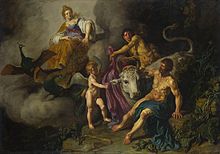
In Greek mythology, Io is a fascinating character known for her beauty and tragic story. She is often depicted as a mortal woman who caught the attention of Zeus, the king of the gods. Her tale is filled with themes of love, jealousy, and transformation, making it a compelling part of Greek lore. The story of Io is not just about her relationship with Zeus, but also about her struggles and the consequences of divine actions. This article delves into the life of Io, exploring her background, her transformation, and the impact of her story on Greek mythology.
Background of Io
Io was a beautiful priestess of Hera, the wife of Zeus. According to the myths, she was the daughter of Inachus, the river god, and thus she was associated with the river that bore his name. Her beauty was renowned, and she was admired by many, but it was Zeus who became infatuated with her. In his quest to win her affection, he approached her in the form of a cloud to hide his true identity from Hera. This act of deception set off a chain of events that would change Io’s life forever.
 Ion
IonHera, suspicious of her husband, quickly discovered the truth about Io. In a fit of jealousy, she transformed Io into a heifer, a sacred cow, to keep her away from Zeus. This transformation was not only a punishment for Io but also a way to hide her from Hera’s watchful eyes. The story illustrates the power dynamics between the gods and mortals, as well as the lengths to which Hera would go to protect her marriage. Io’s transformation into a cow symbolizes her loss of autonomy and the tragic fate that befell her due to the actions of the gods.
The Transformation of Io
After her transformation into a cow, Io’s life took a drastic turn. She was no longer a free woman but a wandering animal, forced to flee from the presence of the goddess Hera. Her journey was filled with hardship and sorrow, as she was constantly pursued by Hera’s servant, Argus, who was tasked with watching over her. Argus had a hundred eyes and was known for his vigilance, making it nearly impossible for Io to escape. This part of her story emphasizes the theme of surveillance and control, highlighting the struggles of those who are oppressed by more powerful beings.
In her desperate quest for freedom, Io roamed the earth, experiencing a range of emotions from fear to despair. She wandered through various lands, including Egypt, where she eventually found refuge. During her travels, she encountered many challenges, including the constant threat of Argus. Her plight resonated with many, as she became a symbol of suffering and resilience in the face of overwhelming odds. The tale of Io reflects the struggles of individuals who are caught in the crossfire of powerful forces beyond their control.
 Iphicles
Zeus’s Intervention
Seeing Io’s suffering, Zeus decided to intervene. He sent Hermes, the messenger god, to rescue her from Argus. Hermes, known for his cunning and cleverness, approached Argus and lulled him to sleep with music and stories. Once Argus was asleep, Hermes swiftly killed him, freeing Io from her captivity. This act of rescue highlights the complex relationships between the gods and mortals, as well as the themes of loyalty and betrayal. Although Zeus had played a role in Io’s suffering, he also took action to alleviate her pain.
After her rescue, Io was still not completely free. Hera, in her anger, sent a gadfly to torment Io, causing her to wander even more. The gadfly stung her relentlessly, driving her to madness and further complicating her journey. Despite the assistance from Zeus, Io’s life remained tumultuous. She continued to travel across various regions, embodying the struggle of a woman trying to reclaim her identity and freedom amidst divine interference. Her resilience in the face of such adversity is a testament to her strength as a character in Greek mythology.
Io’s Journey to Egypt
Io’s journey eventually led her to Egypt, where she found a semblance of peace. In Egypt, she was recognized as a goddess and worshipped by the locals. This transformation from a cursed mortal to a revered goddess reflects the duality of her character and the complexities of her story. In Egypt, she was associated with the moon and fertility, which marked a significant shift from her earlier experiences of suffering and torment. This change highlights the idea that even in the face of adversity, there is potential for renewal and transformation.
 Iris
IrisWhile in Egypt, Io bore a son named Epaphus, who was considered a significant figure in mythology. He was often associated with the founding of cities and was revered as a king. This aspect of her story illustrates how Io’s legacy continued beyond her own struggles, as she became a mother and a symbol of hope for future generations. The connection between Io and Epaphus also signifies the importance of lineage and heritage in Greek mythology, as the stories of gods and mortals often intertwine.
Symbolism and Themes
The story of Io is rich in symbolism and themes that resonate with many aspects of human experience. One of the primary themes is transformation, both physical and emotional. Io’s transformation into a cow serves as a metaphor for loss of identity and autonomy, while her eventual elevation to goddess status represents the possibility of reclaiming power and agency. This duality is a common motif in mythology, where characters often face trials that lead to profound changes in their lives.
- Jealousy: The jealousy of Hera plays a crucial role in Io’s story, showcasing how emotions can drive individuals to act against others, often leading to unintended consequences.
- Freedom and Captivity: Io’s journey illustrates the struggle for freedom in the face of oppression, a theme that resonates throughout various myths and stories.
- Divine Intervention: The involvement of Zeus and Hermes highlights the complex relationships between gods and mortals, where divine actions can both harm and help.
Another significant theme in Io’s narrative is resilience. Despite the challenges she faced, Io continued to persevere, ultimately finding a place where she was revered. Her journey reflects the human spirit’s ability to endure hardship and seek out hope even in the darkest of times. The transformation from a victim of circumstance to a figure of worship underscores the idea that one’s experiences, no matter how painful, can lead to growth and recognition.
Io in Art and Literature
Io’s story has inspired countless works of art and literature throughout history. From ancient pottery to modern paintings, her image and narrative have been depicted in various forms. Artists often portray her as a beautiful woman, sometimes with bovine features, to emphasize her dual identity. This visual representation serves to highlight the tension between her mortal and divine aspects, encapsulating the complexities of her character.
In literature, Io has appeared in works by notable ancient poets such as Homer and Ovid. These writers explored her story in different ways, emphasizing various themes such as love, betrayal, and the quest for identity. Ovid, in particular, provides a detailed account of her transformation and suffering in his work “Metamorphoses,” where he delves into the emotional depth of her character. Such literary explorations have contributed to the enduring legacy of Io in the realm of mythology and storytelling.
Modern Interpretations of Io
In contemporary culture, Io’s story continues to resonate with audiences. Her tale is often interpreted through modern lenses, exploring themes of feminism, empowerment, and the struggle against oppression. Many scholars and writers have reimagined her narrative, focusing on her agency and resilience rather than solely on her victimhood. This shift in perspective allows for a deeper understanding of her character and the challenges faced by women throughout history.
Additionally, Io’s story has been used as a metaphor in discussions about identity and transformation in modern society. Her journey can be seen as a reflection of the struggles many individuals face when navigating their own identities in a world that often imposes limitations. By examining Io’s experiences, contemporary audiences can find parallels in their own lives, leading to a greater appreciation for her character and the lessons her story imparts.
Io in Astronomy
Interestingly, Io’s legacy extends beyond mythology and literature into the realm of science. In 1610, the Italian astronomer Galileo Galilei discovered one of Jupiter’s moons and named it Io, recognizing the mythological figure’s significance. This moon is one of the four largest moons of Jupiter, known as the Galilean moons, and it is notable for its volcanic activity and striking landscape. The naming of the moon Io serves as a testament to the enduring influence of Greek mythology on various fields, including astronomy.
The moon Io is characterized by its colorful surface, which is a result of its geological activity. It is considered one of the most geologically active bodies in the solar system, with hundreds of volcanoes and vast lava plains. This connection between Io, the mythological figure, and the celestial body adds another layer of depth to her story, as it links her to the natural world and the mysteries of the universe. The legacy of Io continues to inspire curiosity and wonder, bridging the gap between ancient myths and modern scientific exploration.
the story of Io is a multifaceted tale that encapsulates themes of love, jealousy, transformation, and resilience. From her tragic beginnings as a mortal woman to her eventual status as a goddess, Io’s journey is a powerful narrative that has captivated audiences for centuries. Through her experiences, we gain insight into the complexities of human emotions and the struggles faced by those caught in the web of divine machinations. As we explore the various interpretations and representations of Io in art, literature, and science, we are reminded of the enduring legacy of Greek mythology and its relevance in our understanding of the world.