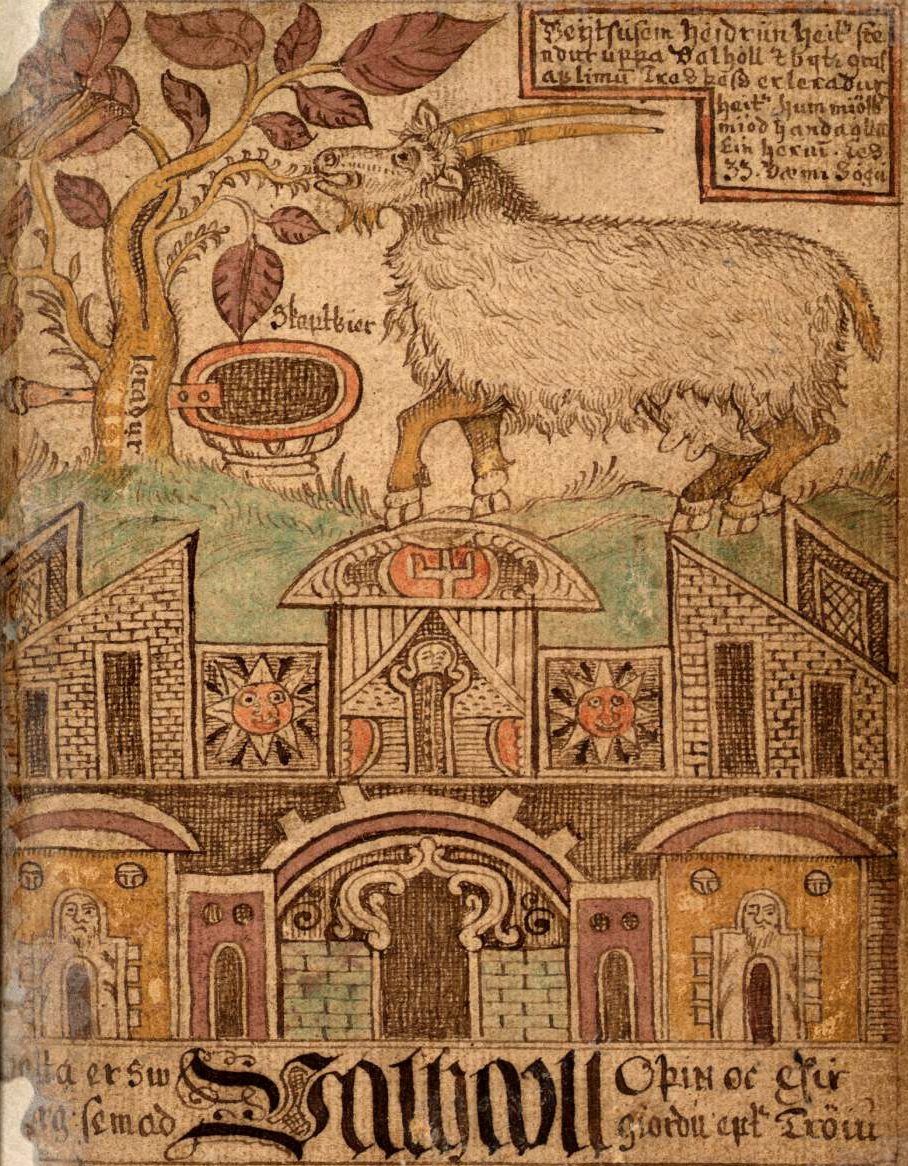
In Norse mythology, Heidrun is a fascinating creature that captures the imagination of many. She is often depicted as a goat that resides in Valhalla, the majestic hall where the slain warriors, known as the Einherjar, gather after death. Heidrun plays a significant role in the mythology surrounding the afterlife and the feasting that takes place in Valhalla. Her presence is not just that of a mere animal; she symbolizes abundance and sustenance for the warriors who have fought bravely in life. The milk she produces is said to provide the warriors with an endless supply of mead, a beverage that is central to the celebrations in Valhalla.
The Origins of Heidrun
Heidrun’s origins can be traced back to the ancient Norse texts, particularly the Poetic Edda and the Prose Edda. These texts are vital for understanding Norse mythology and the various characters and creatures that inhabit it. Heidrun is said to be one of the creatures that dwell in Valhalla, alongside other significant figures such as Odin and the Valkyries. The goat is believed to have been created from the same cosmic elements that shaped the universe, emphasizing her importance in the grand tapestry of Norse beliefs.
 Havamal
In the Prose Edda, Heidrun is described as a beautiful goat with a majestic appearance. She stands on the roof of Valhalla, grazing on the leaves of the tree Yggdrasil, the World Tree. This tree is a central element in Norse cosmology, connecting the nine worlds of existence. The leaves of Yggdrasil are said to be nourishing and contribute to the health and vitality of Heidrun, allowing her to produce an abundant supply of milk for the warriors.
Heidrun’s Role in Valhalla
Heidrun’s primary role in Valhalla is to provide sustenance for the Einherjar. After a day of fighting and training, the warriors gather to feast and celebrate their victories. Heidrun’s milk is transformed into a delightful mead that flows endlessly, ensuring that there is always enough for everyone. This aspect of Heidrun highlights the theme of abundance and the importance of sharing in Norse culture. The idea that a single goat can provide for so many warriors emphasizes the interconnectedness of life and the generosity of the gods.
 Hati
HatiThe mead produced from Heidrun’s milk is not just any beverage; it is a special drink that grants the warriors strength and vitality. In Norse mythology, mead is often associated with wisdom and inspiration, particularly in the context of poetry and storytelling. Thus, Heidrun’s milk serves a dual purpose: it nourishes the body and inspires the mind. This reflects the Norse belief in the importance of both physical and mental strength in achieving greatness.
Symbolism of Heidrun
Heidrun is rich in symbolism within Norse mythology. As a goat, she represents fertility and abundance, traits that are highly valued in agricultural societies. Goats have been associated with nourishment and sustenance for centuries, making Heidrun a fitting symbol for the warriors of Valhalla. Her ability to produce an endless supply of milk reflects the idea that the gods provide for their chosen warriors, ensuring that they lack for nothing in the afterlife.
Furthermore, Heidrun can also be seen as a symbol of renewal and rebirth. The continuous cycle of feasting and fighting in Valhalla mirrors the natural cycles of life and death. Just as Heidrun provides sustenance for the warriors, the cycle of life ensures that new generations continue to rise and fall. This theme of renewal is prevalent in many aspects of Norse mythology, reminding us that life is a series of transformations.
 Harðgreipr
Connections to Other Mythological Figures
Heidrun is not an isolated figure in Norse mythology; she has connections to several other important characters. One of the most notable figures is Odin, the chief of the gods. Odin is often associated with wisdom, war, and death, and he plays a crucial role in selecting which warriors are worthy of entering Valhalla. Heidrun’s provision of mead for these warriors aligns with Odin’s role as a protector and provider. This connection underscores the importance of community and camaraderie among the Einherjar, as they share in the bounty provided by Heidrun.
Additionally, Heidrun has ties to the Valkyries, the warrior maidens who serve Odin. The Valkyries are responsible for choosing those who will die in battle and guiding them to Valhalla. Once the warriors arrive, they are welcomed by Heidrun’s endless supply of mead. This relationship emphasizes the role of women in Norse mythology, as the Valkyries not only select the warriors but also ensure their well-being in the afterlife.
Heidrun in Popular Culture
Heidrun has not only remained a significant figure in ancient Norse texts but has also found her way into modern popular culture. Her character has been adapted in various forms of media, including literature, video games, and television shows. These adaptations often portray her as a mystical creature that embodies the spirit of Norse mythology, capturing the imagination of new generations.
In literature, Heidrun appears in stories that explore themes of bravery, camaraderie, and the afterlife. Authors draw inspiration from her role in Valhalla to create narratives that celebrate the warrior spirit. Video games, such as those based on Norse mythology, often include Heidrun as a character or reference her in quests that involve the Einherjar and their feasts. These modern interpretations help to keep the legend of Heidrun alive, introducing her to audiences who may not be familiar with the original texts.
The Legacy of Heidrun
The legacy of Heidrun is significant in the context of Norse mythology and culture. She represents the values of strength, community, and the importance of celebration in the face of adversity. The warriors of Valhalla, who have dedicated their lives to fighting, find solace and joy in the endless feasts made possible by Heidrun’s milk. This aspect of her legacy highlights the idea that even in the afterlife, the bonds of friendship and the spirit of celebration endure.
Moreover, Heidrun’s role as a provider of mead emphasizes the importance of sharing and generosity in Norse culture. The act of coming together to feast and celebrate is a central theme in many cultures, and Heidrun embodies this idea within the Norse pantheon. Her legacy serves as a reminder that sustenance and joy are best when shared with others, reinforcing the importance of community and togetherness.
Heidrun’s Influence on Rituals and Traditions
Heidrun’s influence extends beyond mythology into the realm of rituals and traditions. In ancient Norse society, feasting was a significant part of their culture, especially during celebrations and festivals. The idea of sharing mead, a drink that symbolizes camaraderie and celebration, can be traced back to the legend of Heidrun. Her presence in Valhalla and the mead she produces would have inspired rituals centered around feasting and honoring the fallen warriors.
Modern interpretations of Norse traditions often include references to Heidrun in celebrations that honor the warrior spirit. Festivals celebrating Norse heritage may feature toasts made with mead, paying homage to the endless supply provided by Heidrun. This connection between the past and present serves to keep the spirit of Norse mythology alive, allowing new generations to engage with these ancient stories.
Heidrun in Comparative Mythology
When examining Heidrun within the context of comparative mythology, one can find parallels with similar figures in other cultures. For instance, the idea of a creature providing sustenance in the afterlife is not unique to Norse mythology. In various cultures, there are representations of animals or beings that play a vital role in the sustenance of the deceased. This common theme highlights the universal human concern with the afterlife and the need for nourishment beyond death.
In Greek mythology, the Elusinian Mysteries involve rituals that celebrate the cycle of life and death, often featuring the consumption of special foods and drinks. Similarly, in Egyptian mythology, the afterlife is depicted as a place where the deceased are provided with sustenance by the gods. These comparisons underscore the significance of nourishment in the afterlife across different cultures, with Heidrun serving as a representative of this theme in Norse beliefs.
Conclusion of Heidrun’s Journey
Heidrun’s journey through Norse mythology showcases her as a central figure that embodies the themes of abundance, community, and the celebration of life and death. Her milk, transformed into mead, nourishes the warriors of Valhalla and reinforces the bonds of friendship among them. As we explore the legacy of Heidrun, we discover not only a mythical creature but also a symbol of the values that have shaped Norse culture for centuries. Through her enduring presence in modern adaptations and celebrations, Heidrun continues to inspire and connect us to the rich tapestry of Norse mythology.