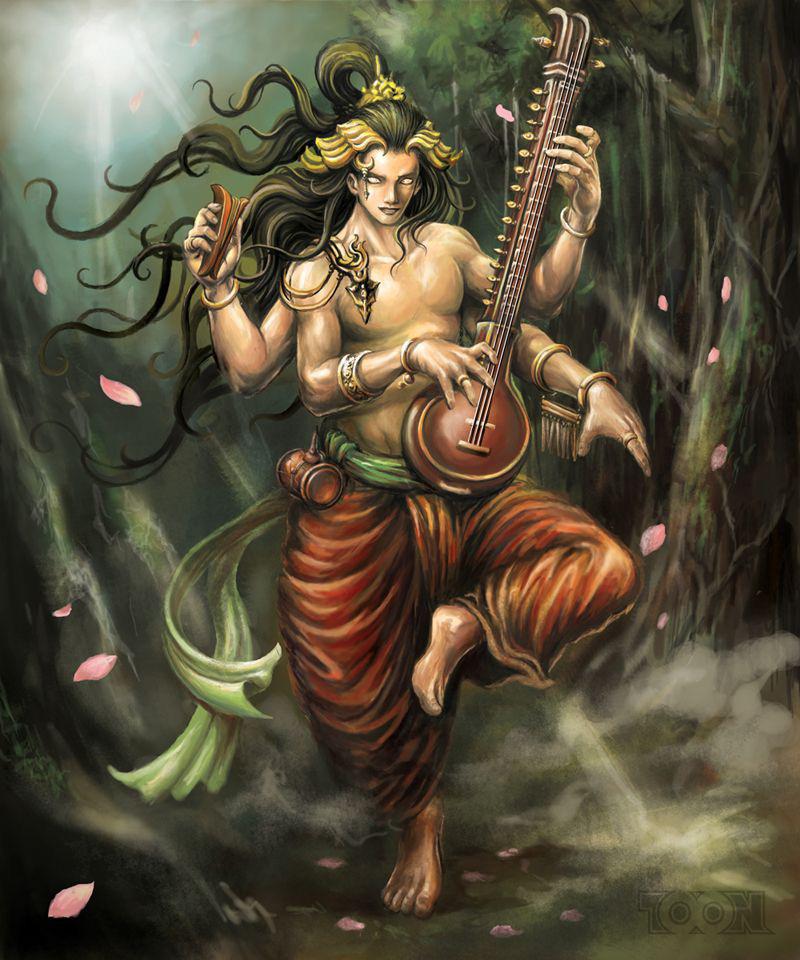
The Gandharvas are fascinating celestial beings in Hindu mythology. They are often depicted as male spirits who are skilled in music and dance. These beings are associated with the heavens and are considered the celestial musicians of the gods. Their enchanting melodies are believed to have the power to please deities and even influence the emotions of mortals. The Gandharvas hold a significant place in various ancient texts, including the Vedas and the Mahabharata, where they are often mentioned in stories involving divine and heroic characters.
Origins of the Gandharvas
The origins of the Gandharvas can be traced back to ancient Hindu scriptures. According to the Vedic texts, they are said to be born from the mind of Brahma, the creator god in Hinduism. This divine origin gives them a unique status among other celestial beings. The Gandharvas are considered the sons of Rudra and Vishnu, and they are often associated with the Devas, or gods. Their creation is linked to the cosmic order, and they play a vital role in maintaining harmony in the universe.
 Pañcamakâras
In various texts, the Gandharvas are described as having a beautiful appearance. They are often portrayed as young men with divine features, adorned with exquisite jewelry and garments. Their beauty is not just physical; it is also reflected in their talents. The Gandharvas are known for their musical abilities, which are said to be unmatched by any other beings. They can create melodies that can enchant anyone who listens, making them highly revered in both celestial and earthly realms.
The Role of Gandharvas in Hindu Mythology
The role of Gandharvas in Hindu mythology is multifaceted. They are primarily known as musicians, but their influence extends beyond mere entertainment. In many stories, they serve as messengers between the gods and humans. Their songs can convey important messages and prophecies. For instance, in the Mahabharata, the Gandharvas are often called upon during critical moments to provide guidance or to participate in significant events.
In addition to their role as musicians, Gandharvas are also seen as guardians of the celestial realms. They protect the Apsaras, who are beautiful celestial nymphs. The relationship between Gandharvas and Apsaras is often depicted as romantic, with the two groups frequently engaging in dances and celebrations. This interaction highlights the connection between art, love, and divinity in Hindu culture.
 Dyavaprthivi
Gandharvas and Their Musical Abilities
The musical abilities of the Gandharvas are legendary. They are often depicted playing various instruments, including the veena, flute, and mridanga. Their music is said to have the power to evoke different emotions, from joy to sorrow. The Gandharvas are not only skilled musicians but also composers who create intricate melodies and songs. Their music is considered divine, capable of transcending the earthly experience.
The melodies of the Gandharvas are also linked to the concept of raga in Indian classical music. Each raga is associated with specific moods and times of the day, and the Gandharvas are believed to have mastered these compositions. In many stories, their music can soothe troubled hearts or inspire great courage. This connection between music and emotion underscores the importance of the arts in Hindu spirituality.
Famous Gandharvas in Hindu Literature
Several Gandharvas are well-known in Hindu literature, each with unique stories and characteristics. One of the most famous is Chitrasena, who plays a significant role in the Mahabharata. Chitrasena is known for his exceptional musical talent and his involvement in the Kurukshetra war. He is also recognized for his friendship with the Pandavas, particularly with Arjuna. This friendship illustrates the bond between divine beings and human heroes.
 Dyaus
DyausAnother notable Gandharva is Vishvavasu, who is often mentioned in various texts. He is known for his musical prowess and his connection to the Apsaras. Vishvavasu’s stories often revolve around themes of love and beauty, showcasing the romantic aspect of Gandharvas. Their interactions with Apsaras highlight the harmonious relationship between different celestial beings in Hindu mythology.
Gandharvas in Modern Culture
The influence of Gandharvas extends beyond ancient texts and into modern culture. They are often referenced in various forms of art, including music, dance, and literature. In contemporary Indian classical music, the concept of Gandharva continues to inspire musicians and performers. Many compositions are dedicated to these celestial beings, celebrating their musical legacy and divine nature.
Moreover, the portrayal of Gandharvas can be seen in films and television shows that explore Hindu mythology. These adaptations often emphasize their beauty, talent, and connection to divine love. As a result, the Gandharvas remain relevant in today’s cultural landscape, captivating audiences with their enchanting stories and timeless music.
The Significance of Gandharvas in Spiritual Practices
In Hindu spirituality, Gandharvas hold significant importance. Their association with music and art makes them symbols of creativity and expression. Many practitioners believe that invoking the blessings of Gandharvas can enhance one’s artistic abilities and bring harmony to their lives. This belief is reflected in various rituals and practices where music plays a central role.
Furthermore, the Gandharvas are often associated with the concept of bhakti, or devotion. Their melodies are believed to connect the devotee with the divine, creating a sense of unity with the cosmos. This connection is essential in many spiritual practices, where music serves as a medium for expressing devotion and love towards the divine.
Legends and Tales Involving Gandharvas
Numerous legends and tales involving Gandharvas illustrate their significance in Hindu mythology. One popular story tells of how the Gandharvas helped the gods during the churning of the ocean (Samudra Manthan). During this event, the gods and demons worked together to obtain the nectar of immortality. The Gandharvas played a crucial role by providing music to soothe the chaos and maintain harmony during this monumental task.
Another famous tale involves the love story of Vishvavasu and Urmila. Their romance highlights the themes of love and devotion, showcasing the emotional depth of Gandharvas. Such stories emphasize the connection between love, art, and the divine, reinforcing the Gandharvas’ role as mediators between the human and celestial realms.
The Legacy of Gandharvas
The legacy of Gandharvas continues to thrive in various forms of art and spirituality. Their enchanting melodies and captivating stories have left a lasting impact on Indian culture. Many artists and musicians draw inspiration from the tales of Gandharvas, incorporating their essence into contemporary works. This ongoing influence demonstrates the timeless nature of their significance in Hindu mythology.
In addition to their artistic legacy, the Gandharvas are also a reminder of the importance of harmony and balance in life. Their connection to music and the divine serves as a guiding principle for many individuals seeking to cultivate creativity and spirituality. By embracing the teachings of the Gandharvas, one can aspire to achieve a deeper understanding of the world and their place within it.
The Gandharvas are a vital part of Hindu mythology, embodying the beauty of music, art, and divine connection. Their stories and musical talents continue to inspire people across generations, reminding us of the importance of creativity and harmony in our lives. Through their enchanting melodies and captivating tales, the Gandharvas invite us to explore the depths of our own creativity and spirituality.