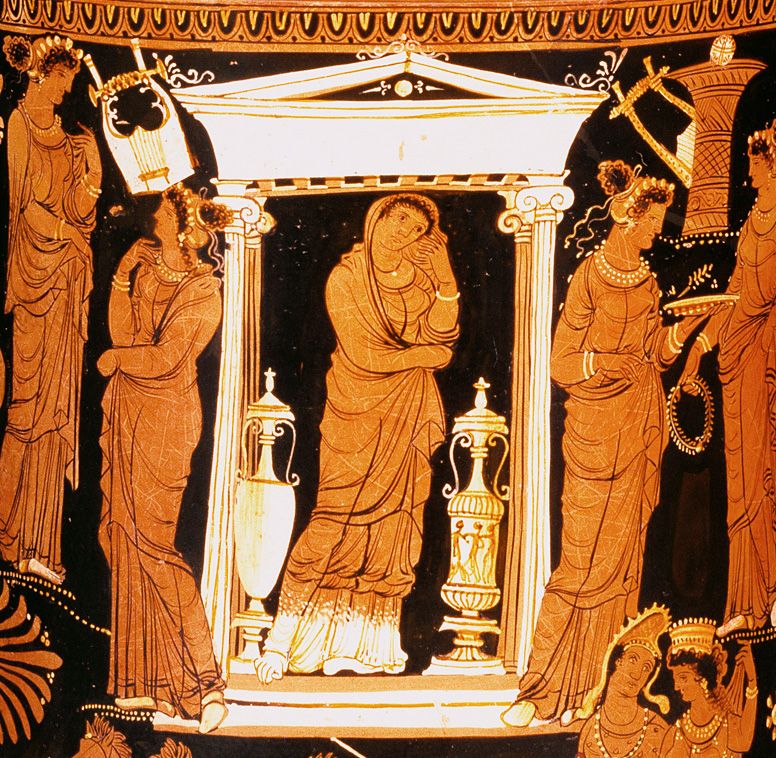
In Greek mythology, Niobe is a figure known for her tragic story, which serves as a powerful cautionary tale about pride and the consequences of hubris. She was the daughter of Tantalus and the wife of Amphion, the king of Thebes. Niobe’s tale is most famously associated with her excessive pride in her children and her subsequent downfall. Her story is often explored in literature, art, and various forms of cultural expression, symbolizing the dangers of arrogance and the fragility of human life.

The Family of Niobe
Niobe belonged to a distinguished lineage in Greek mythology. Her father, Tantalus, was a king who was punished by the gods for his misdeeds, while her mother was a nymph. Niobe married Amphion, a talented musician and builder, who was known for his ability to charm stones into place with his lyre. Together, they had a remarkable number of children, typically said to be fourteen in total: seven sons and seven daughters. This large family was a source of great pride for Niobe, and she often boasted about them.
Niobe’s children were renowned for their beauty and strength. The boys were named Amphion, Zethus, and others, while the girls included Chloris and Antiope. Each child was said to have exceptional talents and virtues. Niobe’s pride in her offspring grew to the point where she felt superior to the goddess Leto, who had only two children, the twin gods Apollo and Artemis. This arrogance would ultimately lead to her tragic fate.
The Hubris of Niobe
Niobe’s hubris, or excessive pride, became her defining characteristic. She frequently boasted about her children, comparing them to the children of Leto. In her arrogance, she openly mocked Leto, claiming that she was a better mother because she had more children. This act of disrespect toward a goddess was considered a grave offense in ancient Greek culture. The gods were known to protect their honor fiercely, and Niobe’s pride set the stage for her downfall.
 Notus
NotusHer boastful claims did not go unnoticed. Leto, angered by Niobe’s insolence, decided to take revenge. She sent her children, Apollo and Artemis, to punish Niobe for her hubris. The consequences of Niobe’s arrogance were swift and devastating. In their wrath, Apollo killed all of Niobe’s sons, while Artemis killed her daughters. This tragic event turned Niobe’s pride into profound sorrow and despair.
The Transformation of Niobe
After the loss of her children, Niobe was consumed by grief. She was transformed from a proud mother into a heartbroken figure, wandering the mountains in despair. Her once-beautiful visage became a reflection of her sorrow, and she was often depicted in art as weeping for her lost children. This transformation symbolizes the fleeting nature of pride and the deep pain that can arise from loss.
Niobe’s transformation is not just physical but also emotional. Her grief is palpable, and she becomes a representation of the consequences of challenging the gods. The gods, in their infinite power, showed that they would not tolerate disrespect. As Niobe mourned her children, she became a symbol of how quickly fortune can change, and how pride can lead to one’s ruin.
 Nymphs
The Legacy of Niobe
Niobe’s story has left a lasting legacy in literature and art. Her tale has been recounted by various ancient authors, including Ovid in his work “Metamorphoses.” In this text, Ovid explores the themes of pride, punishment, and the fragility of human life. Niobe’s character serves as a warning against excessive pride and the dangers of elevating oneself above the divine.
Throughout history, artists have depicted Niobe in various forms. Many sculptures and paintings capture her sorrow and despair, showcasing her as a grieving mother. The imagery often emphasizes her tears and the desolation she experiences after losing her children. These artistic representations highlight the emotional depth of her story and the universal themes of loss and humility.
The Symbolism of Niobe
Niobe’s story is rich in symbolism, representing various aspects of human experience. Her pride symbolizes the dangers of arrogance, while her tragic fall illustrates the fragility of life. The contrast between her initial happiness and her eventual despair serves as a reminder that fortune can change rapidly. This theme resonates with audiences across cultures and eras, making Niobe’s story timeless.
Moreover, Niobe’s transformation into a stone figure, as some myths suggest, symbolizes the permanence of grief. Just as a stone is unyielding and unchanging, Niobe’s sorrow becomes a fixed part of her existence. This aspect of her story invites reflection on the nature of loss and how it can shape one’s identity. The notion that grief can become an integral part of a person’s being is a powerful message that continues to resonate today.
Niobe in Modern Culture
The story of Niobe continues to influence modern culture in various ways. Her character has appeared in numerous adaptations, including plays, novels, and films. Many contemporary artists draw inspiration from her tale, using it to explore themes of motherhood, loss, and the consequences of pride. The enduring nature of Niobe’s story speaks to the human experience, reminding us of the emotions that connect us across time.
In literature, authors often reference Niobe as a metaphor for loss and mourning. Her name has become synonymous with grief, particularly in the context of parental loss. This cultural association highlights the impact of her story on societal perceptions of motherhood and the emotional weight of losing a child. As a result, Niobe’s legacy persists, serving as a reminder of the complexities of love and loss.
The Moral Lessons of Niobe
Niobe’s tale offers several moral lessons that continue to be relevant today. One of the most significant lessons is the danger of hubris. Her story teaches that pride can lead to devastating consequences, particularly when one elevates oneself above the gods or nature. This cautionary message encourages humility and respect for the forces greater than ourselves.
Additionally, Niobe’s experience underscores the importance of empathy and compassion. Her transformation from a proud mother to a grieving figure serves as a reminder that life is unpredictable, and we must approach others with understanding. The fragility of happiness is a theme that resonates deeply, urging individuals to cherish their loved ones and recognize the value of human connections.
Comparative Myths
Niobe’s story is not unique in mythology; it shares similarities with various other myths across cultures. For example, the tale of Inanna from Sumerian mythology also explores themes of pride and loss. Inanna’s descent to the underworld and her eventual resurrection reflects the cyclical nature of life and death, much like Niobe’s transformation through grief.
Additionally, the myth of Demeter and her daughter Persephone explores themes of maternal love and loss. Demeter’s grief over Persephone’s abduction by Hades leads to the changing seasons, symbolizing the connection between loss and renewal. Both myths highlight the emotional depth of motherhood and the impact of loss on one’s identity.
Conclusion: The Enduring Relevance of Niobe
Niobe’s story remains a powerful narrative that continues to resonate with audiences today. Her journey from pride to despair serves as a reminder of the complexities of human emotion and the fragility of life. The themes of hubris, loss, and transformation are universal, making her tale relevant across cultures and generations. As we reflect on Niobe’s story, we are reminded of the importance of humility, empathy, and the enduring nature of grief.