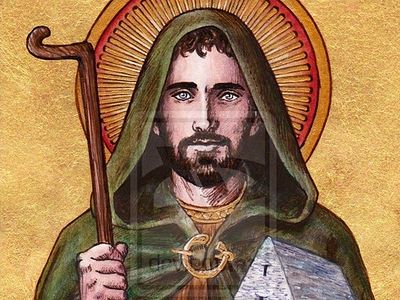
St. Enda is a significant figure in Christian mythology, particularly in the context of early Irish Christianity. His life and contributions are intertwined with the spread of Christianity in Ireland during the fifth and sixth centuries. He is often celebrated as a saint who played a vital role in establishing monasticism in the country. His legacy is marked by the founding of several monasteries, most notably the one on the island of Aran. This article delves into the life of St. Enda, his impact on Christian practices, and the traditions that have emerged around his figure.
Life of St. Enda
St. Enda was born into a noble family in Ireland, which was a common background for many early saints. His early life is often described as one of privilege, but he felt a strong calling to serve God. After experiencing a transformative moment, he decided to leave his comfortable life behind and dedicate himself to a spiritual path. This decision marked the beginning of his journey towards sainthood. Enda’s life was characterized by a deep commitment to prayer and solitude, which set him apart from others of his time.
 St. Erasmus
After his decision to embrace a monastic life, St. Enda traveled to the island of Aran, where he established a monastery. This location was chosen for its isolation, allowing for a peaceful environment conducive to prayer and reflection. The monastery became a center for learning and spiritual growth, attracting many followers and disciples. Enda’s leadership and teachings emphasized the importance of community, devotion, and the pursuit of holiness. His influence spread throughout Ireland, and many other monasteries were inspired by his example.
Monastic Contributions
St. Enda is credited with the establishment of one of the earliest monastic communities in Ireland. His monastery on the island of Aran became a model for future monastic institutions. The lifestyle practiced by Enda and his followers included rigorous schedules of prayer, work, and study. This monastic rule emphasized a balance between spiritual and physical labor, which helped cultivate a strong sense of discipline among the monks. The monks engaged in various forms of work, including agriculture, manuscript copying, and metalwork, which contributed to the self-sufficiency of the community.
The monastic community founded by St. Enda was not only a place of worship but also a center for education. Many young men came to study under Enda, learning about the Christian faith, scripture, and the arts. The tradition of monastic education would later play a crucial role in preserving knowledge during the turbulent times of the early medieval period. The monks of Aran became known for their scholarship, producing manuscripts that contained religious texts, poetry, and historical accounts. This intellectual legacy would influence generations to come.
 St. Elizabeth Of Hungary
Spiritual Teachings
St. Enda’s teachings focused on several key themes that are central to Christian spirituality. One of the most important aspects of his message was the call to conversion and personal transformation. He encouraged his followers to turn away from worldly distractions and to seek a deeper relationship with God. This emphasis on inner change is a recurring theme in Christian teachings and was particularly relevant during a time when pagan practices were still prevalent in Ireland.
Another significant aspect of St. Enda’s spirituality was the importance of community. He believed that living in a monastic community was essential for spiritual growth. The bonds formed among the monks fostered a sense of support and accountability, allowing them to grow in their faith together. This communal aspect of monastic life became a hallmark of many Irish monasteries and contributed to the development of a unique Christian culture in Ireland.
Legacy and Influence
The legacy of St. Enda extends beyond his lifetime and continues to influence Christian practice in Ireland. His monastic community laid the foundation for the spread of Christianity throughout the country. Many other saints, such as St. Brendan and St. Columba, were inspired by Enda’s example and went on to establish their own monasteries. This chain of influence helped to solidify Christianity as a dominant faith in Ireland.
 St. Elizabeth Of Portugal
St. Enda is also remembered through various feast days and traditions that celebrate his life and contributions. His feast day is observed on March 21st, and many Christians participate in special services and rituals to honor his memory. The stories and legends surrounding St. Enda have been passed down through generations, ensuring that his impact on Irish Christianity is not forgotten.
St. Enda in Literature and Art
The figure of St. Enda has inspired countless works of literature and art throughout the centuries. His life story is often depicted in hagiographies, which are biographies of saints that emphasize their virtuous lives and miraculous deeds. These texts serve to educate and inspire the faithful, providing examples of how to live a life dedicated to God. St. Enda’s hagiography highlights his dedication to monasticism, his spiritual teachings, and the miracles attributed to him.
In addition to written works, St. Enda has also been portrayed in various forms of visual art. Artists have depicted him in paintings, sculptures, and stained glass windows, often emphasizing his role as a monk and leader. These artistic representations serve to keep his memory alive and to inspire reverence among the faithful. The imagery associated with St. Enda often includes symbols of monastic life, such as the cross, a book, or elements representing nature, which reflects his connection to the land.
Modern Celebrations of St. Enda
In contemporary times, the legacy of St. Enda is celebrated in various ways. Many communities in Ireland hold festivals and events in his honor, often featuring traditional music, dance, and storytelling. These celebrations not only commemorate St. Enda’s contributions but also serve to strengthen community ties and cultural heritage. Participants often gather to share meals, participate in religious services, and engage in activities that promote a sense of belonging and shared faith.
Moreover, St. Enda’s influence can be seen in the ongoing practice of monasticism in Ireland. While the nature of monastic life has evolved, the core values of community, prayer, and service remain integral to many religious orders. Retreat centers and modern monasteries continue to draw inspiration from St. Enda’s teachings, providing spaces for spiritual growth and reflection. This connection to the past ensures that the spirit of St. Enda lives on in the hearts of many today.
St. Enda’s life and teachings have left an indelible mark on the history of Christianity in Ireland. His dedication to monasticism, community, and spiritual growth has inspired countless individuals and shaped the development of the Church in the region. As a central figure in Christian mythology, St. Enda serves as a reminder of the enduring power of faith and the importance of living a life committed to service and devotion. Through ongoing celebrations, literature, and art, his legacy continues to thrive, enriching the spiritual landscape of Ireland and beyond.