WORLD

Vassago
Vassago is a spirit listed in early modern European grimoires of ceremonial magic, most famously in the Ars Goetia, the first part of the Lesser Key of Solomon. He is described as a powerful prince who reveals things that are hidden, lost, or concealed, and who can disclose information about the past and the future. Although commonly classified as a demon, Vassago is presented in the grimoire as being “of a good nature” compared with many other spirits in the same catalogue.
Origins in Solomonic demonology
Vassago belongs to the tradition of Solomonic grimoires, magical texts attributed—usually pseudonymously—to King Solomon. These works present Solomon as a master of spirits who compelled supernatural beings to reveal knowledge or perform tasks. The attribution is legendary rather than historical: there is no reliable evidence that the biblical king wrote the later European grimoires associated with his name.
The most important source for Vassago is the Ars Goetia. This text forms the opening section of the Lesser Key of Solomon, a compilation that survives in manuscripts from the seventeenth century and incorporates material from older magical and demonological catalogues. The work presents seventy-two spirits in a ranked hierarchy. Each entry generally supplies a name, title, number of infernal legions, a description of abilities, and a seal or emblem used in the grimoire’s ritual system.
Vassago is identified as the third spirit in the Ars Goetia. His entry follows Bael and Agares. Related material also appears in earlier demonological catalogues, including Johann Weyer’s Pseudomonarchia Daemonum, published in the sixteenth century. The wording and spelling vary between manuscripts and editions, so the surviving descriptions should not be treated as a single unchanged ancient tradition.
The connection with Solomon reflects the religious environment in which these books developed. Christian Europe commonly treated magic involving spirits as illicit or demonic, even when magical writers used biblical figures, angels, divine names, and scriptural language. The grimoires therefore occupy an uneasy space: they draw on Jewish and Christian traditions, late antique ritual practices, astrology, Renaissance occult philosophy, and medieval ideas about demons, while presenting their procedures as a form of controlled spiritual authority.
Name and identity
The name is commonly written Vassago, but Vasago and other minor variations occur in historical and modern sources. These differences reflect manuscript copying, transliteration, and editorial standardisation. There is no secure evidence that the name preserves a known pre-Christian deity or that it can be confidently traced to a particular ancient language.
Vassago is not a figure from the Bible, and he does not have a developed mythology in Jewish scripture, Christian scripture, or classical mythology. His identity is primarily grimoire-based: he is known because he occupies a specific place in a catalogue of spirits. Claims that he was originally an ancient god, a fallen angel named in early religious texts, or a demon worshipped throughout antiquity are not supported by the main historical sources.
In the Ars Goetia, Vassago is called a “mighty prince” and is said to be of the same nature as Agares, the second spirit in the catalogue. This statement establishes a comparison within the grimoire’s hierarchy, but it does not clearly explain whether the two spirits are related, belong to the same older tradition, or simply share a classification. Vassago should not automatically be described as Agares’s subordinate, offspring, servant, or companion. The source does not establish those relationships.
Rank and classification
Vassago’s title of prince places him among the higher-ranking spirits in the hierarchy used by the Ars Goetia. The catalogue includes kings, dukes, princes, marquises, presidents, and other titles that resemble a European court or military structure. This organisation reflects the way early modern demonological writers imagined the infernal world: spirits were arranged into offices and ranks, much as angels were arranged into heavenly orders.
He is said to govern twenty-six legions of spirits. In this context, a legion is part of the catalogue’s military imagery rather than a number independently verified by historical evidence. The statement is a feature of the grimoire’s literary and ritual framework. It indicates status and authority within the imagined hierarchy, not a documented account of an actual supernatural army.
The text’s description of Vassago as being “of a good nature” requires some context. It does not mean that the grimoire treats him as a benevolent god or as a morally good being in the ordinary religious sense. Instead, the phrase distinguishes him from spirits portrayed as deceptive, violent, destructive, or difficult to control. A spirit could be labelled relatively favourable within a demonological catalogue while still being classified as a demon.
Abilities and traditional role
Vassago’s principal function is the disclosure of knowledge. The Ars Goetia attributes to him the ability to declare things past and future and to discover things that are hidden or lost. These powers place him within a long tradition of spirits associated with divination, secret knowledge, and the recovery of concealed objects.
The reference to the past and future gives Vassago a broad temporal role. He is not described as a prophet with a particular theological message, nor is he associated with a named historical event or legendary quest. Instead, his ability is general: he can reveal information that is unavailable to ordinary perception. This includes knowledge of previous events, possible future developments, and objects or facts that have been concealed.
His association with lost things is especially significant in the context of ceremonial magic. Early modern magical texts often organised supernatural beings according to practical offices: finding treasure, influencing relationships, teaching sciences, causing visions, locating hidden objects, or answering questions. Vassago’s office reflects the desire to obtain knowledge through supernatural intermediaries at a time when divination and magic were closely connected with debates about religion, natural philosophy, astrology, and forbidden knowledge.
The source does not give Vassago a long narrative explaining how he gained these powers. There is no major story in which he loses a treasure, serves a particular human magician, or participates in a battle among demons. His identity is functional rather than narrative. The catalogue tells readers what he is supposed to do, but provides little biography.
Appearance and seal
The traditional entry gives Vassago a seal, or magical emblem, associated with his name. In the grimoire system, seals function as identifying signs within a ritual manuscript. They are not equivalent to coats of arms in a historical sense, and their designs can vary between manuscripts, copied diagrams, and modern editions.
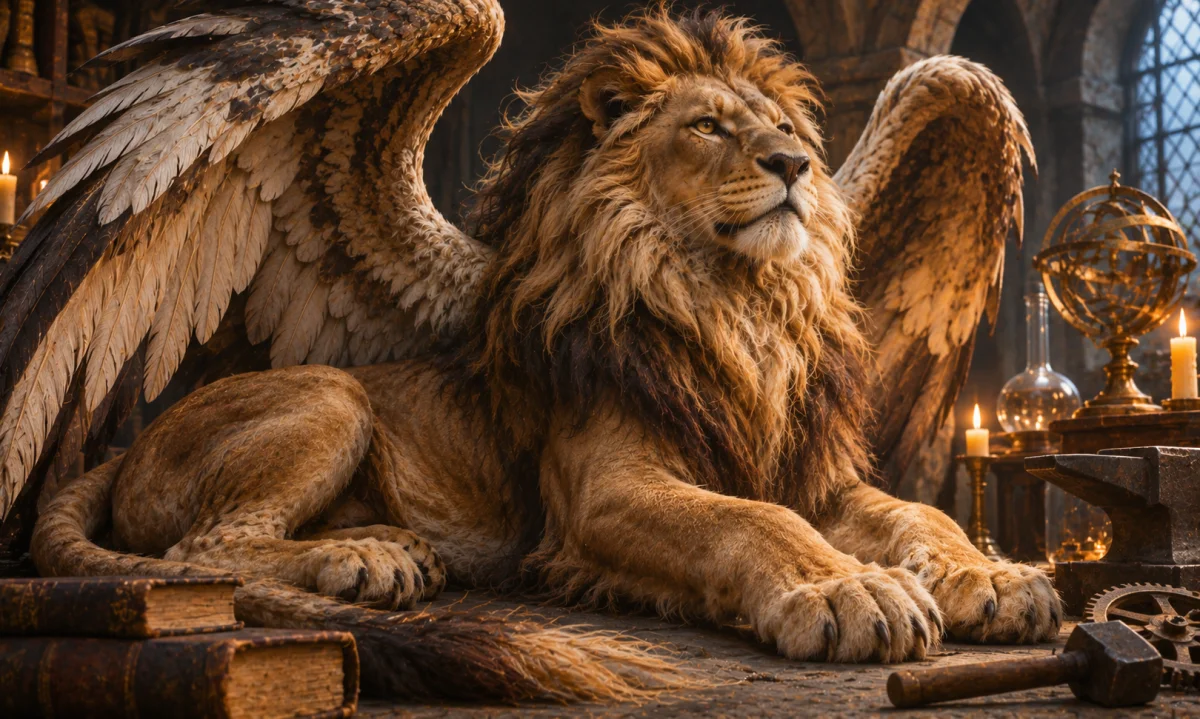
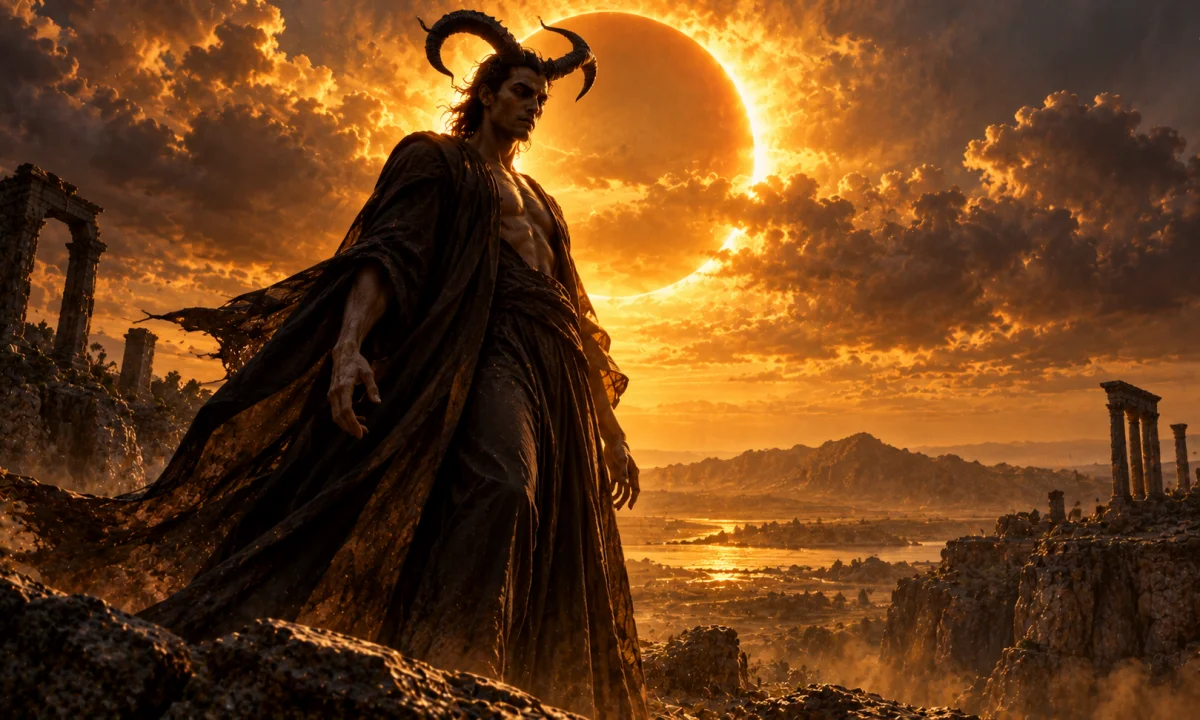
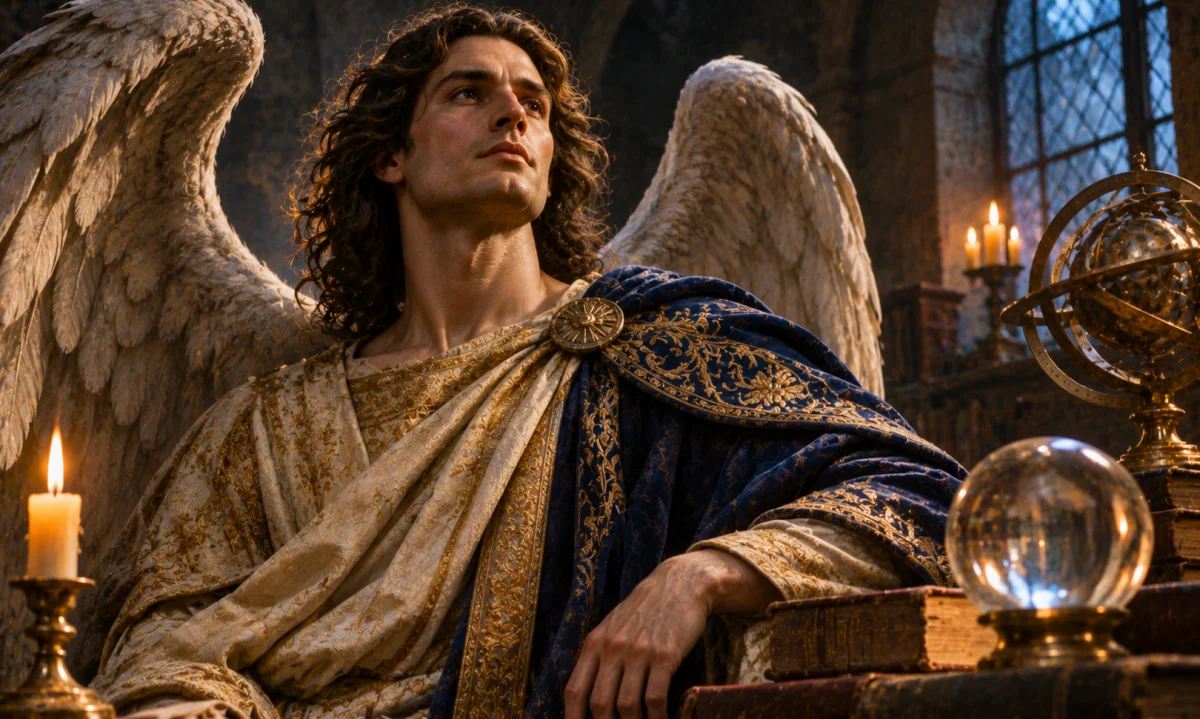
Unlike some entries in the Ars Goetia, Vassago’s description does not provide a detailed physical form. The text does not firmly state that he appears as a man, animal, hybrid, crowned monarch, angel, or monstrous creature. Consequently, many popular images of Vassago are later artistic interpretations rather than descriptions preserved in the primary grimoire tradition.
Modern illustrations may portray him as a dignified prince, a hooded seer, an elegant spirit, or a supernatural figure surrounded by books, keys, mirrors, or concealed objects. These images draw on his title and powers, but they should not be confused with a fixed traditional appearance. A depiction of a handsome or scholarly Vassago belongs to later visual culture unless it is clearly presented as an artist’s interpretation.
Relationship to Agares
Vassago is frequently discussed alongside Agares because the grimoire describes him as being of the same nature as Agares. This is one of the few explicit comparisons attached to his entry. It has sometimes encouraged writers to treat the two as members of a single supernatural family or as closely connected spirits.
That interpretation goes beyond what the source securely establishes. Agares and Vassago have different entries, different positions in the catalogue, and different stated offices. Agares is described with abilities and imagery that do not belong to Vassago. The phrase “same nature” may indicate a similarity of rank or type, or it may preserve a classification inherited from an earlier catalogue. It does not prove a family relationship, shared origin, or joint mythology.
Confusion is particularly likely because modern summaries sometimes transfer attributes from one entry to the other. Agares is traditionally associated with a distinctive appearance involving an old man riding a crocodile and carrying a hawk, while Vassago is not given that form in the standard grimoire description. Assigning Agares’s crocodile, hawk, or old-man imagery to Vassago is a modern conflation rather than a feature of Vassago’s own entry.
Religious and cultural interpretation
Vassago illustrates how early modern demonology could combine moral condemnation with practical classification. Christian writers generally regarded demons as hostile or spiritually dangerous beings, yet magical catalogues often described individual spirits in technical terms: a spirit might be more cooperative, more truthful, less destructive, or better suited to a particular task than another.
This tension appears throughout the Ars Goetia. Its spirits are placed within a Christian-influenced universe, but the catalogue also treats them as specialists with offices. Vassago’s role as a revealer of hidden information reflects the cultural prestige and danger attached to secret knowledge. Information about the future could be considered divine providence, fraudulent superstition, natural prediction, or demonic temptation depending on the religious and intellectual viewpoint of the observer.
From a historical perspective, Vassago is therefore best understood as a product of European learned magic and demonological literature, not as evidence for a continuous ancient cult. His importance lies in the way grimoires organised supernatural knowledge. He represents the spirit who answers questions, reveals concealed matters, and gives form to the hope that uncertainty can be overcome through ritual expertise.
There is also an important difference between the theology of demons and the practical language of grimoires. In formal Christian teaching, a demon’s apparent helpfulness would not necessarily make it trustworthy or morally good. In a magical catalogue, however, “good nature” can mean useful or comparatively compliant. Reading the phrase without its historical context can make Vassago appear more like a protective spirit or benevolent deity than the source intends.
Vassago in modern occultism
Vassago remains present in modern occult and esoteric writing, especially in traditions influenced by the Ars Goetia. Contemporary practitioners may interpret him as an intelligence connected with divination, memory, lost objects, hidden truths, clairvoyance, or personal insight. Some portray him as unusually approachable because the old text calls him “of a good nature.” These interpretations are modern developments rather than additional details preserved in the early catalogues.
Modern occult authors also sometimes expand his identity by assigning him preferred colours, animals, planetary correspondences, personality traits, or elaborate visual forms. Such systems may be meaningful within a particular contemporary practice, but they are not consistent across all modern sources and should not be presented as universally traditional.
Vassago has appeared in fantasy fiction, role-playing games, music, visual art, and other popular media that draw on the names of the Ars Goetia. In these settings he may become a major antagonist, a patron of forbidden knowledge, a supernatural adviser, or a completely reimagined character. These portrayals often borrow his name and association with hidden knowledge while changing his rank, appearance, morality, and relationships. They belong to modern creative reception, not to the historical demonological tradition.
Distinguishing tradition from later invention
The historically secure features of Vassago are relatively limited. He is a prince and the third spirit in the Ars Goetia; he is associated with the nature of Agares; he is described as comparatively good-natured; he governs twenty-six legions; and he reveals past and future matters while finding things hidden or lost. His name varies in spelling, and the wording differs across editions and related catalogues.
Beyond these points, caution is necessary. Vassago has no securely documented ancient mythology, no established biblical identity, no universally accepted physical form, and no traditional family history. Descriptions that present him as an ancient god, a specific fallen angel, a member of a demon dynasty, or the rider of a crocodile generally combine later speculation with material belonging to other figures.