WORLD
WORLD
St. Rufina

St. Rufina is remembered in Christian tradition as a martyr of early Christianity, usually associated with Rome and most often commemorated together with St. Secunda. Their story belongs to the broad tradition of virgin martyrs, in which young women are portrayed as refusing marriage, imperial power, or pagan cult in order to remain faithful to Christ. The historical details are limited, and much of what survives comes from later liturgical memory rather than from contemporary records.
Traditional identity and classification
Rufina is generally classified among the saints of the early Roman Church. In the most familiar tradition, she and Secunda were sisters or close companions who suffered martyrdom during the persecution of Christians under the Roman Empire. The exact historical setting is uncertain. Some later accounts place their death in Rome, while others associate them with the nearby region of Ostia, where their cult became established. Because the surviving evidence is sparse, the precise circumstances of their lives cannot be verified with confidence.
In Christian hagiography, Rufina is not usually presented as a theological writer, missionary, or miracle-working ascetic. Her importance lies instead in witness and martyrdom. Her name appears in the context of devotion to early Roman martyrs whose veneration formed part of the identity of the Roman Church. As with many early saints, the sacred memory of the figure is often more clearly preserved than the biographical facts.
Origins of the tradition
The tradition of Rufina and Secunda is ancient in devotional terms, though the surviving documentation is limited. Their cult is attested in the Roman liturgical calendar and in the later growth of local veneration, which suggests that Christians in Rome and its surroundings had long remembered them as martyrs. The best-known form of their story is not a contemporary martyr act in the strict historical sense, but a later narrative shaped by the conventions of saintly biography.
Such narratives often served several purposes at once. They offered models of steadfast faith, supported local sanctity, and linked Christian communities to the early, persecuted Church. In Rufina’s case, the story also reflects the strong emphasis in early Christian tradition on virginity, chastity, and courage in the face of coercion. Whether every detail of the legend is historical cannot be established, but the persistence of the cult suggests that the martyr names were important to the communities that preserved them.
The meaning of the names and identity of the saints
Rufina is a Latin feminine name related to rufus, meaning “red” or “reddish.” In Roman naming practices, it could function as a personal name rather than as a description. The name itself does not reveal a special role or attribute in the saint’s legend, although later readers sometimes connected martyrdom with the color red, symbolically associated with blood and sacrifice. That association is interpretive rather than original to the name.
The relationship between Rufina and Secunda varies slightly in the tradition. They are commonly described as sisters, but some retellings emphasize companionship rather than strict biological kinship. As with many early saintly pairs, the shared martyr narrative matters more than the precise family structure. What remains consistent is that they are remembered together, reflecting a paired devotion that was common in ancient and medieval Christianity.
Traditional story of Rufina and Secunda
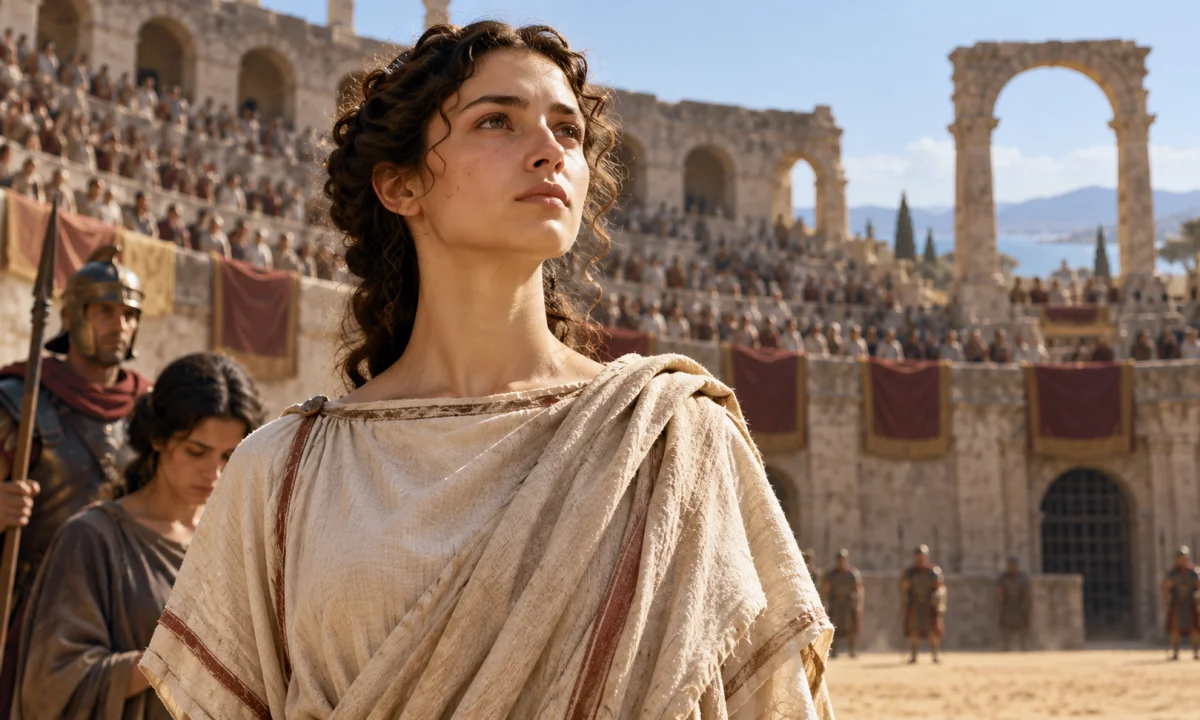
The most familiar version of the story presents Rufina and Secunda as young Christian women who refused to abandon their faith. In one strand of tradition, they had been promised in marriage, but chose consecrated virginity instead. Their intended husbands or suitors, angered by their refusal, denounced them, leading to their arrest and martyrdom. Other versions focus less on marriage and more broadly on their steadfastness under persecution.
In hagiographic retellings, the two saints are brought before authorities and pressured to sacrifice to pagan gods or renounce Christianity. They refuse. Because early martyr stories often use recurring literary patterns, the exact sequence of events may reflect the structure of Christian martyr literature more than a fully recoverable historical record. Even so, the central message is clear: fidelity to Christ is valued above social expectation, family pressure, and imperial command.
Some traditions place their death on the road near Rome, while others associate it with the area of Ostia. This geographical variation is typical of early cults transmitted through local memory, liturgical calendars, and later saint collections. The existence of a tomb or shrine likely helped anchor the story in a particular place, even if the precise historical details became blurred over time.
Martyrdom and virginity in the Christian tradition
Rufina’s saintly identity is closely tied to two major themes in Christian tradition: martyrdom and virginity. In early Christianity, virgin martyrs were often praised for choosing spiritual devotion over socially expected marriage. Their renunciation was interpreted not simply as personal preference but as a sign of total dedication to God. This theme appears in many saints’ lives, though the details differ from figure to figure.
Martyrdom, in turn, marked the highest form of witness. The word “martyr” in Christian usage originally referred to a witness. Over time it came to denote those who suffered death for the faith. Rufina’s story fits that pattern. Her significance does not depend on miracles or complex legend cycles, but on the testimony that she remained faithful under threat. That simplicity may help explain why the tradition endured.
The combination of virginity and martyrdom was especially powerful in late antique Christianity because it joined bodily integrity, spiritual resolve, and public confession. In such stories, the saint’s body is often central: it becomes the site of suffering, testimony, and eventual veneration. Rufina’s relic cult, where attested, would have reinforced this understanding.
Relics, cult, and liturgical remembrance
Devotion to Rufina and Secunda developed within the broader world of Roman saint cults. Their names are preserved in liturgical calendars, which indicates formal recognition in the worship life of the Church. For many saints of the early centuries, this liturgical memory is one of the most reliable signs that a local cult existed, even when biography is uncertain.
Tradition has associated their relics with sites in Rome and the surrounding region, and their veneration became part of the sacred geography of Christian Rome. Such sites mattered because they linked the present community to the witness of the martyrs. Pilgrims, clergy, and local believers could encounter the saints not only through stories but through places, feast days, and prayers.
The feast day of Rufina is traditionally observed together with Secunda. In Roman Catholic devotion, they are commemorated as companions in martyrdom, and their memory has remained part of the calendar of saints. Their presence in the liturgical tradition is more important than a large body of narrative legend, since it shows that they were not merely literary inventions but living figures of devotion.
Historical evidence and scholarly interpretation
Historically, Rufina is difficult to reconstruct with certainty. Scholars generally distinguish between the saint as venerated in tradition and the historical person, if one can be recovered. For many early martyrs, especially women saints, the sources are late, stylized, or shaped by devotional aims. That does not make the tradition meaningless, but it does mean that firm biographical claims should be made cautiously.
One common scholarly approach is to treat the martyrdom tradition as evidence of an early and enduring cult, even if the original event cannot be fully verified. In other words, the legend tells us at least that Christians remembered Rufina as a holy martyr by the time the cult was established. The exact date of her death, the names of the persecutors, and the specifics of her family life may be uncertain or varying by source.
Another important interpretive issue is the literary form of the martyr story. Christian hagiography often uses recognized motifs: noble refusal, interrogation before a judge, steadfast confession, and the martyr’s death as victory. Rufina’s story may reflect these patterns. For that reason, historical reading requires separating the symbolic structure of the text from the few elements that may preserve genuine memory.
Symbolism and religious significance
Rufina’s enduring significance lies in what her tradition symbolizes for Christian communities. She represents loyalty under pressure, purity of intention, and the conviction that faith can outweigh social obligation. In the language of martyrdom, she is a witness whose body and will are united in resistance to coercion. For believers, such a figure embodies courage in a concentrated and memorable form.
Her association with Secunda also highlights a common feature of saintly devotion: holiness is often remembered relationally. Saints may be venerated as siblings, companions, or paired witnesses. That pairing strengthens the story by showing that faith is shared and that sanctity can be communal rather than solitary. In Rufina’s case, the bond with Secunda deepens the sense of mutual support and steadfastness.
Rufina’s cult also illustrates how the early Church honored women martyrs. In Christian memory, women like Rufina were not peripheral figures; they were central examples of fidelity, often admired precisely because they confronted social expectations that defined female honor in terms of obedience, marriage, and family continuity. Their refusal created a powerful counter-image of spiritual autonomy.
Distinction from similar figures
Rufina should not be confused with other saints or biblical figures who share similar names. The most common confusion is with St. Rufina and St. Secunda as a pair, or with other early Roman martyrs whose histories are also uncertain. Because saint calendars sometimes preserve names with little explanatory detail, it is easy to merge distinct figures. The tradition under discussion here concerns the martyr Rufina commemorated with Secunda, not later saints or local holy women with similar names.
There is also no reliable basis for identifying her with any one famous woman from the New Testament or with a later legendary character bearing a related name. Such identifications sometimes appear in devotional writing, but they are not secure historically. Care is needed because saints’ names can recur across centuries and regions.
Place in Christian memory
Rufina’s story belongs to the vast memory of the martyrs, but it also has a distinctly Roman character. The early Church of Rome developed a dense network of commemorations for martyrs whose tombs, shrines, or feast days anchored Christian identity in the city’s landscape. Rufina’s remembrance within that system helped make the martyr past present to later generations.
Her legend also illustrates how Christian communities preserved meaning even when historical records were sparse. A saint could become important not because every detail was documented, but because the community recognized in the figure a faithful pattern worth repeating in prayer and memory. That is especially true for early women martyrs, whose stories often survive more clearly in worship than in archival history.
Later reception and modern relevance
In modern devotional practice, Rufina is usually known through calendars of saints, parish traditions, and brief hagiographical notices rather than through a large body of popular storytelling. She has not acquired a major independent presence in modern literature, film, or popular fantasy. Where she appears today, it is typically within the context of Christian history, feast-day observance, or discussions of early female martyrs.
Her continuing relevance lies less in widespread popular culture than in the historical and spiritual themes her tradition preserves. Rufina remains meaningful as part of the memory of early Christian witness, especially for readers interested in how the Church remembered women who resisted coercion and chose fidelity over compromise. The limited evidence surrounding her also makes her a reminder that saints’ lives often blend history, devotion, and liturgical memory in ways that are not always easily separated.
Key features of the tradition
- Tradition: Christian saint and martyr, usually associated with Rome and often with Ostia
- Companion figure: Most commonly remembered with St. Secunda
- Main themes: Faithfulness, virginity, martyrdom, and resistance to coercion
- Historical certainty: Limited; details vary and are not fully verifiable
- Cult: Preserved in liturgical remembrance and local devotion
- Significance: Example of early Christian female martyrdom and paired sainthood
Common traditional motifs associated with Rufina
- Refusal to renounce Christian faith
- Association with another martyr, Secunda
- Possible connection with vowed virginity or refusal of marriage
- Martyrdom understood as witness rather than defeat
- Local Roman or suburban memory tied to sacred sites
Why Rufina matters in Christian tradition
Rufina matters because her story preserves the memory of a saintly woman whose witness was valued by the early Church, even if the historical outline remains incomplete. Her tradition joins together the martyr’s courage, the virgin saint’s purity, and the community’s devotion to holy memory. In that sense, she stands within one of Christianity’s most enduring patterns: the honoring of those who remained faithful under pressure and were remembered as exemplary witnesses long after their deaths.