WORLD
WORLD
St. Rose Philippine Duchesne
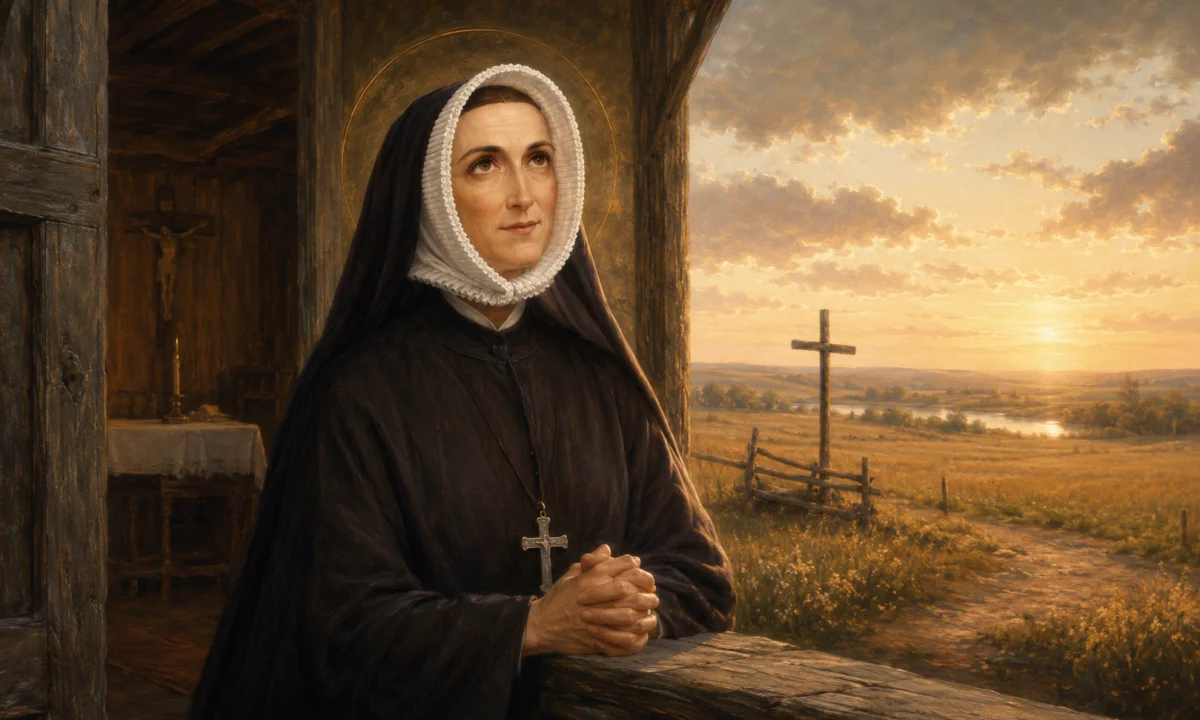
St. Rose Philippine Duchesne was a French Catholic religious sister and missionary whose life is remembered in the tradition of the Church rather than in myth or folklore. She is venerated as a saint in Roman Catholicism, especially in connection with the Society of the Sacred Heart and the early Catholic mission in the United States. Her story belongs to religious history: it is grounded in biography, ecclesial memory, and devotional tradition, not in legend about a supernatural being.
Identity and place in Christian tradition
Rose Philippine Duchesne was born in 1769 in Grenoble, France, and entered religious life during a period of great upheaval in French history. She became a member of the Society of the Sacred Heart, a congregation devoted to education and the spiritual formation of girls and young women. In Catholic tradition she is honored as a saint because of her perseverance, missionary zeal, prayer, and service, especially among Indigenous peoples and settlers in North America.
Her name is sometimes written with the full religious form Saint Rose Philippine Duchesne, while “Philippine” was her religious name. In Catholic usage she is often simply called Rose Philippine Duchesne or Mother Duchesne. She is not associated with a cult figure from pre-Christian religion, and her sainthood rests on the Church’s canonization process and devotional practice.
Historical setting
To understand Duchesne’s life, it helps to place her within late 18th- and early 19th-century Catholic history. France was shaken by the French Revolution, which deeply affected religious communities. Many convents were suppressed, religious property was seized, and public Catholic life was restricted. Women’s religious life survived in altered forms, often under pressure and uncertainty. Duchesne’s vocation unfolded in this context of interruption and rebuilding.
Her later mission work also belongs to the history of Catholic expansion in the United States. The early 1800s were a time when the American Catholic Church was still developing institutions, clergy, schools, and religious orders. Catholic missionaries often worked in frontier conditions, and women religious played a crucial role in education and care, especially where formal church structures were limited.
Life and religious vocation
Rose Philippine Duchesne was born into a well-connected family in Grenoble. As a young woman she felt drawn to the religious life, though her path was not straightforward. She joined a Visitation convent, but the upheavals of the Revolution disrupted convent life and forced changes in her plans. After a period of family and personal difficulty, she eventually encountered the Society of the Sacred Heart, founded by Madeleine Sophie Barat. This congregation emphasized education, prayer, and devotion to the Sacred Heart of Jesus.
In the Society of the Sacred Heart, Duchesne found the framework for the mission that shaped her life. She was known for discipline, endurance, and a strong sense of calling. Her life as a sister involved prayer, teaching, and administrative responsibility, but her identity in Catholic memory is strongly connected to missionary sacrifice. She became one of the early members of the congregation to go to the United States, leaving behind her native country for work in a very different cultural environment.
Mission to the United States
Duchesne arrived in the United States in 1818. The mission was demanding from the start. The sisters initially faced practical hardships, language barriers, and unfamiliar social conditions. Their first communities were established in areas where Catholic institutions were still developing, and they often lived with very limited resources.
One of Duchesne’s most important contributions was her work in Missouri and the broader Mississippi Valley region. She helped establish houses of the Society of the Sacred Heart and supported schools for girls. Catholic education was central to the congregation’s mission, and Duchesne’s efforts helped extend that work into frontier settings.
Her mission also brought her into contact with Indigenous communities, especially the Potawatomi. In Catholic historical memory, she is often associated with a profound personal commitment to Native peoples, though the broader historical context includes the complexity and limits of missionary activity in colonial and postcolonial settings. She worked among the Potawatomi in Kansas in her later years, and the traditional remembrance of her life emphasizes her humility, persistence, and desire to serve. Modern interpretation often places her mission within the larger and more difficult history of Catholic work among Indigenous peoples, including both sincere charity and the cultural pressures tied to assimilation.
Roles, qualities and symbolism
As a saint in Catholic tradition, Duchesne is not linked to miraculous powers in the way some saints are popularly imagined in folk devotion. Her significance lies in example and patronage rather than in a mythic profile. She is remembered for:
- Missionary endurance in difficult and often isolated conditions.
- Educational work, especially for girls and young women.
- Prayerful discipline and attachment to the Sacred Heart devotion.
- Adaptability in moving from France to the United States and from established convent life to frontier mission life.
- Respectful concern for those she served, especially in relation to Indigenous communities.
In Catholic symbolism, she represents the union of contemplative faith and active service. The Society of the Sacred Heart valued both prayer and education, and Duchesne’s life became a model of that combination. Her sanctity is often described in terms of hidden labor, patience in adversity, and fidelity to mission even when results were limited.
Stories and remembered episodes
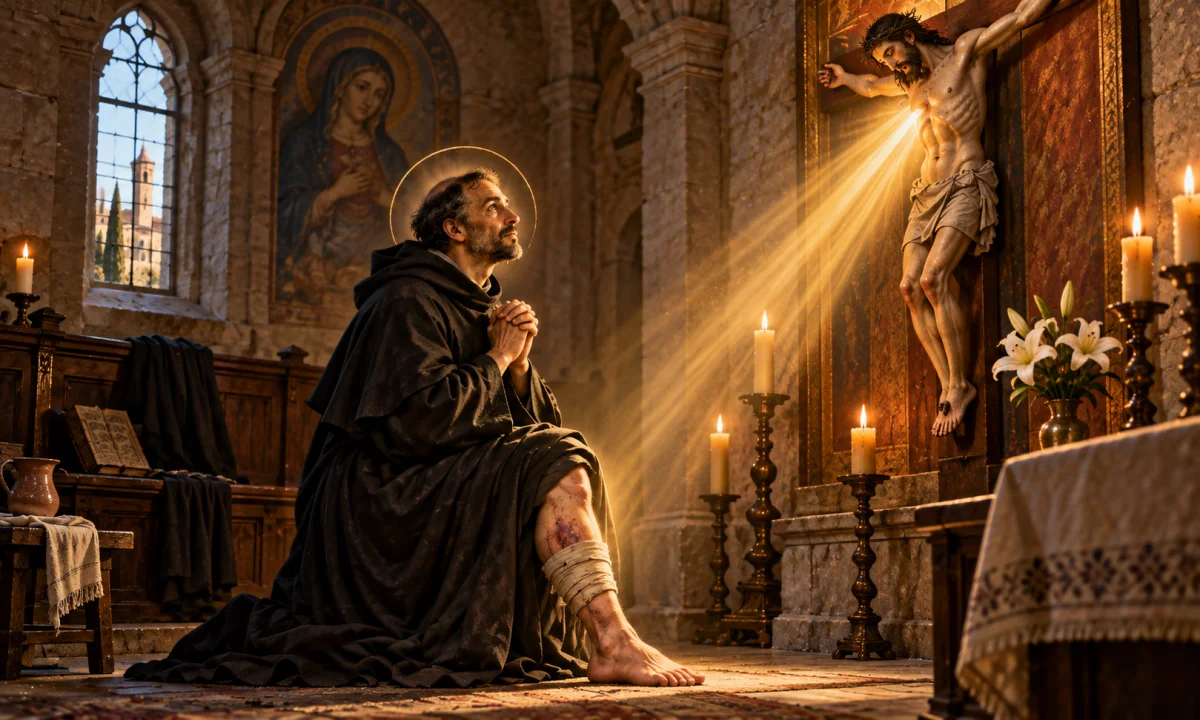
Several episodes from Duchesne’s life are often repeated in Catholic memory. One of the best known is her steadfastness in mission work despite physical hardship and repeated frustration. She was not celebrated for ease or success in worldly terms; rather, her reputation grew from perseverance when conditions were poor, travel was difficult, and resources were scarce.
Another important tradition concerns her age and endurance. She spent many years in mission life, including a long period in the United States after leaving France. Even as her strength declined, she remained devoted to prayer and the community. This image of age and continuing commitment became part of her spiritual legacy.
The tradition surrounding her time with the Potawatomi is especially significant. She was known to them, in Catholic remembrance, by a name meaning “the woman who always prays,” a detail frequently repeated in devotional accounts. The historical transmission of such names can vary in form and accuracy across sources, but the tradition itself reflects how her prayerful identity was remembered. Her final years were spent in the region of present-day Missouri and Kansas, where she continued to support the community as health permitted.
Relationship to the Society of the Sacred Heart
Duchesne’s identity cannot be separated from the Society of the Sacred Heart. The congregation, founded in France, was dedicated to education and spiritual formation, especially for girls. Its spirituality centered on the Heart of Jesus as a symbol of divine love, compassion, and redemptive self-gift. Within that framework, Duchesne’s missionary life became a model of the order’s ideals.
Her relationship with Madeleine Sophie Barat, the founder of the Society, is especially important. Barat and Duchesne are remembered as complementary figures: Barat as the foundress and organizer, Duchesne as the missionary pioneer in North America. Both are significant in the history of women’s religious life, but they should not be confused with one another. Duchesne was not the founder of the Society, though she became one of its most prominent early missionaries.
Canonization and official recognition
Rose Philippine Duchesne was canonized by the Roman Catholic Church in 1988. Canonization means the Church formally recognized her as a saint worthy of public veneration and imitation. In Catholic understanding, canonization does not turn a person into a mythic figure; it confirms holiness as discerned through a combination of life, reputation, and ecclesial investigation.
Her feast day is observed on November 18 in the Roman Catholic calendar. She is honored particularly in communities connected with the Society of the Sacred Heart, Catholic education, and dioceses and institutions in areas where she worked. The devotional memory of her life is strongest where her mission had lasting institutional influence.
Interpretation and cultural significance
Scholars and church historians often view Duchesne’s life through several overlapping lenses. One is the history of women’s religious life in the aftermath of the French Revolution. Another is the expansion of Catholic institutions in the United States. A third is the encounter between Catholic missionaries and Indigenous peoples, a subject that requires careful and nuanced interpretation.
For many Catholics, Duchesne is significant because she embodied a form of sanctity that was practical, unspectacular, and resilient. Her holiness was not presented as dramatic charisma or visionary power. Instead, it was associated with perseverance, obedience, and an ability to endure hardship for the sake of others. This kind of sanctity is especially important in Catholic devotional culture, where saints often represent a range of callings, from scholars and martyrs to educators and missionaries.
In broader cultural terms, Duchesne’s life also illustrates how women religious shaped the social and educational landscape of the United States. Her schools and communities contributed to Catholic formation in places that lacked established infrastructure. At the same time, modern readers often examine missionary history critically, asking how religious devotion interacted with colonial expansion, cultural change, and the lived experience of Indigenous communities. That critical perspective does not erase her personal sincerity, but it does place her work in a more complex historical frame.
Distinction from similar names and figures
St. Rose Philippine Duchesne should not be confused with other saints named Rose, such as St. Rose of Lima, a much earlier Peruvian saint known for asceticism and mysticism. The two are distinct historical figures from different continents, periods, and traditions. Duchesne was also not related to legendary “rose saints” in folklore or popular devotional imagination beyond the shared symbol of the rose as a sign of holiness.
Her surname may also lead to confusion because it is French and uncommon in English-speaking contexts. “Duchesne” is a family name, not a title or a symbolic designation. The best-known part of her religious name is “Philippine,” which distinguishes her within the Society of the Sacred Heart and in Catholic memory.
Later remembrance and modern relevance
Modern devotion to Duchesne is strongest in Catholic educational institutions, religious communities, and local histories connected to her mission. Schools, churches, and religious houses may bear her name, reflecting her association with teaching and missionary service. These commemorations are part of living Catholic tradition rather than popular entertainment culture.
In contemporary discussions, her legacy is often approached in two ways. Devotional accounts emphasize her holiness, courage, and compassion. Historical studies are more likely to examine the social and cultural consequences of missionary activity, especially in relation to Indigenous peoples. Both approaches can coexist if they are careful not to distort the evidence. Duchesne remains a significant figure because her life stands at the intersection of saintly memory, women’s religious history, and the formative period of Catholic life in the United States.
Key aspects of her traditional remembrance
- French Catholic sister of the Society of the Sacred Heart.
- Missionary pioneer in the United States.
- Promoter of Catholic education, especially for girls.
- Remembered for prayer, endurance, and service among frontier communities.
- Canonized by the Roman Catholic Church in 1988.