WORLD
WORLD
St. Regulus
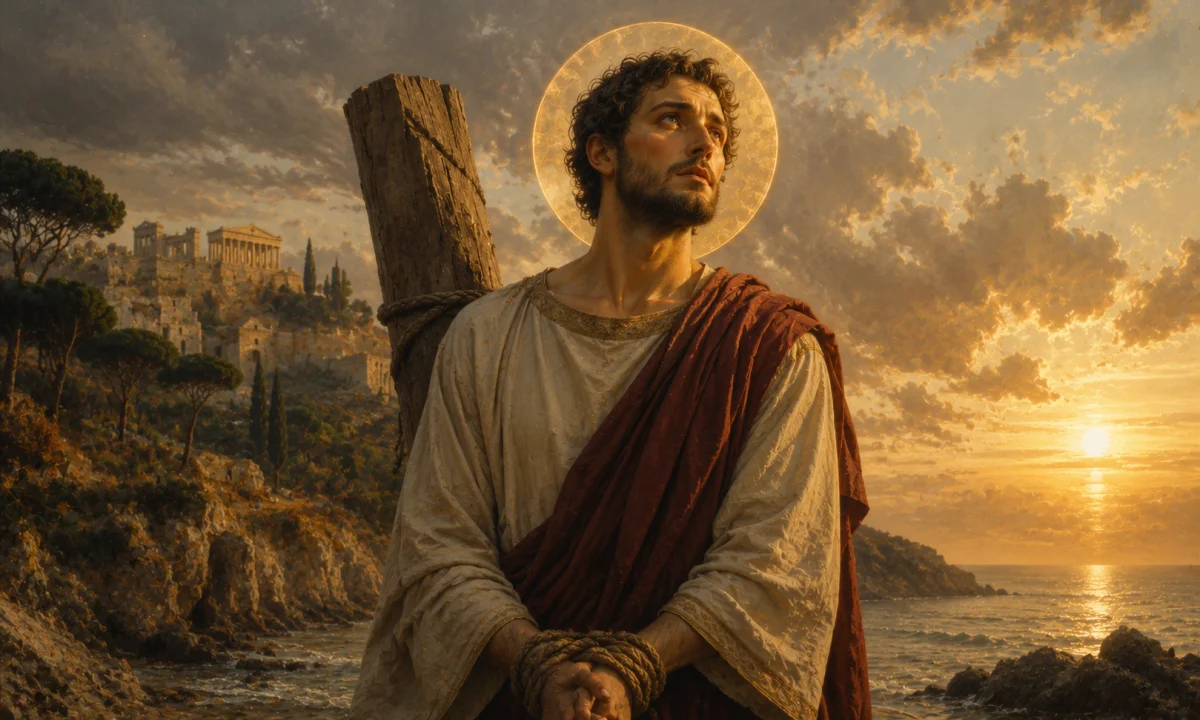
St. Regulus, also known as St. Rule, is a figure in the medieval Christian traditions associated with St Andrews in Scotland. According to the best-known legend, he was a monk or cleric who brought relics of St Andrew from the eastern Mediterranean to the Pictish kingdom. The story helped explain why St Andrew became the patron saint of Scotland and why the settlement later called St Andrews became an important centre of Scottish Christianity.
The historical identity of Regulus is uncertain. His story survives mainly through medieval foundation legends rather than contemporary records, and the name may also refer to several different Christian saints in other parts of Europe. For that reason, the Scottish St. Regulus should not automatically be identified with every saint named Regulus, Rieul, or Rule.
Name and identity
Regulus is a Latin name that can mean “little king” or “young prince.” In Scottish usage, the saint is commonly called St. Rule, a form derived from the Latin name through medieval linguistic changes. The name of St Rule’s Church in St Andrews preserves this traditional form.
Medieval accounts describe Regulus as a guardian of relics connected with St Andrew. Some versions present him as a monk, while others give him a clerical or episcopal status. His precise place of origin also varies. He is often portrayed as coming from the Greek-speaking Christian world, but the legends do not provide reliable historical evidence for a clearly documented biography.
Regulus is therefore best understood as a saint of local and regional Christian tradition, whose importance rests especially on his connection with the arrival of St Andrew’s relics in Scotland. He is not the same person as the apostle Andrew, nor is he the author of the traditions surrounding Andrew’s life.
The Scottish foundation legend
The central story says that Regulus was entrusted with relics of St Andrew. An angel or divine messenger instructed him to take them away from their original shrine and carry them to a distant land. Regulus travelled west by sea and eventually reached the eastern coast of what is now Scotland.
The landing place is associated with the settlement later known as St Andrews. In earlier times the area had other names, including Kilrymont, a name connected with a church or religious foundation. The legend relates that Regulus presented the relics to a local ruler, often identified in medieval versions as a Pictish king named Hungus or Angus. The king then granted land for a church and religious community.
The relics listed in versions of the story are not always identical. They are commonly said to have included parts of the apostle’s body, such as fingers, an arm bone, or a knee bone. Medieval relic legends frequently used detailed inventories to establish the authenticity and sacred importance of a shrine, but these lists do not provide independent proof that the relics had truly been transported in the manner described.
The story gives Regulus an important role as a founder and bearer of sacred inheritance. He does not replace Andrew as the central patron. Rather, he acts as the person through whom Andrew’s cult is brought to Scotland and made visible in a particular place.
Origins of the tradition
There is no surviving contemporary account that securely records Regulus’s journey. The principal written forms of the story appear in medieval materials connected with St Andrews, produced several centuries after the period in which the events are supposed to have occurred. These accounts were concerned not only with history in the modern sense, but also with establishing the antiquity, legitimacy, and prestige of the church at St Andrews.
One important setting for the tradition was the growth of the St Andrews church during the Middle Ages. A foundation story involving an ancient saint, a Pictish ruler, and relics of an apostle could demonstrate that the church possessed an exceptionally venerable Christian origin. Such stories were especially significant when ecclesiastical institutions were defending their status, privileges, or claims to primacy.
The legend may preserve a memory of genuine early Christian connections between Scotland and other parts of the Christian world, but its details remain difficult to verify. Scholars have proposed different explanations for the rise of the St Andrews tradition. It may reflect the movement of relics, the development of a local cult, links with Northumbrian or Irish Christianity, or the adoption of St Andrew as a patron by the Pictish church. None of these possibilities can be established as the complete historical explanation.
The cult of St Andrew was certainly important in medieval Scotland, but the surviving evidence does not allow Regulus’s personal biography to be reconstructed with confidence. The saint’s story belongs partly to the religious imagination of medieval St Andrews, where sacred history, local identity, and ecclesiastical politics were closely connected.
St Rule’s Church and St Andrews
The most visible monument associated with Regulus is St Rule’s Church in St Andrews. Its surviving tower and ruined walls stand beside the later cathedral. The building was constructed in the medieval period, probably in the twelfth century, and formed part of the religious complex that developed around the shrine of St Andrew.
The present church should not be treated as the building in which Regulus himself worshipped. It was built long after the period traditionally assigned to him. Its name and location show, however, that the memory of St Rule remained active and that he was regarded as an important figure in the early history of the site.
St Rule’s Church also illustrates the relationship between the two saints. The church was named for Regulus, while the wider ecclesiastical centre was dedicated to St Andrew. This arrangement reflects the structure of the foundation legend: Regulus is the arriving guardian and founder, while Andrew is the apostolic patron whose relics make the place holy.
St Andrews eventually became one of the most important religious centres in medieval Scotland. Its cathedral, bishopric, relic cult, and pilgrimage connections gave the town influence far beyond the original local settlement. In that setting, the story of Regulus helped connect a Scottish church to the wider Christian world.
Relics and sacred authority
Relics were central to medieval Christian devotion. They were believed to preserve a physical connection with holy persons and could make a church a destination for prayer and pilgrimage. A shrine that claimed to possess apostolic relics could acquire considerable religious and political significance.
The tradition of Regulus carrying Andrew’s relics performs several religious functions. It explains how the relics reached Scotland, gives a human agent to the transfer, and presents the foundation of the church as guided by divine providence. The journey is not merely a voyage from one country to another; it is an act of sacred translation, in which holiness is deliberately moved to a new Christian community.
At the same time, relic traditions must be distinguished from independently documented history. Medieval churches often preserved competing claims about the same saint’s remains, and relics could be divided, transferred, or identified in different ways. The existence of a local tradition demonstrates the importance of the relics to worshippers, but it does not by itself establish the route or date of their arrival.
Religious symbolism
Regulus is associated chiefly with mission, guardianship, pilgrimage, and the establishment of Christian worship. His defining action is the faithful preservation and delivery of sacred relics. Unlike saints whose legends focus on martyrdom, miraculous combat, or dramatic conversion, Regulus is remembered primarily as a custodian and founder.
His voyage can also be read symbolically. The movement from the eastern Mediterranean to northern Britain reflects the expansion of Christianity across geographical and cultural boundaries. The saint carries an apostolic connection into a region where Christian institutions were still developing. In the legend, the new foundation is not isolated from the broader Church; it is linked directly to one of Christ’s apostles.
The encounter with the Pictish ruler is equally significant. It presents the growth of Christianity as involving both holy individuals and political authority. Regulus supplies sacred legitimacy, while the ruler provides land and protection. This partnership mirrors the way early and medieval churches often described their foundations: divine guidance was joined to royal patronage.
Historical interpretation
Modern historians generally treat the story of Regulus with caution. The earliest detailed written accounts are too late to confirm the journey as a contemporary event, and their purpose was at least partly to support the prestige of St Andrews. The name of the local ruler, the exact contents of the relic collection, and the route of the voyage may all reflect later elaboration.
That uncertainty does not make the tradition meaningless. Foundation legends can preserve information about how a community understood its own past, even when they cannot be verified as straightforward chronicles. The Regulus story reveals the importance of apostolic authority, relics, royal patronage, and connections with the wider Christian world in medieval Scottish religious culture.
The historical origins of St Andrew’s presence in Scotland remain a matter of interpretation. There may have been earlier devotion to Andrew in Pictland or in neighbouring Christian communities, followed by the growth of a major shrine at St Andrews. The role assigned to Regulus may have been created or expanded to explain that development. It is therefore possible to value the saint’s tradition as part of Scotland’s religious history without claiming that every detail of the legend is historically proven.
Feast and local veneration
Regulus’s veneration was particularly connected with St Andrews and the surrounding Scottish religious landscape. His name was preserved in the church, the site’s legends, and the memory of the foundation of the shrine. He did not become as universally prominent as St Andrew, but his supporting role remained important within the local tradition.
Dates associated with saints named Regulus can vary because different local calendars refer to different individuals. A feast day assigned to the Scottish St Rule should therefore not be confused automatically with the commemorations of Regulus of Senlis, Regulus of Arles, or other saints bearing the same or a similar name.
Other saints named Regulus
Several Christian figures called Regulus appear in regional calendars and later saint lists. The evidence for some of them is limited, and their names have sometimes been rendered in different forms, including Rieul or Rule. Similarity of name alone is not enough to establish that they are the same person.
- Regulus of Senlis, also known as Rieul, is associated with the early Christian history of Senlis in northern France. His traditional biography places him among the early bishops or evangelizers of the region, but the chronology and details are uncertain.
- Regulus of Arles is another saint connected with the episcopal history of southern Gaul. Accounts of his dates and role differ, and he belongs to a separate regional tradition from the Scottish St Rule.
- Other saints named Regulus appear in local martyrologies, sometimes with little surviving information beyond a name and a place of veneration.
These figures should be kept distinct from the Regulus of St Andrews. The Scottish saint’s defining association is the legendary transfer of St Andrew’s relics to Pictland, whereas the French and other European Reguli are remembered through different episcopal, missionary, or martyr traditions.
Later cultural significance
Regulus remains relevant chiefly through the historic landscape of St Andrews rather than through a large modern popular-culture presence. St Rule’s Church and its tower continue to embody the medieval memory of the saint, while the surrounding cathedral precinct preserves the setting in which his legend acquired institutional importance.
His story also forms part of the wider cultural history of Scotland’s patronage by St Andrew. The national prominence of Andrew is sometimes discussed without mentioning the figure who, according to tradition, brought Andrew’s relics to Scotland. Regulus occupies that intermediate position: a comparatively obscure saint whose legend helps explain the international and apostolic identity claimed by one of Scotland’s most important religious centres.